

Iranian hardliners denounce FM’s comments on country’s military
Mohammad Javad Zarif faces criticism after saying America can destroy Tehran’s army ‘with one bomb’
 Add ToI as a Preferred Source on Google
Lazar Berman is The Times of Israel's diplomatic reporter
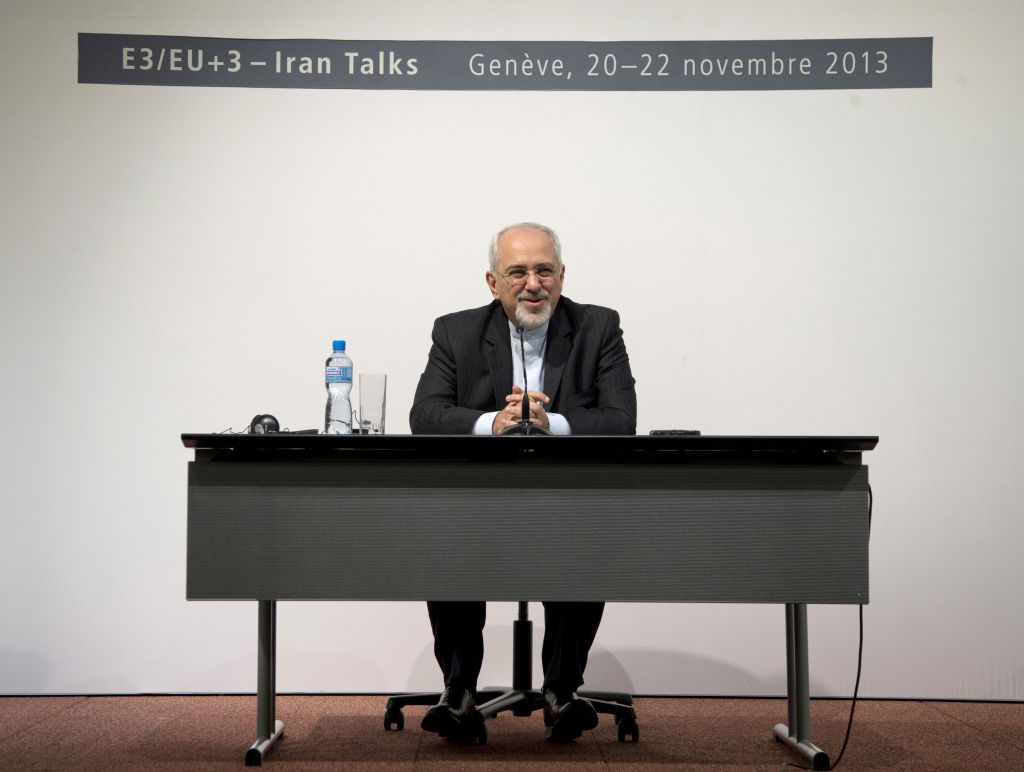
Iran’s foreign minister faced criticism from hardliners this week after telling university students that the US could easily destroy Iran’s military.
Mohammad Javad Zarif, speaking to students at Tehran University last week, said that America could obliterate Iran’s army “with one bomb,” Financial Times reported.
“Western powers are not scared of a few of our tanks and missiles,” Zarif, who has been Iran’s chief negotiator in nuclear talks with the P5+1 countries, said. “They are afraid of people. Do you think the US, which can destroy all our military systems with one bomb, is scared of our military system?”
He corrected his remarks hours later, saying he meant to emphasize the role public support for the nuclear program had played in deterring a US invasion.
According to Iranian media, 20 parliamentary hardliners wrote to President Hassan Rouhani asking him to “revise” Zarif’s appointment as foreign minister.
“A foreign minister is a diplomat and should not comment on issues that are not within his authority,” said Hassan Naghavi, spokesman for the parliamentary national security committee.
Kayhan, an ultra-conservative newspaper under the control of Iran’s supreme leader, said Monday that Zarif had diminished Iran’s bargaining power in future talks.
While hardliners denounced Zarif, reformist media praised him, with one newspaper likening him to Mohammad Mossadegh, the democratically-elected prime minister overthrown by a Western-orchestrated coup in 1953.
In an interim deal signed last month with six world powers, Tehran agreed to partially freeze Iran’s nuclear program in exchange for limited sanctions relief.
The US and its allies fear that Iran may be trying to develop a nuclear weapon, a charge Tehran denies.
The P5+1 — the five permanent members of the UN Security Council and Germany — and Iran are expected to resume talks shortly to work out the technical details of last month’s interim agreement, which has yet to take effect. Talks for a lasting agreement are also due to commence soon.








The Times of Israel Community.