

Is Netanyahu spoiling for a fight in the West Bank?
A series of recent decisions by the government could undermine the very conditions keeping the peace


 Add ToI as a Preferred Source on Google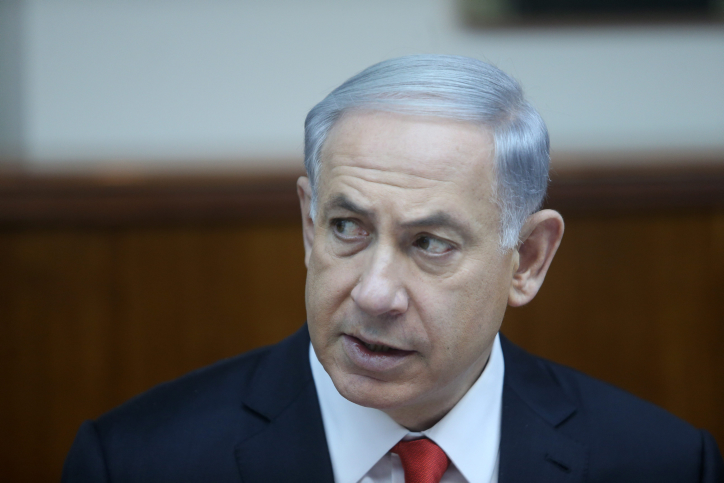
Prime Minister Benjamin Netanyahu has excelled in previous years at a carefully calculated interaction with the Palestinians, and in so doing prevented a third intifada, a violent uprising. So why now, of all times, just before an election, is he pushing decisions that are stirring things up?
Could it be that he is trying, just three weeks before the elections for the Knesset, to agitate the atmosphere in the West Bank?
This question, that seems at first glance to be a strange conspiracy theory, is one that more and more people are asking themselves in the international community, the Palestinian Authority, and even among some in the Israeli government itself. The reason why the suspicion arose is the series of decisions taken by Israeli officials in recent weeks that are increasing the likelihood of a violent outburst in the West Bank.
The decision announced on Monday by the Israel Electric Company to cut off the supply for an hour a day to the Palestinian cities of Jenin and Nablus because of the PA’s large unpaid bills, is only the latest link in a chain. Before this the government decided to freeze the transfer to the PA of tax money that Israel collected from Palestinians, and Water Minister Silvan Shalom decided to forbid the connection of the new Palestinian city Rawabi to the water network.
These actions, all three of which were done despite clear warnings from the security establishment, create, to an outside observer, the feeling that “someone in Israel is almost begging for an intifada.”
Two central reasons prevented the outbreak of violence on the streets of the West Bank in recent years.
The first reason is the Palestinian Authority, that has proved more than once in this period that it has the ability to control what is happening in the territories. Even during the days of IDF operations Protective Edge in 2014 and Pillar of Defense in 2012 the West Bank continued to be one of the quietest places in the region, if not the quietest.
The PA carried out a wave of mass arrests among Hamas and Islamic Jihad activists, foiled serious terror attacks and constantly maintained the security coordination with the IDF despite the tensions on the diplomatic level between the Israelis and Palestinians.
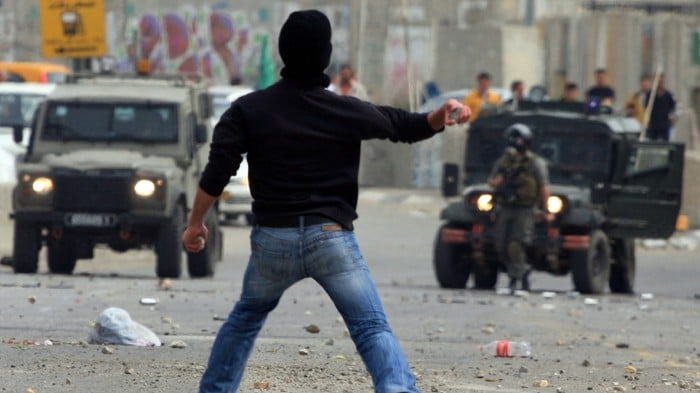
The Israeli decision to delay the transfer of tax money and as a result to enable only a partial payment of PA officials’ wages — including salaries for leading members of the security apparatus — is a serious blow to the ability of the PA to operate and certainly to the effectiveness and morale of the Palestinian security forces.
At every opportunity the PA has stressed that it is against an intifada, but the PA is likely to become irrelevant if the tax freeze continues. In the less bad of the dire potential scenarios, Fatah members may be urged to take to the streets. In the graver of the dire potential scenarios, the PA could simply collapse, as US Secretary of State John Kerry warned may happen just last week. The vacuum could be filled by violent elements from Hamas, Islamic Jihad or forces even more extreme.
The second reason that the dangers of a third intifada haven’t been realized thus far is the quality of life in the West Bank. Since at least 2007 (when Hamas took over the Gaza Strip) it has markedly improved. The economy was morphine for Israel, a wonder medicine that caused the masses to stay in their homes during the turbulent days and to not launch a third intifada.
But, especially recently, there have been Israeli actions that are damaging the basic living conditions of the Palestinians — for example shutting off the electricity. Will that help Israel and the electric company to speed up the PA payments of its debts? The PA at the moment can’t even pay its own wages.
Experts are holding their heads in their hands at the decision to cut off the power, and even more so, at the odd timing of it. To his credit, it is worth noting that during the last six years while he was in the job, Prime Minister Netanyahu knew how to avoid a real crisis in the West Bank by using a level-headed tactical approach and a willingness to listen to security officials familiar with the situation on the ground.
He supported strengthening the joint activities between the IDF and the Palestinian security forces, which proved effective for both sides.
When Jerusalem began to burn a few months ago, he was quick to distinguish himself from those pyromaniacal members of parliament who ascended to the Temple Mount, and he coordinated his position with the Jordanian king to calm the turmoil. When a senior minister in his government had a meeting with
Mohammad Dhalan, the sworn rival of Mahmoud Abbas, he sent calming messages to the PA through the head of the Shin Bet Security Services.
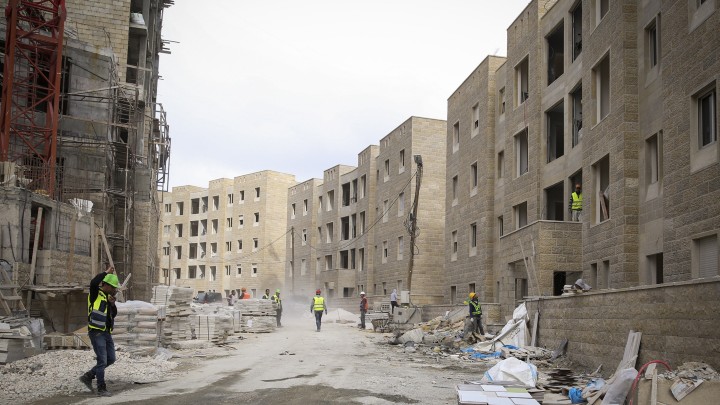
The best example of all of the careful attitude of his government was the building of the new Palestinian city of Rawabi, that has been advancing in recent years despite a serious diplomatic dispute between the prime minister in Jerusalem and the PA in Ramallah. Rawabi, which is supposed to be the middle-class Palestinian city, is the embodiment of the economic peace that Netanyahu has tried to advance as an alternative to withdrawing from the West Bank.
Even Defense Minister Moshe Ya’alon, not exactly a white dove of peace, understood the importance of the Palestinian yuppie city as a socio-economic project, and its ability to contribute to maintaining calm. Therefore, the current stubbornness by the Israeli government, in not allowing Rawabi to be connected to the water supply, as reported by the Times of Israel at the end of last week, seems like a real deviation from the careful approach, and instead reflects an attitude of provocation and stirring things up.
A senior Western diplomat who recently spoke with seniors figures in the Israeli government about these decisions said that “no one expects Israel and the Palestinian Authority to advance any kind of dramatic moves before the elections, but we don’t understand why Israel is insisting on negative steps. Rawabi is the most absurd example, because it is clearly in Israel’s interest to enable a higher standard of living for the Palestinians, but the matter of the taxes also raises a lot questions for us. If the [Israelis] want to prevent an explosion, they can resolve this. But if they insist on not resolving things, it could be that they want something else.”




The Times of Israel Community.