

 From the Liveblog of
Thursday, August 14, 2014
From the Liveblog of
Thursday, August 14, 2014
Long-neglected Gaza heritage wilts in war
 Add ToI as a Preferred Source on Google
The Gaza Strip, a narrow sliver of territory tucked into the eastern Mediterranean between Egypt and Israel has been home to settled communities since at least 3,300 BC, historians say, governed by the Caananites, Pharoahs, Greeks, Romans and Byzantines before the arrival of Islam in the seventh century.
It was ruled by the Mamluk dynasty in the 13th century, and three centuries later joined the Ottoman Empire, which held sway until the British took the area in 1917.
But Gaza has relatively little to show for its history.
Centuries of conquest and conflict, and rapid population growth since the creation of the State of Israel in 1948, have hit the enclave’s cultural heritage badly. Squat apartment blocks built from cinder blocks line many of the city’s streets.
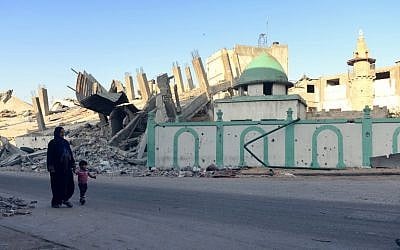
“It’s not a priority for anyone,” says Yasmeen al-Khoudary, who helps curate a private museum set up by her engineer father Jawdat.
“When you think of Gaza you never think of history, or ancient Gaza or archaeology, you always think food, medicine, refugee camps, Hamas.”
Israeli authorities restrict the entry to Gaza of some key construction materials, including cement and steel, which they say Hamas could use to build attack tunnels, and so renovations look difficult.
But in the Darraj neighborhood, which is home to some of Gaza’s oldest buildings, sites such as the Grand Omari Mosque and the Church of Saint Porphyrius still stand, both of them in good condition.
The Hamam al-Samara, Gaza’s only remaining Turkish bath, has served the residents of Darraj for more than 1,000 years, and has more recently become a tourist attraction for the few who visit.
— AFP










The Times of Israel Community.