

 From the Liveblog of
Sunday, February 1, 2026
From the Liveblog of
Sunday, February 1, 2026
Protesters gather at Knesset to demand government facilitate Ethiopian immigration
 Add ToI as a Preferred Source on Google
Ariela Karmel is a political correspondent at The Times of Israel. She previously reported for Calcalist and Haaretz. She holds an MA in Middle Eastern and African History from Tel Aviv University and a BA in Political Science from the University of British Columbia.
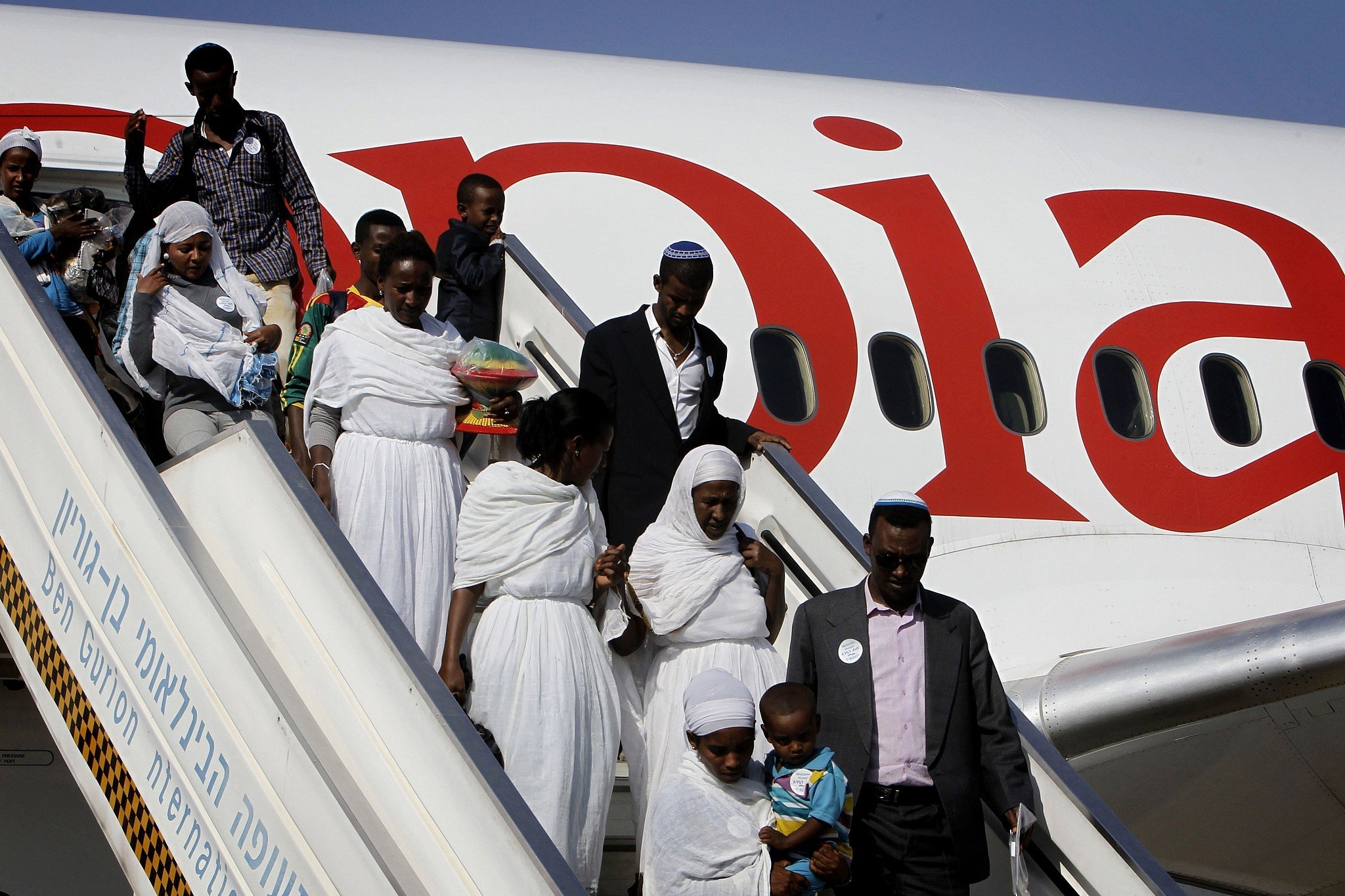
Demonstrators gather outside the Knesset demanding that the government facilitate the immigration of the remaining Jewish community in Ethiopia to Israel amid ongoing violence and strife in Ethiopia’s Tigray region.
The protesters say that the government has halted immigration from Ethiopia and stopped funding it, and demand that it immediately “reallocate funds to resume immigration and bring to Israel those whose situation continues to deteriorate against the backdrop of the civil war in Ethiopia,” according to a statement from protest organizer Power for Aliyah, which assists Ethiopian immigrants.
Ethiopia was engulfed in a violent civil war when the national army fought the Tigray People’s Liberation Front for two years, ending with a peace agreement in November 2022. However, disputes over various issues have continued. The war reportedly killed hundreds of thousands of people and caused the collapse of healthcare services, leading to widespread famine.
The organization estimates that roughly 2,000 protesters are in attendance from across the country, mostly from the Ethiopian community, many of whom have family members waiting in Ethiopia to immigrate to Israel.
The gathering was the latest in a longstanding effort to bring to Israel descendants of Ethiopian Jews who had converted to Christianity in the 19th century, and some of their relatives. The minority is known in Hebrew as Falasha, and in English as Falash Mura, a term some regard as derogatory. Only Falasha whose parents or children live in Israel may immigrate and only if the new arrivals are unmarried and have no children.
However, Blue and White MK Pnina Tamano-Shata, who herself is of Ethiopian descent, says that many of those waiting to immigrate were already approved for immigration and set to immigrate when she was immigration minister in 2020-2021 during Yair Lapid and Naftali Bennett’s short-lived government.
“The government has halted immigration for three years, thereby putting the lives of those waiting – and their families in Israel – on hold,” she says, speaking at the protest.
“This is ongoing mistreatment of Ethiopian immigrants,” she continues, adding that “the government does not count Ethiopian Jews in Israel.”
Protesters argue that approximately 10,000 eligible immigrants have been waiting in Ethiopia for decades, concentrated mainly in the capital of Addis Ababa and Gondor.
“The Government of Israel is leaving them to continue waiting in Ethiopia and ignoring their terrible pain,” says Power for Aliyah chair Gabi Warko in a statement.
“We intend to continue the struggle regularly until the government comes to its senses and brings all of our families,” she continues.





The Times of Israel Community.