

 From the Liveblog of
Friday, May 8, 2026
From the Liveblog of
Friday, May 8, 2026
Recently freed Palestinian journalist recounts Israeli jail rations that led to 130-pound weight loss
 Add ToI as a Preferred Source on Google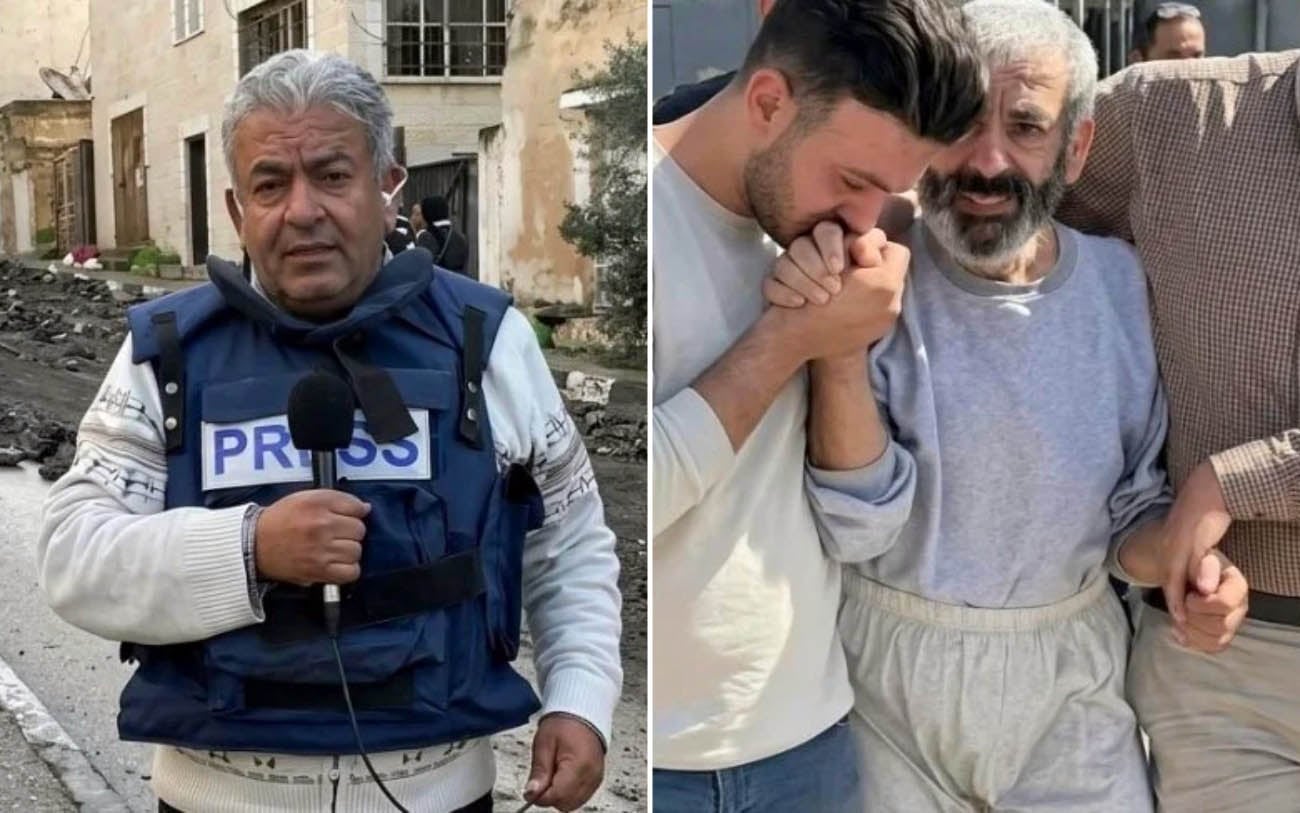
A Palestinian journalist recently released from one year in Israeli jail, where he was held without charge, recounts the severe conditions prisoners undergo in an interview with CNN.
Ali Samoudi lost 130 pounds while in prison and was barely recognizable to family and friends after he was released on April 30.
Samoudi was held by Israel using a controversial legal tool called administrative detention, which allows authorities to indefinitely keep a suspect in custody without charge, based on covert intelligence information.
While some in administrative detention are eventually charged, others — including Samoudi — are not.
The practice is so controversial that Defense Minister Israel Katz barred its use against Jewish suspects last year. It is now only employed against some 4,000 Palestinians and a small number of Arab Israelis, leading to charges of discrimination by Israeli authorities.
Samoudi, in the CNN interview, recalls the small rations of food that prisoners are given each day.
Palestinian journalist Ali al-Samoudi was recently released from Israeli prison, where he was held for a year without charge and without a trial. He lost around half his body weight behind bars. “It was a real hell,” he tells @JDiamond1, in this heart-wrenching report. pic.twitter.com/WH0tqu4lyn
— Christiane Amanpour (@amanpour) May 8, 2026
He says breakfast consisted of one spoon of labneh and a quarter spoon of jam. Lunch was four spoons of rice, two slices of cucumber and one spoon of white beans. Dinner was two spoons of hummus, one spoon of tahini and a hard-boiled egg.
Mirrors are banned in Israeli jails, so he didn’t see how gaunt he looked until his release. “I felt something dreadful. My situation was difficult, and I understood that, but I did not imagine it was to this extent,” he tells CNN.
A recent report from Israel’s own Public Defender’s Office determined that Palestinian security detainees held in Israeli prisons have suffered from severe and systematic violence from prison guards, deprivation of food and medical neglect, while also having been subjected to unsanitary conditions that caused and exacerbated outbreaks of disease in the prisons.
“It was true hell. Prison today is hell in every sense of the word. Everything they practice with us was punishment and revenge,” Samoudi says.
Israel’s Prison Service did not respond to a request for comment on Samoudi’s detention or why he was held for so long if he was never charged.
IPS, in the past, has denied allegations of mistreatment and insisted that inmates are treated according to international law.






The Times of Israel Community.