

Merz calls to repair Europe’s rift with US, saying old world order ‘no longer exists’
Speaking at Munich Security Conference, German leader says he has begun talks with France on a European nuclear deterrent; Macron: ‘Europe has to become a geopolitical power’
 Add ToI as a Preferred Source on Google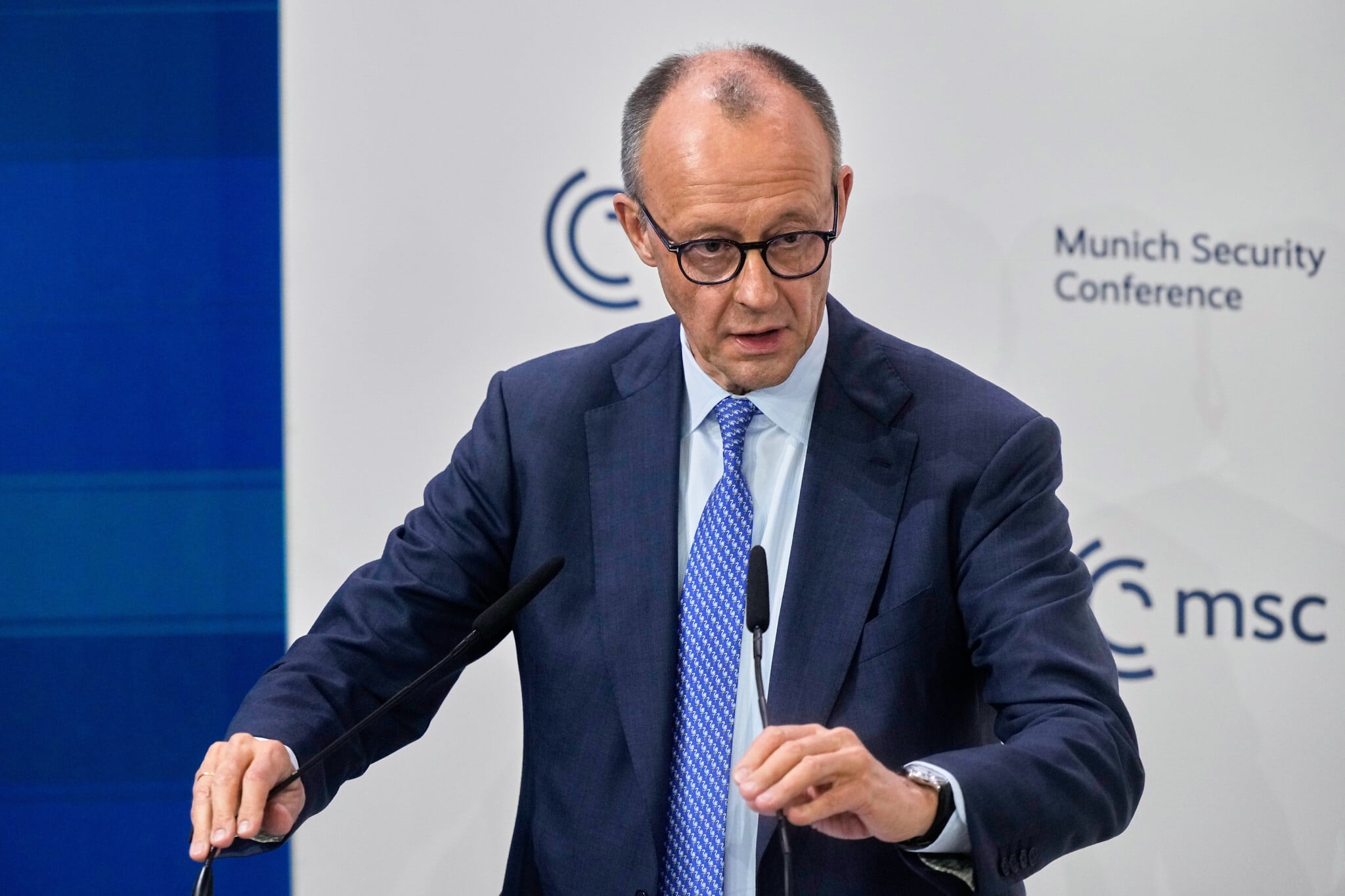
MUNICH — German Chancellor Friedrich Merz called on Friday for the United States and Europe to “repair and revive trans-Atlantic trust together,” saying that even the US isn’t powerful enough to go it alone in an world whose old order has withered.
Merz called for a “new trans-Atlantic partnership,” acknowledging that “a divide, a deep rift” has opened up across the Atlantic as he opened the Munich Security Conference, an annual gathering of top global security figures, including many European leaders and US Secretary of State Marco Rubio. Merz said that the post-World War II world order, “as imperfect as it was at its best times, no longer exists” today.
Hours later, French President Emmanuel Macron said that “Europe has to become a geopolitical power.” He said that “it’s ongoing, but we have to accelerate” in areas such as defense, technology and “de-risking vis-a-vis all the big powers in order to be much more independent.”
At last year’s conference, a few weeks into US President Donald Trump’s second term, US Vice President JD Vance stunned European leaders by lecturing them about the state of democracy and freedom of speech on the continent — a moment that set the tone for the last year.
A series of statements and moves from the Trump administration targeting allies followed, including Trump’s threat last month to impose new tariffs on several European countries in a bid to secure US control of Greenland, a semiautonomous territory of NATO ally Denmark. The president later dropped that threat.
Stronger together
“The culture war of the MAGA movement in the US is not ours,” Merz said. “The freedom of the word ends here when this word is turned against human dignity and the constitution. And we don’t believe in tariffs and protectionism, but in free trade.”
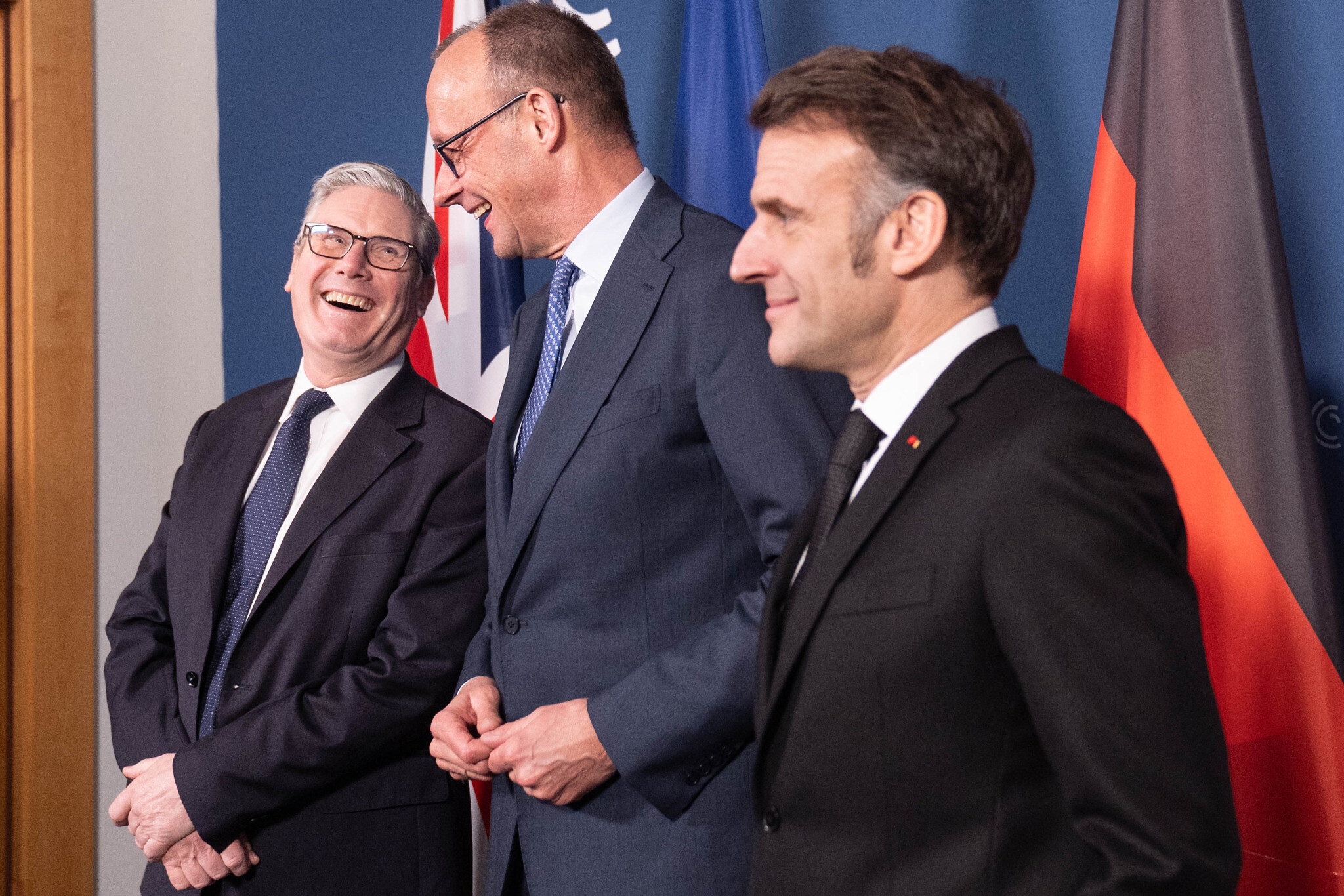
He said that Europe would stand by climate agreements and the World Health Organization.
But Merz said that Europe and the US should conclude that “we are stronger together” in today’s world.
“In the era of great-power rivalry, even the United States will not be powerful enough to go it alone,” he said. “Dear friends, being a part of NATO is not only Europe’s competitive advantage. It’s also the United States’ competitive advantage, so let’s repair and revive trans-Atlantic trust together.”
The Europeans, Merz said, are doing their part.
A European nuclear deterrent
Merz said that Berlin had begun talks with France about a European nuclear deterrent, while Macron said Europe had to become a geopolitical power given the Russian threat would not disappear.
“I have begun confidential talks with the French President on European nuclear deterrence,” Merz said. “We Germans are adhering to our legal obligations. We see this as strictly embedded within our nuclear sharing in NATO. And we will not allow zones of differing security to emerge in Europe.”
Macron is due to make a speech on the nuclear deterrent later this month.
He said the consultations with Germany and other leaders were part of a broader discussion that included conventional deep strikes capabilities, which Europe does not possess unlike Russia, and the role of France’s nuclear deterrent.
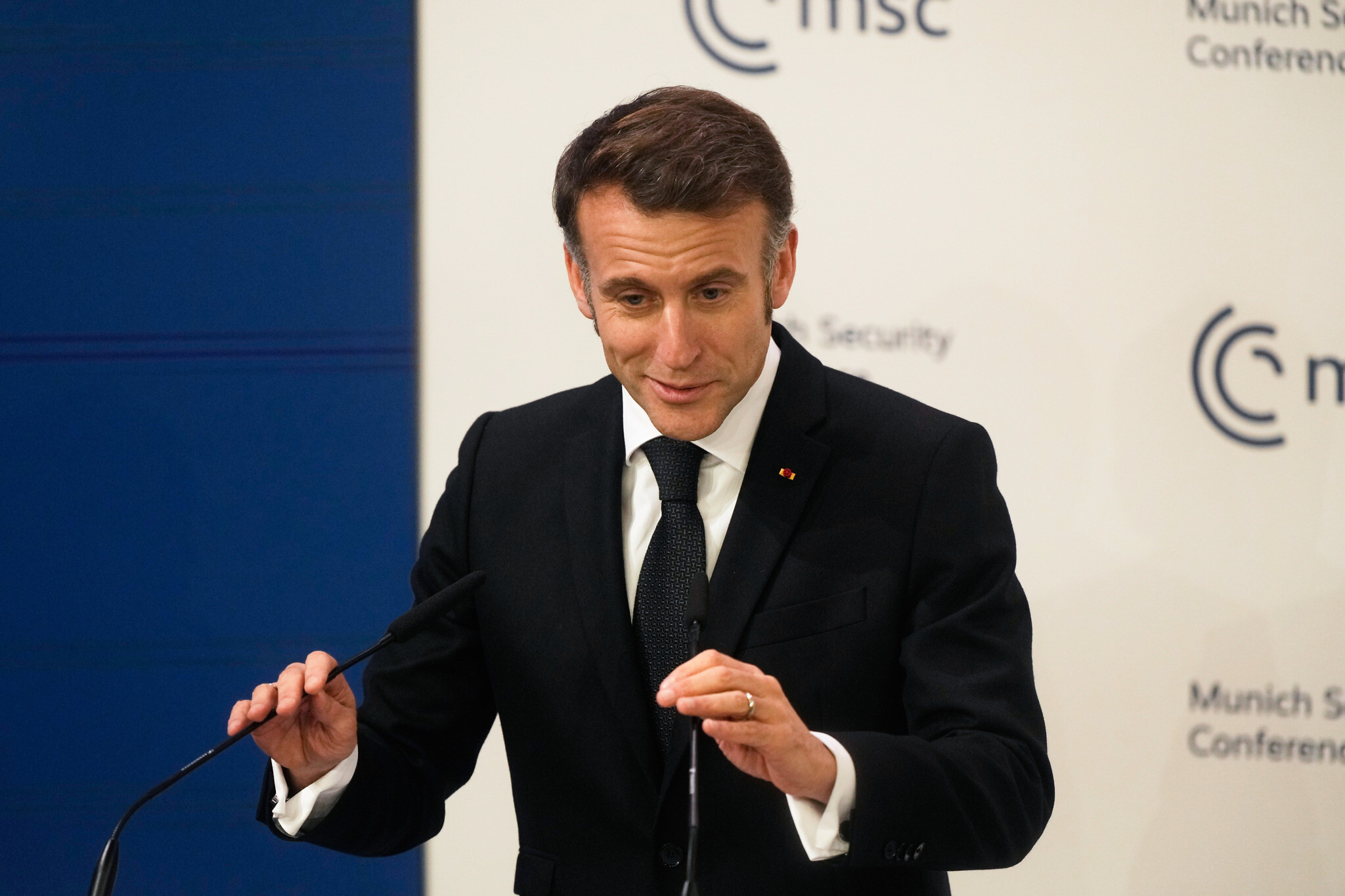
“This is the right time for audacity. This is the right time for a strong Europe,” Macron said. “Europe has to learn to become a geopolitical power. It was not part of our DNA.”
“We have to reshuffle and reorganize our architecture of security in Europe. Because the past architecture of security was totally designed and framed during Cold War times. So it’s no longer adapted,” he said.
European nations have long relied heavily on the United States, including its large nuclear arsenal, for their defense but have been increasing military spending, partly in response to sharp criticism from the Trump administration.
While Germany is currently banned from developing a nuclear weapon under international agreements, France is the European Union’s only nuclear power following Britain’s departure from the bloc and has the world’s fourth-largest stockpile.
“This is the right time for a strong Europe,” he said. “This Europe will be a good ally and partner for the United States of America, because it will be a partner taking its fair share of the burden. It will be a partner being respected — and we have to be respected.”
‘Shift in mindset’ in Europe
Since last year’s Munich conference, NATO allies have agreed under pressure from Trump to a large increase in their defense spending target.
NATO Secretary-General Mark Rutte said that there has been a “shift in mindset,” with “Europe really stepping up, Europe taking more of a leadership role within NATO, Europe also taking more care of its own defense.”
With Rubio heading the US delegation this year, European leaders can hope for a less contentious approach more focused on traditional global security concerns. Before departing for Germany, Rubio had some reassuring words as he described Europe as important for Americans.
“We’re very tightly linked together with Europe,” he told reporters. “Most people in this country can trace both, either their cultural or their personal heritage, back to Europe. So, we just have to talk about that.”
But Rubio made clear that it wouldn’t be business as usual, saying: “We live in a new era in geopolitics, and it’s going to require all of us to reexamine what that looks like.”
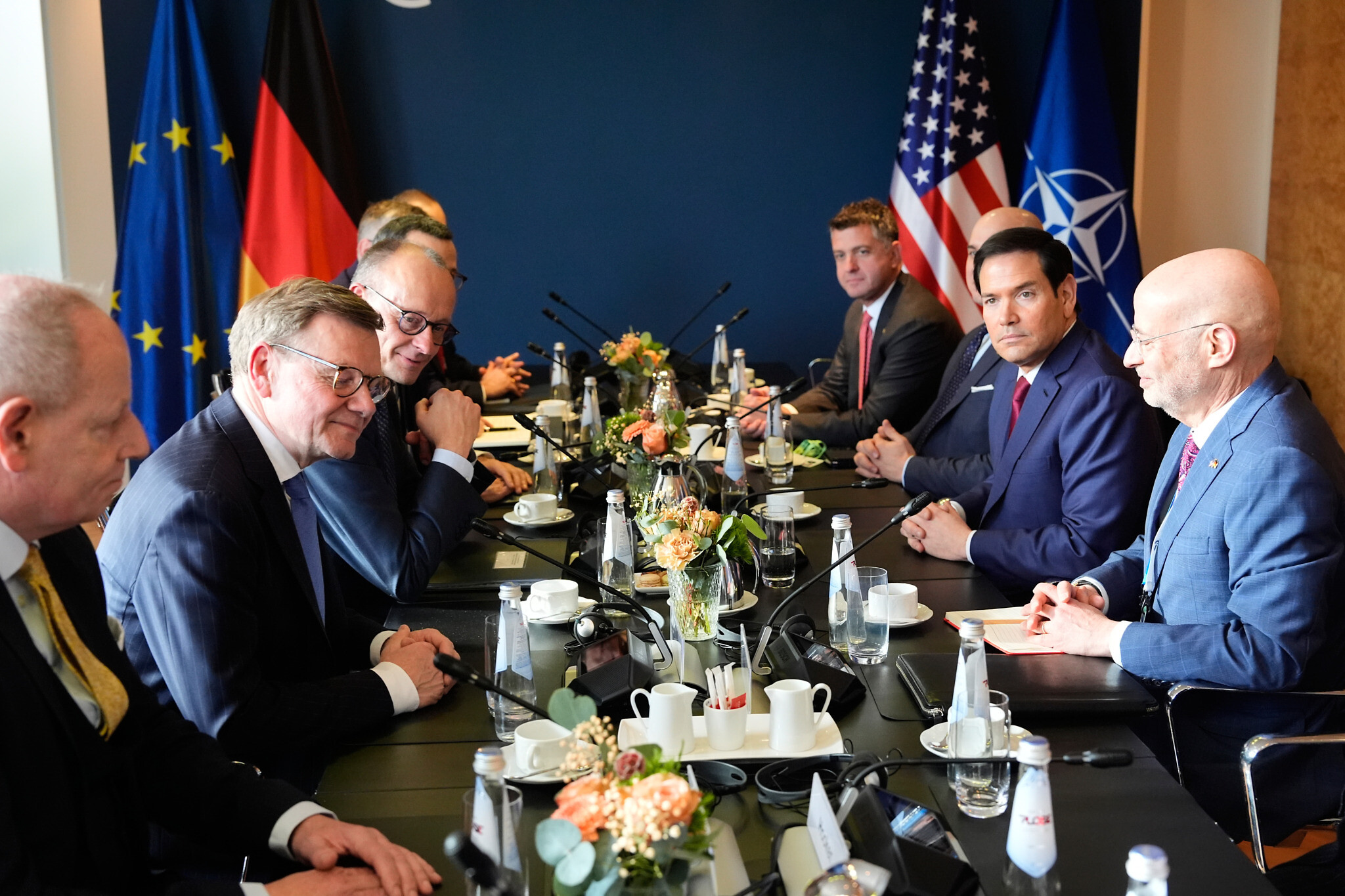
Mike Waltz, the US ambassador to the United Nations, told the conference that the US had been sustaining the financial burden of multilateralism for too long and Europeans need to do more.
“There is a cost to the status quo and the status quo was not sustainable any more,” Waltz said.
Merz said that Europe’s “excessive dependency” on the US was its own fault, but it’s leaving that behind.
“We won’t do this by writing off NATO — we will do it by building a strong, self-supporting European pillar in the alliance, in our own interest,” he said.
He acknowledged that Europe and the US will likely have to bridge more disagreements in the future than in the past, but “if we do this with new strength, respect and self-respect, that is to the advantage of both sides.”




The Times of Israel Community.