

New life rejuvenates a growing Ladino music scene
The Ljuba Davis Ensemble exudes love for Ladino melodies and language from its pores
 Add ToI as a Preferred Source on Google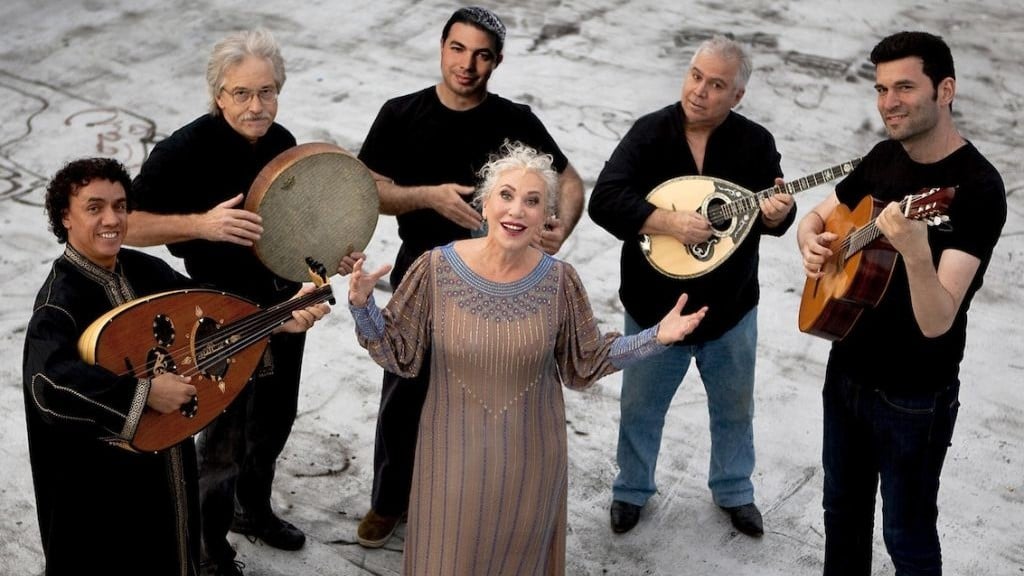
NEW YORK (JTA) — Avraham Pengas, a veteran bouzouki player, says few Ashkenazic musicians can make Sephardic music come alive.
Ljuba Davis, he says, is “absolutely” one of them.
Davis (her first name is pronounced LYOO-bah) is the lead singer of the Ljuba Davis Ladino Ensemble, a group that performs Ladino and Sephardic music. The group features an oud (a lute of Middle East origin), the bouzouki (a Greek four-stringed instrument), classical Spanish guitar and lively percussion.
Its musicians are equally diverse. Pengas, 60, was born in Athens, Greece. Nadav Lev, the guitarist, grew up on a kibbutz in Israel. Percussionist Osama Farouk hails from Egypt. And oud player Rachid Halihal grew up in Morocco.
The ensemble’s diversity reflects the nature of the Ladino language, which originated in Spain before the Inquisition and was spoken throughout Greece, the Balkans, Turkey, North Africa and beyond.
Ladino has much in common with Yiddish, Europe’s other Jewish language. Both have a rich and varied culture of folktales, music and literature. Both were devastated by the Holocaust. And both have been classified as endangered by the Israeli government. In 1997, Israel established the National Authority of Ladino aimed at preserving Judeo-Spanish culture.
Alongside the revived interest in Yiddish in recent years, a small crop of young musicians are working to revive Ladino musical culture and revamp it for a new audience. Sarah Aroeste’s recently released album “Gracia” is a combination of revamped Ladino classics and original music. The album was named one of the best of 2012 by the Forward.
“The Ladino music scene keeps growing. It’s been growing for awhile, and it keeps growing,” said Gloria Ascher, a professor of Ladino language and literature at Tufts University. “There are new performers, new composers. People are really very excited about it.”
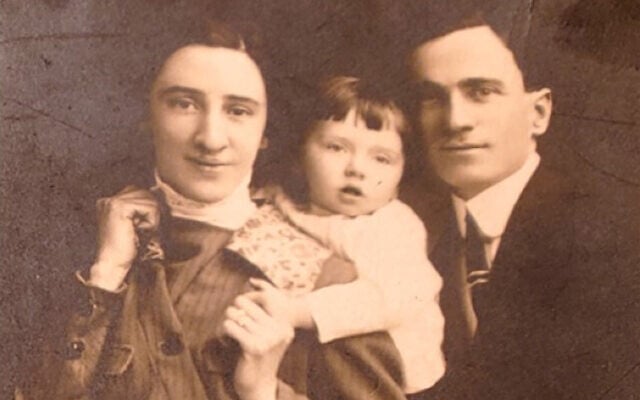
Davis, 68, was born in Beckley, W.Va., to parents of Ukrainian descent. But her grandmother always reminded her that the family originally came from Spain.
She learned music from her father, a classically trained violinist, and found herself drawn to the Sephardic musical tradition. She later became a fixture on the West Coast music scene, where she melded Jewish music and protest songs in the Bay Area while working as a registered nurse and raising seven children on traditional Ladino lullabies such as “Dourme, Dourme.”
‘The lyrics evoke the feeling of the Mediterranean, the warmth, the sunshine, the romance’
“There’s a life to the music melodically,” Davis said. “The lyrics evoke the feeling of the Mediterranean, the warmth, the sunshine, the romance.”
It wasn’t until she was 65 that Davis made a recording at the prompting of her son David.
“He said, ‘Mom, before you lose your voice and your marbles, you’ve got to make this recording,’ ” Davis recalled. “He’d been hearing this music since childhood.”
Through the fundraising website Kickstarter, Davis raised $12,000 in 60 days to cover recording expenses. Davis and her son scoured the New York music scene for accompanying musicians.
Pengas, a veteran of the Sephardic music scene, was introduced through a mutual friend. Halal was found playing the oud in a subway station.
A double CD was released in 2011 and led to performances throughout the Northeast, including a recent concert on Martha’s Vineyard where Davis lives. The group performed at the Gibraltar World Music Festival last year and played in New York in December.
“One of the elements that I love is that it’s unusual for people to hear Ladino,” said Davis. “I love it all — the music, the liturgy, the language. It’s in my pores.”









The Times of Israel Community.