

NGO sees sharp rise in smoke pollution complaints during annual olive harvest
Nearly 1,400 Israelis report foul air this month amid olive harvest fires. Clean air NGO: Annual problem needs budgeted, professional plan, not another hotline
 Add ToI as a Preferred Source on Google
Sue Surkes is The Times of Israel's environment reporter
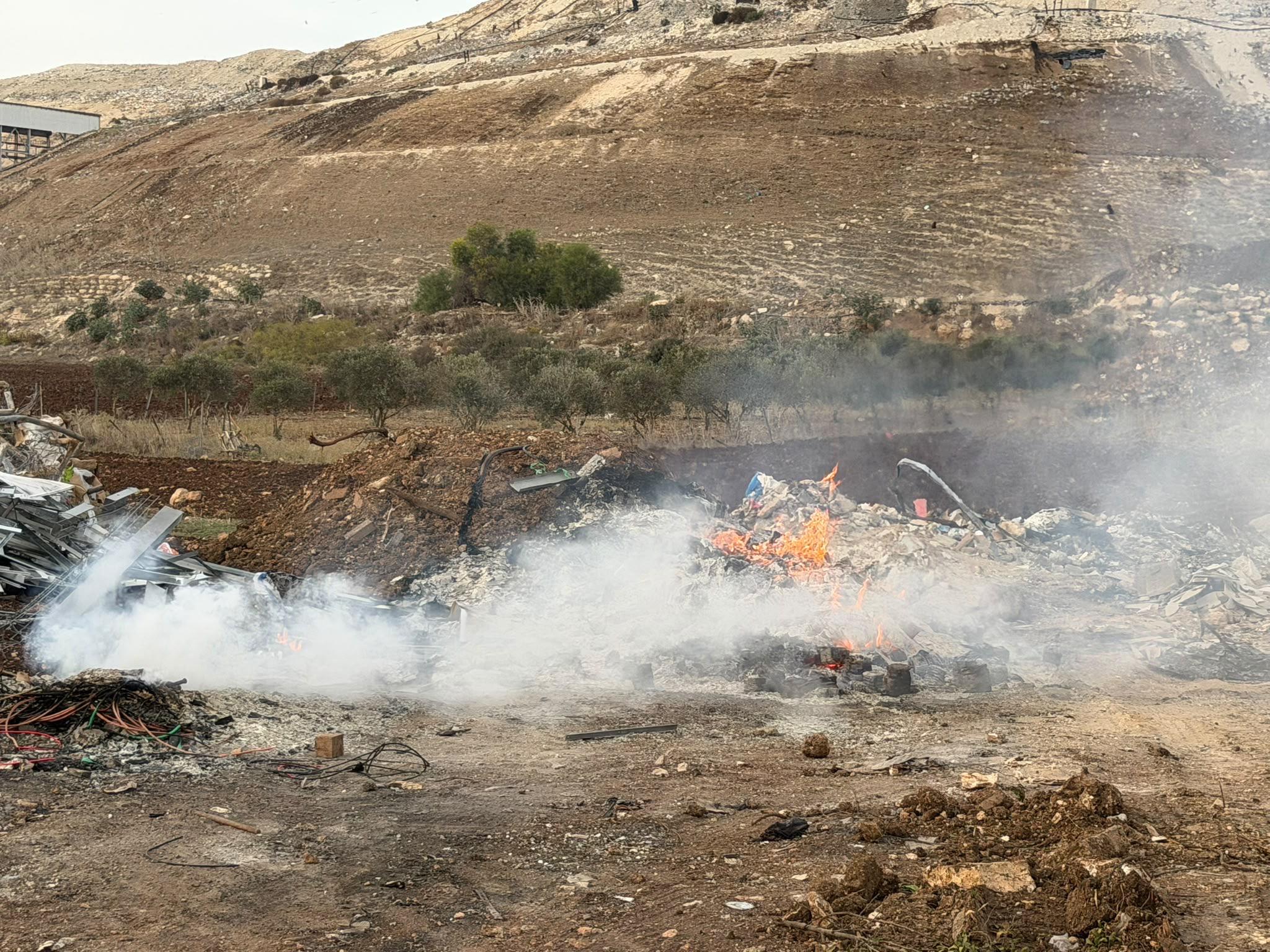
Nearly 1,400 Israelis have complained this month to a clean air NGO about putrid air and burning smells, as the annual olive harvest continues apace, along with the illegal burning of branches and prunings, sometimes together with household and electronic waste.
The 1,367 complaints to Citizens for Clean Air (Hebrew link) compare with 964 in October and 786 in September.
The surge repeats last year’s complaint pattern. Complaints also climaxed during the olive harvest, and saw the Environmental Protection Ministry and the Civil Administration (the civilian arm of the Defense Ministry’s Coordinator of Government Activities in the Territories) announcing enforcement blitzes, while critics accused the authorities of sticking “Band-Aids” on an annual problem, rather than implementing a budgeted, professional plan.
In October, the latest month analyzed by Citizens for Clean Air, which runs its own hotline for complaints (054-9562220 by WhatsApp), 377 complaints came from the north, including Haifa, followed by 327 from the West Bank. Most complaints came from Ma’ale Adumim (137), a large West Bank settlement outside Jerusalem; the Menashe Regional Council in north-central Israel; and the city of Harish. The Menashe region and Harish lie along the Green Line, the pre-1967 boundary between Israel and the West Bank.
Last December, after a similar rush of complaints, Environmental Protection Ministry meetings and Knesset hearings, Environmental Protection Minister Idit Silman announced an immediate NIS 40 million (then worth $12.4 million) to help rehabilitate one of the two main landfills serving the West Bank, and to hire additional inspectors, including at checkpoints along the Green Line.
This was to help the Civil Administration, which is the body authorized to act in the West Bank.
Defense Minister Israel Katz and Finance Minister Bezalel Smotrich declared the fires in the West Bank a national security threat and announced an emergency plan.
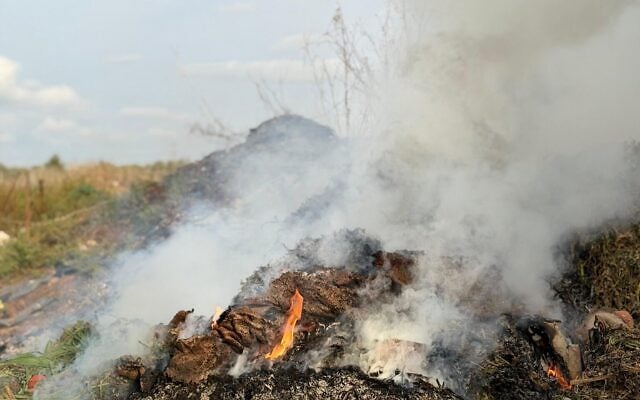
But an Environmental Protection Ministry bid for an additional NIS 134.6 million ($41.6 million) in the 2026 state budget went unheeded.
This month, as complaints spiraled again, the ministry said its Green Police, joined by the Israel Police, the Israel Nature and Parks Authority, and Fire and Rescue Services, handled over 30 burning incidents throughout Israel in one day alone and handed out thousands of shekels in fines. Green Police Director Yossi Bar and Ministry Director-General Rami Rosen emphasized ongoing daily patrols to catch arsonists in real time.
However, Yaniv Bleicher, who chairs Citizens for Clean Air, told The Times of Israel that such pinpoint actions would not solve the problem.

Bleicher cited the Civil Administration’s decision earlier this month to close the small Beit Anan landfill northwest of Jerusalem, which serves over 20 Palestinian communities.
“Because of that, people started dumping and burning in other places, and that is what caused the deterioration in [air quality] in northern Jerusalem and Giv’at Ze’ev [a West Bank settlement just north of the capital],” he said.
Late last week, after meeting the Jerusalem Municipality and other bodies, the Civil Administration announced Beit Anan’s reopening, with additional emergency measures such as a joint environmental hotline.
“As if another hotline will solve anything,” Bleicher responded, after residents were first told to report to an environmental hotline, then to the Israel Fire and Rescue Services. “And if a resident sees smoke and doesn’t know whether the fire is inside Israeli territory or across the line, who are they supposed to report to?”
“Instead of one coordinating body … they scatter the responsibility,” he added. “Let me guess that this isn’t what will solve the problem.”
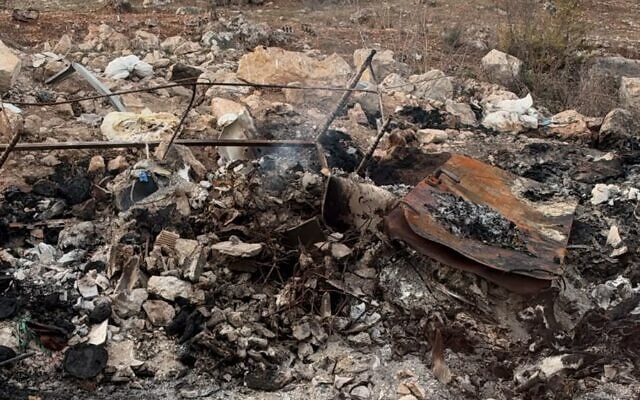
The Civil Administration said it recognized the waste-burning problem across the West Bank and was investing substantial resources to eradicate it. A dedicated task force coordinates Central Command security bodies on prevention, detection, firefighting, and enforcement, it said, citing over 1,500 patrols this year and declining pollution in the Shoham and Modi’in areas.
The Environmental Protection Ministry said that while authority for waste fires in the West Bank rests solely with the Civil Administration and the Defense Ministry, the Environmental Protection Ministry has formulated a strategic plan to address environmental hazards in the West Bank, as well as cross-border hazards, and hopes to bring it to the government for approval.
It added that responsibility for preventing and addressing environmental hazards within Israel lies with the local authorities, that the Green Police and district teams operate year-round to locate burning sites and carry out enforcement, and that since early October, the ministry has stepped up inspection and enforcement activities to prevent and reduce waste and pruning fires in open spaces and agricultural fields.







The Times of Israel Community.