

Syria’s Aleppo airport reopens following repairs after alleged Israeli strikes
Operations resume at country’s second-largest airport
 Add ToI as a Preferred Source on Google
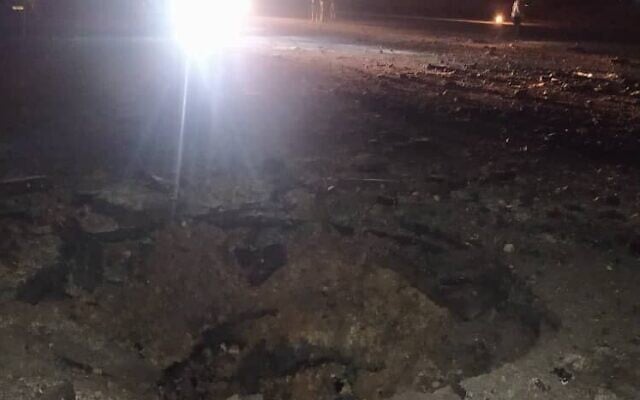
DAMASCUS, Syria — Flights resumed from Aleppo on Friday after repairs were carried out on Syria’s second-largest airport following an air strike earlier this week blamed on Israel.
The first civilian flight landed in more than 72 hours.
Damage to the main runway in Tuesday’s raid had put the airport out of service, but the transport ministry said Friday repairs had been completed.
The first incoming flight, from Kuwait, landed at 8:30 p.m. local time (1730 GMT), according to the Syrian Observatory for Human Rights monitoring group, a Britain-based watchdog of unclear funding.
There were no reports of injuries in the strike, the second to hit the airport in just a week.
Since civil war erupted in Syria in 2011, Israel has carried out hundreds of strikes against its northern neighbor, targeting government troops as well as allied Iran-backed forces and Hezbollah fighters.
As a rule, Israel’s military does not comment on specific strikes in Syria, but has admitted to conducting hundreds of sorties against Iran-backed groups attempting to gain a foothold in the country. It says it also attacks arms shipments believed to be bound for those groups, chief among them Lebanese terror group Hezbollah.
Aleppo is a major city in northern Syria, near its border with Turkey, and is an uncommon — though not unprecedented — target for reported Israeli airstrikes.
On Thursday, Syria’s Foreign Minister Faisal Mekdad issued a harsh warning to Israel over the airstrikes. He said Israel was “playing with fire” and risking a wider military conflict.
The Syrian foreign ministry accused Israel of a “war crime according to international law” over the latest alleged airstrikes and said it “must be held to account for it.”
Earlier this year, airstrikes attributed to Israel caused major damage to the Damascus International Airport, halting all air traffic for two weeks.
Generally, relatively large weapons are thought to be smuggled via Syria on Iranian cargo airlines, which frequently land at Damascus International and the Tiyas, or T-4, airbase, outside of the central Syrian city of Palmyra.
The weaponry is then believed to be stored in warehouses in the area before being trucked to Lebanon.







The Times of Israel Community.