

Talks on ‘technical aspects’ of Geneva deal to resume this week
News of further talks underlines that nuclear accord not yet finalized, six-month countdown to permanent deal hasn’t started and Iran isn’t bound by any new terms
 Add ToI as a Preferred Source on Google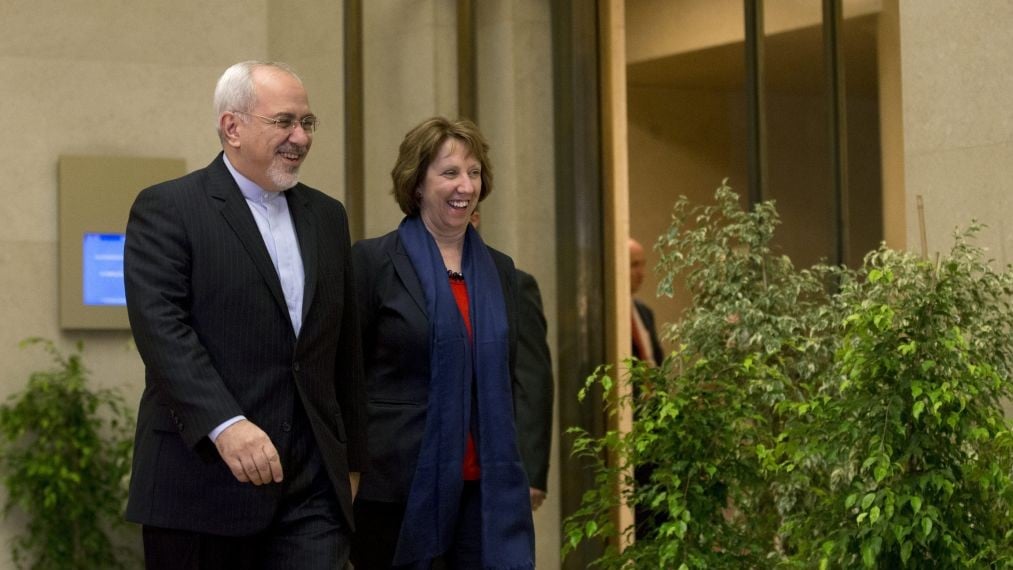
Underlining that the interim deal signed a week ago in Geneva was not in fact completed, representatives of Iran and the P5+1 nations are to meet again in the Swiss city this week to discuss unresolved aspects of the agreement.
Iran’s ISNA news agency reported Saturday that the new talks would focus on “technical aspects” of the Geneva accord. It did not state what level of representatives would attend the talks, but the US has indicated that Under Secretary for Political Affairs Wendy Sherman is likely to head its delegation.
The semi-official Iranian news agency also quoted Iran’s Deputy Foreign Minister Abbas Araqchi, a key player in the Geneva negotiations, as saying that Iran would retain the “right” to enrich uranium under any permanent accord with the world powers. “There is no suspension [under the interim accord], and enrichment would be part of the solution in the final step of the nuclear deal,” he said.
News of the new round of talks in Geneva followed a series of clarifications from the negotiators in recent days over what was and wasn’t agreed in the talks that led to the announcement early last Sunday morning that an interim accord had been reached on Iran’s rogue nuclear program.
The foreign ministers of the P5+1 nations and Iran’s Foreign Minister Mohammad Javad Zarif embraced and shook hands in apparent delight when announcing that a deal had been done. But Iran on Tuesday accused the US of publishing an inaccurate account of what had been agreed. And Zarif said in a subsequent address to the Iranian parliament that Iran would continue construction on the Arak heavy water plant, in an apparent breach of the ostensibly agreed terms.
The State Department on Tuesday acknowledged that Iran is currently enjoying a “window” of time before the six-month interim deal takes effect, during which it is not bound to take any credible steps toward disabling its ability to produce a nuclear weapon.
State Department spokeswoman Jen Psaki said that the six-month interim period, during which Iran would take steps to rein in its nuclear program in exchange for sanctions relief, had not yet begun. She also said a number of details were still to be worked out, without specifying which points had yet to be finalized.
“The next step here is a continuation of technical discussions at a working level so that we can essentially tee up the implementation of the agreement,” Psaki told reporters. “Obviously, once that’s — those technical discussions are worked through, I guess the clock would start. Obviously, there’ll also be a reconvening of the political track with the P5+1, which Under Secretary Sherman will continue to be our lead negotiator on.”
Psaki said that she did not “have a specific timeline” for how long the window would be in place before the six-month period began, nor did there seem to be any mechanism in place to prevent Iran from stepping up nuclear production before the scale-down went into effect.
“In terms of what the Iranians are or aren’t doing, obviously our hope would be, given we are respecting the spirit of the agreement in pressing for sanctions not to be put in place and beginning the process of figuring out how to deliver on our end of the bargain, that the same would be coming from their end in the spirit of the agreement,” Psaki said.
Psaki’s statements largely confirmed suggestions by former State Department official and ambassador Elliott Abrams, who argued in a Council for Foreign Relations blog earlier Tuesday that the language used by the White House to discuss the Iran interim deal was largely “aspirational,” suggesting that much of the touted P5+1 deal with Iran had yet to be finalized.
Abrams called on the Obama administration to “clarify whether that is or is not the case, because the entire “agreement can be hung up over that negotiation over implementation.”
The text of the deal, indeed, is written in frequently conditional tense. “The first step would be time-bound, with a duration of 6 months, and renewable by mutual consent…”, it states in an early clause, suggesting that the accord as agreed early last Sunday was more of a statement of intentions than a final, binding last word.
Israeli officials at the weekend denounced President Barack Obama for presiding over ostensibly failed negotiations with Iran under which they said the sanctions pressure on Tehran is collapsing and the Islamic Republic has been granted the right to enrich uranium. The entire wall of sanctions, painstakingly constructed over years, is already crumbling and “will collapse within months,” the unnamed officials were quoted as saying by Israel’s Channel 2.
Publicly, Israel’s Prime Minister Benjamin Netanyahu has slammed the Geneva deal as a “historic mistake,” said Israel is not bound by it, and vowed to thwart Iran’s nuclear weapons drive alone if necessary. In a phone conversation with Obama last Sunday, Netanyahu agreed to send a team led by his national security adviser to Washington to try to impact world powers’ upcoming efforts to reach a permanent accord to thwart Iran’s nuclear weapons drive.
Privately, the unnamed officials were quoted as indicating, Jerusalem is feeling a bitter, dismayed and helpless sense of “We told you so.” Claiming that officials and businessmen from around the world — notably including China, Turkey, France, Russia and India — are already converging on Iran, ready to resume large-scale oil, banking and all manner of other business dealings as sanctions are eased in the wake of Sunday’s Geneva deal, the officials were quoted as saying that Israel knew the sanctions pressure would collapse, “but even we didn’t imagine it would happen this fast.”







The Times of Israel Community.