

The current Israel-US rift was only a matter of time
Given their wildly different stances on the Mideast, is it any wonder the Obama administration and the Netanyahu government keep clashing?

 Add ToI as a Preferred Source on Google
Avi Issacharoff, The Times of Israel's Middle East analyst, fills the same role for Walla, the leading portal in Israel. He is also a guest commentator on many different radio shows and current affairs programs on television. Until 2012, he was a reporter and commentator on Arab affairs for the Haaretz newspaper. He also lectures on modern Palestinian history at Tel Aviv University, and is currently writing a script for an action-drama series for the Israeli satellite Television "YES." Born in Jerusalem, he graduated cum laude from Ben Gurion University with a B.A. in Middle Eastern studies and then earned his M.A. from Tel Aviv University on the same subject, also cum laude. A fluent Arabic speaker, Avi was the Middle East Affairs correspondent for Israeli Public Radio covering the Israeli-Palestinian conflict, the war in Iraq and the Arab countries between the years 2003-2006. Avi directed and edited short documentary films on Israeli television programs dealing with the Middle East. In 2002 he won the "best reporter" award for the "Israel Radio” for his coverage of the second intifada. In 2004, together with Amos Harel, he wrote "The Seventh War - How we won and why we lost the war with the Palestinians." A year later the book won an award from the Institute for Strategic Studies for containing the best research on security affairs in Israel. In 2008, Issacharoff and Harel published their second book, entitled "34 Days - The Story of the Second Lebanon War," which won the same prize.
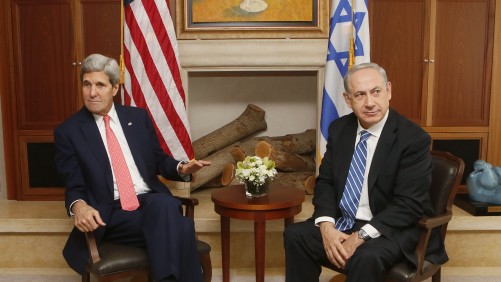
In many ways, the most recent discord between Washington and Benjamin Netanyahu’s government was inevitable. It was really only a matter of time — for more reasons than just the personal tensions between Netanyahu and Barack Obama.
A deep abyss separates the two sides when it comes to their perspectives of the Middle East and the changes it has undergone in recent years.
When an Israeli official was asked about the most recent disagreements with the Obama administration, he tried to argue that the disputes were over a single specific issue, namely the Iranian nuclear program and interim negotiations with world powers.
But later in the conversation with The Times of Israel, that same source admitted that the strategy that the Americans chose to employ in the talks with Iran is consistent with the erratic policies, in Israel’s eyes, that the US government has been promoting throughout the Middle East.
In his speeches this week, US Secretary of State John Kerry tried to send a message to Netanyahu along the lines of “you can trust me” — his precise words in the Iranian context being, “We are not blind and I don’t think we’re stupid.”
The trouble is that since the Arab Spring began three years ago, the White House has displayed what seems to many in the Israeli leadership to be a worrying combination of blindness and stupidity — from its intervention in Libya, its handling of Egypt under Hosni Mubarak’s regime and then under General Abdel-Fattah el-Sissi, and its insistence on a settlement construction freeze in the West Bank at the beginning of Obama’s first term, to its decision not to act in Syria, despite ultimately making significant progress in dismantling Damascus’s chemical weapons.
For many in Jerusalem, the Syrian issue perfectly demonstrates the White House’s erratic policies in the region. The Assad regime ordered its forces to use chemical weapons against civilian populations, and the entire Arab world — including the Syrian opposition — expected American forces to strike back at Damascus. But then came Washington’s glorious capitulation.
That last-minute stammer, that indecision, may have had positive implications as far as dismantling Syria’s chemical weapons arsenal was concerned (mostly thanks to Russia’s intervention), but it had a negative impact on the US’s standing among moderate Sunni Arab countries in the region.
In addition, it intensified Jerusalem’s skepticism over Washington’s ability and willingness to take military action against Iran if the latter chooses to continue marching toward the bomb. The bottom line is that while the outcome of Washington’s strategies in Syria may turn out to be positive, the manner in which this strategy was devised has caused the decision makers in Tel Aviv and Jerusalem to think twice before accepting Kerry’s appeal to Israel to trust America.








The Times of Israel Community.