

Tracking down a musical witness to the day a savior was murdered
James Inverne traces a journey back 50 years, when a conductor, plunged into mourning, found a eulogy for John F. Kennedy
 Add ToI as a Preferred Source on Google
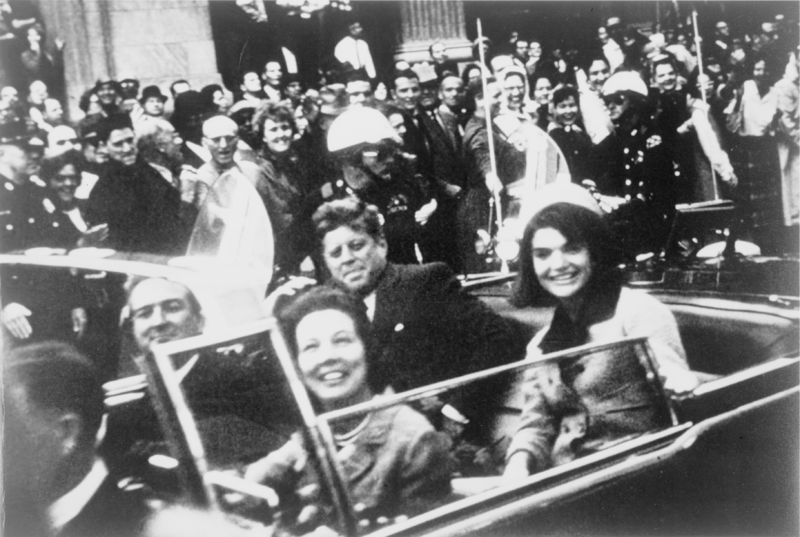
New York had a pregnant, slightly strained feel this week, as the entire city seemed to stretch its neck towards the week’s end and its two attendant great events. Thanksgiving was the reason the shops were packed and the roads were jammed. But first, and I think a bit nervously, Americans were waiting for a day of memorial, a day which, even five decades on, brings its sense of shell-shock: November 22, the fiftieth anniversary of the killing of JFK.
For me, that momentous anniversary has already been a journey, and I am at a different vantage point from where I was six months ago.
Back then, I was at home in the UK. One morning at 2 a.m., I was doing the washing up, listening to an old radio program about, of all things, the sci-fi series “Doctor Who” on the BBC iPlayer. Out of nowhere and more or less irrelevant to the program itself, a sound clip was played from the day that Kennedy was murdered.
It featured the famous conductor Erich Leinsdorf at a Boston Symphony Orchestra matinee, announcing from the stage the death of the president and a change in the scheduled concert; they will now play the funeral march from Beethoven’s Eroica Symphony. The audience screams.
It remains one of the most chilling pieces of radio footage I have ever heard. I woke up my sleeping wife and played it to her. And that’s where the obsession began. I resolved to find someone who was with the orchestra that long-ago night and hear their testimony, to preserve for posterity the report of someone intimately involved.
http://www.youtube.com/watch?v=IVNKNz-lc6k
I suppose in hindsight this journey around the death of a president who was never my president, and a concert in a country that was never my country, might have been a personal quest for closure. Was it at some level about the analogous death of Yitzhak Rabin, the site of whose killing in Tel Aviv I found myself visiting only last week, days before my JFK article was published in the US? Was it to do with the too-early death of my own mother, a decade ago this year? Both of these things, and more.
Kennedy’s death has become a symbol for so much that is cruel and unfair and lopsided and not the way things were supposed to go. At the same time music by its very nature is fluid, irregular in shape; it binds and it pours over and across and is able to reach and touch everything. So the coming together in one quest, in one concert as it were, of this assassin’s bullet, this piercing shard of history, and the immediate balm of a symphony, became an event I felt compelled to – well, to vicariously live through.
After several false starts and with the inestimable help of the Boston Symphony Orchestra’s press team, I finally found one of the orchestra’s librarians from that night, a man who had buried his memories and his pain deep but who, through a long conversation, graciously and even bravely allowed the details to resurface. It is a unique story — one that has, in a matter of days since publication on Time.com, been viewed and shared many thousands of times over social media. This week in New York, nearly everyone I know seems to have read it.
It is remarkable that the person I managed to find was the person. Nobody else quite had his experience. Because it was he who was charged by Leinsdorf with quickly digging out the scores of the Eroica for the players, he who then had to distribute them – in full view of the audience – to the bemused players on stage, and he who had to tell each of them as he did so the tragic news that a president was dead.
But also looming large in the story was the major player, the one who, since he died in 1993, I could never reach – the conductor Erich Leinsdorf. And that’s where this story at some level becomes a Jewish story. Leinsdorf (nee Landauer) was an Austrian, one who escaped the clutches of the Third Reich by the narrowest of margins when he was appointed assistant conductor at the Metropolitan Opera House in New York. That was in 1937. Weeks after he left Austria, the Anschluss took place and Hitler arrived.
So Leinsdorf knew about assassins’ bullets. He also knew what America at its best represented and was in some ways already part of the extended Kennedy White House; it was Lyndon Johnson who had become the conductor’s principal help when he first arrived in America. So the shooting of Kennedy was for Leinsdorf part of his Jewish narrative. His savior, the savior of many of his people, had been murdered and by implication an entire philosophy of hope and salvation was under attack.
(He knew about forgiveness too, or came to. Or at least about coming to terms, to the extent that he felt able to take a job as Principal Conductor of the West Berlin Radio Symphony Orchestra in the late 1970’s.)
One wonders how much of this Jewish side of the narrative is there in Leinsdorf’s announcement from that stage, in the deliberate, histrionically muted performance of the Beethoven. As a Jew, I certainly hear all of that.
So suddenly this JFK anniversary, for me, is as much about this journey as the event itself. But then, I’m not sure it ever was just about the event itself. All of these anniversaries – Kennedy, Rabin, my mother – when they happen now, will be connected to the pursuit of a story. To a testimony and a musical experience that, somehow, bears witness across history.






The Times of Israel Community.