

After Hungary’s Orban loses, Czech FM says Prague will remain ‘advocate’ for Israel
Petr Macinka says he is reopening discussion of moving embassy to Jerusalem, no matter what EU thinks; says leftist anti-Israel feeling ‘almost a religion’ among many Europeans
 Add ToI as a Preferred Source on Google
Lazar Berman is The Times of Israel's diplomatic reporter
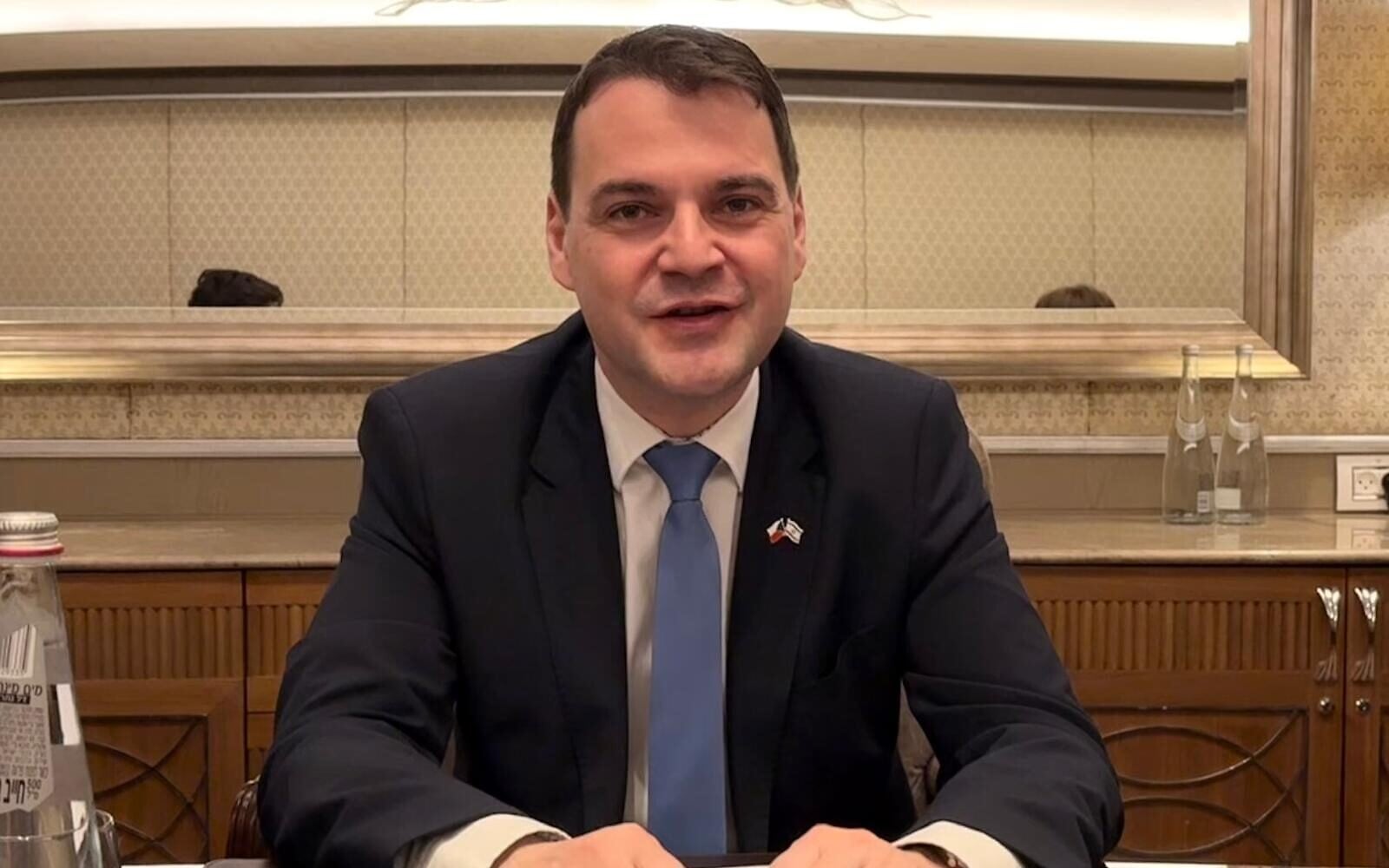
The Czech Republic has “always, always” been an advocate for Israel in the European Union and will remain so, Czech Foreign Minister Petr Macinka told The Times of Israel this week.
Macinka spoke from his hotel in Jerusalem on Tuesday, visiting days after the electoral defeat of Hungarian Prime Minister Viktor Orban, widely seen as Israel’s most reliable ally in Europe.
Though Hungary is expected to remain a solid friend of Israel, the change of leadership has brought a new focus to the Czech role in pushing back on EU countries more hostile to Israel.
Even countries that have been close to Israel have moved away from it since the Hamas-led October 7, 2023, attack and war in Gaza. On Tuesday, Italy’s right-wing Prime Minister Giorgia Meloni announced that Rome would not be renewing its defense agreement with Israel.
In September, the European Commission, the EU’s executive body, presented a proposal for sanctions on far-right Israeli ministers and a partial suspension of Israel’s association agreement with the EU over alleged humanitarian violations in Gaza. The sanctions were not immediately approved, and the effort, which requires unanimous support from the bloc’s member countries, remains frozen.
Macinka, 47, said that his country doesn’t hide its position on Israel from other EU states.
“We tell them all the time that there is a special tie between the Czech Republic and Israel,” he said. “We have the traditional, longstanding friendship for decades between the Czech Republic and Israel, so we work together with the Israeli government. And we discuss some crazy ideas that come from the European Union from time to time.”
Throughout the conflict that erupted with the October 7 attack, the Czech Republic emerged as one of Israel’s most consistent backers in forums like the United Nations and the EU — often in coordination with countries like Hungary, Austria, Germany and Romania.
Israel enjoys the support of those countries, and Macinka noted that there are also pan-European parties for whom backing Israel is a core tenet. The ruling Czech ANO 2011 party is a member of the Patriots for Europe, a grouping of right-wing and far-right parties.
“All of them, they have a quite strong position that’s very positive to Israel,” he said. “There is a power that understands Israel, that understands the situation, and understands the ideology that comes from the European Union.”
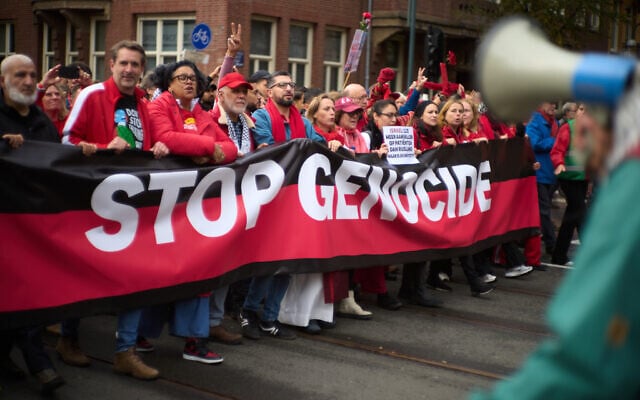
Macinka blamed hostility to Israel in Europe on a “leftist ideology, almost a religion.”
“It is about the political correctness,” he said. “It is about hypertrophied human rights-ism. They are, on one hand, politically correct, but on the other hand, every sentence is finished with the ‘Free Palestine.'”
Calling it “a new kind of antisemitism,” Macinka said that pro-Palestinian Europeans “don’t want to understand Israel.”
At the same time, he predicted that many naive young university students would eventually grow out of their left-wing positions.
“I think it’s more or less stupid. These people, they don’t understand the world,” he said. “When they get older, they will realize the real world.”
Plans to move the embassy
Macinka said that he is reopening a discussion on moving the Czech embassy to Jerusalem.
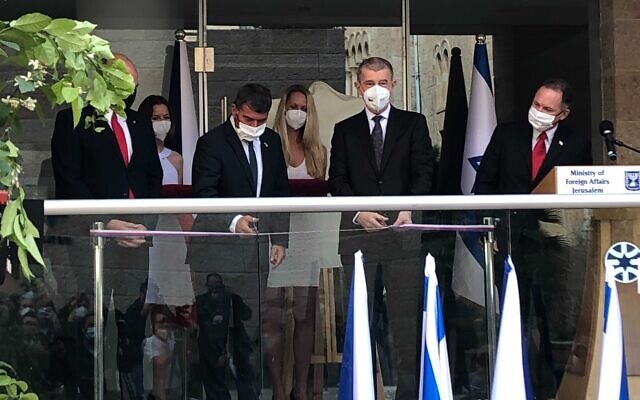
Prague opened a diplomatic office in Jerusalem in 2021, a step that drew protests from the Palestinian Authority and the Arab League. After the October 7 attack, then-prime minister Petr Fiala said the embassy move to Jerusalem from Tel Aviv could come in a matter of months, but backed off last May.
“Let’s make it clear: The Czech Republic will move the embassy, because it is right, the question is not if but when,” Fiala told a hearing in the upper house of the Czech parliament. “Let’s be a little patient, but at the same time ready to make this step as soon as the right moment arrives.”
“Now the discussion is opened, and I hope that one day we will have our embassy in Jerusalem,” he said, “and I hope that not only us but many other countries should have their embassies in Jerusalem.”
I don’t care about the European Union in this respect.
The Czech Republic would be the second NATO country to move its embassy to Jerusalem after the United States, which did so in 2018 under the first Donald Trump administration. It would be the first European Union state to move its embassy.
“I don’t care about the European Union in this respect,” said Macinka.
Foreign Minister Petr Macinka’s foreign trip begins in Israel on Yom HaShoah, the day of remembrance for the victims of the Holocaust.Following the morning moment of silence, he honored the victims at Yad Vashem in Jerusalem together with his Israeli counterpart Gideon Sa’ar. pic.twitter.com/Xn9Ls2Ys7t
— Czech Ministry of Foreign Affairs (@CzechMFA) April 14, 2026
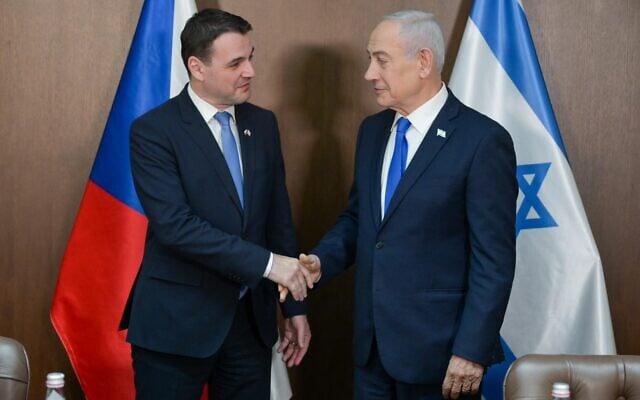
Macinka met with Prime Minister Benjamin Netanyahu, President Isaac Herzog and Foreign Minister Gideon Sa’ar during his one-day visit on Holocaust Memorial Day, which included a stop at Yad Vashem and the site of a deadly Iranian missile strike in Beit Shemesh.
Trying to open the Strait of Hormuz
Prague, he said, is open to taking part in a multilateral effort to reopen the Strait of Hormuz.
Iran, in response to the US-Israeli bombing campaign that started on February 28, effectively blocked the flow of vessels through the critical strait, through which one-fifth of global oil and gas supplies flow.
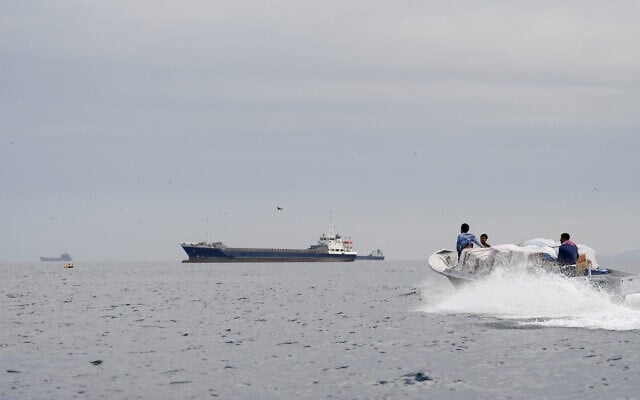
A US blockade of Iranian ports began on Wednesday, during a ceasefire in the war.
“For the Czech Republic, the Strait of Hormuz is extremely important,” said Macinka. Iran’s closure of the waterway “has a serious impact not only in this region but also on our country and all countries in Europe. So it is our interest to do something, to join something.”
The Czech contribution would be mostly symbolic, as the landlocked central European country doesn’t have a navy.
He expressed support for the British-French initiative that will bring countries together to discuss a potential future multinational mission to keep the strait open.
Despite US President Donald Trump escalating his verbal attacks on NATO, Macinka said he wasn’t worried about the transatlantic alliance falling apart.
“The Americans are not leaving NATO,” he said. “They are the strategic power in NATO. Of course, Europe should learn how to take care of itself.”
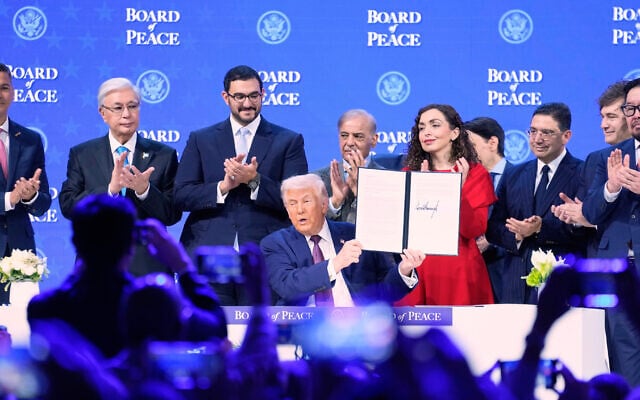
He also said that Prague supports Trump’s 20-point plan for Gaza, which aims to set up postwar governance and security frameworks in the Strip.
The Czech Republic is an observer on the Board of Peace, the body created by Trump to oversee his ceasefire plan for Gaza.
“This is probably the first real plan for Gaza that is realistic,” he said. “It goes far beyond just the peace. It’s quite ambitious but realistic.”
He added, “So I think this is absolutely the right approach.”



The Times of Israel Community.