

How an escape from the Nazis colored the career of Harvard’s longest-serving dean
Now retired, Michael Shinagel reflects on his family’s flight from Vienna and how he, a boy who didn’t know English until age 7, earned a PhD in literature
 Add ToI as a Preferred Source on Google
Reporter at The Times of Israel
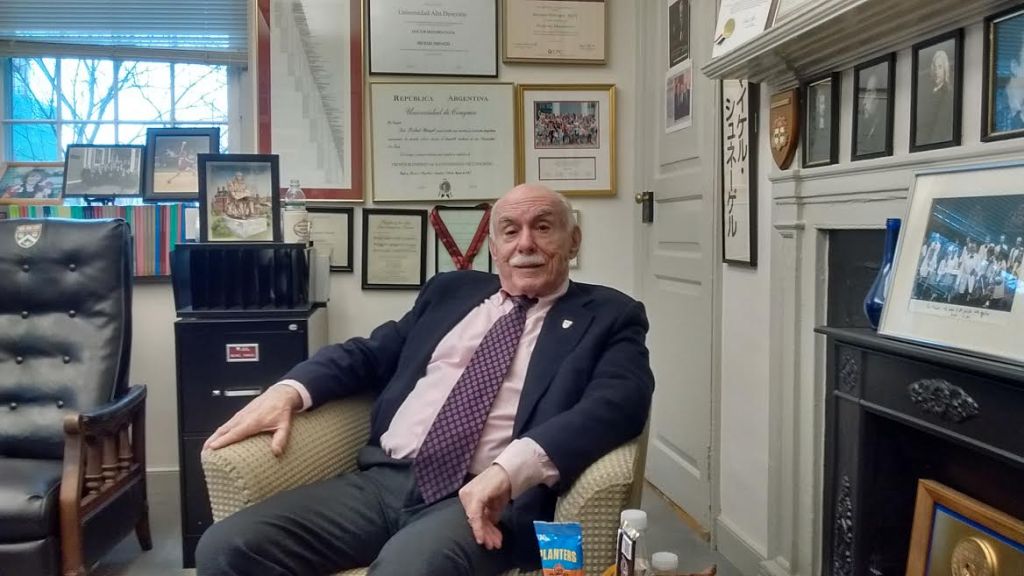
CAMBRIDGE, Massachusetts — Seventy-five years ago, a young Austrian-Jewish refugee fled Nazi-occupied Europe with his parents and older brother.
That 7-year-old boy named Michael Shinagel grew up to become the longest-serving dean in Harvard’s 380-year history. Now retired, he still teaches literature at the Division of Continuing Education, where he served as director and then dean from 1975 to 2013.
During his tenure at Harvard, he worked abroad with Israeli and Palestinian officials, including the late Shimon Peres and experienced the impact of the Israeli-Palestinian conflict at Harvard. He said he watched the campus shift from “institutionally anti-Semitic” to a more inclusive atmosphere.
But behind every step of Shinagel’s life was his awareness of his escape from Hitler.
“My formative years were years of trauma and anxiety,” he told The Times of Israel during an interview at his Harvard office. “I blocked [out] almost everything. There are snippets — antiaircraft [fire] against RAF bombing, we’d go in the basement for safety… My brother and I would go in the street after an air raid and pick up warm cartridges.
“I went through many years of psychiatry, attempts at hypnotherapy. I couldn’t open the closet in my childhood. A psychiatrist told me, ‘The reason the closet is locked is to protect you.’”
In an attempt to open that locked door, Shinagel has journeyed back to his boyhood apartment in Vienna, and has read — and discussed — Holocaust literature.
‘I went through many years of psychiatry, attempts at hypnotherapy’
This year, Shinagel penned his own Holocaust memoir, “Holocaust Survivor to Harvard Dean: Memoirs of a Refugee’s Progress.”
“[As] a Holocaust survivor, I have a kind of moral responsibility to bear witness,” he said.
He expressed a hope that the book, self-published through Xlibris, would represent “a statement about my name and what it stood for.”
Shinagel was born in Vienna on April 21, 1934 to Emmanuel and Lilly (Hillel) Shinagel. Emmanuel Shinagel immigrated to Vienna from Gorlice, a Jewish community in Poland. Lilly Hillel was the daughter of a rabbi of a large Jewish community in Leipnik, Czechoslovakia.
‘[As] a Holocaust survivor, I have a kind of moral responsibility to bear witness’
Shinagel described Vienna as “a magnet for people in Europe, and particularly Jews.” He said that while Jews constituted a minority of the population, “the cultural and professional elite in Vienna were predominantly Jewish,” citing Sigmund Freud, Ludwig Wittgenstein and Gustav Mahler.
But, he said, “the Viennese were notoriously anti-Semitic.”
The tensions increased on March 12, 1938, when Nazi Germany annexed Austria in the Anschluss.
“My father had the foresight to see we had to get out once the Anschluss came,” Shinagel said. “He got us out before Kristallnacht.”
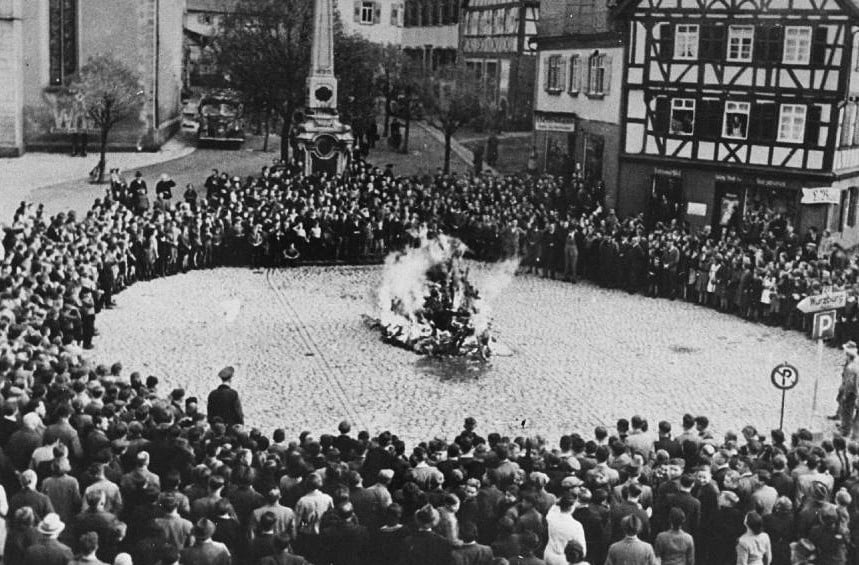
Emmanuel Shinagel melted down 24-karat Austrian currency into cigarette cases sewn into clothing.
“We lived on that for three years, selling cases,” Shinagel said.
The family followed a circuitous route from Austria to Czechoslovakia to Belgium to France. In Le Havre, they had plans to leave for Martinique on May 12, 1940. Two days before their scheduled departure, the German Blitzkrieg attacked the lowlands.
“My father had to report to the police because he was an alien from Austria,” Shinagel said. “He disappeared.”
Postcards from the edge
Trying to locate her husband, Shinagel’s mother sent him a postcard through the International Red Cross.
“The Belgian authorities rounded up people, mostly Jews, from Austria and other parts, and shipped them by cattle car to Perpignan [in France],” Shinagel said. “There was a camp from the Spanish Civil War for refugees from Spain coming into France. It was where he had been.”
‘It was a very disturbing image, to be at the camp, a little kid, six years old, my father behind barbed wire’
The Nazis granted permission to the Shinagels to see him.
“It was a very disturbing image, to be at the camp, a little kid, six years old, my father behind barbed wire, in short pants and an undershirt,” Shinagel said. “I was asked to throw him a candy bar, like in the zoo, going to feed the animals.”
Emmanuel Shinagel was allowed to leave the camp after his wife convinced the authorities that he was a Soviet citizen with US immigration papers (the Nazis were not yet at war with the Soviet Union). And the family was allowed to leave Europe via Marseille, aboard the Vichy French ship the Winnipeg, bound for Martinique.
Shinagel credits Hiram Bingham IV — the American attaché in Marseille and the son of the discoverer of Machu Picchu — with saving his and his family’s lives.
“Contrary to State Department orders, he gave visas to Jews,” Shinagel said. “The State Department in the US was notoriously anti-Semitic.”
Eventually, Shinagel said, “the State Department found out what he was doing and shipped him to Buenos Aires.”
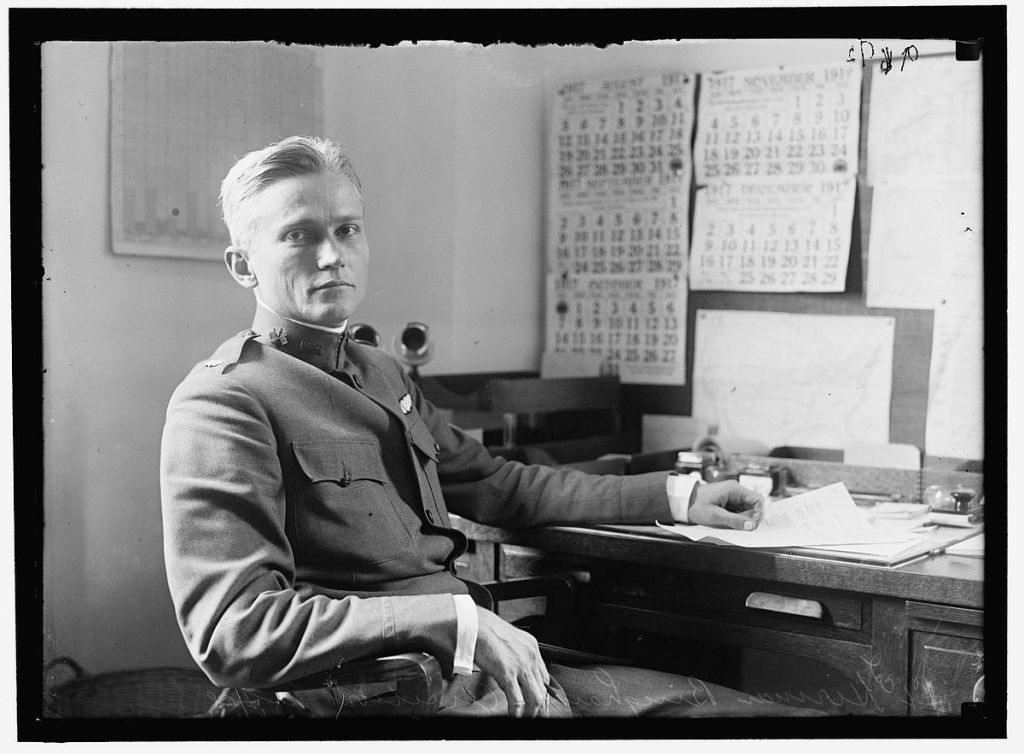
Bingham had provided visas to Marc Chagall and the brother of Thomas Mann, saving “thousands of Jewish lives, my family included, because of his kindness,” Shinagel said.
(Years later, Bingham’s granddaughter Alexandra Bingham Mezzina enrolled in Shinagel’s graduate English seminar at the Harvard Extension School. Mezzina wrote an award-winning master’s thesis, “Trauma and Telling Time in William Faulkner’s Fiction.”)
A circuitous voyage
Despite having visas, the Shinagel family’s escape was far from over — there was still one more twist.
Because England was at war with Vichy France, a British destroyer intercepted the Winnipeg halfway across the Atlantic.
“We were taken to Trinidad, a British colony, and interned in a camp for five or six weeks until getting passage to New York,” Shinagel said. “We arrived in June 1941, three years after leaving Vienna.”
Emmanuel Shinagel made a change upon his arrival in New York: The family name, previously spelled “Schinagel,” would now be ‘Shinagel.’
“My father, in his brilliance, realized that people would always have trouble with ‘Schinagel,’” Shinagel quipped. “He wanted to Americanize it. He dropped the ‘C.’”
With his family now living in the upper Manhattan neighborhood of Inwood, Michael Shinagel would begin an improbable career path leading to Harvard.
He did not know English when he arrived in the US, but eventually graduated from the Bronx High School of Science. He found opportunities at Cornell, where he attended the School of Agriculture, and at Oberlin, where he won a graduate fellowship to Harvard, taking time in between to serve with the US Army during the Korean War.
Shinagel said that “prior to World War II, Jews couldn’t get tenure at Harvard,” but that “things changed dramatically after 1945.”
Shinagel earned a PhD in English literature at Harvard, completing his dissertation, “Daniel Defoe and Middle-Class Gentility,” in 1964.
‘Prior to World War II, Jews couldn’t get tenure at Harvard’
The next summer, he visited Vienna, returning to his childhood apartment in the second floor of a two-story building at 26 Eckpergasse. The new occupants were a couple and their two teenage daughters.
“When the parents arrived, they feared I had come to reclaim artifacts that might have been left behind, but I reassured them that I was just trying to reconnect with my childhood in Vienna,” Shinagel wrote in a 2008 essay for “The Hidden Child,” a newsletter published by the Hidden Children Foundation under the auspices of the Anti-Defamation League.
The family invited Shinagel to meet a neighbor across the hall, “a bald, elderly man, who looked like the actor Donald Pleasence,” he wrote. “[He] spoke of my parents, and the visit on the whole was cordial.”
After coming back to the US, Shinagel visited his mother in New York.
“When I mentioned the neighbor, she spat on the floor and angrily told me how she used to cook chicken soup and bake cookies to share with this neighbor, but how after the Anschluss he showed up in a Nazi uniform,” Shinagel wrote.
For himself, now a married father of two, he felt that his visit to his childhood home “was significant, an exorcism,” he wrote.
The changing face of Harvard
Shinagel taught at Cornell and then Union College before returning to Harvard in 1975 as director of continuing education. Shinagel described finalizing arrangements with then-faculty dean Henry Rosovsky, a son of Russian Jewish parents in the Free City of Danzig. Rosovsky had escaped Europe in 1940.
“We shook hands on the deal,” Shinagel recalled in his memoir. “Henry smiled and said, ‘Mazel tov!’”
In 1976, Shinagel became part of an unprecedented Harvard summer conference of senior education officials from Israel, Palestine, Iran and Turkey.
The Israeli delegates included IDF Major General Baruch Levy, with whom Shinagel said he became friendly. Levy, since retired, is the chairman of Tzevet, the Israeli war veterans’ association. He is also chairman of the board of trustees of the Galilee Institute. His brother, the late Moshe Levy, was a former IDF chief of staff.
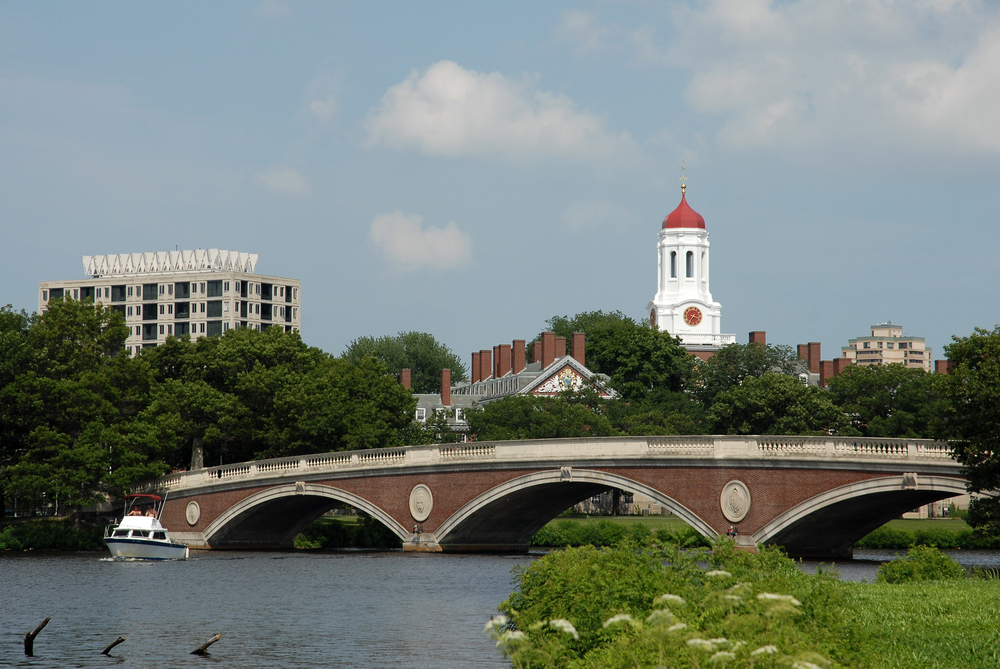
By 1986, the Israeli-Palestinian conflict was having repercussions at Harvard.
That year, in addition to being a dean, Shinagel was named the head, or master, of one of the Harvard dormitories, Quincy House. (He would serve in that role until 2001.) To give its dining hall “a cosmopolitan feel,” Shinagel hung international flags, including an Israeli flag, from the rafters.
“A group of Quincy House students [noticed the] Israeli flag,” Shinagel recalled. “They said, ‘We have a Palestinian student. It’s a poke in the eye for her.’”
Praising the empathy of the delegation, which included Jews, Shinagel removed the flag.
He subsequently received a visit from a group of Jewish students whom he described as “militant.” The students asked why he had taken the flag down, and called him anti-Semitic, he said.
‘I had relatives in Israel, I was a Holocaust survivor. The [Jewish] students were not going to be mollified’
“I had relatives in Israel, I was a Holocaust survivor,” he said. “They [the group] were not going to be mollified.”
In more recent decades, Shinagel has worked to foster peace in the Middle East. His connection with Levy resulted in an opportunity at the Peres Center for Peace in 1996.
“[Levy] said, ‘Come on over and teach in Israel,’” Shinagel recalled. “It went very well.”
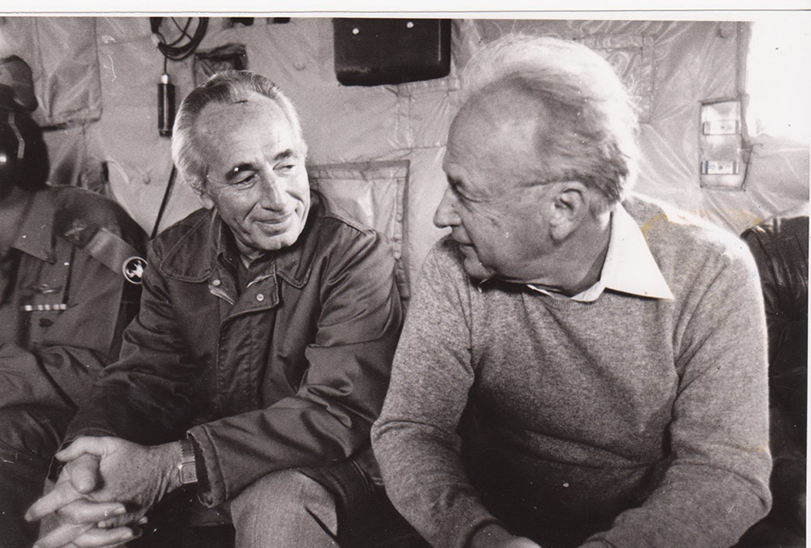
While in Israel, Shinagel met Peres, the former president and prime minister.
“He was a statesman,” Shinagel said. “When he addressed the Palestinians, he spoke like a teacher: ‘Look, we want to have a peaceful coexistence. The way you succeed is, you privatize for peace.’ It was very good sense.”
Shinagel also taught at the Galilee Institute, at sessions with African and Southeast Asian educators.
“By then, the Jordanians and Palestinians were not allowed to join,” he said. “They feared for their lives.”
Shinagel taught in Israel “year after year for a 20-year period,” he said.
He lamented the current situation between Israel and the Palestinians.
“Unfortunately, all the promise and hopefulness we experienced 20 years ago, we see receding,” he said.
He added, “A book I have at home by Lawrence Langer [“The Holocaust and the Literary Imagination”] discusses authors like Elie Wiesel and Jerzy Kosinski and Primo Levi… I read that the books that stand out and become classics are books that talk about a common theme. Not ‘us versus them,’ but ‘what do we learn from the Holocaust?’
“Unfortunately, the Holocaust affected people in ways, very profound ways, so people like Netanyahu can never feel secure with a perceived enemy or potential enemy. They’ll never be able to make peace,” he said.
Perhaps writing his memoirs is an attempt for Shinagel to make peace with his own past.
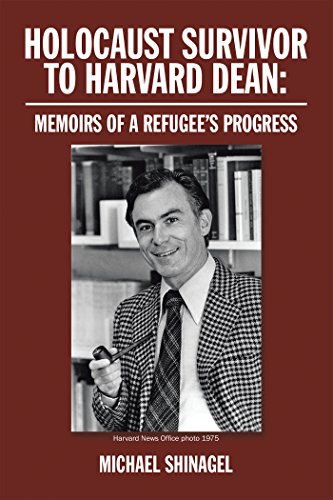
In addition to describing the ordeals of his childhood, the book addresses some of his rockier moments as an adult. His first two marriages ended in divorce. His third and current wife is Marjorie North; they were married in 1995.
“I’m not a perfect man by any means,” he said. “I’m not a religious Jew. I’m a religious person. I’ve had a good life, I think. I care about the right things, I’m a good person. It’s something worth saying.”
He dedicated the book to his extended family, “whoever and wherever they may be,” he wrote, adding, “Shalom.”
“Here I am, a Holocaust survivor, and I’ve never had a sense of an extended family,” he said.
Many members of his mother’s family died in Theresienstadt; many members of his father’s family also died in concentration camps, he said.
“I envy people with siblings, aunts, uncles, cousins,” he said. “My wife’s family, at Thanksgiving, had 20 people, 19 [were] all blood relatives. I’m the outsider. I feel that.”



The Times of Israel Community.