

Israel reportedly plans to monitor Rafah Border Crossing, as its reopening nears
Hebrew media says Israel will operate remote surveillance systems and have advance approval of travelers’ information; IDF to deploy near gate of Gaza’s border with Egypt
 Add ToI as a Preferred Source on Google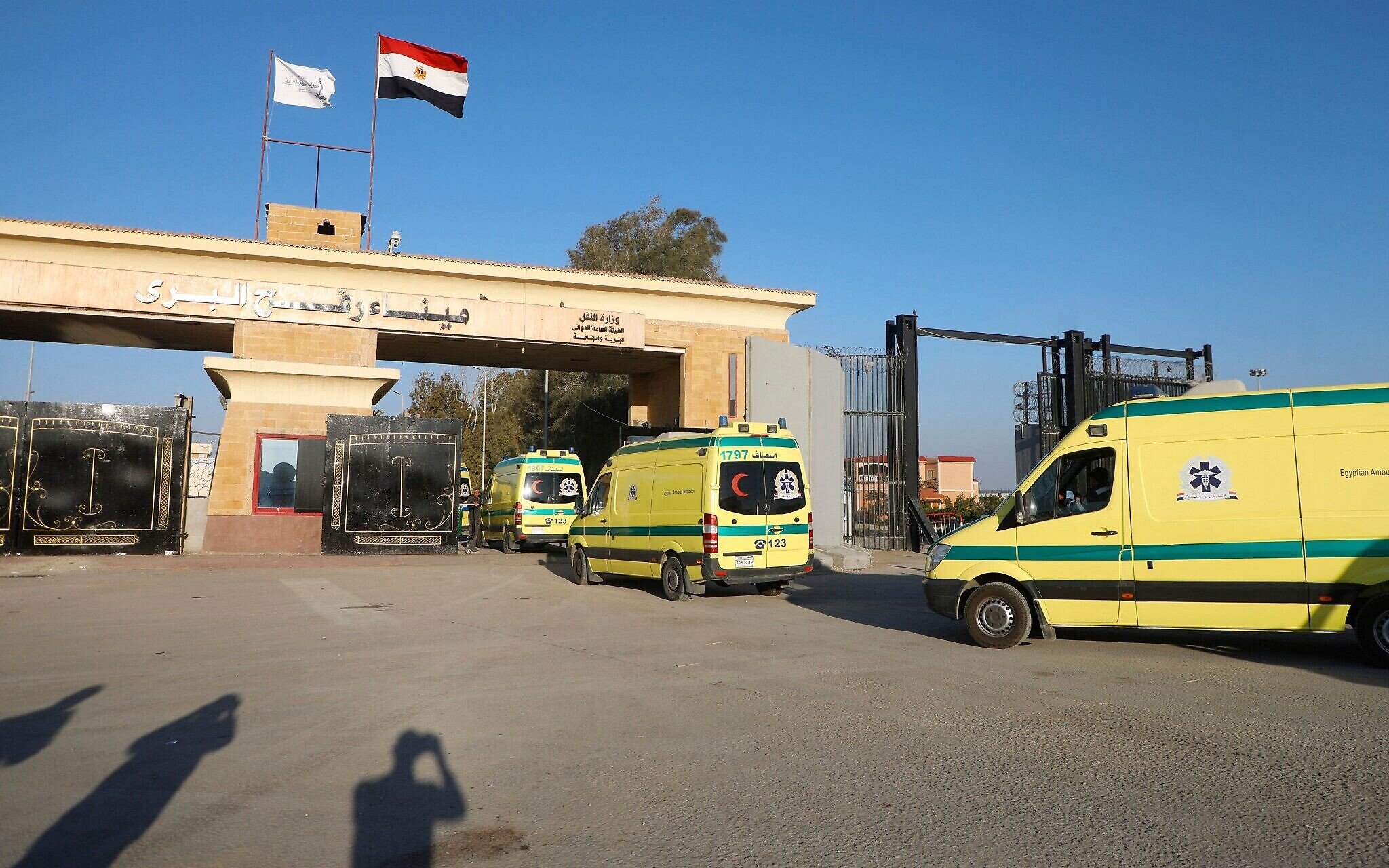
Israel will reportedly conduct significant oversight of the Rafah Border Crossing, even if it buckles to international demands that the gate between Egypt and Gaza fully reopen next week.
Israel will operate a remote surveillance system at the crossing, be in charge of granting advanced approval to travelers coming in and out of the Gaza Strip, and be able to scan any computers or other electronic devices passing through, the Kan public broadcaster reported on Thursday.
While the Israel Defense Forces will not be physically present at the crossing, Israeli troops will be deployed nearby and operate their own checkpoint aimed at preventing weapons smuggling.
The crossing itself will be operated by officers from the European Union Border Assistance Mission, founded in 2005 to monitor the crossing, along with uninformed members of the Palestinian Authority’s intelligence service, Kan said. The network noted that the same framework was used during the previous Israel-Hamas ceasefire in January 2025. Israel shuttered the crossing around two months later, and it has remained closed since.
Israel offered to reopen the crossing late last year, but only for Gazans to exit, further raising fears in the Arab world that Jerusalem was trying to shrink the Strip’s population. Egypt refused to comply with the one-way reopening, and the crossing has remained closed, in violation of US President Donald Trump’s 20-point plan for ending the Gaza war. That document states that the crossing was to immediately reopen under the same parameters laid out in the January 2025 ceasefire.
In recent weeks, as Trump has launched the ceasefire’s second phase and US pressure on Israel to fully reopen Rafah has intensified, Washington raised the issue with Prime Minister Benjamin Netanyahu during the latter’s visit to Florida late last month, a US official told The Times of Israel. The official added that the administration left those meetings optimistic that the crossing would reopen within days — which did not happen.
PEACE IN THE MIDDLE EAST: Ali Shaath, Chief Commissioner of the National Committee for the Administration of Gaza, thanks President Trump for his leadership, announces the reopening of the Rafah crossing, and outlines a path toward a more prosperous future for Gaza. pic.twitter.com/1RMol3E4tE
— The White House (@WhiteHouse) January 22, 2026
On Sunday, the security cabinet reportedly decided to keep the crossing shut amid anger over the inclusion of senior representatives from Turkey and Qatar on the influential Gaza Executive Board tasked with overseeing postwar Gaza under Trump’s Board of Peace. Israel has also insisted that the reopening of Rafah be conditioned on the return of the final deceased hostage, Ran Gvili, and on Hamas giving up its weapons — two things that have not yet happened.
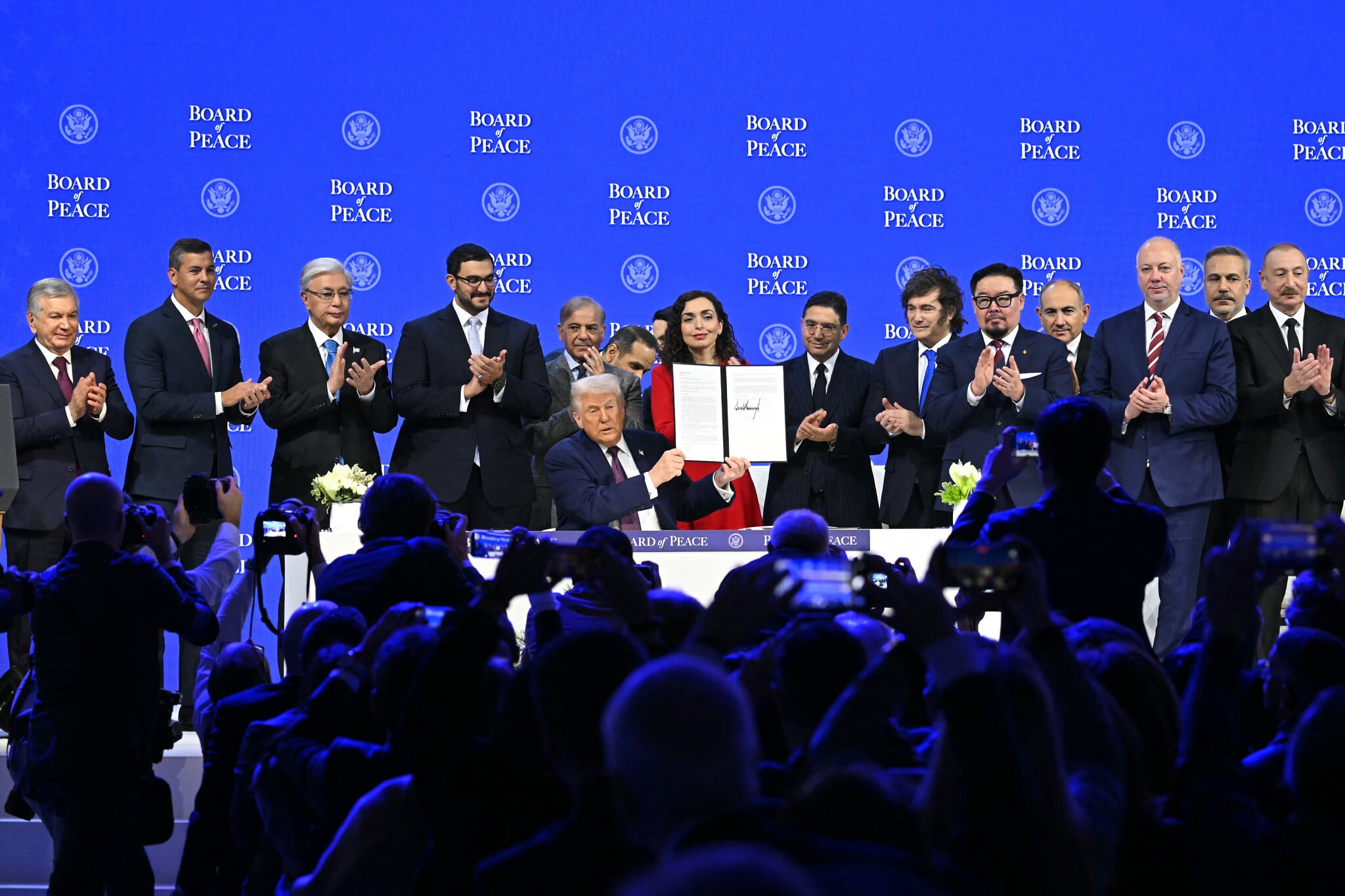
But during Thursday’s signing ceremony for the Board of Peace in Davos, Switzerland, the head of the newly established Gaza technocratic governing panel announced that Rafah would reopen in both directions next week.
Board of Peace High Representative Nickolay Mladenov subsequently announced that “an agreement has been reached” on the matter, indicating that Jerusalem had been consulted and was privately on board.
Netanyahu’s office didn’t deny the plan to reopen Rafah, issuing a statement to reporters attributed to an anonymous Israeli official who said, “A special effort is underway to return the body of the late Ran Gvili, while making full use of the information in our possession” and that the security cabinet will reopen Rafah early next week, previewing a meeting of that group whose conclusion appeared foregone.
Gaza technocrats announce budget for public sector salaries
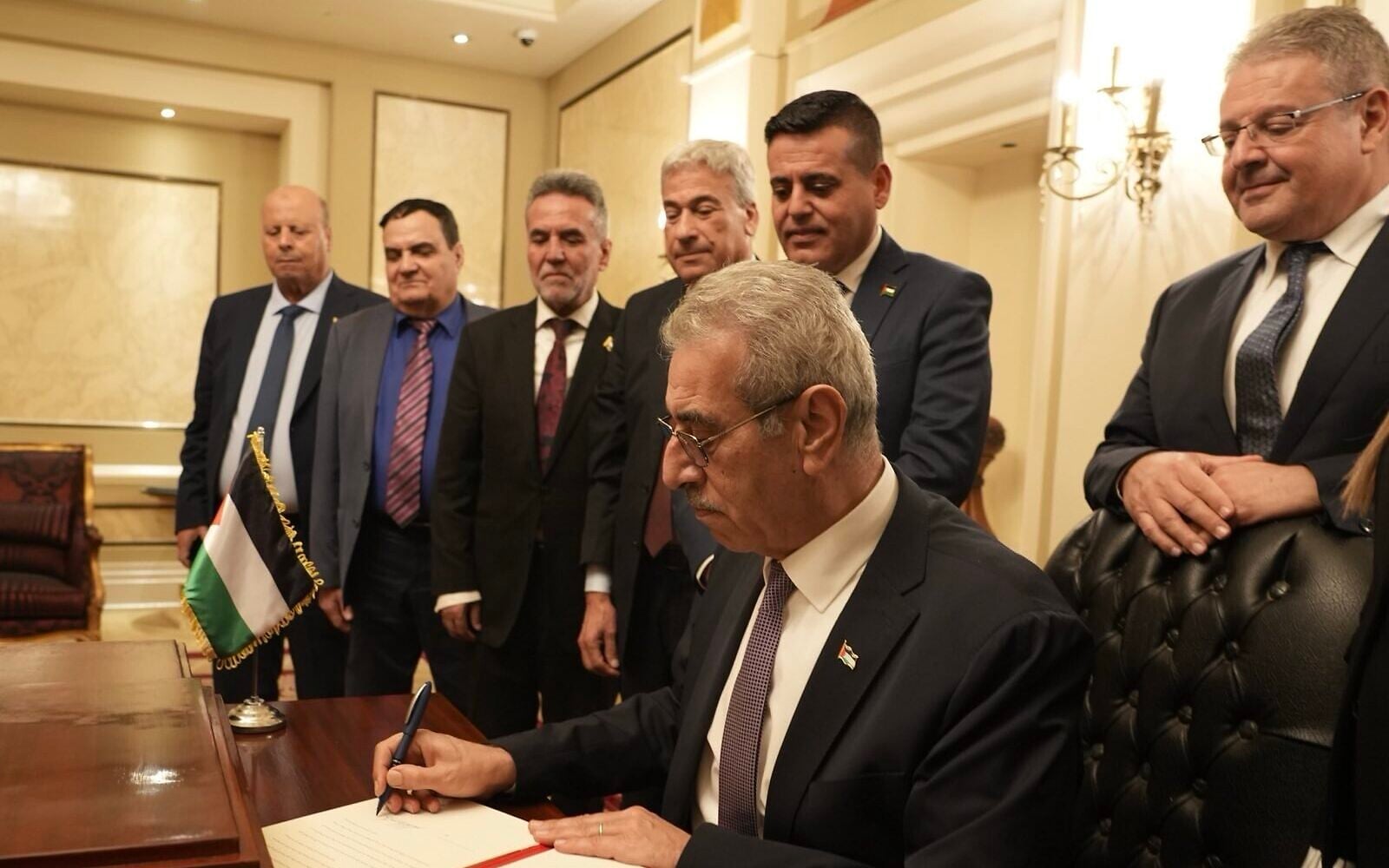
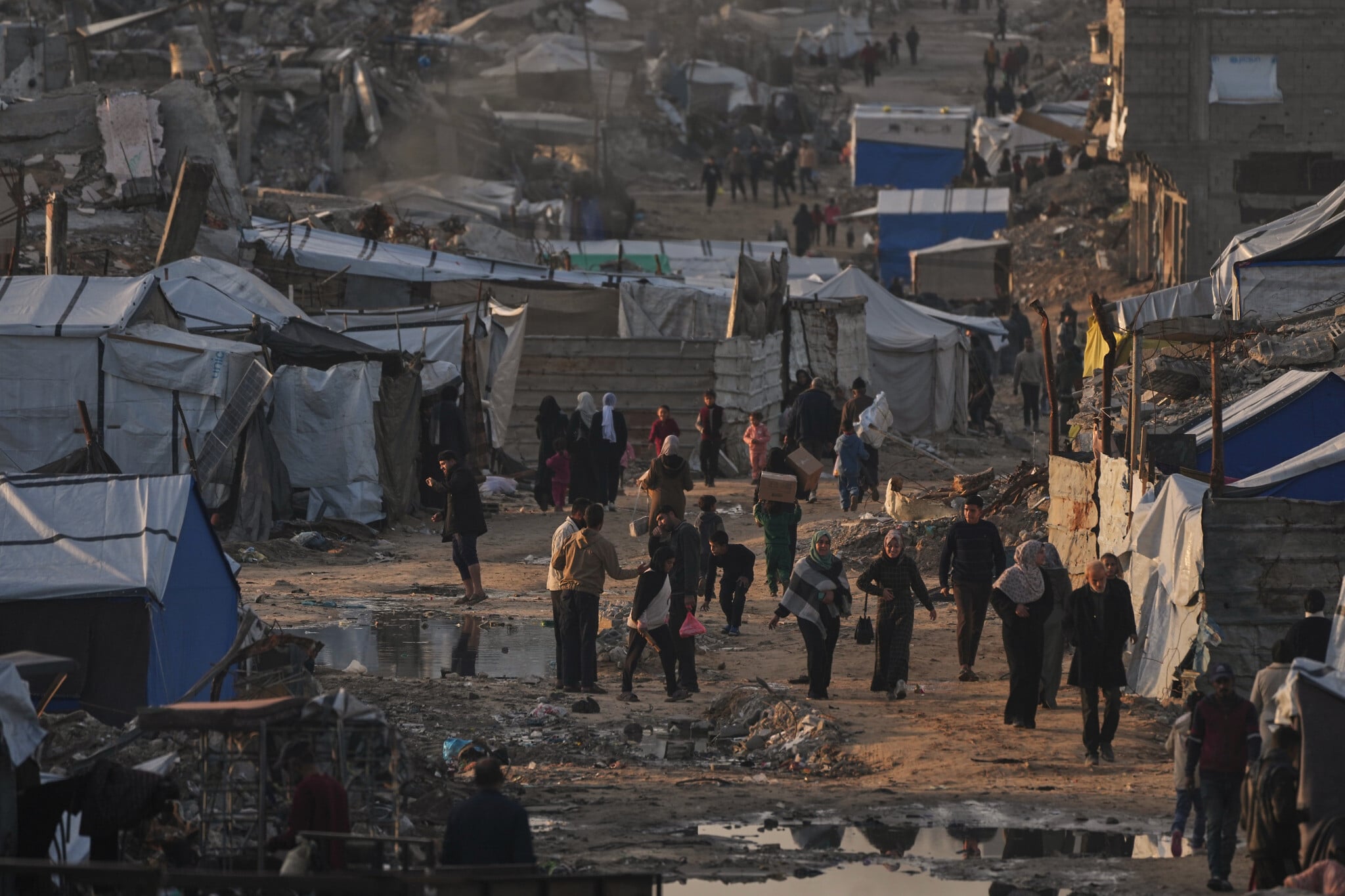
Also on Thursday, Gaza’s incoming Palestinian technocratic government, officially known as the National Committee for the Administration of Gaza (NCAG), announced that its monthly budget for the salaries of public sector employees will be $100 million.
The 12-member panel of technocrats said in a statement that it is working toward “economic stability, free from the pressures of the [Israeli] occupation.”
The statement appeared aimed at demonstrating financial transparency to the public and international community.
But the NCAG will be reliant on the US’s ability to fundraise for the Board of Peace, which is overseeing the technocratic committee’s work. Senior US adviser Jared Kushner said at Thursday’s signing ceremony that Washington will host a conference in two weeks where the contributions made by various countries will be announced. A slideshow presented by Kushner revealed that the US is seeking $25 billion in foreign investments to cover Gaza’s public sector costs.
It is also not yet clear which workers NCAG will be able to hire. Israel has, to date, been blocking the involvement of public sector workers on the Hamas or PA payroll, leaving very few other options for employees that NCAG can hire.
For its part, Channel 13 reported that Israel will, in fact, allow Palestinians who were on Hamas’s payroll to work for NCAG, leading a senior Israeli official to warn the government that the terror group will retain significant influence in Gaza under Trump’s plan.
The network did not divulge the identity of the senior Israeli official and the report was not confirmed.
Report: US, mediators hold talks on disarmament
Meanwhile, Channel 12 claimed Thursday that the US and key Gaza mediators have begun quiet talks with Hamas on a plan to gradually disarm the terror group and dismantle its military infrastructure in the Strip.
According to the report, discussions involving the US, Qatar, Turkey and Egypt have been underway for roughly two to three weeks. The plan presented to Hamas reportedly calls for the immediate destruction of heavy weapons, tunnels, arms-production sites and terror infrastructure, followed by a prolonged, phased process to collect and dismantle personal weapons held by Hamas operatives and other gunmen.
Under the proposal, those who agree to hand over their weapons would be offered either safe passage out of Gaza or integration into the security forces of the Palestinian technocratic government tasked with running the Strip, the report said. In parallel, the US would seek to establish a Palestinian police force subordinate to that technocratic administration, with exclusive authority over the use of force.
Channel 12 reported that the plan also envisions a gradual withdrawal by the IDF from positions inside Gaza, including a phased pullback from the Yellow Line that demarcates the border between the areas controlled by Hamas and Israel, contingent on progress in disarmament. Reconstruction efforts, as outlined by Kushner in Davos earlier today, would likewise be tied to compliance with the weapons handover.
The Channel 12 report came two days after a report in the Saudi Asharq Al-Awsat newspaper, which said that several senior Hamas commanders are expected to depart the Strip as part of arrangements linked to the next phase of the ceasefire and the entry of the technocratic administration.
That report — which was quickly denied by Hamas officials — said that the emerging framework is based on Hamas figures exiting Gaza in parallel with the technocratic committee assuming control, with Egyptian intelligence mediating the process. Turkey is said to be the primary destination under discussion, though no final decisions have been made and some Hamas commanders have reportedly refused to leave.
Earlier this month, a US official and two Arab diplomats told The Times of Israel that Washington had been in talks with Egypt, Qatar and Turkey, which have assured Washington that Hamas will agree to a gradual disarmament plan that would begin with the terror group giving up its heavy weaponry and the launch of a “buy-back” program for lighter weapons.
At the time, the three sources said that the goal is to begin implementing the program in the coming weeks.







The Times of Israel Community.