

 From the Liveblog of
Sunday, May 10, 2026
From the Liveblog of
Sunday, May 10, 2026
‘A modern Eichmann trial’: Lawmakers, justice minister tout imminent passage of bill to try Oct. 7 perpetrators
 Add ToI as a Preferred Source on Google
Sam Sokol is a former political correspondent at The Times of Israel. He was previously a reporter for the Jerusalem Post, Jewish Telegraphic Agency and Haaretz. He is the author of "Putin’s Hybrid War and the Jews"
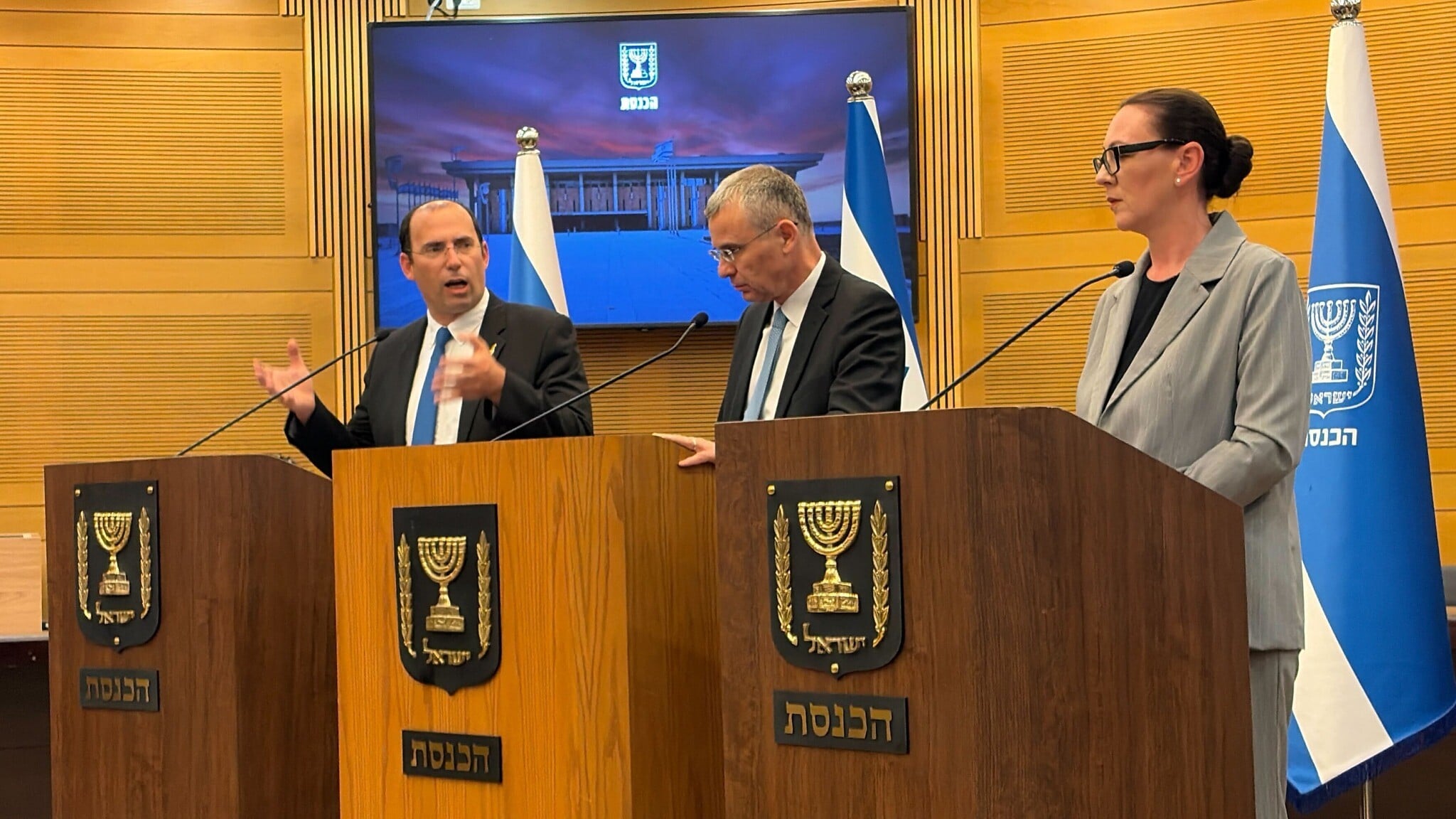
Justice Minister Yariv Levin, Knesset Constitution Law and Justice Committee chairman Simcha Rothman, and Yisrael Beytenu MK Yulia Malinovsky hold a joint press conference in the Knesset to celebrate the imminent passage of a bipartisan bill establishing a special military tribunal for trying Palestinian terrorists accused of committing atrocities during the October 7, 2023, invasion.
Addressing reporters, Levin asserts that the legislation, which is due to go through the final two readings needed for it to pass into law tomorrow evening, “ensures not only that justice is served, but also that the historical record of the horrific massacre — of the victims, the hostages, and those responsible — will endure for generations.”
“Together, we have succeeded in forging a very broad consensus in the Knesset, crossing coalition and opposition lines, so that this historic legal proceeding will take place on an agreed-upon basis and earn the trust of the entire nation,” he says.
Answering a reporter’s question, Levin argues that the bill will “ensure proceedings meet all standards so they gain international recognition and trust, especially in the United States,” while also making sure that trials are “managed efficiently so they finish within reasonable timeframes, despite being a massive event involving hundreds of defendants.”
Security forces captured approximately 300 of the invaders inside Israel following the attacks, and have held them in various detention centers since, with Israeli law enforcement and prosecutorial agencies deliberating over the last two and a half years on how best to put them on trial.
Under the legislation, the tribunal will be able to charge the assailants with all relevant crimes, including genocide under the terms of Israel’s 1950 Law for the Prevention of Genocide, harming Israeli sovereignty, causing war, assisting an enemy during a time of war, and terror charges under Israel’s 2016 law for combating terrorism.
Those convicted of genocide charges would be liable for the death penalty.
Citing the biblical verse “I will pursue my enemies and destroy them, and I will not return until they are consumed,” Rothman describes the bill as “a clear message to Israel’s enemies.”
Malinovsky, in turn, asserts that the tribunals enabled by the legislation will constitute a “modern Eichmann trial,” referring to the trial of notorious Nazi Adolf Eichmann in 1961, adding that “this law enjoys the broadest consensus seen here in years.”
Asked why the bill is necessary given that the coalition recently passed a death penalty for terrorists law, Malinovsky replies that “from the start, it was clear that the October 7 event is a separate case.” She adds that, because laws cannot be applied retroactively, her legislation had been, of necessity, based “on legislation and offenses that already existed in the statute book on October 7.”
Jeremy Sharon contributed to this report.








The Times of Israel Community.