

 From the Liveblog of
Sunday, May 10, 2026
From the Liveblog of
Sunday, May 10, 2026
Left on the sidelines, Eisenkot says Bennett-Lapid merger ‘not how you build partnerships’
 Add ToI as a Preferred Source on Google
Sam Sokol is a former political correspondent at The Times of Israel. He was previously a reporter for the Jerusalem Post, Jewish Telegraphic Agency and Haaretz. He is the author of "Putin’s Hybrid War and the Jews"
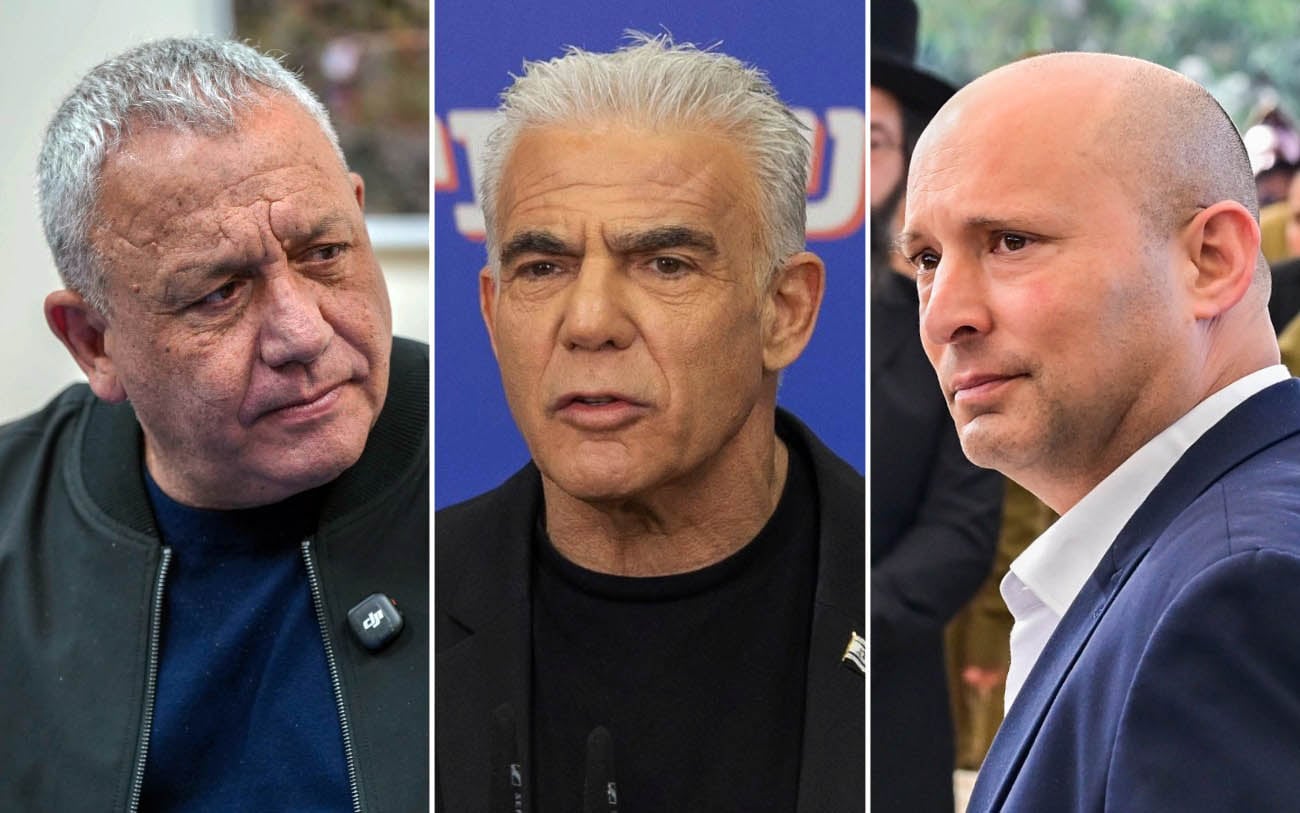
Yashar chairman Gadi Eisenkot criticizes the union of former prime minister Naftali Bennett and Opposition Leader Yair Lapid, telling party activists in a recording from a conference on Thursday that he had long pushed to create a large centrist party to challenge Prime Minister Benjamin Netanyahu, and that his opposition colleagues’ decision to go ahead and merge without him was “not how you build partnerships.”
“The main alternative I tried to promote about six months ago was organizing the camp that the media calls ‘center left,’ and which I call the ‘statesmanlike camp’ that would go with the liberal right. My thought was to reach an optimization of a structure that would bring the maximum number of votes and lead to victory. Certainly not to repeat what happened in the last elections,” Eisenkot says in a recording published by the Ynet news site.
Such a party would have included Eisenkot, Bennett, and Lapid but not Yair Golan’s The Democrats or Avigdor Liberman’s Yisrael Beytenu, in order to give voters three alternatives: a “super-party” in the center alongside left and right-wing alternatives.
However, he did not succeed and ultimately received a phone call informing him of Bennett and Lapid’s union only minutes before it was publicly announced — after which the two announced that they had “opened the door for me and were even saving the second and third spots for me,” Eisenkot continues.
“That’s not how you build partnerships. Now, I’m not insulted. I immediately picked up the phone and said let’s meet and continue to cooperate. What guides me is how we defeat this bad government and build an alternative.”
“There is no anger in me, nothing at all, and I am not taking any merger off the table. What matters is how to win,” Eisenkot adds.
Following reports that Eisenkot and Liberman were in talks on a potential merger, the two politicians announced last Thursday that they are working to expand cooperation ahead of the upcoming election, but did not confirm any plans to run on a unified slate.



The Times of Israel Community.