

Once representing hope, an EU mission in Gaza is symbol of sputtering Western vision
EUBAM unit was deployed to border crossing in preparation for Palestinian independence, but two-state vision is increasingly losing out to notion of a single, shared entity
 Add ToI as a Preferred Source on Google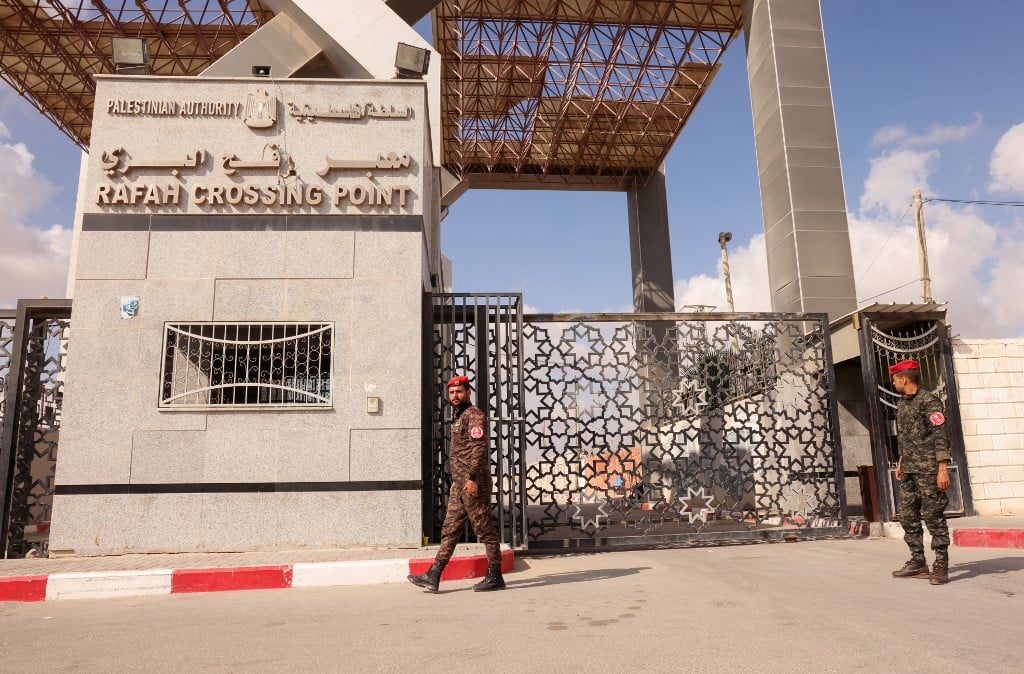
AP — It’s been 16 years since the borders of the Gaza Strip slammed shut after Hamas seized control of the territory from Fatah.
The takeover forced the European Union to withdraw monitors who had been deployed at a Gaza border crossing to help the Palestinians prepare for independence. Yet the EU has regularly renewed funding for the unit since then, most recently late last month.
The continued existence of the unit known as EUBAM is an extreme example of the West’s willingness to keep pumping hundreds of millions of dollars a year into the moribund vision of a two-state solution between Israel and the Palestinians.
Proponents say this approach remains the best chance for securing an eventual peace deal. Critics argue that opting for such costly conflict management helps keep the 56-year-old Israeli military control of other Palestinian territories in place and allows Europe and the US to avoid making the hard political decisions needed to end the conflict.
This week’s Israeli military operation in the Jenin refugee camp, a West Bank terror stronghold, following numerous deadly attacks by Palestinians from the area, and previous eruptions of violence also underscore the limits of international efforts to contain the conflict.
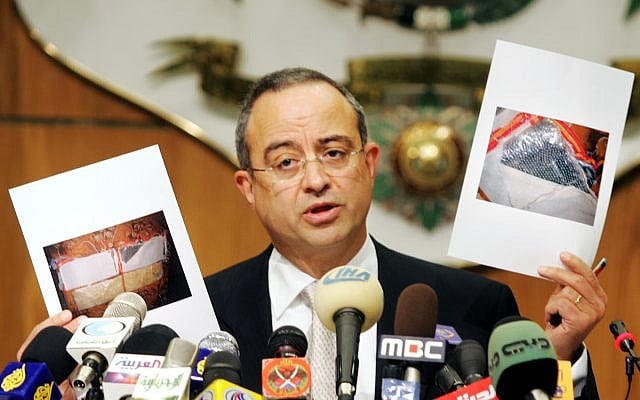
“The international community, in my view, understands the reality that the two-state solution is gone,” said Marwan Muasher, a one-time Jordanian foreign minister and former ambassador to Israel. “It does not want to acknowledge this publicly, because acknowledging it publicly is going to have to force the international community to start talking about alternatives, all of them problematic.”
Muasher, now a vice president at the Carnegie Endowment for International Peace, is unusual among his peers. The legions of diplomats and politicians who have devoted their careers to Mideast peacemaking remain committed to the two-state vision, even as the ground around them has shifted.
“I am still a believer,” said Ehud Olmert, the former Israeli prime minister who led the last round of substantive peace talks with Palestinian leaders before leaving office in 2009.
“There is no other solution. Everything else is almost inevitably a prescription for disaster,” Olmert said.
The two-state approach has guided international diplomacy since the 1993 Oslo peace accords between Israel and the Palestine Liberation Organization. The interim accords were meant to lay the groundwork for the establishment of a Palestinian state alongside Israel.
Palestinians seek the West Bank, East Jerusalem and the Gaza Strip, areas Israel captured in the 1967 Six Day War, for their state. The land between the Mediterranean and the Jordan River, made up of pre-1967 Israel and the other three area lands, is populated in roughly equal parts by Palestinians and Israeli Jews. Pollsters predict an eventual Palestinian majority because of higher birth rates.
Proponents of partition say it would create a democratic Israel with a clear Jewish majority in defined borders and enable Palestinians to realize their national aspirations.
Without partition, the default is a reality in which a shrinking Israeli minority controls a growing Palestinian majority with few political rights. Leading rights groups claim an apartheid system is already in place. Israel rejects any allegation of apartheid, saying its own Arab citizens enjoy equal rights, while its limitations on Palestinians are a necessity born of the need to protect itself from violence. Israel also notes that it granted limited autonomy to the Palestinian Authority at the height of the peace process in the 1990s and withdrew all its soldiers and settlers from Gaza in 2005.
Since the Oslo Accords 30 years ago, the US and EU have spent billions of dollars on development projects and direct aid to the Palestinian Authority to promote the two-state vision. US Secretary of State Antony Blinken and EU foreign policy chief Josep Borrell both pledged support for a partition deal.
Yet the West has little to show for its efforts. Peace initiatives led by successive US presidents were derailed by violence, Israeli settlement expansion and mutual distrust.
Hamas, shunned by the West as a terrorist group, has fought four wars against Israel and remains entrenched in Gaza. The Palestinian Authority, which governs semi-autonomous enclaves in the West Bank, is weaker than ever. Israel’s hard-right government opposes Palestinian independence and is racing to expand a settler population that has ballooned to over 700,000 people.
Preoccupied with the war in Ukraine and its rivalry with China, the Biden administration has done little more than condemn Israeli settlement plans and call for de-escalation.
Recent opinion polls show that only about one-third of Israelis and Palestinians still favor a two-state solution.
Even some members of the Palestinian Authority, which has the most to gain from independence, have begun to speak publicly about equal rights between the river and the sea, rather than two states.
“The basis for us is ending the occupation, obtaining freedom,” said Mahmoud Aloul, an aide to Palestinian Authority President Mahmoud Abbas. He said it does not matter if the conflict ends with two states or a single binational state for Israelis and Palestinians.
In academic and human rights circles, many now speak about a “one-state reality” – in which Israel wields overall control over Palestinians. Muasher said that given the current environment, it is time for the world to focus on Palestinian human rights instead of unrealistic peace plans.
Ines Abdel-Razek, executive director of the Palestine Institute for Public Diplomacy, an advocacy group, said calls for a two-state solution are “comfortable” for the international community, but insincere.
She said that if the US were serious about peace, it would force Israel to reverse its settlement enterprise. Instead, she said, Washington gives Israel billions in military aid, allows settlement groups to raise funds in the US, engages with institutions promoting the annexation of the West Bank and pushes for normalization with other Arab countries.
“The problem is the dire gap and hypocrisy between the discourse and then the policies and practices that are put in place,” she said.
US President Joe Biden has restored over $500 million in assistance to the Palestinians since entering office. The vast majority of those funds have gone to the UN agency for Palestinian refugees, but about a quarter has gone to USAID for various humanitarian and economic projects in the West Bank and Gaza.
This assistance was cut by former president Donald Trump after the Palestinian Authority refused to engage with US peace efforts. Ramallah severed ties with Washington in 2017 after Trump recognized Jerusalem as Israel’s capital.
US law bars financial assistance directly to the PA, due to Ramallah’s welfare program, which includes payments to security prisoners as well as the families of those convicted of carrying out attacks against Israelis.
Nearly a generation ago, when EUBAM was established, Palestinian statehood hopes hadn’t yet been crushed.
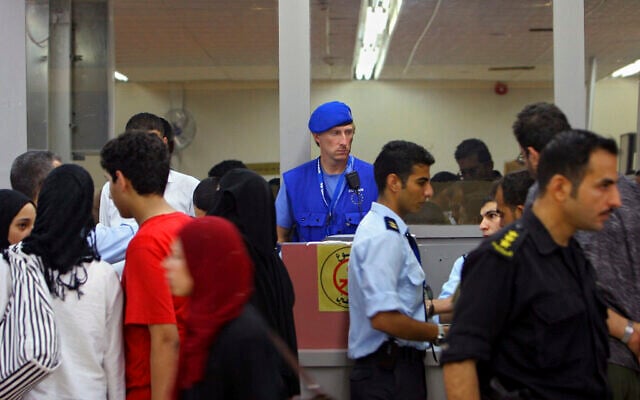
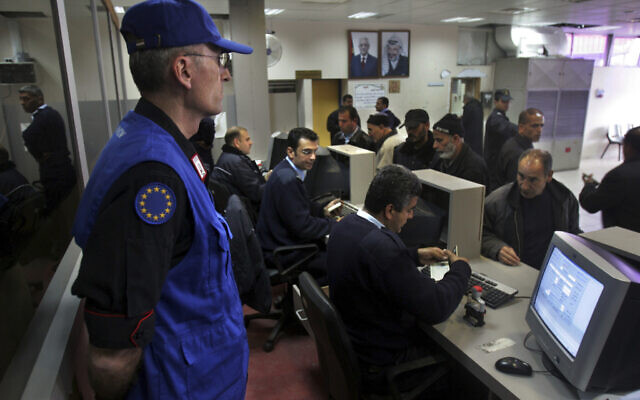
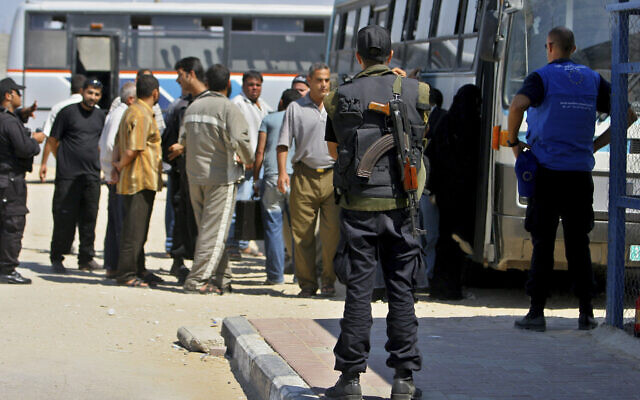
The unit was set up after Israel’s withdrawal from Gaza in 2005. The border monitors helped the Palestinian Authority run the territory’s Rafah crossing with Egypt, while coordinating with Israel. It had 130 workers and helped some 2,700 people cross the border each day.
Florin Bulgariu, the current director of EUBAM, said the initial agreement included plans to help the Palestinians develop a seaport, airport and take over additional border crossings.
Those plans came crashing down when Hamas won Palestinian parliament elections in 2006 and took control of Gaza in 2007, driving out Abbas’s forces. The EU shuttered the Rafah operation but still maintains a scaled-down office in Israel.
With a staff of 18 and a budget of 2.5 million Euros a year, EUBAM helps train Palestinian officials in the West Bank to spot counterfeit documents, use X-ray technology and stop drug and weapons smuggling.
“The idea is for the PA to be fully prepared to take over the Rafah crossing point when the time comes,” he said, acknowledging that the odds of this happening anytime soon are nonexistent. Some of this training has bolstered PA border agents in the West Bank as well, he said.
Bulgariu said he is proud of what the mission has accomplished but also frustrated “because I cannot share or implement all that I know.”
Yet he remains committed to the EU’s two-state vision. “This is the only solution that might work in the end, separate borders, everyone with his own business,” he said.
Times of Israel staff contributed to this story.







The Times of Israel Community.