

Syria to comply with WMD plan, but won’t accept Assad resignation
After UN Security Council passes resolution, PM says Damascus will cooperate with inspectors, but FM says Assad resignation not an option
 Add ToI as a Preferred Source on Google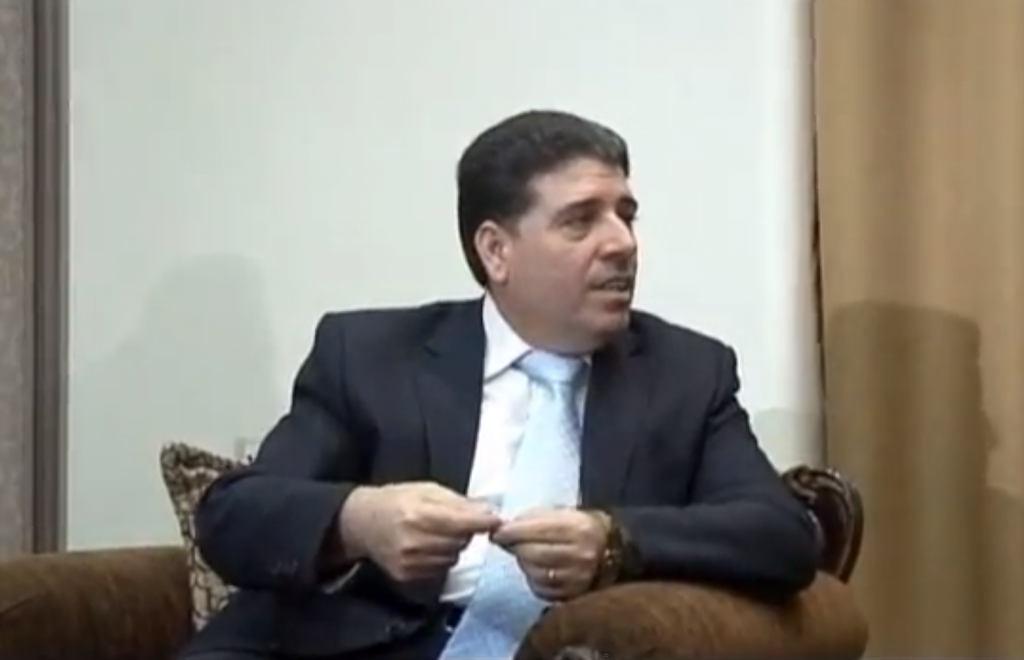
BEIRUT — Syria’s prime minister said Saturday that Damascus will fully cooperate with UN inspectors charged with destroying the country’s chemical weapons stockpile. Foreign Minister Walid Moallem Walid al-Moallem told The Associated Press, however, that the government would not accept any transition peace plan that excludes President Bashar Assad.
Al-Moallem spoke on the sidelines of the United Nations General Assembly, a day after the Security Council approved a resolution that obliges Syria’s government to comply with an international plan to destroy its chemical weapons arsenal. The resolution also endorsed the outcome of the Geneva conference between the government and the opposition in June 2012, which called for the establishment of a transitional government with full executive powers.
The Syrian opposition, which has been embroiled in a bloody conflict with Assad’s forces for two and a half years, has repeatedly said it will not take part in any transition government that includes the president.
The latest statement from al-Moallem could mean that efforts to organize a second meeting of the opposition and the government later this year in Geneva may fail.
“For the Syrian people, Bashar Assad is the elected president until mid-2014, when presidential elections will be held,” al-Moallem said. Other candidates are welcome to run under the country’s constitution, he added, stressing that only the Syrian people can choose their president, not outside governments or the opposition, which is based abroad.
Al-Moallem also repeated his government’s belief that its army is fighting terrorist elements affiliated with al-Qaeda.
“Those terrorist elements are supported by neighboring countries like Turkey and Jordan and some Arab states such as Saudi Arabia and Qatar,” al-Moallem said.
Prime Minister Wael al-Halqi’s comments Saturday came a day after the UN Security Council voted unanimously to purge Syria of its chemical weapons program.
Al-Halqi said in an interview with Lebanon’s Al Manar TV that Syria “welcomed the resolution” and “will fulfill its international duties.” He also said the government “will facilitate the work of the inspectors.”
The UN resolution passed on Friday allows the start of a mission to rid Syria’s regime of its estimated 1,000-ton chemical arsenal by mid-2014. It also calls for consequences if Syria fails to comply, but those will depend on the council passing another resolution in the event of non-compliance.
Some UN inspectors left their hotel in Damascus in one vehicle to an unknown location, according to an Associated Press photographer at the scene.
The UN said Friday its team of weapons experts currently in Syria will investigate seven sites of alleged chemical attacks in the country, four more than previously known. The announcement came hours before the UN Security Council voted unanimously to secure and destroy Syria’s chemical weapons stockpile.
The team initially visited Syria last month to investigate three alleged chemical attacks this year. But just days into the visit, the rebel-held Damascus suburb of Ghouta was hit by a chemical strike, and the inspectors turned their attention to that case. The inquiry determined that the nerve agent sarin was used in the Aug. 21 attack, but it did not assess who was behind it.
The US says more than 1,400 people were killed in the attack while activists gave a smaller number but still in the hundreds.
The UN team of investigators expects to finalize its activities in the country by Monday, a UN statement said.
On Thursday, the world’s chemical weapons watchdog adopted a US-Russian plan that lays out benchmarks and timelines for cataloguing, quarantining and ultimately destroying Syria’s chemical weapons, their precursors and delivery systems.
The Security Council resolution enshrines the plan approved by Organization for the Prohibition of Chemical Weapons, making it legally binding.
The agreement allows the start of a mission to rid Syria’s regime of its estimated 1,000-ton chemical arsenal by mid-2014, significantly accelerating a destruction timetable that often takes years to complete.
A draft of the OPCW decision obtained by The Associated Press calls for the first inspectors to be in Syria by Tuesday.









The Times of Israel Community.