

After years of enmity, Jerusalem to follow US on Cuba détente
Israel for decades was the only state supporting US bid to uphold embargo. That’ll soon be history, but resumption of diplomatic ties still distant
 Add ToI as a Preferred Source on Google
Raphael Ahren is a former diplomatic correspondent at The Times of Israel.
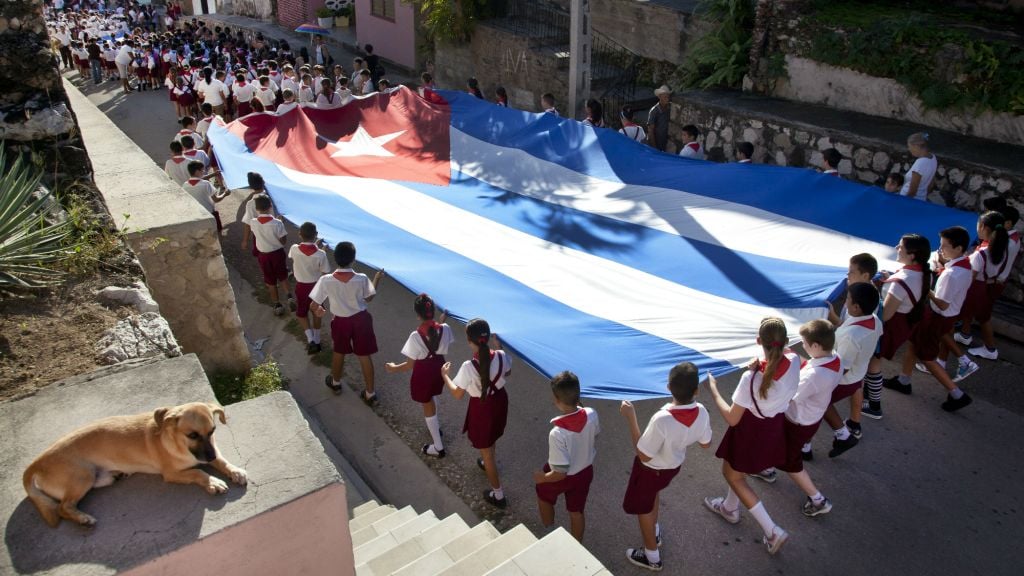
Following the lead of the United States, Israel will likely abandon its anti-Cuba policy, yet the road to a possible resumption of bilateral ties is still long, officials in Jerusalem said this week.
Israeli policymakers were surprised to learn of the dramatic détente between Washington and Havana that US President Barack Obama announced last week. Israel and the US were the only two countries in the world that persistently voted against the lifting of the more than 50-year-old American-imposed embargo against the island nation at the United Nations General Assembly. Sources in Jerusalem assume that if America drops its opposition to the annual General Assembly vote, Israel will do the same.
“Israel supported the American Cuba policy in international forums in the context of the strategic alliance between the two countries and because of Cuba’s critical line on Israel in these forums,” Foreign Ministry spokesperson Emmanuel Nahshon told The Times of Israel Monday. “In light of the change we are studying the [American] decision and stand in contact with American authorities.”
Cuba had unilaterally cut ties with Israel in 1973, not due to the Yom Kippur War — as often wrongly assumed — but because the country’s leader Fidel Castro sought the presidency that year of the Non-Aligned Movement. Relations have since seen ups and downs but mostly remained extremely bitter. In 2010, for example, Fidel Castro compared Israel’s treatment of Palestinians to the Nazi genocide of the Jews. “It would seem that the Fuehrer’s swastika is today Israel’s banner,” the then-83-year-old leader stated.
This year, he accused Israel of “genocide” in Gaza and called Operation Protective Edge a “new, repugnant form of fascism.”

In 2010, however, Fidel Castro, who had been replaced as president by his younger brother Raul four years prior, told US journalist Jeffrey Goldberg that Israel has “without a doubt” the right to exist as a Jewish state. Asked by Goldberg whether Havana would consider resuming diplomatic ties, the elder Castro replied that such things take time, but he did not outright reject the idea.
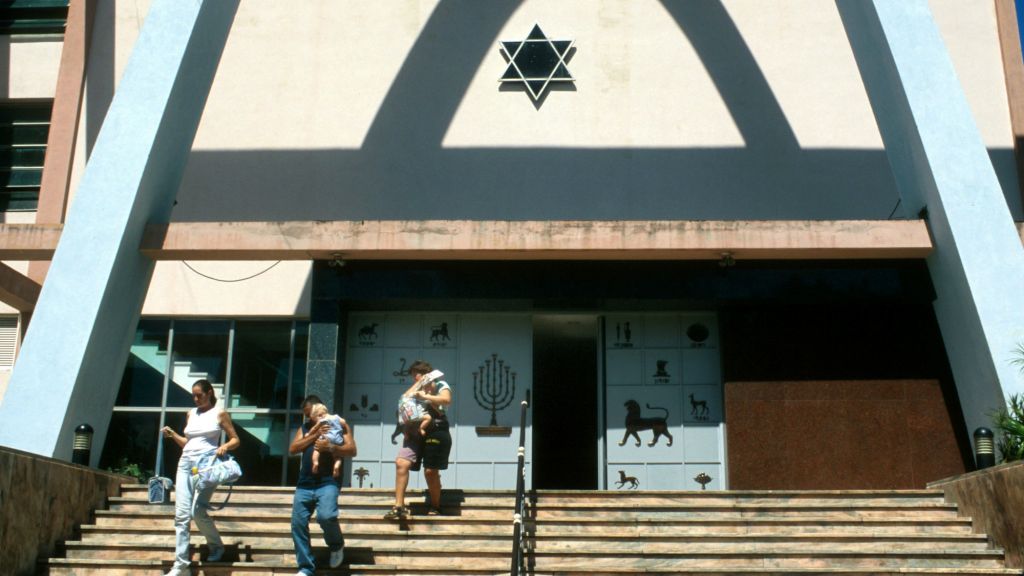
Currently, Canada represents Israel’s interests in Havana, including assisting the country’s Jewish community. Despite the lack of formal diplomatic ties, Israelis do business with Cuba — Mossad officer and former MK Rafi Eitan, for example, established several large agricultural and construction ventures there — and regularly visit as tourists. Since 2003, Cuban Jews come regularly to Israel.
On Sunday evening, senior Foreign Ministry staff discussed the American overture to Havana and its ramifications for Israel’s foreign policy. “We’re at the beginning of a long process. We still need to understand what exactly is happening in the US,” a well-placed Israeli official said, speaking on the condition of anonymity because he was not authorized to discuss the matter with the press.
Obama was known to seek a détente with Cuba, but no one in Jerusalem expected it to happen so rapidly, the official said, adding that the government now needs some time to fully understand the new situation and its implications.
There are several internal American political processes at play, the official explained. The White House announced plans to establish an embassy in Havana, but without the consent of the Republican-controlled Senate it could prove difficult, as Congress confirms every ambassadorial appointment and needs to okay the funneling of funds to update the current interest office in Havana into an embassy, the official said. “The Senate is against this move, and it’s against Obama. After the midterm elections, it’s not sure he’ll succeed in his plans” to fully rehabilitate diplomatic ties with Cuba.
‘Everyone agreed it was stupid move and had no justification but one: pleasing the US’
But if the US drops its traditional vote against the lifting of the embargo of Cuba, there is no reason why Israel would not follow suit. “Our vote on that matter was never because it’s in our interest to uphold the embargo,” the official said. “We just did it for the US.”
A senior official seconded that assessment: “It’s not so much about Cuba, but about the US,” he said.
In 1992, then deputy foreign minister Yossi Beilin asked the Foreign Ministry to review Israel’s policy to vote in favor of the embargo. “I said that the embargo is ridiculous, especially since the US recognized China and allowed it to replace Taiwan as a permanent member of the Security Council. After all, China is no more liberal than Cuba and its human rights record is even worse,” Beilin recalled this week in an article for i24News.
“There is no logic behind the Israeli vote against Cuba! No one in the room disagreed with me, and everyone agreed it was a stupid move that had no justification to it but one: pleasing the US, which had not until then given up on the embargo.”
Beilin raised the issue before the country’s leadership and received an answer he admits was convincing: “We get so much from the US and all they want from us is that we support them in the UN on Cuba. If that is the diplomatic price we must pay, it makes no sense for us to get up and announce that its only ally on the matter had suddenly moved to the other camp.”

Now that Obama decided to cancel a “ridiculous and pathetic policy,” Israel can stop voting against a resolution it in fact supported, Beilin opined. Thanking the president for liberating Israel from having to “make an idiotic vote in the UN in a bid not to anger Washington,” he lamented that Obama failed to acknowledge Israel’s longstanding lone support of America’s position in the UN. “It’s true that the US does the same for us, but we remember,” he noted.
In the early years after Cuba’s Socialist revolution in 1959, bilateral relations were actually quite friendly. In 1961, for the first time, a permanent Israeli diplomatic mission was opened in Havana, according to Hebrew University professor Margalit Bejarano.
“Cuba’s leaders, some of whom received their first lessons in communism from their Jewish friends, admired Israel’s pioneer spirit and saw the kibbutz as a model to emulate,” she wrote in Haaretz on Friday.

But as Havana grew closer to Algeria, Egypt and Yasser Arafat’s Palestine Liberation Organization, Castro’s position toward Israel deteriorated. Cuba started voting against Israel in international forums and became a staunch supporter of the Palestinian cause, yet resisted Arab pressure to cut ties with Jerusalem after the 1967 Six Day War, according to Bejarano.
In 1975, the Castro regime voted in favor of the infamous “Zionism is racism” resolution and three years later shut down the Zionist Federation of Cuba. But after the fall of Communism in the 1990s, Cuba’s relationship with Israel improved.
“After the signing of the Oslo Accords in 1993, Havana signaled a possible change in relations with Israel,” Bejarano noted. “Political developments in the Middle East and the tightening of Castro’s policy at home nipped these nascent connections in the bud, but interpersonal connections flourished: Large numbers of Israeli tourists visit Cuba, and Cuban artists and intellectuals visit Israel.”
Cuba’s dependence on Venezuelan oil and Iranian aid, paired with the fact that the US-Cuban relationship remained frozen, obstructed further rapprochement with Jerusalem. Now, Washington’s new policy toward Havana is set to start a new page in Israeli-Cuban relations, although the possible opening of a new embassy on the Caribbean island is likely still a few years away.







The Times of Israel Community.