

Iran launches massive missiles during naval drill near Strait of Hormuz
Revolutionary Guards Navy conducts exercises that state TV says aim to warn enemies that ‘any miscalculation would meet a decisive response’
 Add ToI as a Preferred Source on Google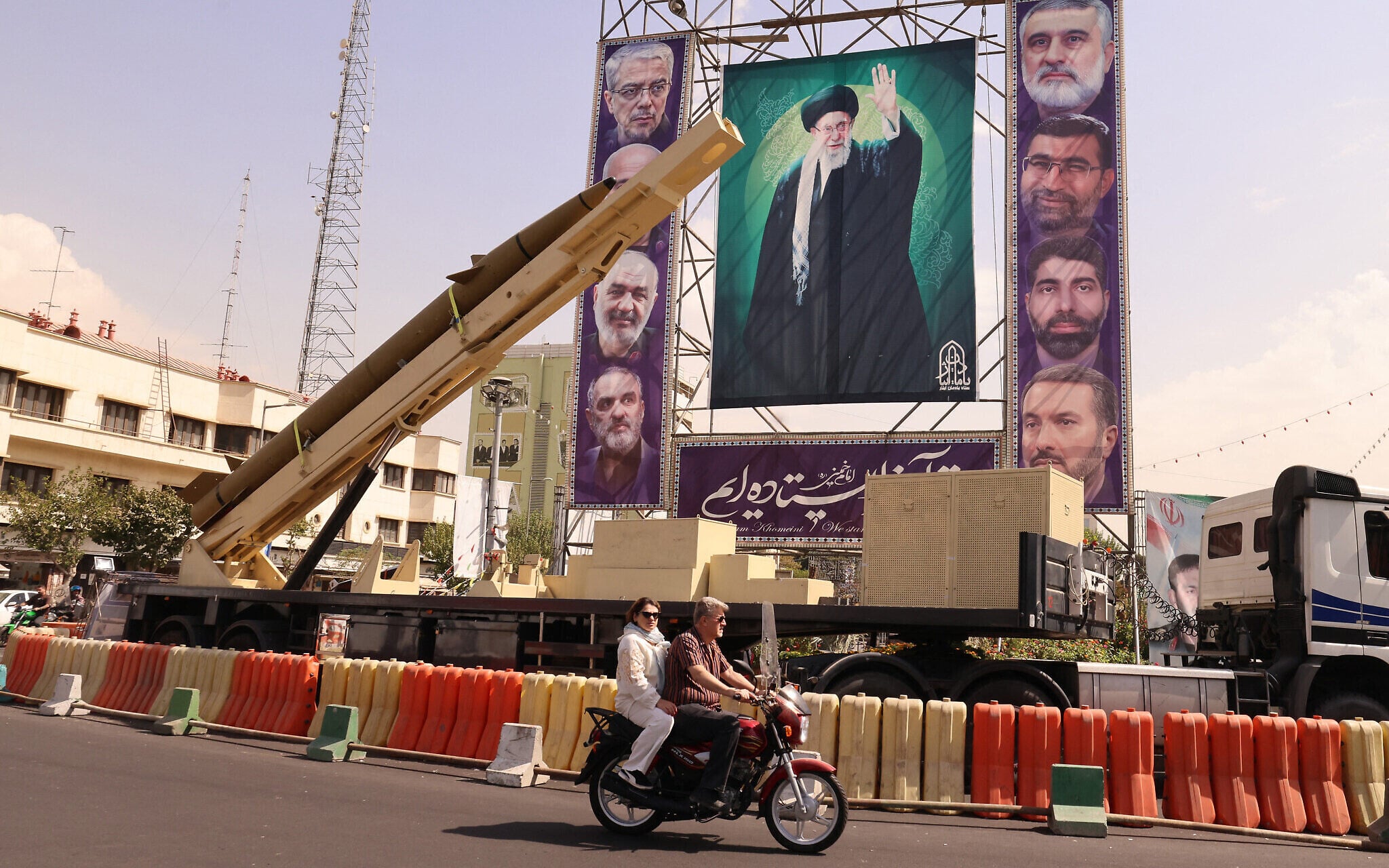
Iran launched massive missiles in the Sea of Oman and near the strategic Strait of Hormuz during the second day of a naval drill, state TV reported Friday.
The report said the paramilitary Revolutionary Guard launched the missiles from the depth of Iran’s mainland, hitting targets in the Oman Sea and neighboring area near Strait of Hormuz in a drill that began on Thursday.
It identified the missiles as cruise Qadr-110, Qadr-380 and Ghadir that have a range of up to 2,000 kilometers (1,250 miles). It said the Guard also launched a ballistic missile identified as 303, without elaborating.
TV footage showed the missiles’ launch and hitting their targets.
Drones simultaneously struck simulated enemy bases, reports said.
The drill is the second one following the Israel-Iran war in June. Since the end of the war, Iran has increasingly insisted that it is ready to counter any future Israeli attack. Iran launched its first naval drill in the area in August.
#Iran launched Qadr-110, Qadr-380, Ghadir, and the 303 missiles in the Sea of Oman and near the strategic Strait of Hormuz during the second day of a naval drill, state TV reported Friday.https://t.co/yTLvfC70rG pic.twitter.com/6KEZjkBNLW
— Jason Brodsky (@JasonMBrodsky) December 5, 2025
The IRGC Navy emphasized what it said was its heightened artificial intelligence readiness and the “unwavering spirit and resistance” of its sailors in confronting any threat.
The West sees Iran’s ballistic missiles both as a conventional military threat to regional stability and a possible delivery mechanism for nuclear weapons should Tehran develop them.
Earlier, Iran hosted what it called an anti-terrorism drill in its northwestern province of East Azerbaijan with members of the Shanghai Cooperation Organization (SCO), which, according to state Press TV, was intended to signal both “peace and friendship” to neighboring states and warn enemies that “any miscalculation would meet a decisive response.”

The land drills were the latest in a series of SCO exercises aimed at enhancing coordination among member and partner states. Saudi Arabia, Iraq, Oman and Azerbaijan also took part in the cross-border counterterrorism exercises.
The SCO, a Eurasian security and economic bloc founded in 2001 to combat terrorism, separatism and extremism, often conducts joint military exercises among its members.
The organization includes China, Russia, India, Pakistan, and several Central Asian countries, with observer and dialogue partners such as Iran, Saudi Arabia and others participating in selected operations.








The Times of Israel Community.