

Italy suffers fresh aftershock as questions of negligence arise
4.3-magnitude quake hits devastated town of Amatrice, while death toll is slightly revised down to 241
 Add ToI as a Preferred Source on Google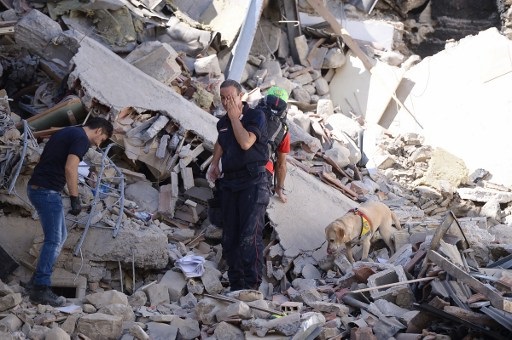
A strong aftershock with a preliminary magnitude of 4.3 hit Amatrice in Italy on Thursday, causing further damage a day after a massive earthquake killed more than 200 people in the town.
The aftershock spread panic and caused one building to partially collapse.
Civil protection officials meanwhile revised the death toll for the quake-stricken area down from 247 to 241 after one of the hard-hit areas adjusted its figures.
Fears are that many more bodies remain buried in the rubble of devastated mountain villages.
As rescuers sifted through collapsed masonry in the search for survivors, questions mounted as to why there had been so many deaths so soon after the 2009 L’Aquila disaster, exposing Italy’s vulnerability to earthquakes.
“In Amatrice alone we are already over 200 deaths,” said Sergio Pirozzi, the mayor of one of the worst-affected villages, suggesting the total number of victims could rise significantly.
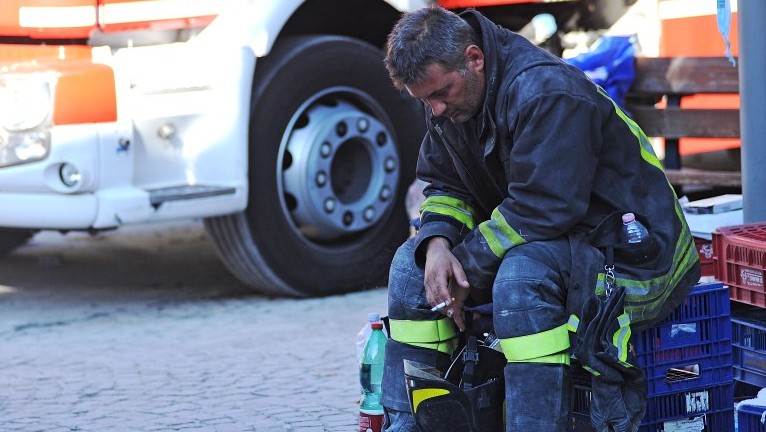
Amatrice normally has a population of around 2,500 but it was packed with visitors when the quake struck as people slept in the early hours of Wednesday.
The Red Cross began shipping in food and water supplies for homeless residents.
Among those who came to pick up emergency provisions were Maria Atrimala, 48, and her 15-year-old daughter.
“We escaped by pure luck, the stairs of the house held and we ran, blindly in the dark and dust,” she said with tears rolling down her face.
“When we got out we could hear the cries of people still trapped and we helped those we could.
“We were in L’Aquila when the earthquake struck there, and now this. We have friends, relatives that didn’t make it. What the future holds I don’t know.”
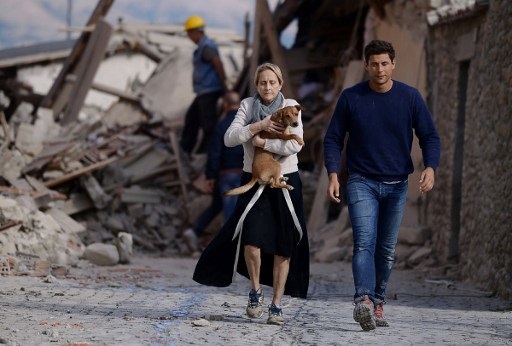
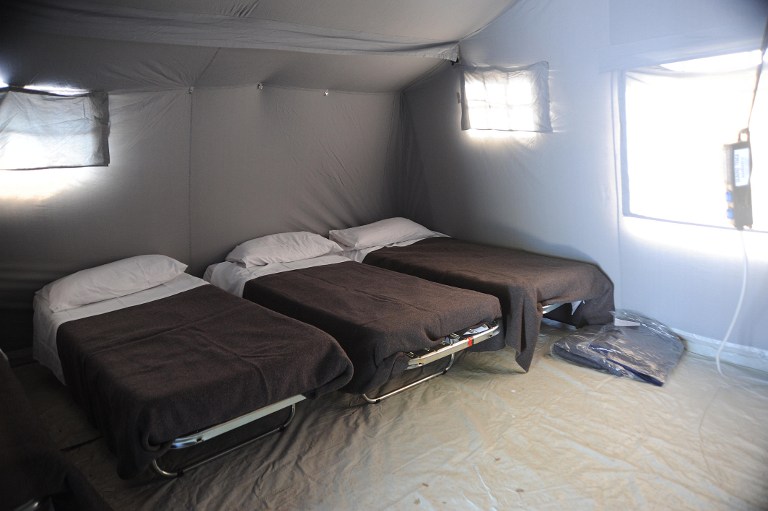
Hundreds of people spent the night sleeping in their cars, in hastily-assembled tents or as guests of families in less-affected nearby areas.
One of them, Monica, said the aftershock that rattled the area just after 5.00 am (0300 GMT) had left her numb.
“We have lost our house. So many friends and family are dead. We have lost everything, even our fear,” she said.
Mario, the father of two small boys, said he was still in shock. “We slept in the car last night, though with the quakes it was hard to sleep at all,” he said between sips of Coke.
“We’ve booked a tent for tonight. But then tomorrow, the next day?”
The extensive damage to lightly-used properties has raised the specter of some of the smaller hamlets in the region being abandoned altogether.
“If we don’t get help, l’Arquata is finished,” said Aleandro Petrucci, the mayor of Arquata del Tronto, which accounted for dozens of the confirmed deaths to date.
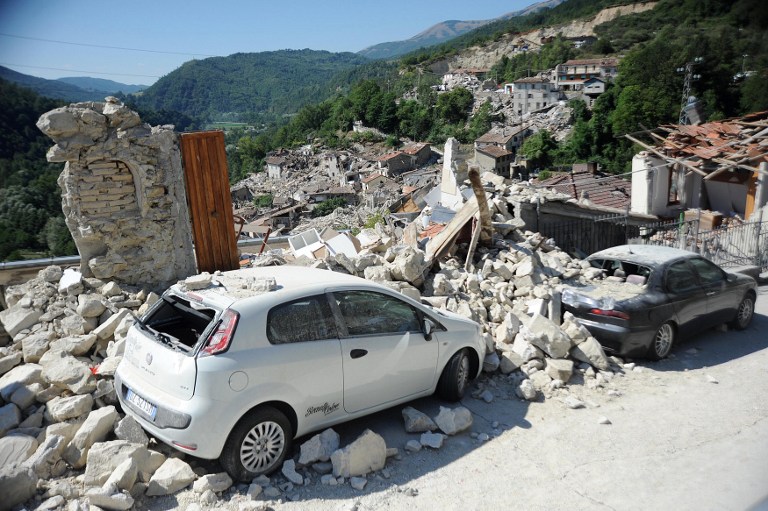
Petrucci said it was impossible to say exactly how many people were in the 13 tiny communities that make up l’Arquata when the disaster struck.
In Pescara del Tronto, which was virtually razed by the quake, there only four permanently resident families but there could have been up to 300 people there on Wednesday.
The epicenter of the quake, which measured 6.0-6.2, was near Amatrice and the tremors’ shallow depth of four kilometers (2.5 miles) exacerbated its impact.
It occurred without warning but in an area with a long history of killer quakes.
The Civil Protection agency which is coordinating the rescue effort said that in addition to the dead, 264 people had suffered injuries serious enough to be hospitalized. Several of them are in a critical state.
Although rescue workers were pessimistic about the chance of finding any more survivors, officials stressed that the last survivor of a 2009 in nearby L’Aquila was pulled from the rubble some 72 hours after it struck.
Prime Minister Matteo Renzi was chairing an emergency cabinet meeting on the crisis.
“The objective is to rebuild and start again,” he said, vowing lessons would be learned from L’Aquila, which still bears huge scars from the 2009 quake that left 300 people dead.
After L’Aquila, the Civil Protection agency made almost one billion euros available for upgrading buildings in seismically-vulnerable areas.
But the take-up of grants has been low, largely because of the cumbersome application process, according to critics.
“Here in the middle of a seismic zone, nothing has ever been done,” said Dario Nanni of the Italian Council of Architects.
“It does not cost that much more when renovating a building to make it comply with earthquake standards. But less than 20 percent of buildings do.”
Nanni said the quake’s impact had been increased by the widespread use of cement rather than wood beams. “These indestructible beams hit walls like a hammer and that is what made so many (houses) collapse.”
One building which was supposed to be quake-proof was the Romolo Capranica school in Amatrice, which collapsed on Wednesday.
That was in sharp contrast to the oldest building in the town, the 13th-century Civic Tower, which was still standing Thursday, despite having been shaken sufficiently to detach its bell.
The bell tower in nearby Accumoli did collapse, onto a quake-proofed house next door, killing a couple and their two toddlers.
Local mayor Stefano Petrucci denied there had been negligence in the maintenance of the tower. “I don’t want to get into a row about that now, we are already suffering too much,” he said.








The Times of Israel Community.