

Jewish frat boys take on bigotry on campus with OneDay Against Hate
As the ADL charts an unprecedented rise in US anti-Semitism over the last two years, interfaith groups unite in an effort to promote dialogue and understanding in all walks of life
 Add ToI as a Preferred Source on Google
Reporter at The Times of Israel
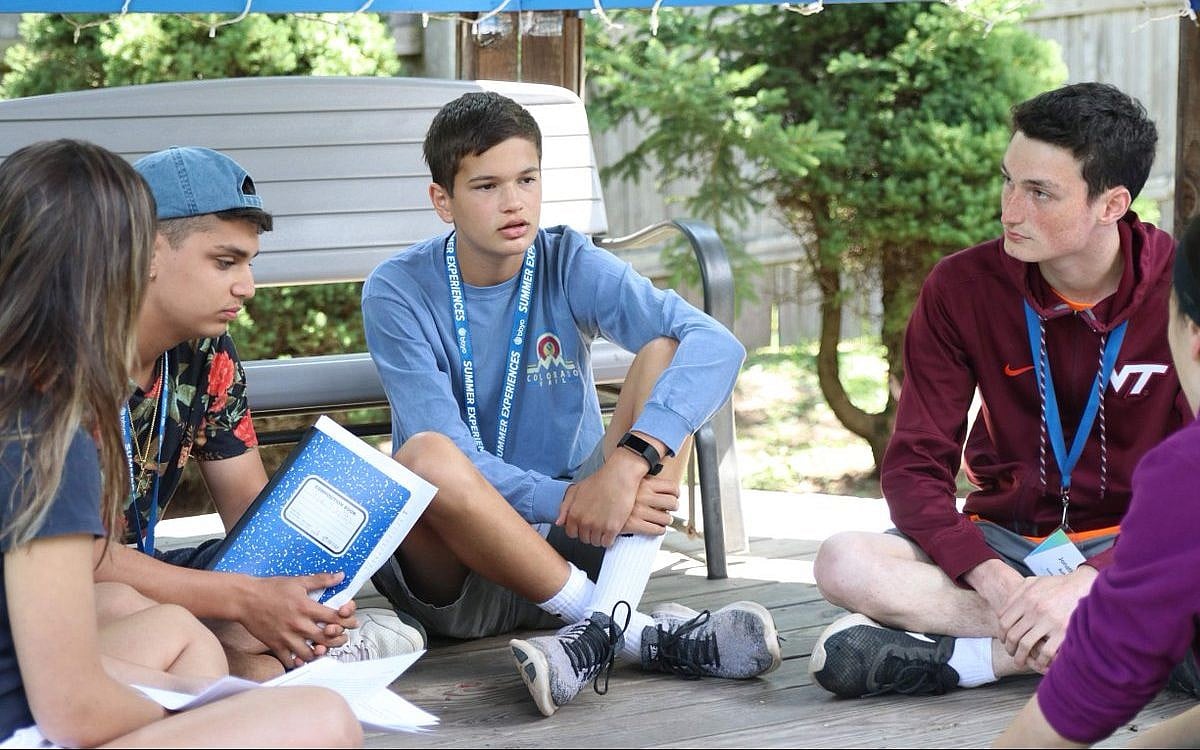
NEW YORK — Earlier this month members of the historically Jewish fraternity Alpha Epsilon Pi, AEPi discovered swastikas painted on a campus building at Appalachian State University in North Carolina.
Last April at Towson University in Baltimore two members of AEPi were allegedly assaulted while walking in the pre-dawn hours. Police are now investigating it as a possible hate crime.
“Our chapters are so proud of their Jewish heritage and AEPi puts it out there so publicly and visibility. Oftentimes they are on the front lines of hate and anti-Semitism,” Jonathan Pierce, media spokesperson for AEPi, told The Times of Israel.
Now, AEPi and Zeta Beta Tau (ZBT), another historically Jewish fraternity, are joining with numerous organizations in promoting OneDay Against Hate.
The campaign, which launched October 1, aims to speak out against hate and initiate what it calls “conversations of understanding.”
Aside from the nationwide launch, which took place primarily on social media, participants in 24 cities including Atlanta, Dallas, Detroit, Las Vegas and Philadelphia held on-the-ground events. Even the Mexican consulate joined in, hosting 30 events across the US.
We all come from different walks of life, and our biases can prevent us from understanding each other. On Oct 1, be part of Oneday Against Hate to urge everyone to look beyond the first impression and start conversations of understanding. https://t.co/OoGORbxuP8 #WeAreOneday pic.twitter.com/ehhMAmyE2o
— The 92nd Street Y, New York (@92ndStreetY) September 29, 2018
The idea for the campaign arose after torch-bearing and Confederate flag-waving white supremacists marched through Charlottesville, Virginia, in August 2017 chanting: “Jews will not replace us.”
At the time several top executives at organizations including the Anti-Defamation League, NAACP, the Human Rights Campaign and the African Middle Eastern Leadership Project decided it was vital to launch a sustained response to counter the hatred the Unite the Right events exposed. But the challenge will be to carry the campaign forward beyond the launch.
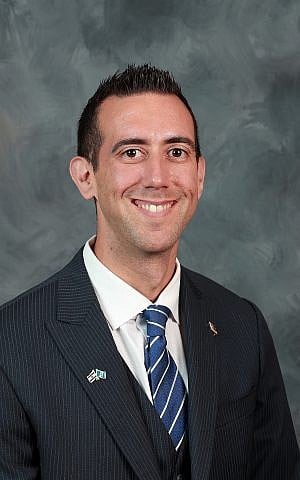
“The problem in the Jewish community is we constantly have the same conversations amongst ourselves. We are preaching to the choir. We want to go beyond that. We don’t want this program to be one and done; that you spend an hour or so on it and that’s it,” said Laurence Bolotin, CEO of ZBT.
Anti-Semitic incidents in the US surged nearly 60 percent in 2017, according to a February 2018 Anti-Defamation League report. It was the largest single-year increase on record and the second highest number reported since the ADL started tracking incidents in the 1970s. According to the ADL, the increase in numbers came in part because of a rise of incidents in schools and on college campuses, which nearly doubled for a second year in a row.
In 2017 there were 1,986 anti-Semitic incidents in the US, including vandalism, attacks on Jewish institutions and physical assaults. And for the first time in at least a decade there were incidents in all 50 states.
To further break it down, anti-Semitic incidents in K-12 schools and college campuses in 2017 nearly doubled over 2016. There were 457 anti-Semitic incidents reported in non-Jewish schools, up from 235 in 2016 and 114 in 2015. Jewish institutions and schools also saw incidents double, jumping from 170 in 2016 to 342 last year. Meanwhile, college campuses saw a total of 204 incidents in 2017, compared to 108 in 2016.
For a recent example, on Saturday vandals spray-painted 19 white swastikas on the Jewish Community Center of Northern Virginia building in Fairfax, Virginia.
Going beyond your first impression is the first step to overcoming bias and creating a world without hate. We are so excited to be a part of Oneday Against Hate and to spark conversations of understanding.
Learn more: https://t.co/UEghn4e8FA #WeAreOneDay pic.twitter.com/9aGfzS2VcR
— Arizona Athletics (@AZATHLETICS) October 1, 2018
But anti-Semitism isn’t the sole focus of the OneDay campaign. In the past several years there has also been a rise in the number of hate crimes and incidents against African-Americans, Muslims, and the LGBTQ community.
“Your experience in college can be indicative of how you comport yourself going forward. The things we say or do can send a message. Hate against one becomes hate against all,” Bolotin said.
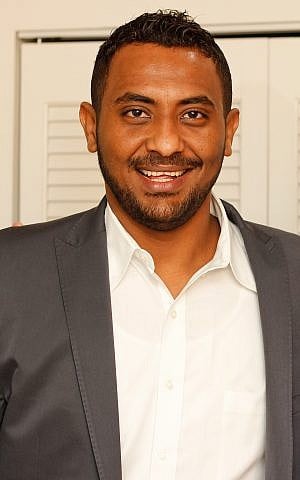
That’s something to which Mohamed Abubakr can relate. The president of the African Middle East Leadership Project (AMEL) moved to the US from Sudan in March 2016, just before the presidential primary season.
“From then, things started to go downhill rapidly at a scary pace. Anger, divisiveness, hateful rhetoric and open expression of intolerance. The trend reminded me of a period in my home country of Sudan, where I was born and raised, of similar decline of public decency, normalized hate speech and preaching. I was similarly scared of what will happen if nothing was done to interrupt this growing trend,” Abubakr said.
So when he learned of the initiative, “it didn’t take me longer than few seconds to decide that I and AMEL will get behind it,” Abubakr said.
AMEL hosted a Facebook live event on October 1 where people talked about race and tolerance.
For Catholic educators, OneDay is also important because it reinforces a longstanding partnership with the ADL which centers on teaching the Holocaust from an interfaith perspective, said Andrea Chavez-Kopp, assistant director for educational and formation programs for the National Catholic Educational Association (NCEA).

It was through that work that the NCEA became aware of the OneDay movement.
“As people of faith, we are all called to love and respect others. Even those who want to stand up against hate, may not always have the tools or the platforms to do so. OneDay allowed for voices to come together,” said Chavez-Kopp.
Chavez-Kopp said the NCEA looks forward to seeing the initiative grow over time.
The founders hope participants will mobilize their constituents, employees, and colleagues to discuss the many ways in which they have been shaped by their different personal backgrounds and life experiences. Some organizations are holding employee and constituent training, encouraging dialogue on inner office messaging systems, and creating PSAs encouraging others to participate.
To prevent participants from getting their backs up or self-censoring as they discuss sensitive topics, OneDay developed conversation guidelines tailor-made for specific locales, such as universities and houses of worship.
“They are designed specifically to avoid shutting down and putting people on the defensive early on in the conversation, and establish intimacy that humanizes the other before tough questions are brought to the conversation. It’s much harder to shut down once that intimacy is established,” Abubakr said.







The Times of Israel Community.