

New bill could create jobs for 1,070 rabbis, cost taxpayers tens of millions a year
Religious hardliners are among critics of the bill, which many see as part of a pact benefiting Shas and the Chief Rabbinate

 Add ToI as a Preferred Source on Google
Canaan Lidor is a former Jewish World reporter at The Times of Israel
A new bill being fast-tracked by the coalition could cost taxpayers NIS 120 million ($33 million) annually, if not double that, in salaries for hundreds of new Orthodox municipal rabbis serving the Chief Rabbinate.
The price tag, which appeared Wednesday in an analysis (Hebrew) by the Calacalist financial newspaper, is a conservative estimate of the cost of the Jewish Religious Services Bill, submitted in June by Religious Zionism MK Simcha Rothman and Shas’s Erez Malul.
If passed, the controversial bill would empower the government to appoint 1,070 new Orthodox rabbis to serve in municipalities, likely at the expense of their budgets. The addition could come on top of the 491 municipal rabbis currently employed nationwide.
The bill, whose language effectively precludes hiring non-Orthodox rabbis for the job, would also limit municipal rabbis’ discretion, making them more subordinate to the ultra-Orthodox Chief Rabbinate than under current conditions.
The draft law, which is facing opposition from liberals and even some hardliners, would give more power to the conservative Rabbinate at a time when the nation is divided and rocked by widespread protests against the hawkish coalition’s judicial overhaul and the religious right supporting it.
Under the bill, the Religious Services Ministry would be able to appoint no fewer than 1,070 new rabbis, according to a recent analysis by the Israel Democracy Institute. But the ministry is currently preparing to hire only 514 new rabbis over the coming two-and-a-half years, Calcalist has learned. That addition would cost at least NIS 120 million a year, the paper determined, based on the evaluation of the average salary and scope of employment of municipal rabbis. Filling the entire roster could double that figure.

The public funding is controversial because it could force municipalities without a city rabbi — there are over 30 of these nationwide — to appoint and hire at least one, despite widespread ideological opposition among many residents to the involvement of clergy in government.
Tel Aviv and Haifa would be compelled to hire two city rabbis: one Sephardic and another Ashkenazi. Currently, no municipal rabbi is employed by either of those cities, which have many Muslim and Christian residents as well as an electoral mass of stridently secular Jewish ones. Two municipal rabbis would also be appointed in Beersheba, which currently has only one city rabbi. Jerusalem already has Sephardic and Ashkenazi city rabbis.
The Religious Services Ministry, which is currently headed by Michael Malkieli of Shas, would also be able to appoint salaried rabbis to specific neighborhoods, even if there is no local demand for them.

All municipal rabbis “are subject to the directives of the Chief Rabbinical Council of Israel, which is the ultimate religious, halachic and spiritual authority on all matters involving the position,” the bill states.
This language is significantly more restrictive than the current law on municipal rabbis, which merely states that they “will act in accordance with the rulings of the local and the Chief Rabbinate.”
Rothman during a committee discussion Tuesday defended this as ensuring uniformity “and to avoid the sort of conflicts that have, at times, ripped the rabbinical establishment to shreds,” he said. Rothman named as an example the Get of Cleves, an 18th-century rabbinic controversy in Germany that some historians believe paved the way to the Haskalah movement and secularization.
The preclusion of non-Orthodox rabbis is found in clauses of the bill stipulating that all candidates for the municipal rabbi position be approved by the Chief Rabbinate — which only recognizes Orthodox Judaism — and agree to accept its authority.
The nomination procedure presents another major controversy, as it seeks to give the ministry a greater say in electing municipal rabbis at the expense of local constituents.

Municipal rabbis are to be elected by an ad hoc electing council where half of the delegates are appointed by the religious services minister, the bill says. Half of the minister-appointed delegates are to be women. The 16 members of the Council of the Chief Rabbinate are also on the electing committee, as are councilors of the municipality in question and the head of its religious council, which is the local office of the Chief Rabbinate.
Rothman, a prominent lawmaker from the Religious Zionism party who co-authored the bill and is a key promoter of the government’s judicial overhaul, has said he would amend the bill to increase the representation of locals in the electing body of municipal rabbis. Rothman is advancing the bill in his capacity as chair of the Knesset Constitution, Law and Justice Committee.
Rabbi Gilad Kariv, a lawmaker for Labor and the director of the Israel Movement for Reform and Progressive Judaism, has protested the law in discussions, calling it a “job grab” and “legalized government corruption.” If it passes, Kariv argued the law would not survive the legal scrutiny of the Supreme Court, which he vowed to petition because the law discriminates against non-Orthodox.
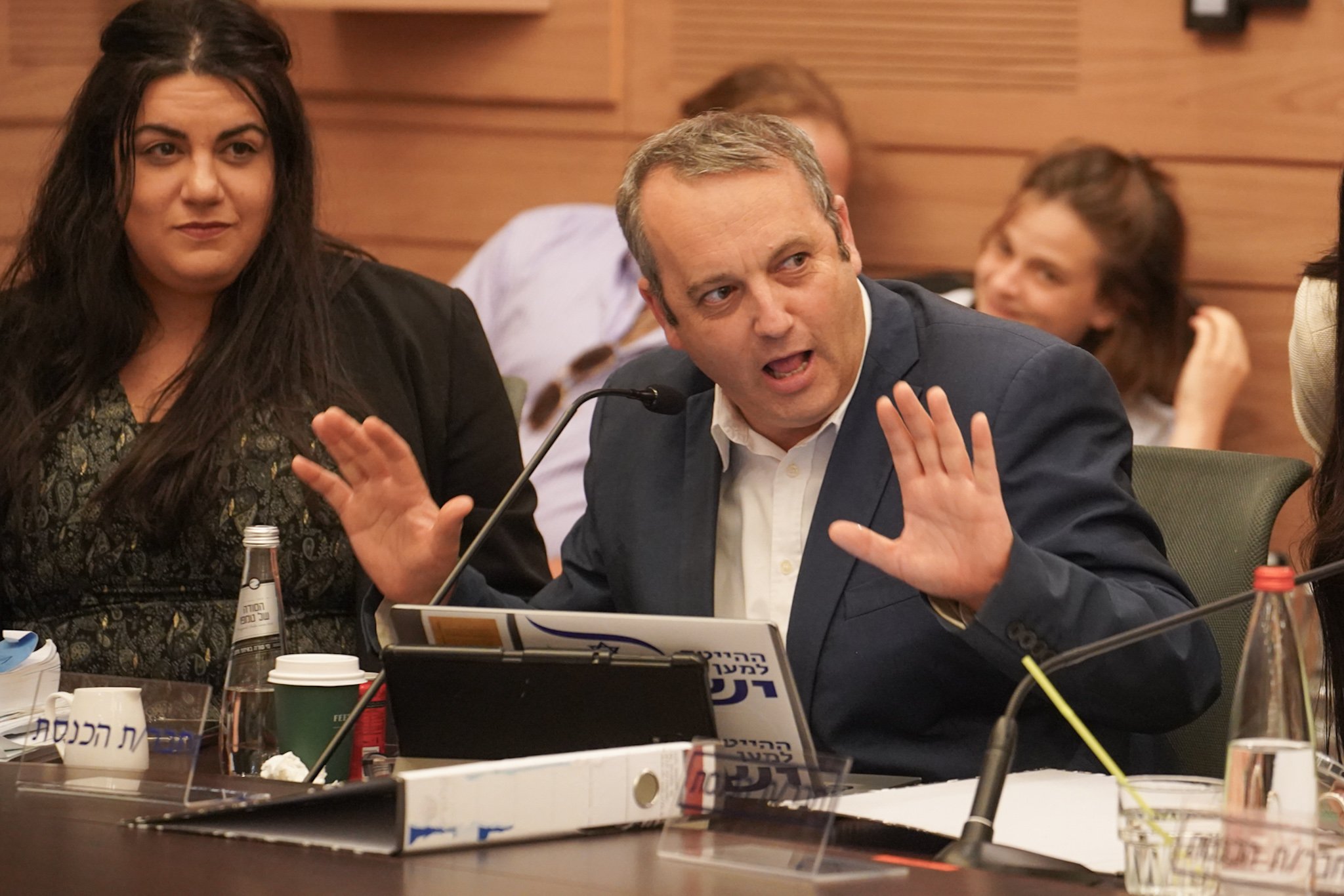
But the bill is also drawing fire from conservative circles, and even from other prominent coalition lawmakers including Likud member Tally Gotliv, who is another vocal promoter of the judicial overhaul. On Tuesday, during the latest committee discussion about the bill, Gotliv and Rothman exchanged harsh words over it. Gotliv accused Simcha Rothman of ramming the bill through without real debate. Rothman suggested that Gotliv cannot be taken seriously.
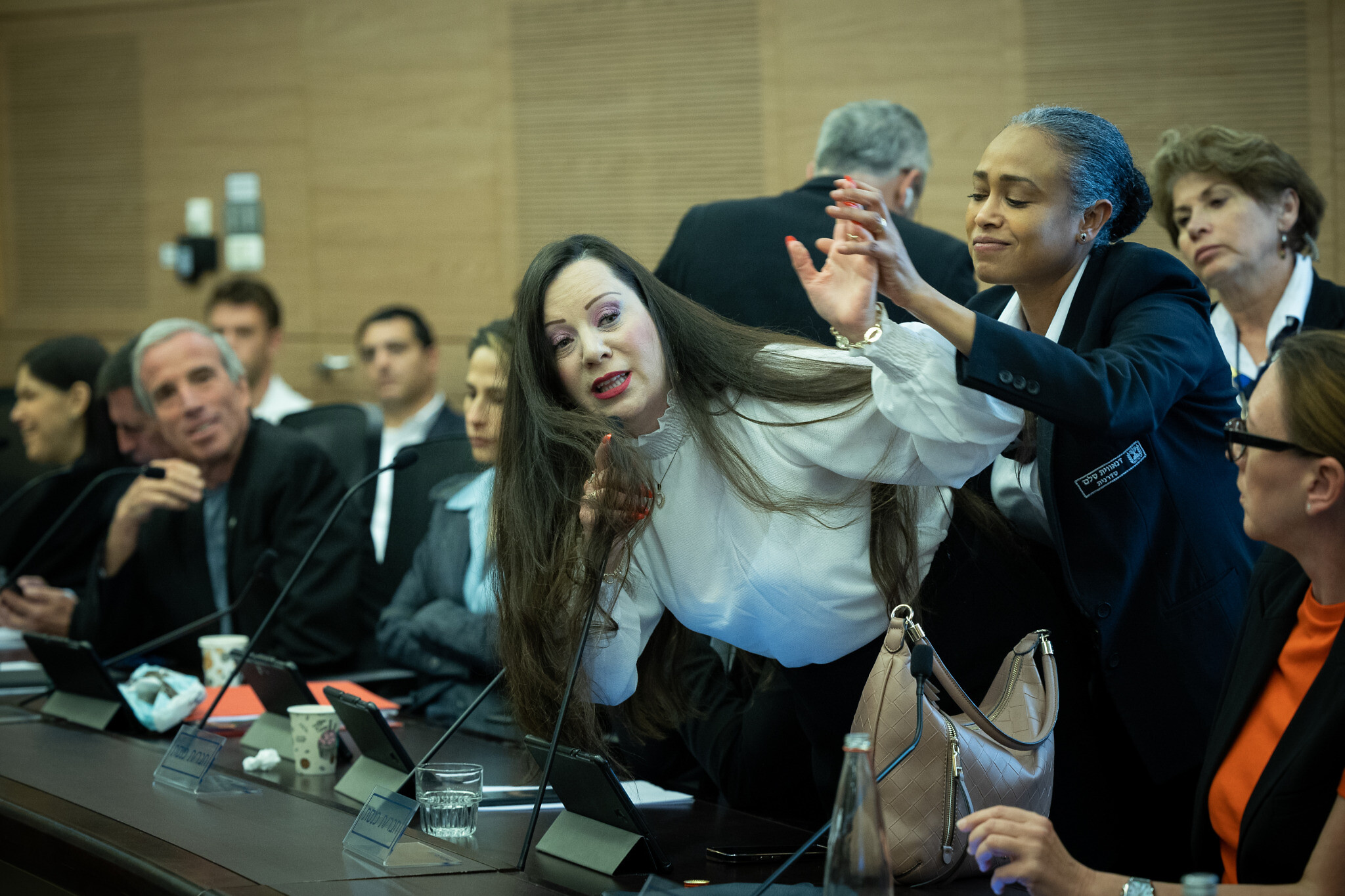
The spat highlighted the scope of the little-discussed bill and laid bare some animosities and frustrations dividing coalition top players amid fierce opposition to their policies.
“It’s not like anyone will listen to me, everything here has been predetermined,” said Gotliv, a lawmaker for Prime Minister Benjamin Netanyahu’s Likud party.
It was likely a reference to Rothman’s authoritarian style as chairman, but possibly also to the widely held assumption that the bill is the result of a pact between Shas and Religious Zionism — parties with contradicting views on key political and ideological issues.
Some of the religious Zionist public’s most eminent rabbis, including Dov Lior, Haim Steiner and Yaakov Ariel, last month asked Religious Zionism to halt the bill, the religious Israel National News website reported. The rabbis stopped short of analyzing the politics behind the bill, and merely questioned public support for it, adding that they and other rabbis were not consulted.

A popular theory about the political pact behind the bill is that it greatly benefits Shas, which has considerable influence on the Chief Rabbinate and a highly devoted and robust network of party apparatchiks. A pact between Shas, whose senior most lawmaker is Aryeh Deri, with Religious Zionism under Finance Minister Bezalel Smotrich, would allow Shas to install hundreds of party loyalists in relatively well-salaried positions: municipal rabbis’ monthly salaries range between NIS 9,000-43,000 ($2,400-$11,200.) It would also afford those rabbis considerable influence on large and diverse populations.
Religious Zionism’s interest for going along with this is less evident, according to Rabbi Ido Pachter, coordinator of religion and state at Ne’emanei Torah Va’Avodah, a relatively dovish religious-Zionist movement.
“There’s a political deal and its specifics are unknown,” Pachter told The Time of Israel. “Maybe in exchange for its cooperation, Shas will allow Religious Zionism to appoint their own chief rabbi. Maybe other nominations.”
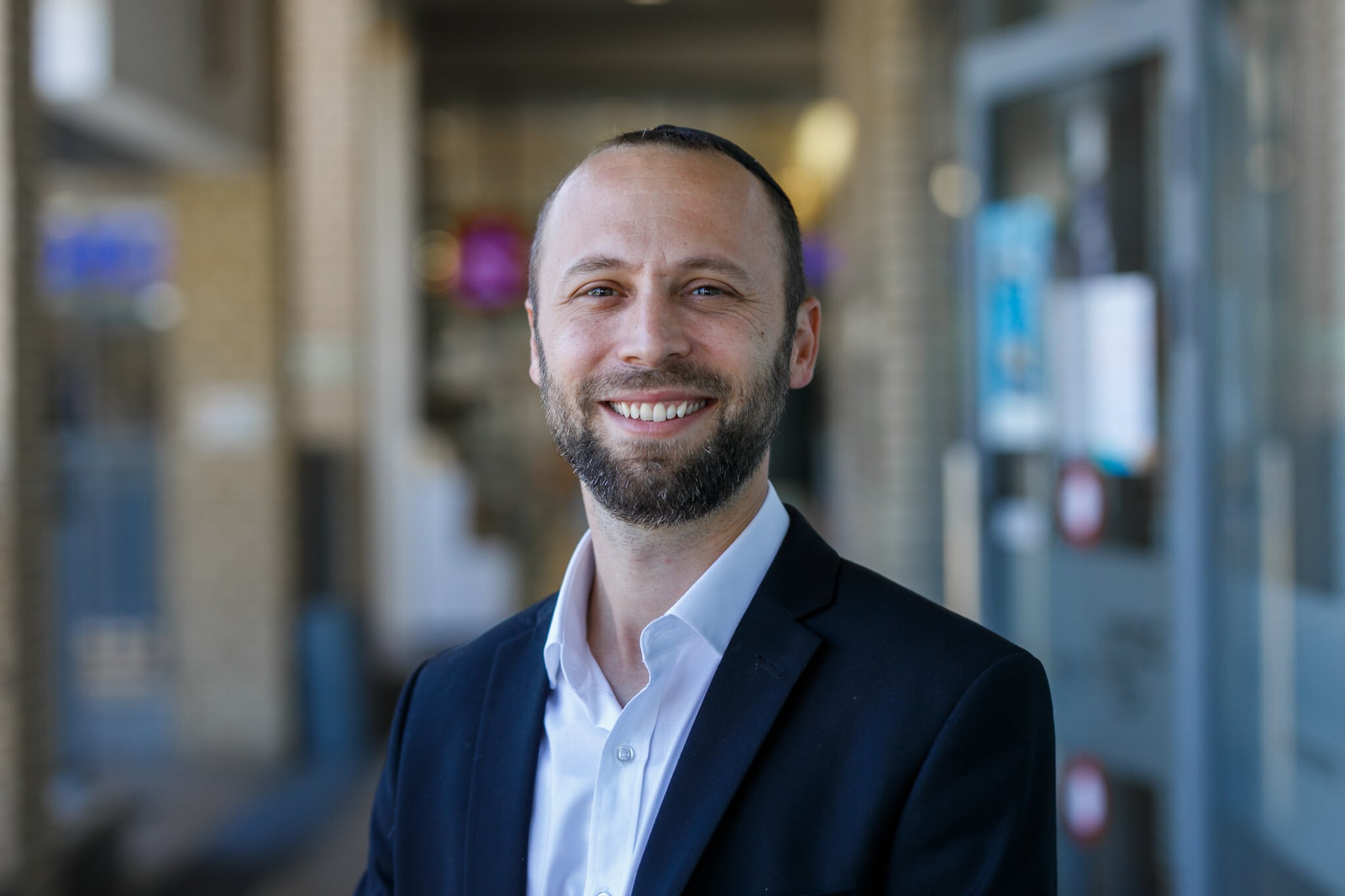
But this would mean that the leaders of Religious Zionism are “selling the birthright of their constituents for some lentil soup,” Pachter said, referencing the biblical story of Esau and Jacob. “For a few small achievements, they are effectively signing over the rabbinical establishment to Shas and the Haredim — while alienating the secular camp in the process.”
The bill is scheduled to be discussed in Knesset twice next week ahead of a first reading at the plenum, which is expected to happen sometime during the winter session.









The Times of Israel Community.