

US customs warns Sukkot travelers their etrogs face inspection
Rabbi urges Orthodox passengers to tell flight attendants before they begin praying, because ‘nu,’ ‘uh,’ and hand signals aren’t always understood
 Add ToI as a Preferred Source on Google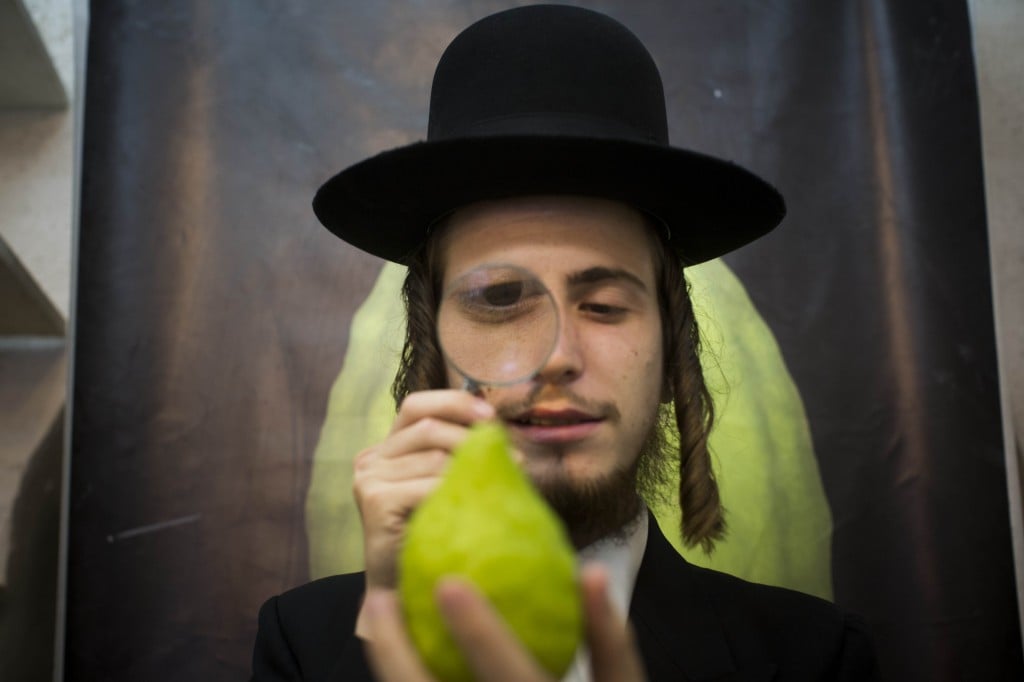
WASHINGTON — U.S. authorities’ new travel guidelines for Sukkot allow passengers to bring the traditional “four species” on board airplanes, but customs regulations warn travelers that their etrogs (citron fruit) face inspection and that European willow twigs are banned.
“TSA’s screening procedures do not prohibit the carrying of the four plants used during Sukkot – a palm branch, myrtle twigs, willow twigs, and a citron – in airports, through or security checkpoints, or on airplanes,” the Transportation Security Administration said in a statement, noting the dates of this year’s Sukkot holiday, from Sept. 18-25. The TSA notice noted that all passengers undergo security screening at checkpoints.
In a separate statement, U.S. Customs and Border Protection also said that the four species were allowed entry, but specified a number of items subject to inspection.
“Travelers will be asked to open the container with the ethrog and unwrap it,” its advisory stated. “The agriculture specialist will inspect the ethrog. If either insect stings or pests are found, the ethrog will be prohibited from entering the United States. If neither is found, the traveler will be allowed to rewrap and re-box the ethrog for entry into the United States.”
Twigs of willow from Europe are banned, it continued, and any sign of pests or disease will mean confiscation of the product.
In a press statement noting the allowances, Rabbi Levi Shemtov, who directs American Friends of Lubavitch, urged observant Jews to cooperate with airline staff and authorities, for instance when praying aboard aircraft.
“Particularly, one should let flight attendants know if they will be davening in flight BEFORE they begin, and understand the implications, as well as potential prosecution, for ignoring requests to sit down when requested, etc.,” said Shemtov, who consulted with Rabbi Abba Cohen, the director of the Washington office for Agudath Israel of America, in setting out the guidelines. “For example, flight attendants do not usually understand ‘nu,’ ‘uh,’ and hand signals, etc. especially when you are already in tallis and tefillin.”
Shemtov told JTA that religious Jews should appreciate the efforts of travel authorities to facilitate their travel.
“We in the Jewish community are fortunate to live with an unprecedented level of personal liberty,” he said. “I hope everyone will appreciate that cooperation with authorities that are so sympathetic to our traditions is the least we can do in return.”
Three years ago, a Kentucky-bound plane was diverted to Philadelphia soon after take off from New York La Guardia airport when a flight attendant mistook a young man’s tefillin, strapped to his head and arm as he prayed, for the wires of a bomb.








The Times of Israel Community.