

A new book looks at Jewish law’s relationship with animal family bonds
In ‘What Animals Teach Us About Families,’ Prof. Beth Berkowitz of Barnard College delves into commandments involving mother birds, baby goats – and ethics, if not empathy
 Add ToI as a Preferred Source on Google
Andrew Silow-Carroll is the editor-in-chief of JTA
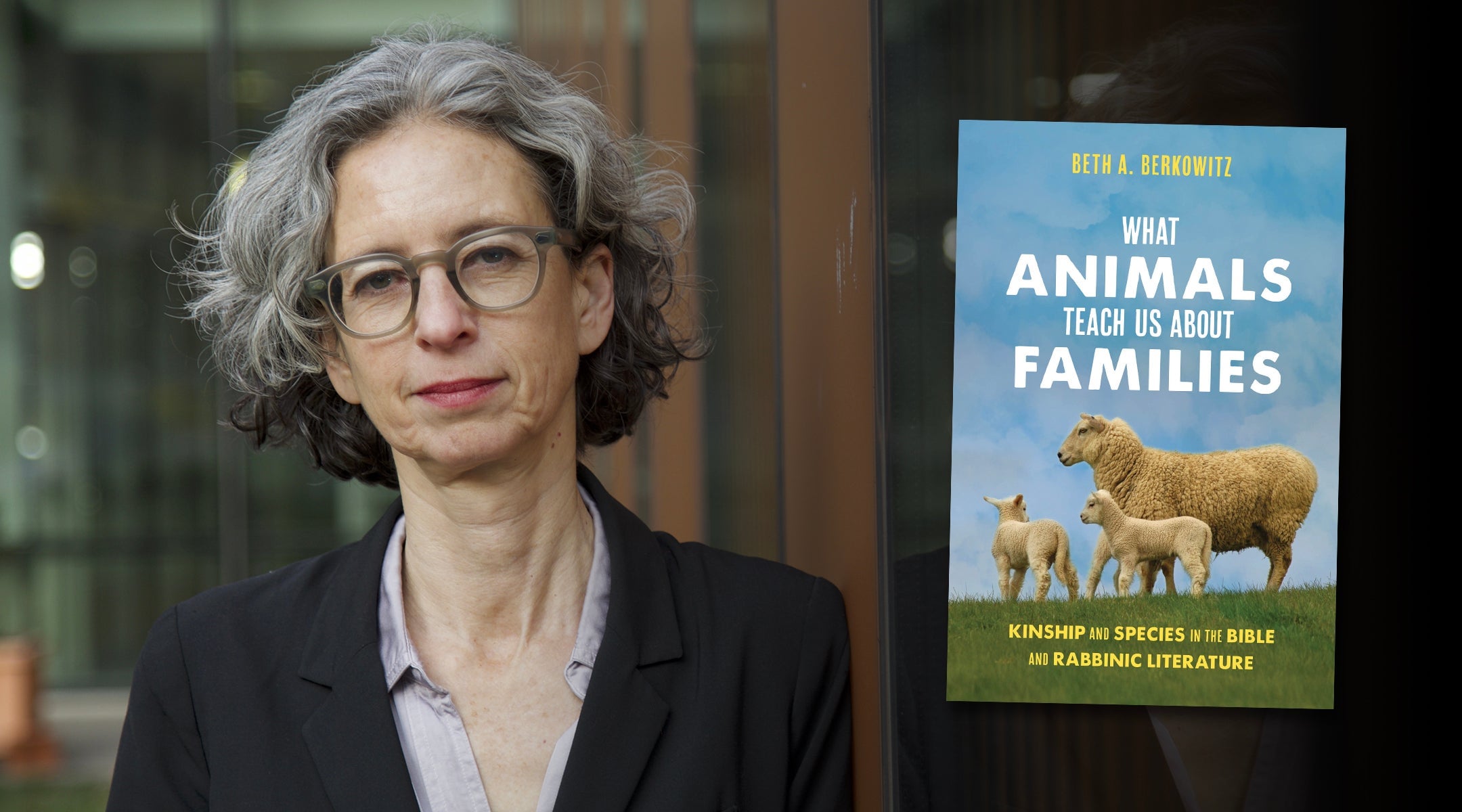
JTA — Beth Berkowitz was 12 years old, sitting at Shabbat dinner at Camp Ramah in the Berkshires, when she noticed something she could not unsee: tiny hair-like feathers clinging to the skin of the chicken on her plate. The chicken no longer felt like food, but perhaps another creature’s parent, sibling, or child.
Berkowitz stopped eating meat soon afterward — a decision that would quietly shape her sense of self and, decades later, her scholarship.
For Berkowitz, now the chair of Jewish Studies and a professor of religion at Barnard College, the path between pre-adolescent vegetarianism and ancient legal texts was neither straight nor obvious. But the throughline is what she explores in her new book about animal kinship and Jewish law. “What Animals Teach Us About Families” insists that animals are living beings with family relationships of their own.
What’s more, Jewish laws about treating animals invite a conversation about these relationships and what they mean to leading a commanded and ethical life.
It is a rare book of Jewish scholarship that cites “Bambi” and “Finding Nemo” alongside the Babylonian Talmud and the first-century philosopher Philo, and that also includes a chapter on what readers can do to ensure that animals are treated more humanely.
“The Bible’s animal-family laws do not protect animal families so much as sensitize us to their presence,” Berkowitz writes. “In the culture of ancient Israel and the late ancient rabbis, that meant keeping track of animal genealogies, learning about animal behaviors, and caring about animals who lost their parents to slaughter.”
“What Animals Teach Us About Families” focuses on four biblical laws that all revolve around parent-child relationships among animals.
One (Leviticus 22:28) forbids slaughtering an animal and its offspring on the same day. Another (Deuteronomy 22:6-7) requires shooing away a mother bird before taking her eggs. Exodus and Leviticus include a similar injunction to keep the baby animal with the mother for the first week of its life. The most famous — repeated three times in the Torah — commands: “Do not cook a kid [that is, a baby goat] in its mother’s milk.”
These laws appear in different books of the Torah, from different textual strata, suggesting a sustained concern, rather than unrelated commandments. They also have no clear parallel in other ancient Near Eastern legal codes.
“That’s what caught my attention,” Berkowitz said in a recent interview from her home in Park Slope, Brooklyn. “This focus on animal parent-child relationships seems to be an innovation.”
What the Torah does not do is explain itself. It offers no rationale for these laws, no theological framing, no moral lessons to be learned. That silence has invited centuries of interpretation — much of it built around the idea that these laws exist to cultivate compassion for animals.

Berkowitz is and isn’t persuaded.
“If this is compassion,” she said, “it’s a very strange kind.” Slaughtering an animal’s offspring a day later hardly seems merciful. Sending away a mother bird only to leave her with an empty nest feels, at best, morally ambiguous. Reading these laws as expressions of empathy, Berkowitz argues, often says more about modern sensibilities than ancient ones.
“The rabbis were not ethicists. They were lawmakers,” she said.
And yet, these legal structures suggest that when it comes to animals’ family bonds, attention must be paid. “Even if compassion isn’t the motivation, the effect can still be ethically significant,” said Berkowitz.
She offers an example from the Mishnah, the compendium of Jewish law published at the end of the second century CE: Sellers of livestock are required to publicly announce when a mother or offspring has been sold for slaughter, so that no one would accidentally kill both on the same day. Keeping the law requires knowing — and naming — animal relationships.
“I find that incredible. Imagine having to track animal family trees, to know who is whose parent, and to say it out loud,” she said. “The rabbis aren’t being sentimental or warm and fuzzy. They just take the law seriously. But in doing so, they force people to recognize animal families.”
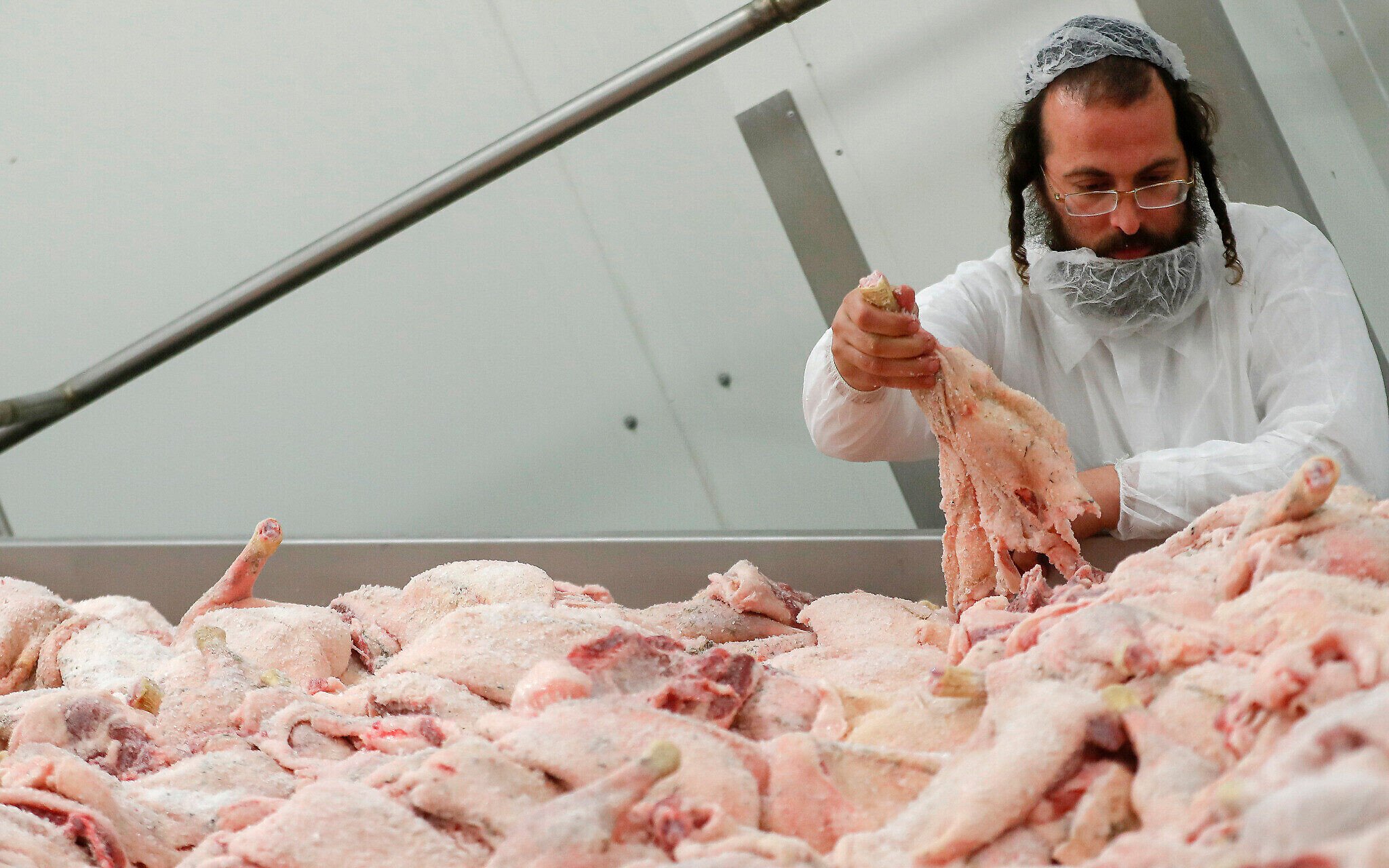
In modern Jewish life, attention has often flowed elsewhere. The prohibition against cooking a kid in its mother’s milk became the basis for the elaborate system of separating meat and dairy foods. In the process, Berkowitz argues, the original concern with a specific mother and her offspring was largely erased.
“People have two sets of dishes and pots and silverware, and most have no idea that the original issue was a mother and her child,” she said. “The animal family disappears.”
That disappearance mirrors a broader cultural shift. Industrial animal agriculture has moved the realities of animal life — and death — far from public view. Calves are separated from their mothers at birth. Male chicks are culled. Animals are raised in conditions where kinship bonds are impossible to sustain. “It changes the terms of everything,” Berkowitz said. “We don’t see the families anymore.”

Science, meanwhile, has been steadily restoring what industrial systems obscure. Research on animal behavior has documented complex family bonds across species: shared parenting among birds, long-term attachments among mammals, grief in response to loss. Animals, it turns out, are not merely biological units but relational beings.
This notion was reinforced when Berkowitz and her husband got their dog Burt in 2017 and discovered what it meant to have a relationship with an animal — not as an object or a resource, but as a social creature with habits, moods, attachments, and dependencies.
That the rabbis knew or intuited this also became apparent in her research for her previous book, “Defining Jewish Difference: From Antiquity to the Present.” In studying the ways Jews express their distinctiveness, she noticed something surprising: animals kept showing up.
“Animals are a major way that human groups differentiate themselves,” she said. “Once you start looking for it, you see it everywhere.”
From there, animals moved from the margins of Berkowitz’s work to the center.
The book’s title — intentionally less academic than its subtitle: “Kinship and Species in the Bible and Rabbinic Literature” — suggests that family is not an exclusively human domain, and that human families are not as exceptional as we might think. Seeing ourselves as animals among animals, Berkowitz suggests, can be both humbling and oddly comforting.

“What does it mean for us to see our families as something we share with other animals? I find it comforting,” she said. “Our anxieties, dramas, attachments — they’re part of being a living creature. They’re not uniquely human failures or pathologies.”
Asked if there has been criticism of her ideas about Jewish law and animals, she mentioned a friend who believed her book could be seen as an endorsement of “family values,” or at least the conservative version that presents the heterosexual nuclear family as the ideal.
Animal families, Berkowitz notes, come in countless forms: cooperative parenting, foster arrangements, same-sex pairings, loose kin networks. Nature offers no single model to defend.
Berkowitz closes the book with an epilogue, co-written with Rabbi Melissa Hoffman, offering modest, practical steps readers might take to improve the lives of animal families: eating less meat, choosing cruelty-free products, and paying closer attention to how everyday choices affect animal lives. The aim is not to demand moral purity or instill guilt, but to raise awareness.
“Jewish tradition is part of a much broader human conversation about how we live with animals and how we manage the harm we cause them,” she said. “And maybe — just maybe — paying attention is already a meaningful act.”
The views and opinions expressed in this article are those of the author and do not necessarily reflect the views of JTA or its parent company, 70 Faces Media.










The Times of Israel Community.