

Pop-up stop for soldiers on Gaza border draws volunteers from across the globe
Begun by a handful of brothers eager to help fellow Israelis on October 7, 2023, Shuva Achim has become a second home for soldiers and a magnet for anyone visiting the south
 Add ToI as a Preferred Source on Google
Sue Surkes is The Times of Israel's environment reporter
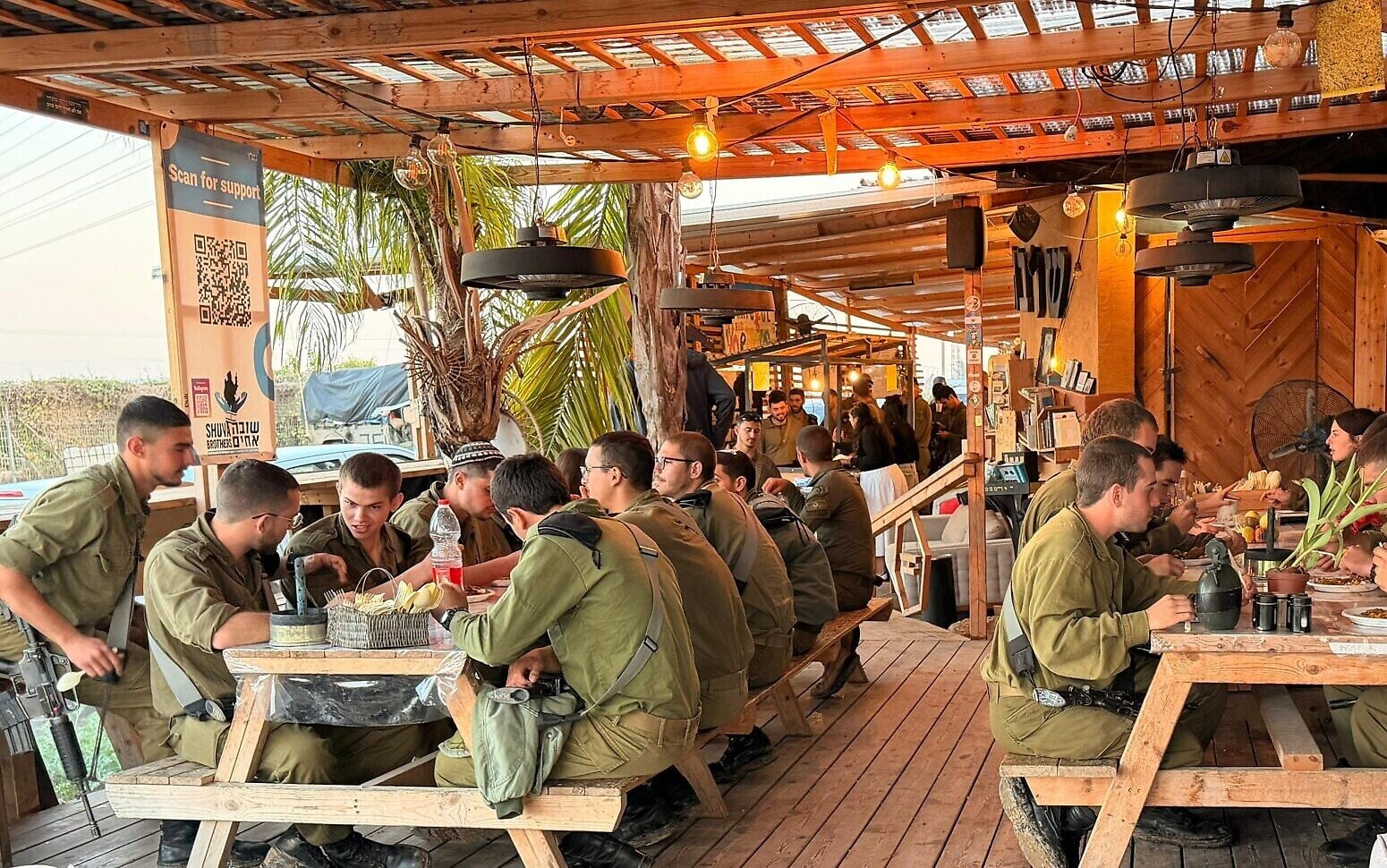
It was cold and rainy on a recent evening at Shuva Junction, near the Gaza border.
But inside a roadside stopping point, Shuva Achim (Shuva Brothers), all was warm and cozy.
Reserve soldiers in their 40s sat on wooden benches sipping hot soup, while conscripts dug into plates of steaming goulash.
“This is real home cooking,” said one. “It’s like being at home.”
In a corner, a soldier played guitar while a volunteer from Germany sang along.
Nearby, retired physiotherapist Yevgenia Menschikovsky doled out food. A resident of Netivot originally from Kazakhstan, she and her husband, Boris, have become regulars here.
“My husband peels and cuts, and I cook,” she explained, gesturing to her spread of rice, quiche, and potatoes.
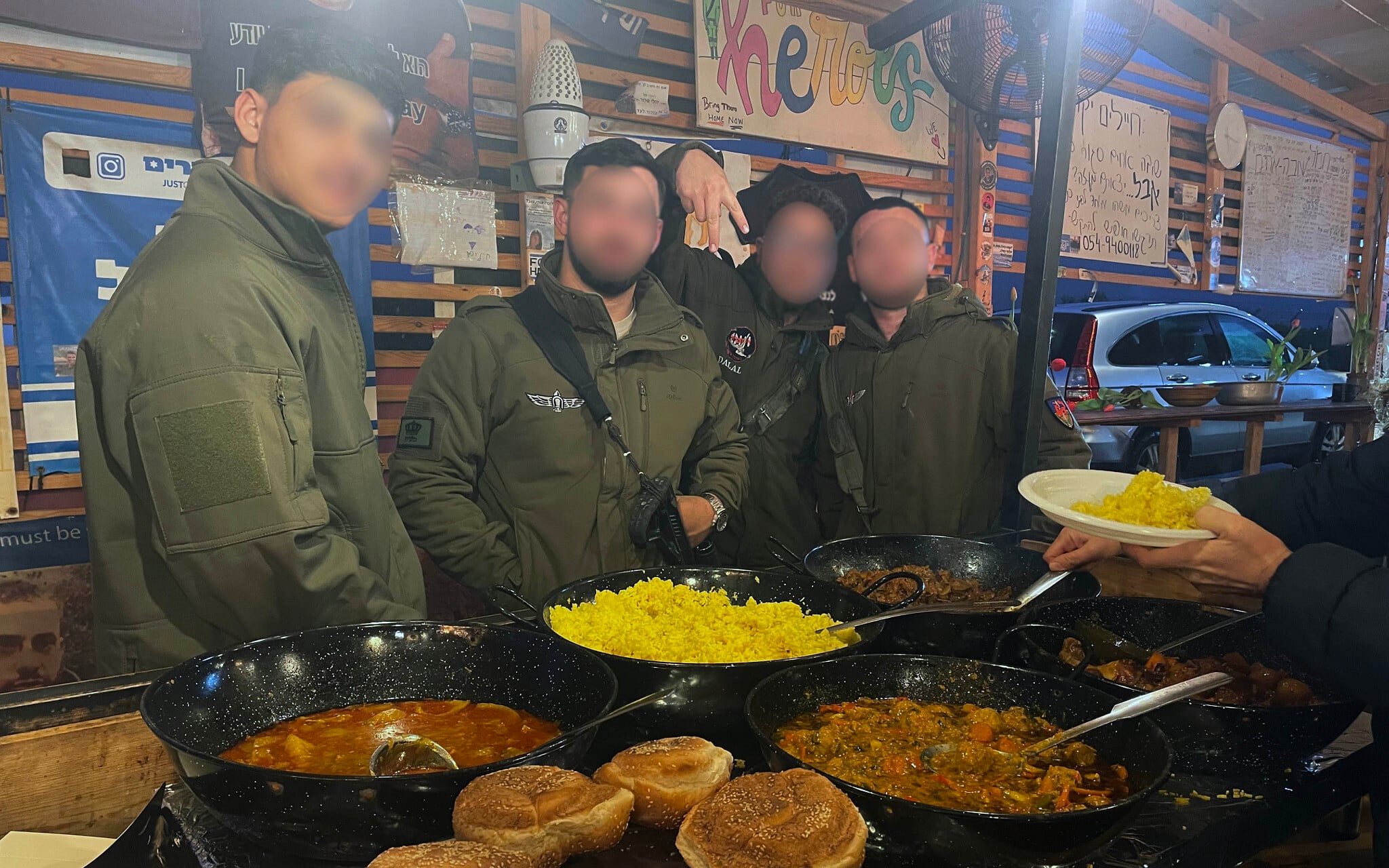
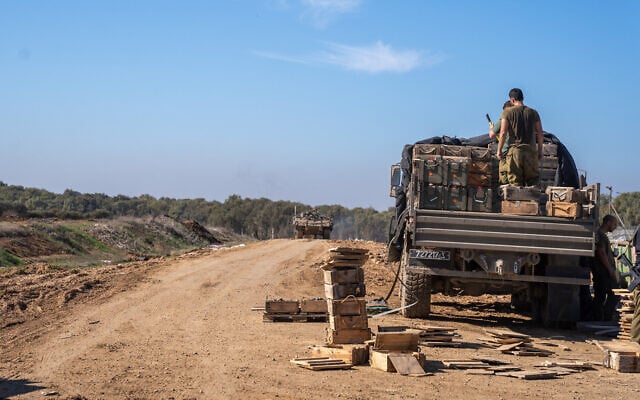
While the nation’s attention focuses on the possibility of missiles from Iran and Lebanon, soldiers are still moving in and out of Gaza.
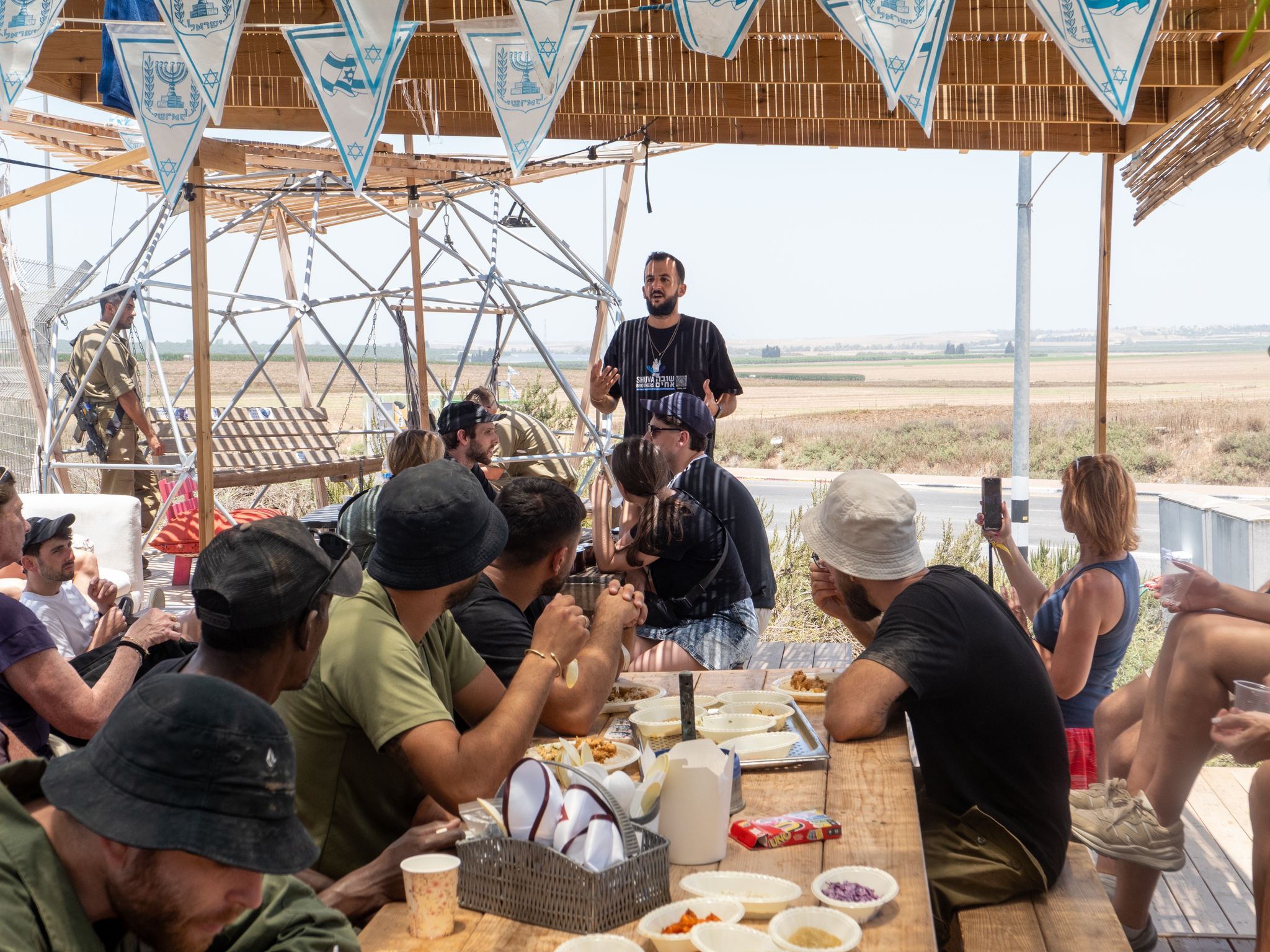
Before they enter and just after they leave, Shuva Achim awaits them. Its guiding spirit, Dror Trabelsi, 31, calls the gathering spot a “Tent of Abraham,” where everyone is welcome.
Trabelsi is a whirlwind of energy, frequently breaking off a conversation to hug a soldier or solve a logistical problem. Whether a soldier needs Teflon plumber’s tape or has to organize a quiet place for commanders to sleep, Trabelsi finds the solution.
“Shuva Achim was never about the tables and food,” he said, “but about people who can help you now, with zero bureaucracy.”
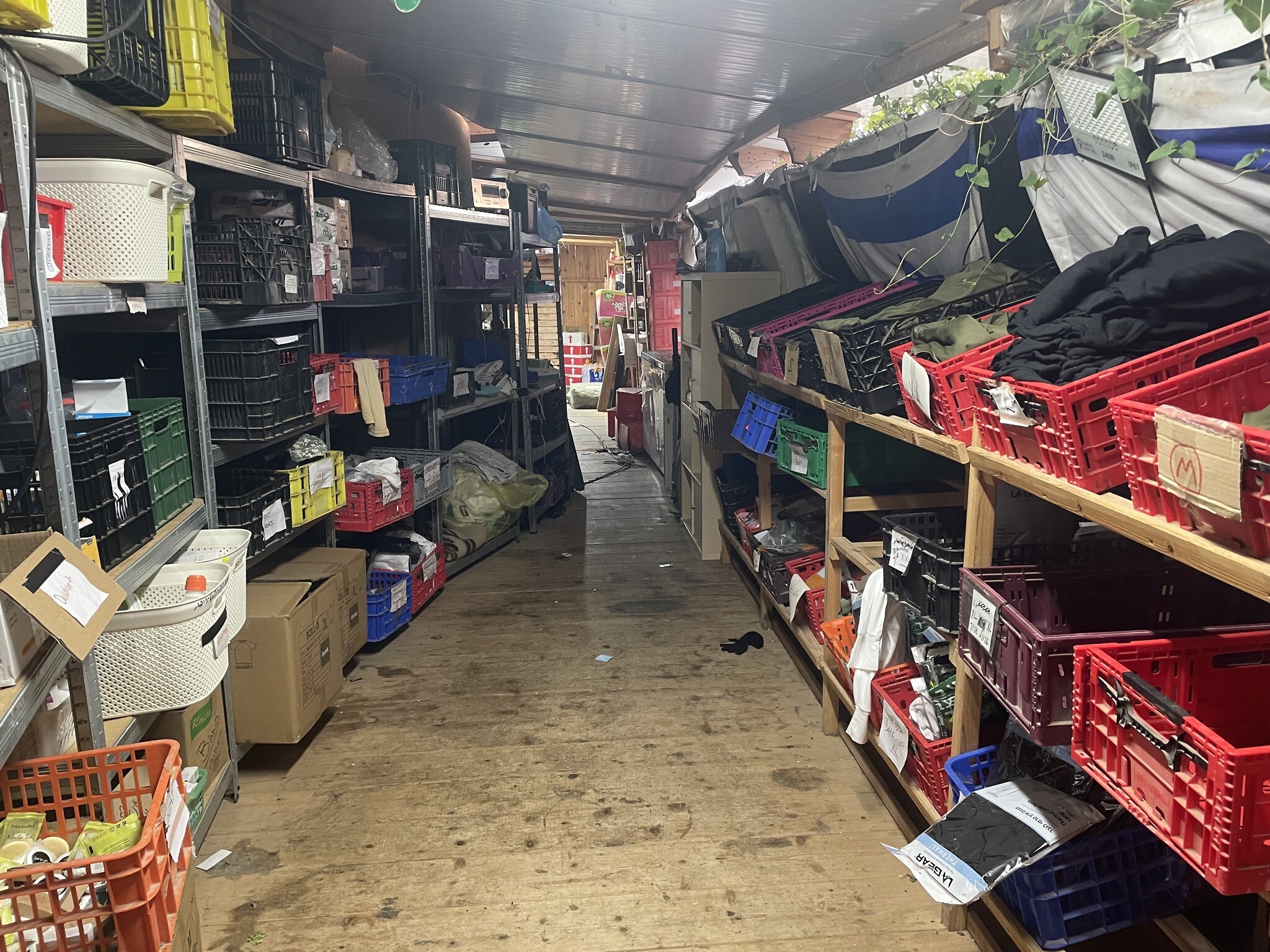
Part of the wooden roadside stop has a special section for clothing, underwear, hygiene items, and more — all provided free to soldiers.
Born from chaos
Just eight minutes from the Gaza border and a minute from Route 232, Shuva Junction was largely commandeered by Hamas on October 7, 2023. After IDF forces neutralized the terrorists who attacked rescue vehicles that morning, the army designated the junction as a safe point for a field hospital.
The initiative began that very day with a single picnic table set up by Dror’s brother, Koby, who lives in Moshav Shuva next to the junction. Since then, the entire Trabelsi family has become involved.
“The army initially called up hundreds of thousands of soldiers who thought they wouldn’t be there for long,” Trabelsi recalled. “When Hamas broke into bases and stole communications systems, it hampered logistics.”
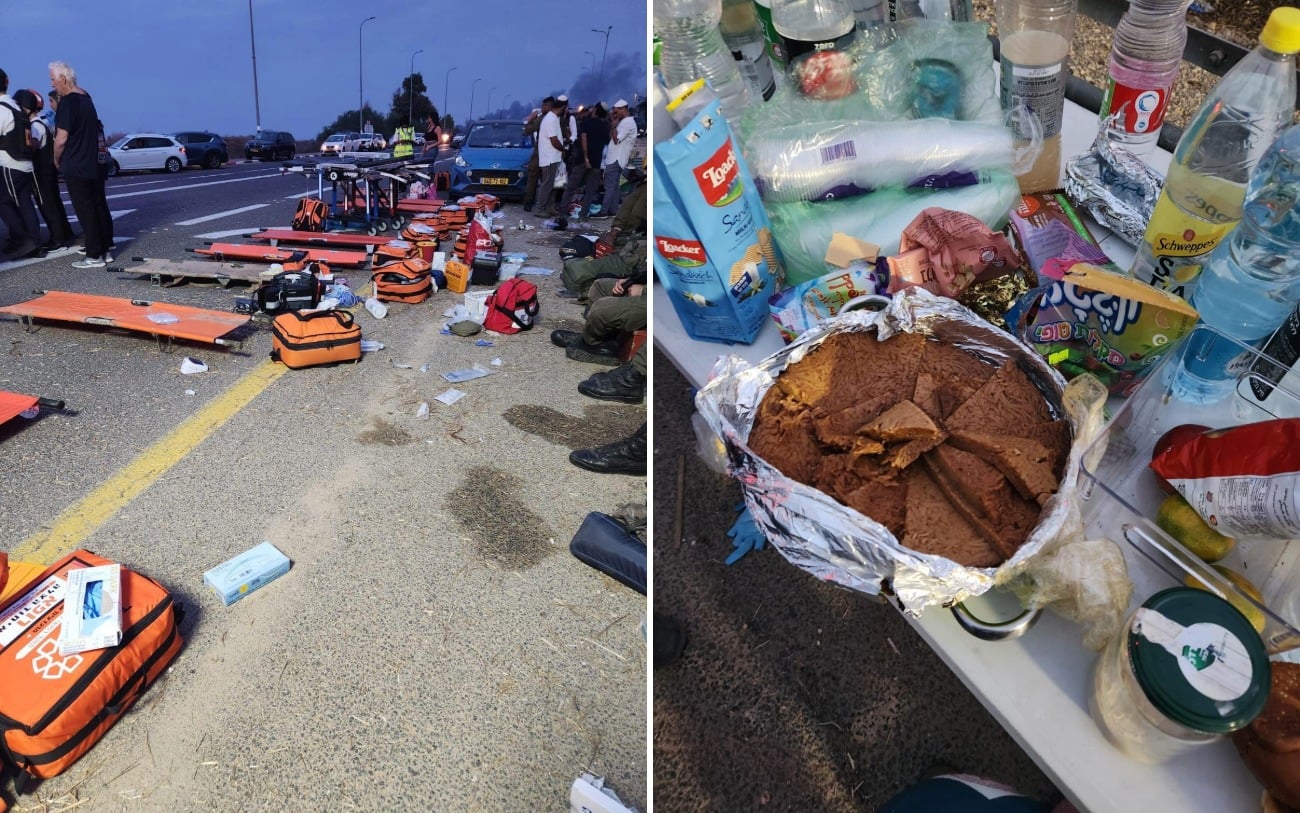
As the only civilian outfit in the war zone for weeks, Shuva Achim immediately began feeding up to 1,500 soldiers daily, providing moral support and a place to decompress. Since its inception, the center has served over 1.5 million meals to an estimated 150,000 soldiers.
A family affair
Trabelsi is one of six brothers. He, his parents, and five of his brothers live in the southern city of Netivot. Their mother, Suzie, provided the first giant pots of couscous, and their father, Roni, who owns a flower shop, provides bouquets for Friday night tables — and sometimes some surprise blooms for a soldier heading home to his wife.
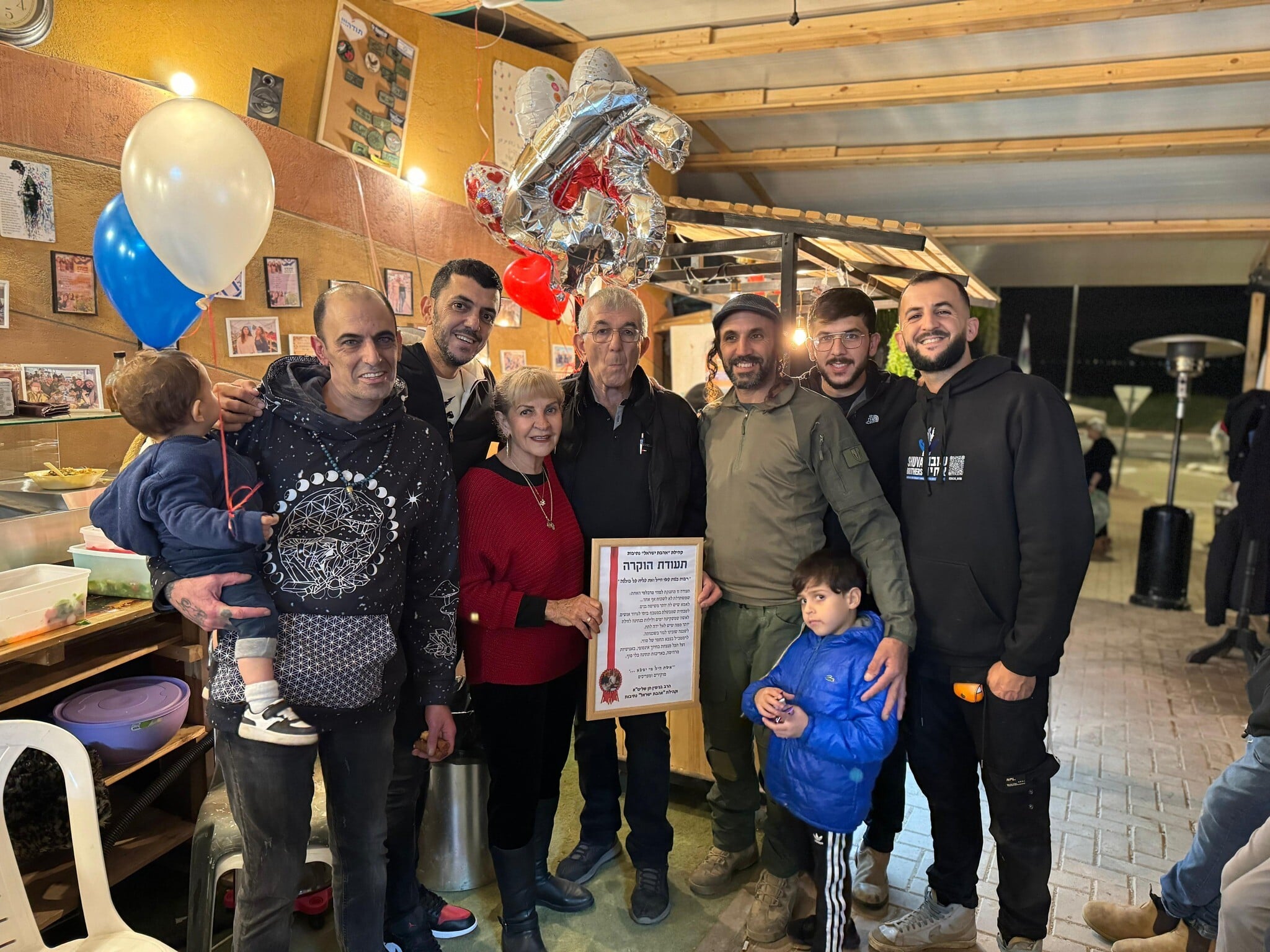
With the exception of Yuval, who served as an officer on reserve duty for much of the war, each brother has a role: Eliran manages suppliers; Koby handles construction and logistics; Avichai and Ariel have volunteered extensively. The brothers’ unofficial “sister,” Oshrat, spent the first 18 months of the conflict in Shuva Achim’s kitchen.
Plus, an army of volunteers
The center’s round-the-clock operation depends on a diverse human tapestry. One can find religious West Bank settlers volunteering alongside secular high-tech workers from Tel Aviv.
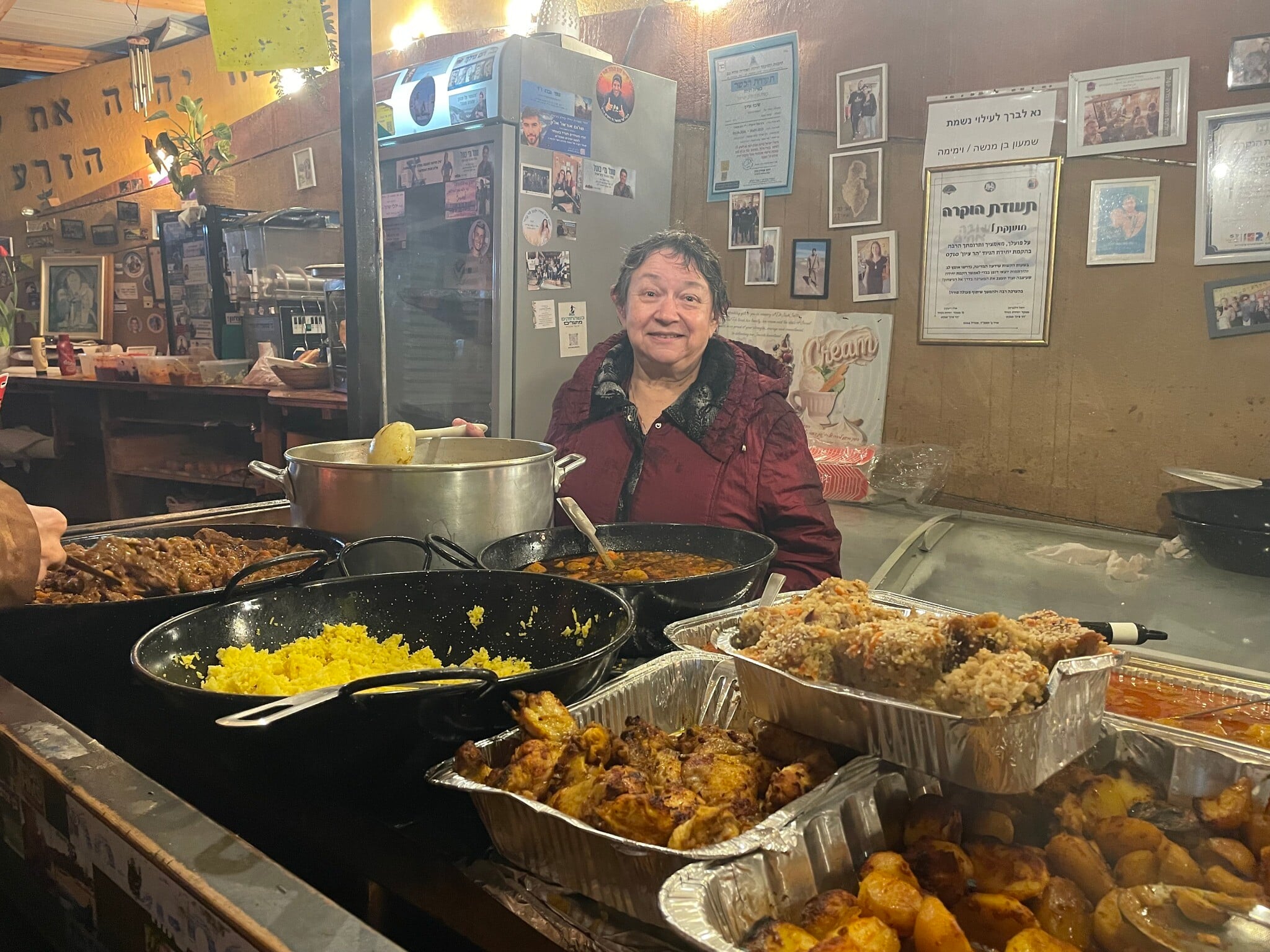
Yevgenia Menschikovsky vowed to cook for soldiers every day until her grandson, who was in Gaza on October 7, was released from his army service. He is now home, but she continues to cook three times a week using her own money and donations.
Ilana Katz, a single mother originally from Ukraine, brings her 10-year-old daughter to teach her “unconditional love.”
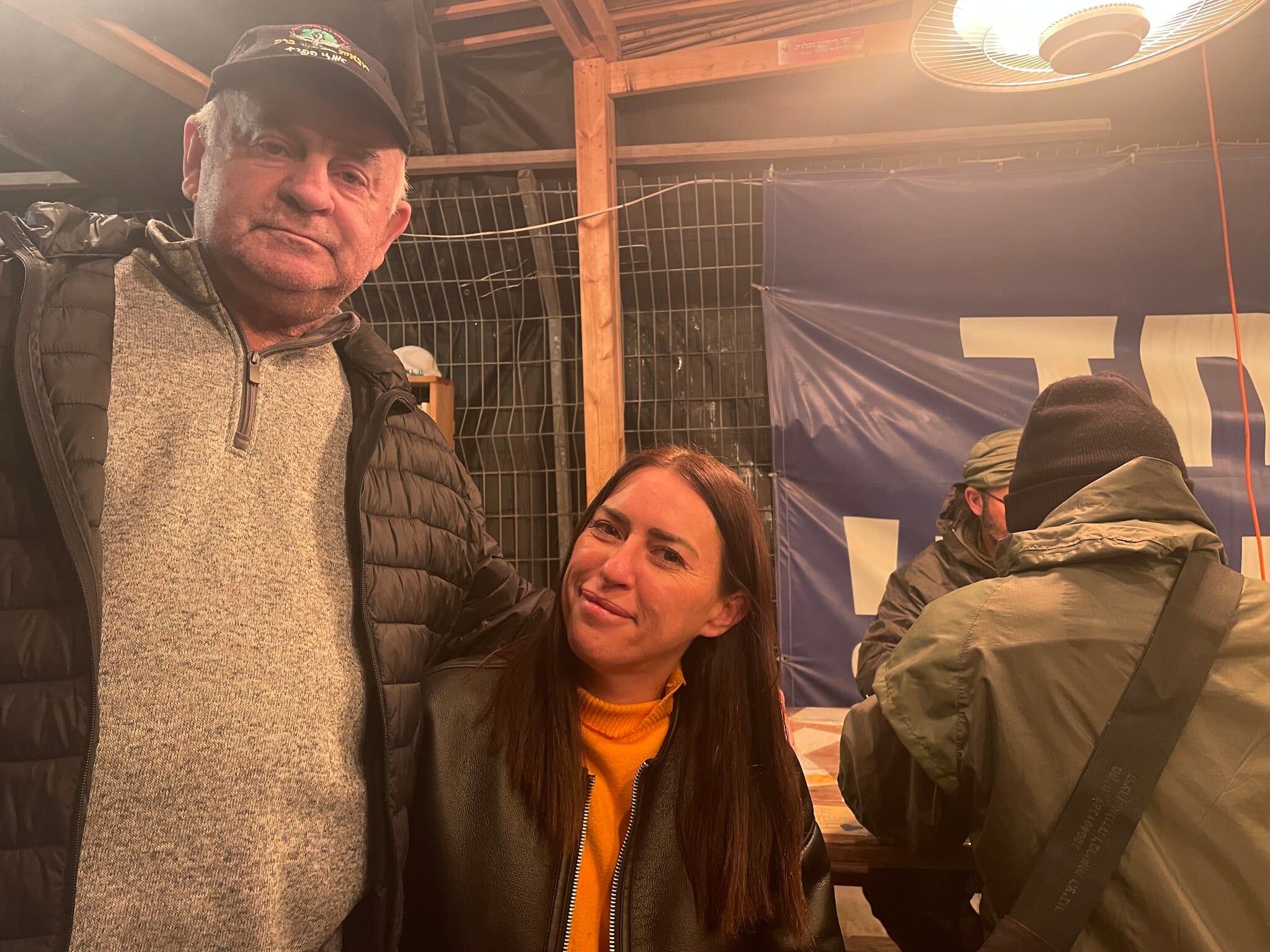
Christians from Holland have come to cook fries, and a Bedouin couple from Rahat helped clean the facility to kosher standards for Passover last year.
“We are the most unorganized organization in the world,” Trabelsi quipped. “Nobody ever tells me when they’re coming. Only Hashem knows,” he said, using a euphemism for God.
Healing broken hearts
While built for soldiers, the junction has become a sanctuary for others, too. It has become part of the itinerary for many Israeli and overseas tourists visiting locations struck on October 7, as well as a welcoming spot for bereaved parents on the way to the Nova site, where hundreds of partygoers were massacred.
Raaya and Hila Rotem, who were taken hostage from Kibbutz Be’eri on October 7, came by one day. Not knowing who they were, Trabelsi welcomed them with Shuva Achim’s signature fishball buns. Both women have since returned to volunteer.
The emotional weight of the site is heavy.
“The soldiers have seen terrible things and sometimes open up to us,” said one anonymous volunteer. “There are lots of broken hearts.”
Operating Shuva Achim initially cost $4,000 per day, a figure that has since settled to roughly $50,000 per month. While the family began by spending their own savings, a fundraising campaign on IsraelGives has raised nearly $1 million toward a $1.5 million goal.
Trabelsi has no plans to stop. He dreams of a permanent facility and branches across Israel for any soldier “who wakes up sweating at night.”
“This is my life now,” he said. “Tour guides can talk about Am Yisrael [the People of Israel], but nobody will really understand until they come here. When they leave Shuva, the only thing that will come out of their mouths is ‘Am Yisrael Hai’ — the People of Israel live.”



The Times of Israel Community.