

Live updates (closed)
 Add ToI as a Preferred Source on Google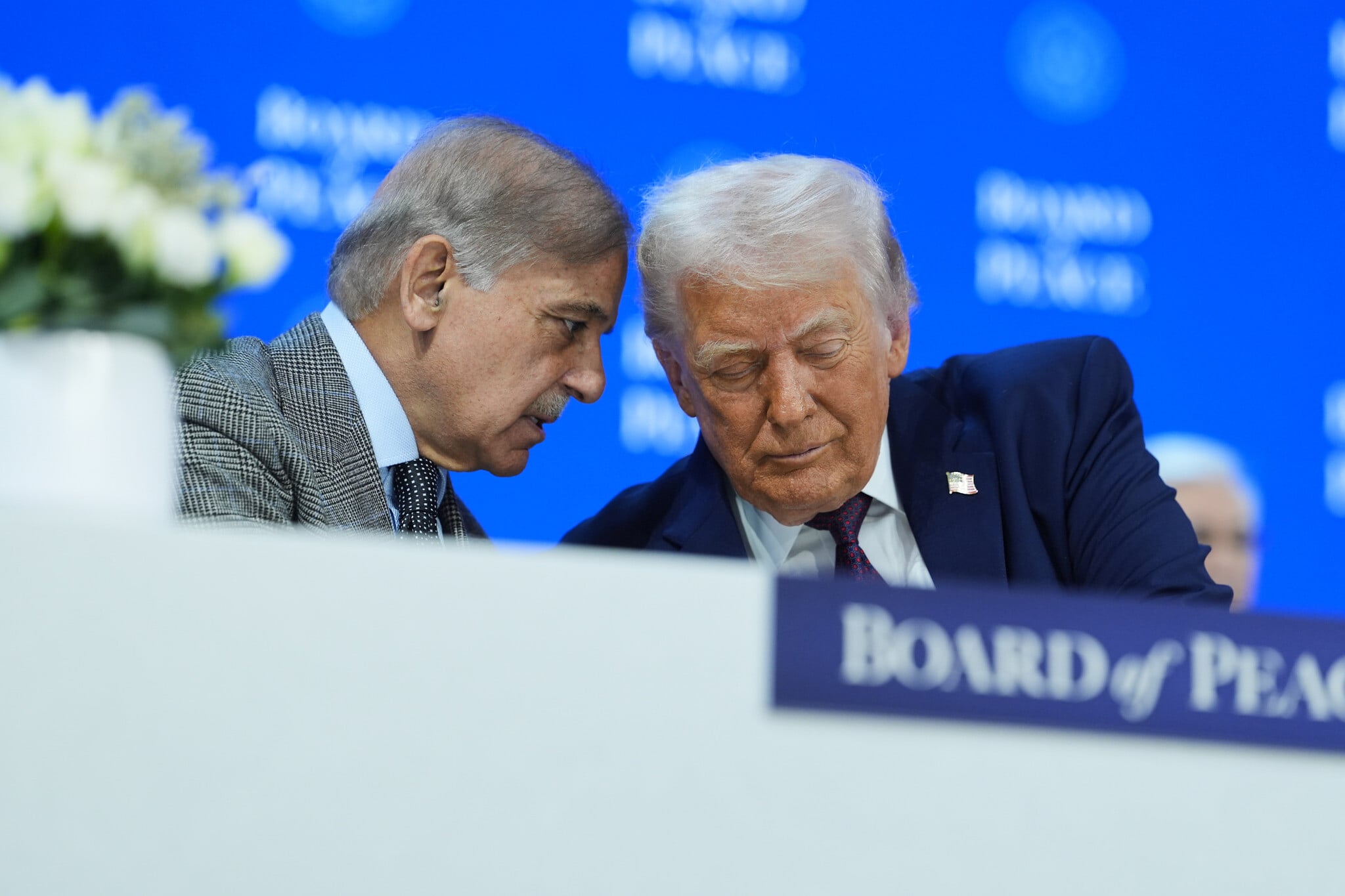
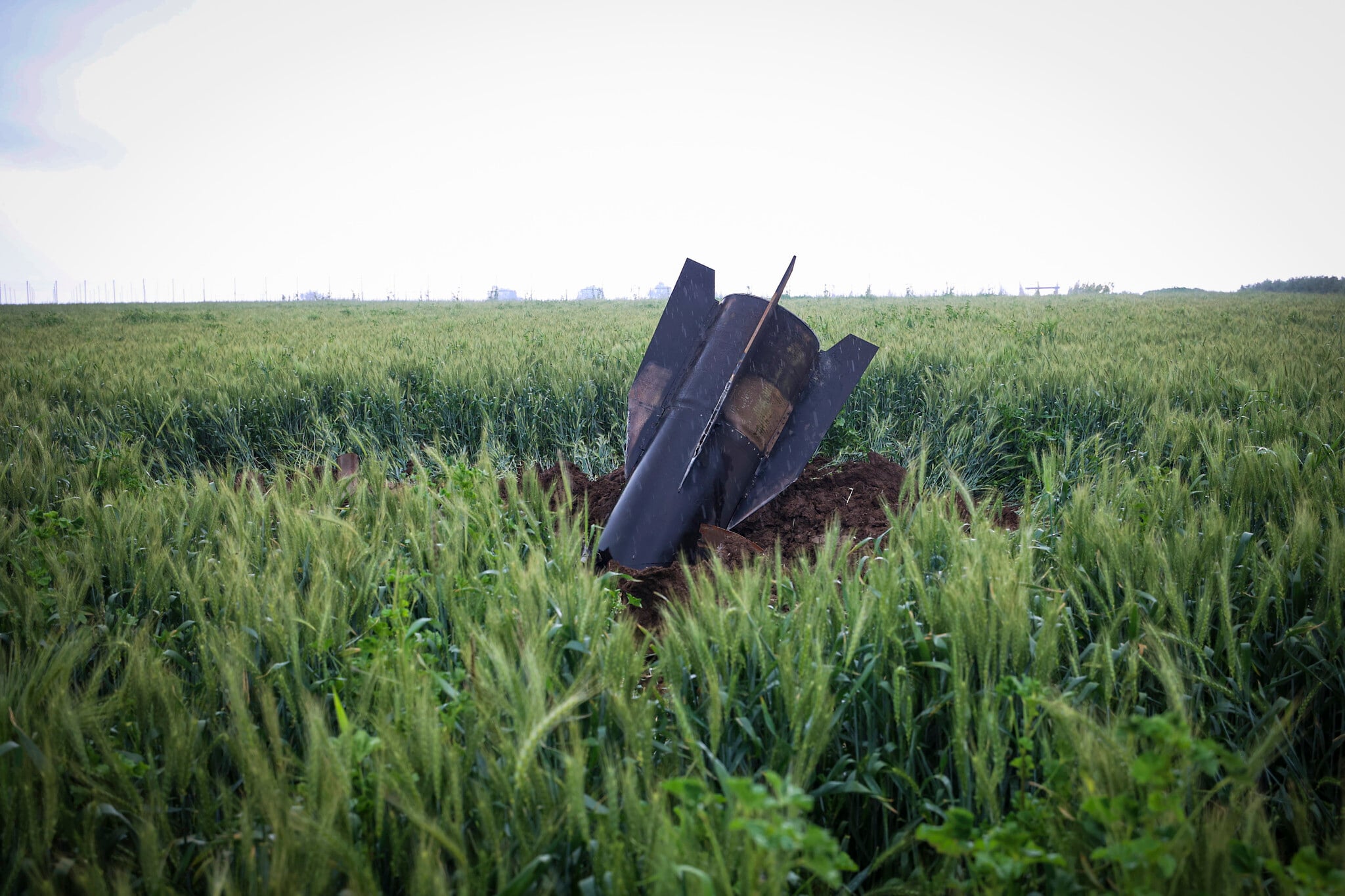
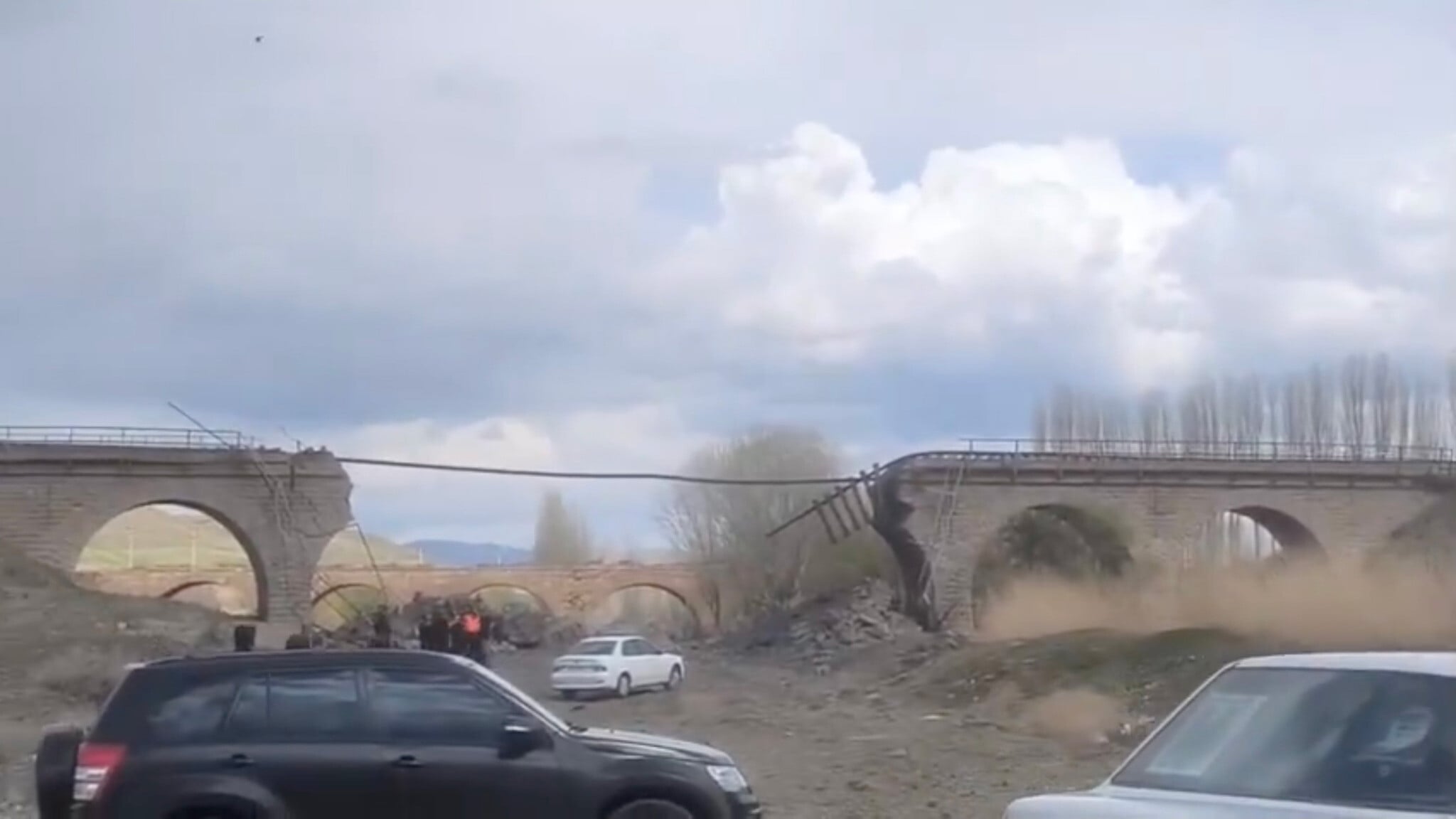
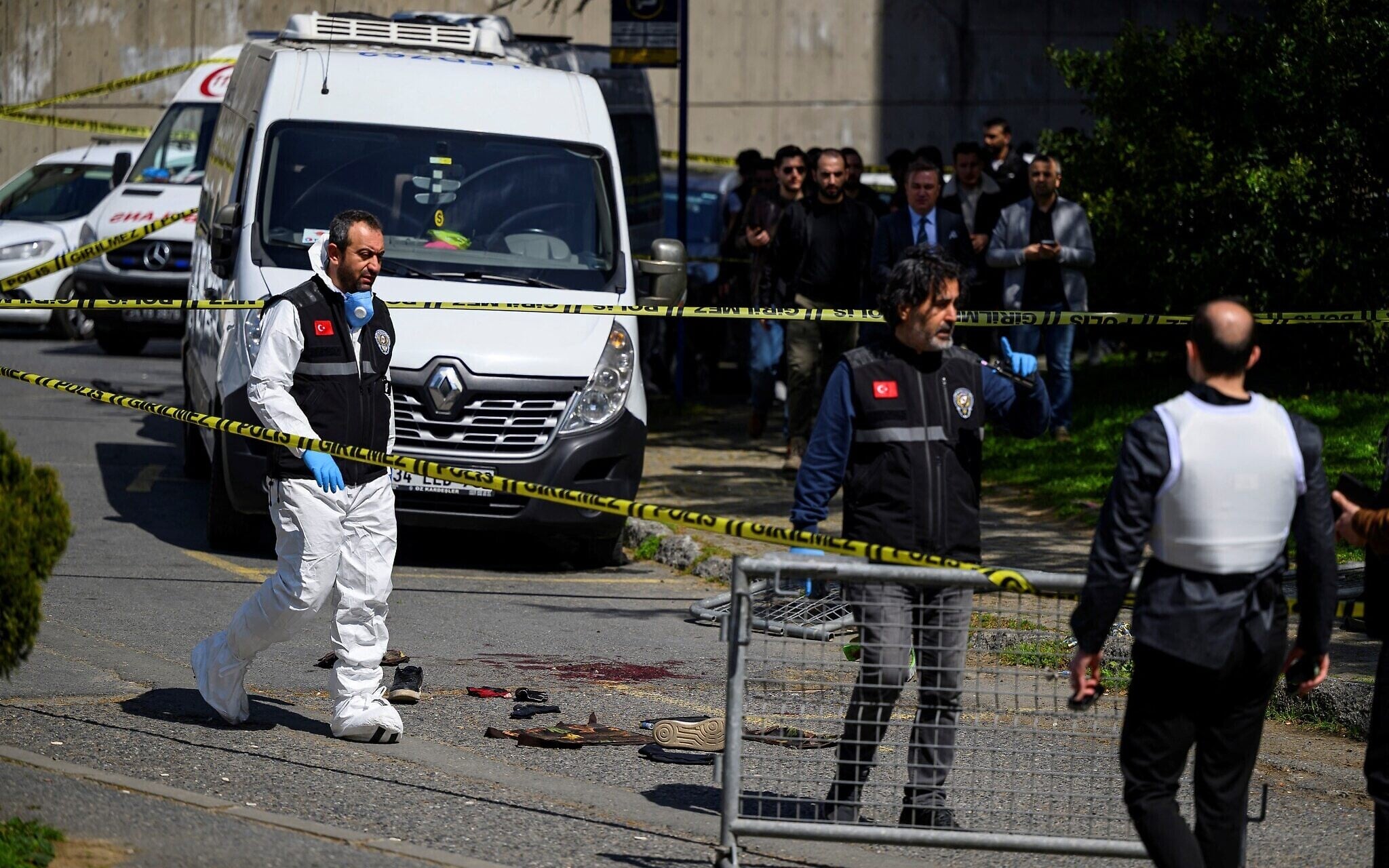
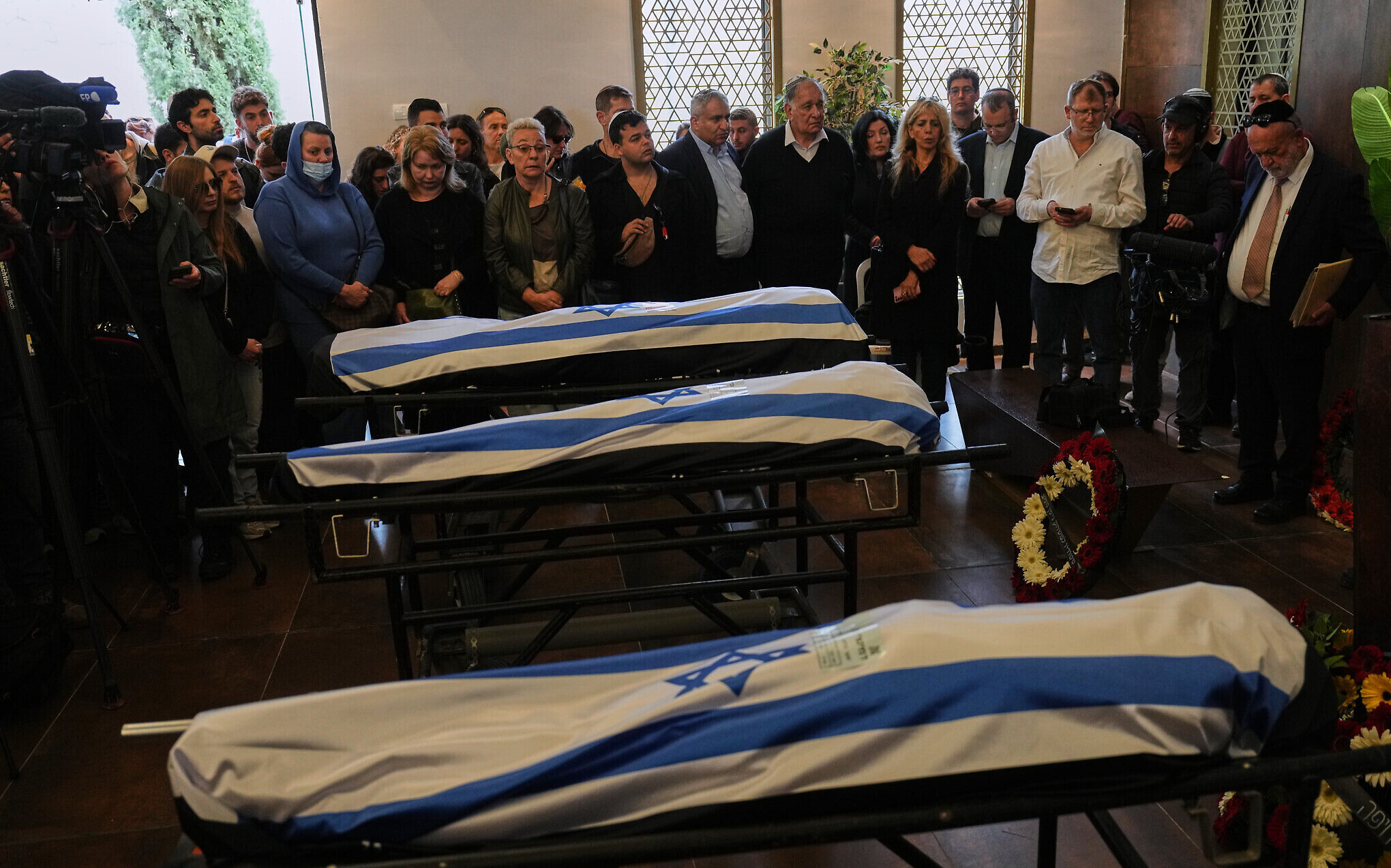
The Times of Israel liveblogged Tuesday’s events as they unfolded.
Trump blasts Tucker Carlson as a ‘low IQ person’ over Iran war claims

Donald Trump speaks with Tucker Carlson during a Tucker Carlson Live Tour show at Desert Diamond Arena, October 31, 2024, in Glendale, Arizona. (AP Photo/Julia Demaree Nikhinson, File)
US President Donald Trump slams far-right media personality Tucker Carlson as “a low IQ person” after the latter claimed that the US was taking steps toward nuclear war.
“Tucker’s a low IQ person that has absolutely no idea what’s going on,” the US president tells the New York Post in a phone call. “He calls me all the time; I don’t respond to his calls. I don’t deal with him. I like dealing with smart people, not fools.”
Carlson, who embraces conspiracy theories and antisemitic rhetoric, has millions of followers online and his online show receives more viewership than some broadcast news networks.
As Trump deadline nears, IDF says it doesn’t have ‘concrete intelligence’ that Iran is planning larger attack
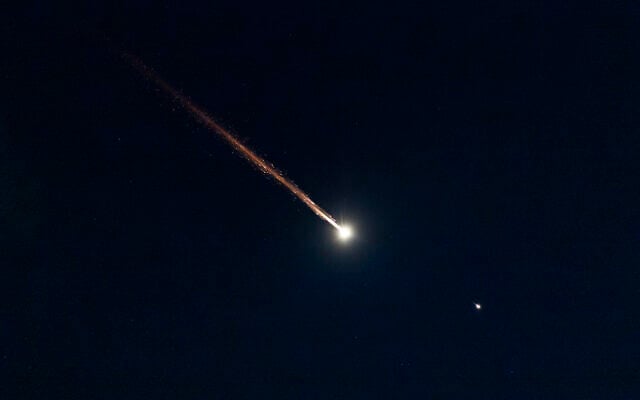
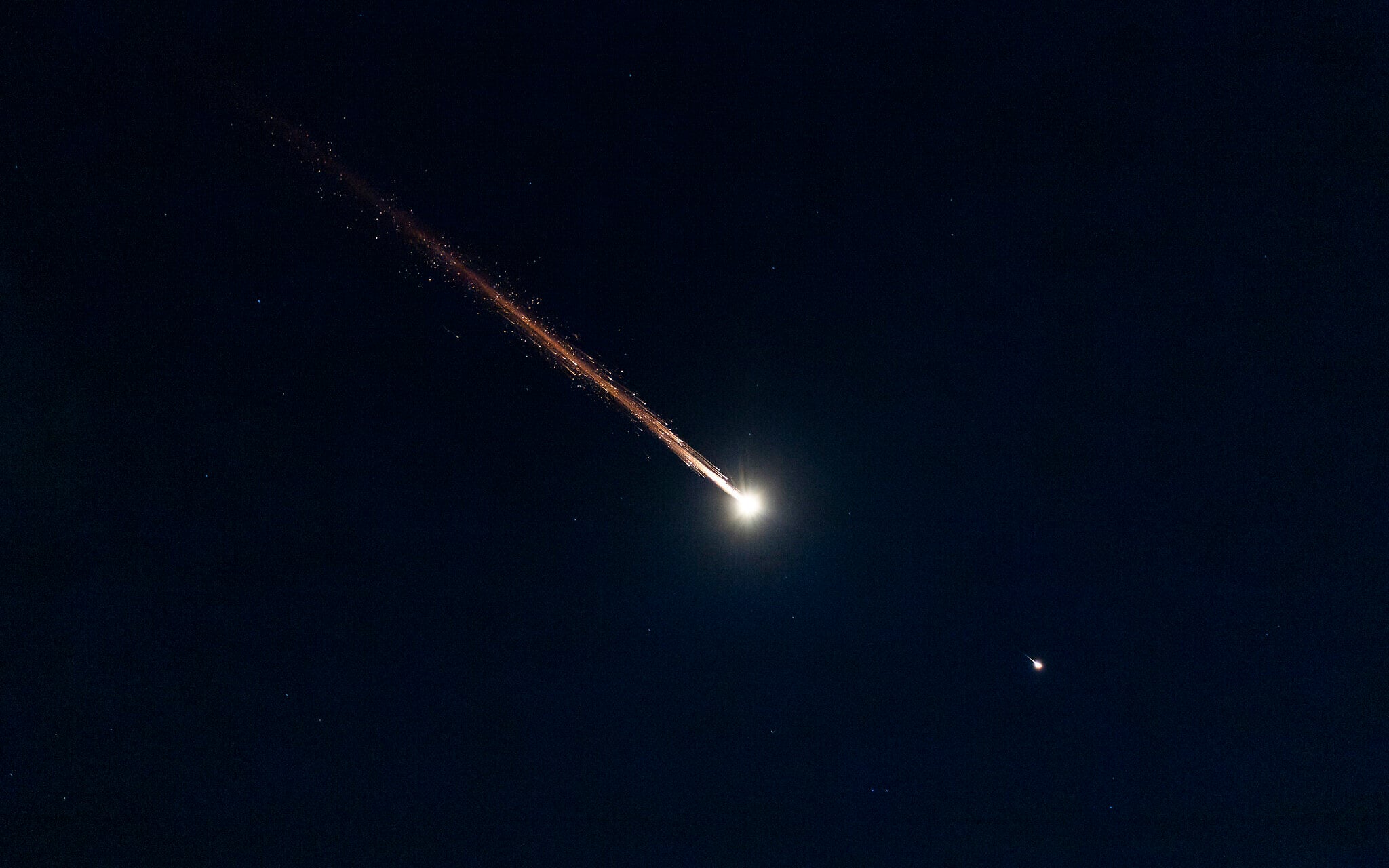
A ballistic missile fired from Iran, as seen over Jerusalem, April 7, 2026.(Yonatan Sindel/Flash90)
After the IDF warned of possible increased missile fire on Israel in the coming hours, the military says it does not have “concrete intelligence” that Iran is planning a larger attack.
The military says it issued issued the warning this evening amid “heightened tensions” in the Middle East, as US President Donald Trump’s ultimatum for Iran is set to expire.
Following an assessment, the IDF decided to warn civilians of possible increased missile fire from Iran, but stopped short of instructing them to remain close to bomb shelters.
The IDF says the public will be updated if there is any change to Home Front Command guidelines.
2 lightly injured in earlier Iranian ballistic missile attack on southern Israel
Two people were lightly injured in Iran’s ballistic missile attack on southern Israel earlier tonight, medics say.
Magen David Adom says it treated two men, aged 30 and 50, who were hit by shrapnel after fragments from the interception of the missile crashed down.
Palestinian woman, 68, dies during Israeli raid in West Bank; husband says soldier pushed her; IDF denies entering home
A 68-year-old Palestinian woman died during an IDF raid of her village in the northern West Bank early Tuesday, according to Palestinian media.
WAFA, the Palestinian Authority’s official news agency, says Sabriya Shamasneh suffered heart failure due to the “intense shock and fear” after soldiers tried to forcibly enter her home in the village of Jayyus at about 2 a.m. She was reportedly declared dead at a hospital in Qalqilya.
The IDF denies having entered her home, and says soldiers who were operating nearby went there to give her medical care after receiving an alert that she had suffered a heart attack, according to the Ynet news site.
الشهيدة المسنّة صبرية أمين شماسنة (68 عاماً) التي ارتقت خلال اقتحام قوات الاحتلال منزلها في بلدة جيوس شرق قلقيلية pic.twitter.com/8dfgARdFxn
— قناة عودة الفضائية (@AwdehTV) April 7, 2026
But speaking to Al Jazeera, Sabriya’s husband Walid says soldiers did raid his home, and that a soldier used his assault rifle to push Sabriya, who hit her head against a wall and died.
“I got up to get dressed, but they were already knocking down the door and entering our room,” he says, adding that the soldiers proceeded to search clothes, bedding and furniture before leaving.
Sabriya then exited the house to call out for her son, thinking the soldiers had seized him from the home of a relative in the village, the husband says. It is unclear from his comments if she was in front of their home or in another location, or why she assumed they were searching for her son.
"الجندي دفعها بالسلاح ورأسها ضرب في السور".. الفلسطيني وليد شماسنة يروي لحظة استشهاد زوجته صبرية شماسنة جراء اعتداء جنود الاحتلال عليها خلال اقتحام منزلها.. ماذا قال؟ #رقمي pic.twitter.com/PSFLfSRjzi
— الجزيرة فلسطين (@AJA_Palestine) April 7, 2026
As Sabriya sought her son, a soldier “pushed her with part of the weapon he had with him; she collapsed and her head hit the wall,” says Walid Shamasneh, adding that “when she fell, there was foam coming out of her mouth, and she didn’t speak.”
“I came and she was strewn on the ground. I said [to the soldier], ‘Have you no mercy or compassion? The woman is dead’,” says the husband.
The soldier responded that an ambulance would come take her to the hospital, and the troops carried on their operation, says Walid Shamasneh.
“Is there a darker day than this?” he asks, in tears.
IDF again issues evacuation warning for civilians in south Lebanon’s Tyre
Israel’s military warns residents of Tyre in southern Lebanon to evacuate as it continues to target the Iran-backed Lebanese terror group Hezbollah.
“Urgent warning to the residents of the city of Tyre, specifically in Shabriha… you must evacuate your homes immediately,” the Israeli military’s Arabic-language spokesman, Avichay Adraee, writes on social media, illustrated by an image of the area to be targeted with a tower block highlighted.
“To guarantee your safety, evacuate your homes immediately and move north of the Zahrani River,” he writes.
“Hezbollah terrorist activities are forcing the IDF to take action against it with force. The IDF does not intend to harm you,” he writes.
The entire city is already under a blanket evacuation order, and the IDF has repeatedly ordered its residents to leave in recent weeks.
Qatar says 4 injured, including child, after debris fell on home amid interception of Iranian missile
Qatar’s interior ministry says that four people, including a child, were injured after debris fell on a house in the Muraikh area following an interception of Iranian missiles.
Regional source to CNN: ‘Some good news expected from both sides soon’ amid Pakistan’s Iran war proposal
A regional source tells CNN that “some good news is expected from both sides soon” after Pakistan requested US President Donald Trump extend his deadline for Iran to reopen the Strait of Hormuz, and called for a two-week truce amid diplomatic negotiations.
The source tells the outlet that it is expected that an agreement will be reached tonight.
The unnamed source says that discussions are being directed by Pakistan’s army chief, Field Marshal Asim Munir.
A senior Iranian official tells Reuters that Tehran is positively reviewing Pakistan’s request to secure more time for diplomacy.
There is no formal confirmation of Tehran’s position.
Before the announcement of Pakistan’s proposal, Trump had told Fox News that the US was in “heated discussions” as the deadline neared.
5 explosions heard in area of Baghdad where US embassy is located
Five explosions are heard in the center of Baghdad, where the US embassy is located.
Since the start of the US-Israeli war against Iran, the embassy and a US diplomatic and logistics centre at Baghdad’s airport have been repeatedly targeted by rockets and drones launched by pro-Tehran armed groups, most of which have been intercepted by air defenses.
Head of US Jewish group decries Trump’s threat to destroy ‘a whole civilization’

Amy Spitalnick onstage in an undated photo. (Streicker Center)
A Jewish leader in the US decries US President Donald Trump’s threat to destroy “a whole civilization” as his deadline for Iran nears.
“We know what it means when leaders call for communities and populations to be wiped out,” Amy Spitalnick, CEO of the Jewish Council for Public Affairs, says in a statement. “Any suggestion that this advances Jewish or Israeli safety is simply an exploitation of our community to advance horrific war crimes and the President’s broader extreme anti-democratic agenda.”
She urges people to recognize “multiple truths” that Iran’s government is repressive and dangerous, and the Trump administration is increasingly flouting its constitutional and humanitarian obligations.
Explosions heard in Qatari capital; UAE says aerial defenses countering Iranian missiles
Blasts are heard in the Qatari capital Doha, while the UAE says its air defenses are responding to missile threats.
“The UAE’s air defenses are currently dealing with missile and drone attacks coming from Iran,” the Emirati Ministry of Defense says in a statement on X.
The explosions come several hours before a US deadline for Iran to agree to a deal or suffer attacks on its civilian infrastructure.
Trump will respond soon to Pakistan’s deadline extension proposal, White House says
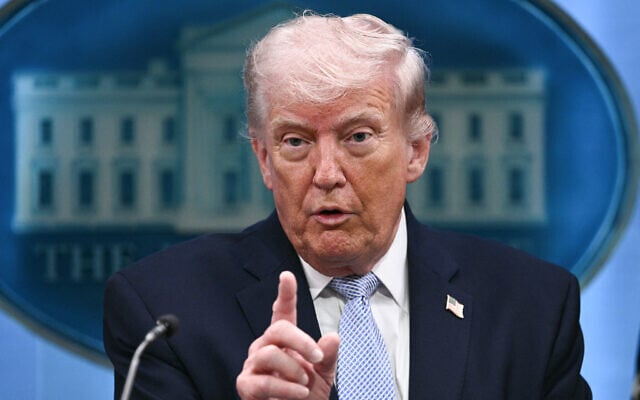
US President Donald Trump speaks about the conflict in Iran in the James S. Brady Press Briefing Room of the White House on April 6, 2026, in Washington, DC. (Brendan SMIALOWSKI / AFP)
US President Donald Trump has been made aware of the request by Pakistani mediators to push back his 8 p.m. Eastern Time deadline for Iran to reopen the Strait of Hormuz, White House press secretary Karoline Leavitt says.
“A response will come,” she adds in a statement.
IDF warns of potential increased missile fire at Israel in coming hours as Trump deadline set to expire
A ballistic missile fired from Iran, as seen over Jerusalem, April 7, 2026.(Yonatan Sindel/Flash90)
The Israel Defense Forces assesses that there could be increased fire toward Israel in the coming hours.
The military says that the assessment has been made as US President Donald Trump’s deadline is set to expire in just over four hours.
The IDF says that it is prepared to both defend and attack, and that the public will be updated if there is any change to Home Front Command guidelines.
Earlier today, Trump threatened that “a whole civilization will die tonight, never to be brought back again,” if Iran doesn’t agree to his demands for reopening the Strait of Hormuz by 8 p.m. EST.
Pakistan PM asks Trump to extend Iran deadline by 2 weeks, calls for truce and for Tehran to open strait during that period

President Donald Trump, right, speaks with Shehbaz Sharif, Prime Minister of Pakistan, during a signing of the Board of Peace charter during the Annual Meeting of the World Economic Forum in Davos, Switzerland, January 22, 2026. (AP Photo/Evan Vucci)
Pakistan’s prime minister asks US President Donald Trump to postpone his deadline for Iran by two weeks and implement a truce for that same period, also urging Tehran to allow maritime traffic through the Strait of Hormuz during that time.
“To allow diplomacy to run its course, I earnestly request President Trump to extend the deadline for two weeks,” writes Shehbaz Sharif, whose government is serving as a mediator between Iran and the United States.
“Pakistan, in all sincerity, requests the Iranian brothers to open Strait of Hormuz for a corresponding period of two weeks as a goodwill gesture,” he writes on X.
“We also urge all warring parties to observe a ceasefire everywhere for two weeks to allow diplomacy to achieve conclusive termination of war, in the interest of long-term peace and stability in the region,” Sharif writes.
The Pakistani premier says that efforts to end the conflict are “progressing steadily, strongly and powerfully.”
In an expletive-laden post earlier this week, Trump warned that the US would attack power plants and bridges in Iran starting Tuesday evening if the Islamic Republic failed to reopen the key waterway. The US president’s deadline is set to expire at 8 p.m. EST.
Iran ready for ‘all scenarios’ after Trump threats, senior official says
Iran is prepared for all possibilities in its war with the United States and Israel, First Vice President Mohammad Reza Aref says, following threats from US President Donald Trump.
“National security and infrastructure sustainability are the subject of our precise calculations. The government has finalized the necessary measures in detail for all scenarios. No threat is beyond our preparedness and intelligence,” Aref says in a post on X.
Trump threatened that “a whole civilization will die tonight, never to be brought back again,” if Iran doesn’t agree to his demands for reopening the Strait of Hormuz by 8 p.m. EST.
Pope Leo says threats against Iran ‘unacceptable’ in unusual appeal after Trump warning

Pope Leo XIV leads a mass for Palm Sunday at St Peter's square in the Vatican on March 29, 2026. (Tiziana FABI / AFP)
Pope Leo says that threats against Iran are “unacceptable,” in an unusual appeal hours after US President Donald Trump said “a whole civilization will die tonight” if Tehran doesn’t agree to his demands for reopening the Strait of Hormuz, in a social media post that shocked world leaders.
Leo, who has emerged as an outspoken critic of the Iran war, calls on citizens across the world to contact their political representatives and ask them to bring the expanding regional conflict to an end.
Missile fragments hit Beersheba amid latest attack from Iran; no reports of injuries
The latest Iranian ballistic missile fired at southern Israel was intercepted, according to the IDF.
Rescue forces are responding to reports of fragments that fell in several areas of Beersheba.
There are no immediate reports of injuries.
Report: Before war, top US officials told Trump that Netanyahu’s regime change plan was ‘bullshit, farcical’

US President Donald Trump pretends to aim a sniper gun while speaking with reporters in the James Brady Press Briefing Room at the White House, April 6, 2026, in Washington. (AP/Julia Demaree Nikhinson)
The New York Times reveals details of a series of situation room meetings held by US President Donald Trump in the lead up to the start of the war with Iran, including one in which Prime Minister Benjamin Netanyahu reportedly pitched a plan that would see the end of the Islamic Republic’s regime, apparently later described by the CIA chief as “farcical” and US Secretary of State Marco Rubio as “bullshit.”
According to the report, Netanyahu gave a presentation to a small meeting including the US president on February 11 that outlined plans for a potential conflict.
The Israeli premier apparently suggested that Iran’s ballistic missile program could be destroyed in a few weeks, and the weakened regime would not only be unable to close the key Strait of Hormuz, but there was only a minimal chance that Tehran would attack neighboring countries.
Additionally, it was apparently said that Mossad had indicated that the protest movement could be reignited, with the spy agency playing a role, allowing the Iranian opposition to take power amid an intensive campaign of airstrikes. The report says the Israeli team also suggested Kurdish fighters could enter Iran from Iraq in a ground operation.
According to the Times, a day later, CIA Director John Ratcliffe told a meeting of top US officials, including Trump, that Netanyahu’s presentation on potential regime change was “farcical.”
The report says that Rubio then said: “In other words, it’s bullshit.”
When Trump asked Gen. Dan Caine, chair of the US Joint Chiefs of Staff, for his opinion, the top military official reportedly told the president that the plan from the Israelis appeared overblown.
“Sir, this is, in my experience, standard operating procedure for the Israelis. They oversell, and their plans are not always well-developed. They know they need us, and that’s why they’re hard-selling,” Caine reportedly said.
The report says that, in fact, Trump appeared most interested in killing the then supreme leader Ali Khamenei and delivering a blow to the regime’s military capabilities, with other aspects of the plan less relevant.
“Over the following days, General Caine shared with Mr. Trump and others the alarming military assessment that a major campaign against Iran would drastically deplete stockpiles of American weaponry, including missile interceptors, whose supply had been strained after years of support for Ukraine and Israel. General Caine saw no clear path to quickly replenishing these stockpiles,” the report says.
“He also flagged the enormous difficulty of securing the Strait of Hormuz and the risks of Iran blocking it. Mr. Trump had dismissed that possibility on the assumption that the regime would capitulate before it came to that. The president appeared to think it would be a very quick war — an impression that had been reinforced by the tepid response to the US bombing of Iran’s nuclear facilities in June,” the New York Times says.
The newspaper says that while Caine’s colleagues believed the military official thought war with Iran was a bad idea, he did not tell Trump his opinion on the matter.
IDF detects ballistic missile attack from Iran; sirens expected in south
The IDF has detected a fresh ballistic missile attack from Iran, targeting southern Israel.
Sirens are expected to sound in the coming minutes.
16-year-old shot and killed in Kafr Qara; no reports of arrests
A 16-year-old was shot and killed in the town of Kafr Qara, reports say.
In a statement, police say that the motive for the killing appeared to be criminal rather than nationalistic.
There are no reports of arrests.
The killing comes a few hours after a 42-year-old man was shot and killed in Lod. Reports say law enforcement believed the killing to be part of a feud between criminal organizations.
Iran’s ‘most central site’ for production of underwater detection systems hit in strike, IDF says
Iran’s “most central site” for the production of sonar and other underwater detection systems was bombed by the Israeli Air Force yesterday, the military says.
The facility in Shiraz, which the IDF says belonged to Iran’s defense ministry, “was used for the planning, research, development, and production of sonar systems that operate using sound waves, and are used to detect submarines, vessels, divers, and underwater missiles.”
The IDF says the strike “significantly damaged the maritime detection and defense capabilities of the Iranian terror regime, as well as its ability to produce and maintain submarines and maritime electronic systems.”
In another strike yesterday, the IDF says it struck a “central site” in Karaj used to manufacture naval cruise missiles and air defense systems.
Latest Iranian ballistic missile hit open area, IDF says; no reports of injuries
The latest Iranian ballistic missile fired at southern Israel was allowed to strike an open area, according to the IDF.
There are no immediate reports of injuries.
‘Problematic’ letter by Shin Bet chief’s wife draws criticism over gender stereotypes – report
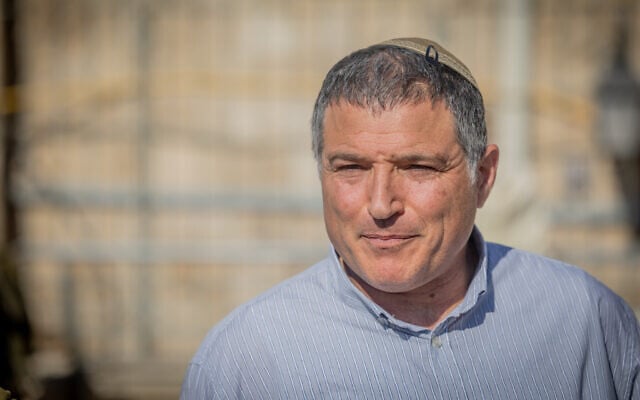
David Zini at the Western Wall in Jerusalem's Old City on August 6, 2025 (Chaim Goldberg/Flash90)
Naomi Zini, the wife of Shin Bet chief David Zini, sparks criticism within the security agency after sending a letter addressed to “the wives of the organization’s personnel,” despite roughly half of its members being women, according to the Kan public broadcaster.
“Like you, I have come to carry the burden of Israel’s security, shoulder to shoulder with my husband. I join you – those who have chosen this path for years,” Zini reportedly wrote, describing herself as “a link in the chain of the women of Israel across generations.”
She praised the role of women in supporting the home front, writing that they “cling to life… and set up our homes and our people on their feet in their revival after two thousand years of exile toward a great destiny whose realization we are only at the beginning of.”
The letter draws pushback from the agency’s gender equality commissioner, who says it contains “problematic elements in quite a few respects.”
According to the official, the framing “ignores and effectively excludes a large group of female employees and managers,” whose male partners support them in carrying out their roles in safeguarding Israel’s security.
She also criticizes the exclusion of non-married partners and same-sex couples, adding that “women in 2026 are much more than joy and running the household.”
While acknowledging the letter’s intent to express support during wartime, the commissioner says “the way it was conveyed caused hurt to quite a few people along the way.”
IDF detects ballistic missile attack from Iran; sirens expected in south
The IDF has detected a new ballistic missile attack from Iran, targeting southern Israel.
Sirens are expected to sound in the coming minutes.
Report: Israel braces for Trump’s deadline, coordinates new Iran targets with US ahead of potential escalation
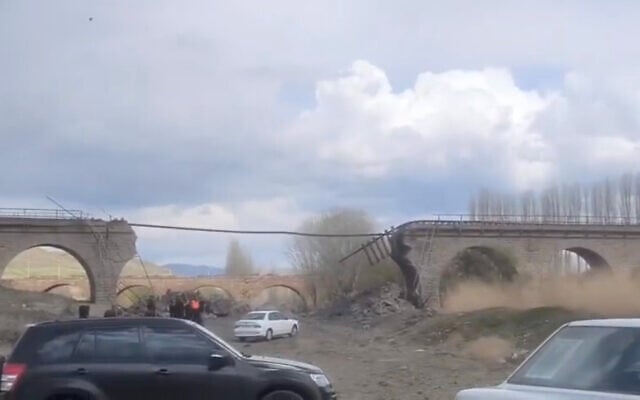
A railway bridge apparently hit in a strike near Amin Abad, Iran on April 7, 2026. (Screenshot from video posted on X)
Israel is preparing for a range of scenarios ahead of the 8 p.m. EST deadline to US President Donald Trump’s Iran ultimatum, from a ceasefire or interim framework agreement to a potential expansion of strikes beyond those already carried out by Israel and the United States, Channel 12 reports.
Senior officials reportedly describe the coming hours as “dramatic,” amid concern that Washington and Tehran could reach a last-minute arrangement that would not fully address key issues – particularly Iran’s nuclear program – and may not safeguard all Israeli interests.
At the same time, officials tell the news outlet that if Trump’s deadline expires without a deal, it could open an “extraordinary window of opportunity” to strike Iranian energy, electricity and other national infrastructure sites that have yet to be targeted.
Israel and the US have already coordinated a division of such targets, the report says.
Meanwhile, mediators – namely Qatar and Pakistan – are reportedly continuing efforts to broker a compromise that could at least prevent an escalation.
US journalist Shelly Kittleson released by Iran-backed militia, Iraqi official says

US journalist Shelly Kittleson poses for a cellphone photo in a cafe in Baghdad, Iraq, March 30, 2026. (AP Photo)
American journalist Shelly Kittleson, who was kidnapped in Baghdad last week, has been released, an Iraqi official with direct knowledge of the situation says.
The official, who spoke on condition of anonymity because he was not authorized to comment publicly, says Kittleson was freed in the afternoon.
He does not share her current whereabouts but says that prior to her release, she had been held in Baghdad.
The powerful Iran-backed Iraqi militia Kataib Hezbollah said in a statement earlier in the day that it had decided to free the journalist, and officials with the militia told The Associated Press that members of the group previously detained by Iraqi authorities would be released in exchange.
IDF admits Tehran synagogue damaged in strike targeting Iranian commander, regrets ‘collateral damage’
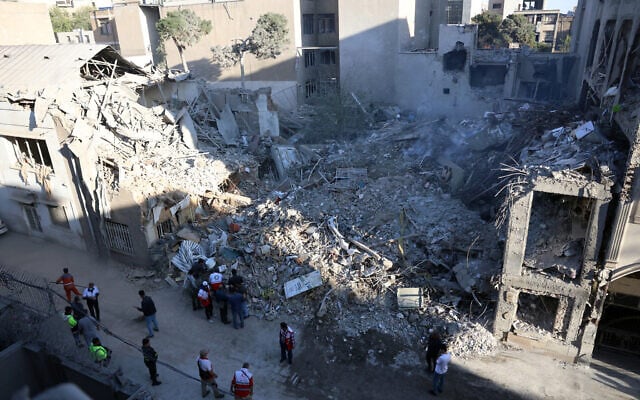
Iranian emergency services gather at the site of strikes that according to local media reports damaged the Rafi-Nia Synagogue and nearby residential buildings in Tehran, on April 7 2026. (AFP)
The IDF says it carried out a strike that damaged a synagogue in Tehran earlier today, saying it was targeting a senior Iranian commander and that it regretted the “collateral damage” to the Jewish house of worship nearby.
According to Iranian media and footage, heavy damage was caused to the Rafi Niya synagogue.
In response to a query by The Times of Israel, the military says that it struck a top commander from Khatam al-Anbiya, Iran’s military emergency command.
“Reports were received that a nearby synagogue was also damaged in the strike. The IDF regrets the collateral damage to the synagogue and emphasizes that the strike was directed at a senior military target within the regime’s armed forces,” the IDF says.
The IDF says that it took steps to “minimize the risk of harm to civilians” in the strike, “including the use of precise munitions and aerial surveillance.”
The results of the strike are still under review, the military adds.
A Jewish synagogue in center of Tehran was damaged by the enemy at 4 a.m. on Tuesday.
Debris removal operations are ongoing. pic.twitter.com/AJuFAptTFV— IRNA News Agency ☫ (@IrnaEnglish) April 7, 2026
Report: Some progress in US-Iran talks but agreement still a long shot
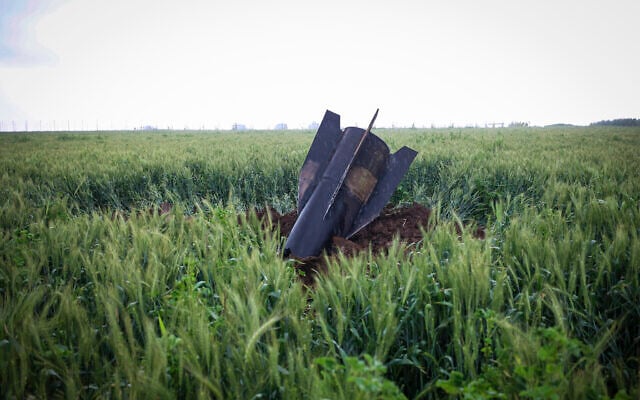
Part of a missile fired from Iran toward Israel is seen after it hit the ground in the Golan Heights, April 7, 2026. (Maor Kinsbursky/Flash90)
Some progress has been made in negotiations between the US and Iran, but an agreement still looks to be a long shot, the Axios news site reports.
The site says the assessment is according to a US official, an Israeli official and two other sources who have knowledge of the discussions.
A US official tells the outlet that US President Donald Trump’s administration was originally questioning “can we get there?,” but is now asking “can we get there by 8 o’clock tonight?” The timeframe is a reference to the deadline imposed by the US president.
“The last proposal we got wasn’t really what we wanted, but it was a lot better than we expected,” a US official says. A source adds that mediators then worked with Tehran on amendments.
“There’s an appetite for more talks. Last week it was Geneva, this week it could be Islamabad,” a US official says.
Trump threatened earlier that “a whole civilization will die tonight, never to be brought back again,” if Iran doesn’t agree to his demands for reopening the Strait of Hormuz in the coming hours.
While the Wall Street Journal reported that Iran has ended direct talks with the US, Axios says it is unable to confirm that Tehran has ended discussions.
IDF calls on vessels off south Lebanon coast to sail north amid Hezbollah activity in area
The IDF calls on vessels off the coast of southern Lebanon to sail north toward Tyre.
“Hezbollah activity endangers vessels in the maritime area between Tyre and Ras Naqoura, which compels the IDF to act against it in the maritime domain,” says army spokesman Col. Avichay Adraee.
He says that “all vessels anchored or sailing in the maritime area marked on the map must immediately sail north of the Tyre area.”
#عاجل ‼️ انذار عاجل إلى جميع القطع البحرية في المجال البحري بين صور ورأس الناقورة
????إن نشاط حزب الله يعرّض القطع البحرية في المنطقة البحرية بين صور ورأس الناقورة للخطر الأمر الذي يجبر جيش الدفاع للعمل ضده في المجال البحري.
????حرصًا على سلامتكم يجب على جميع القطع البحرية الراسية… pic.twitter.com/82TVTMBZvz
— افيخاي ادرعي (@AvichayAdraee) April 7, 2026
US journalist Shelly Kittleson to be released, says Iran-aligned Kataib Hezbollah
US journalist Shelly Kittleson poses for a cellphone photo in a cafe in Baghdad, Iraq, March 30, 2026. (AP Photo)
Iraqi armed group Kataib Hezbollah, which is Iran-aligned, says it will release abducted US journalist Shelly Kittleson, adding that she must leave Iraq immediately.
Kittleson was abducted in late March in Baghdad.
Russia supplies Iran with spy imagery across the Middle East to hone attacks, Ukraine says
Russian satellites have made dozens of detailed imagery surveys of military facilities and critical sites across the Middle East to help Iran strike US forces and other targets, according to a Ukrainian intelligence assessment.
The conclusions, reviewed by Reuters, also found that Russian and Iranian hackers were collaborating in the cyber domain. They represent the most detailed account yet of how Russia has provided secret support to Iran since Israel and the US launched their assault on February 28.
Russian satellites, the undated assessment says, made at least 24 surveys of areas in 11 Middle Eastern countries from March 21 to 31, covering 46 “objects,” including US and other military bases and sites including airports and oil fields.
Within days of being surveyed, military bases and headquarters were targeted by Iranian ballistic missiles and drones, the assessment says, in what it described as a clear pattern.
A Western military source and a separate regional security source tell Reuters that their intelligence also indicates intense Russian satellite activity in the region and say that imagery had been shared with Iran.
Nine surveys covered parts of Saudi Arabia, including five over the King Khalid Military City near Hafar Al-Batin, in what appeared to be an effort to locate elements of the US-made THAAD air defense system, the Ukrainian assessment says.
Areas of Turkey, Jordan, Kuwait and the United Arab Emirates also came under satellite surveillance twice, while places in Israel, Qatar, Iraq, Bahrain and Naval Support Facility Diego Garcia did once, it says.
In an emerging trend, the assessment adds, Russian satellites were actively surveying the Strait of Hormuz, a vital waterway for a fifth of global oil and LNG flows where Iran has imposed a de facto blockade to all but “non-hostile vessels.”
At least 3 said killed after rockets launched from Kuwait hit house near Iraq’s Basra
At least three people were killed and five others wounded when rockets fired from the direction of Kuwait hit a house in Khor al-Zubair near Basra, security and health officials tell Reuters.
Police say the death toll could rise as some family members remain under the debris.
IDF: Latest Iranian ballistic missiles were intercepted or allowed to fall in open areas
The latest Iranian ballistic missiles fired at central Israel were intercepted or were allowed to strike open areas, according to the IDF.
There are no immediate reports of injuries.
Russia and China veto watered-down UN resolution aimed at reopening Strait of Hormuz
Russia and China veto a UN Security Council resolution aimed at reopening the Strait of Hormuz that had been repeatedly watered down in hopes that those two countries would abstain.
The vote — 11 in favor, two against and two abstentions — takes place just hours before an 8 p.m. Eastern deadline set by US President Donald Trump for Iran to open the strategic waterway or face attacks on its power plants and bridges.
It’s doubtful the resolution, even if it had been adopted, would have impacted the war, now in its fifth week, because it was significantly weakened to try to get Russia and China to abstain rather than veto it.
The initial Bahrain proposal would have authorized countries to use “all necessary means” — UN wording that would include military action — to ensure transit through the Strait of Hormuz and deter attempts to close it.
After Russia, China and France, all veto-wielding countries on the 15-member Security Council, expressed opposition to approving the use of force, the resolution was revised to eliminate all references to offensive action. It would have authorized only “all defensive means necessary.”
The resolution vetoed today “strongly encourages states interested in the use of commercial maritime routes in the Strait of Hormuz to coordinate efforts, defensive in nature, commensurate with the circumstances, to contribute to ensuring the safety and security of navigation across the Strait of Hormuz.”
Fresh Iranian missile attack targeting central Israel, says IDF
The IDF has identified another ballistic missile attack from Iran.
Sirens are expected to sound in central Israel in the coming minutes.
Iranian ballistic missile allowed to fall in open area in central Israel, says IDF
The Iranian ballistic missile fired at central Israel a few minutes ago was allowed to hit an open area, “according to protocol,” according to the IDF.
There are no reports of injuries.
Sirens had sounded across central Israel and the West Bank.
IDF’s Zamir: Israel ‘approaching a strategic crossroads’ in war against Iran
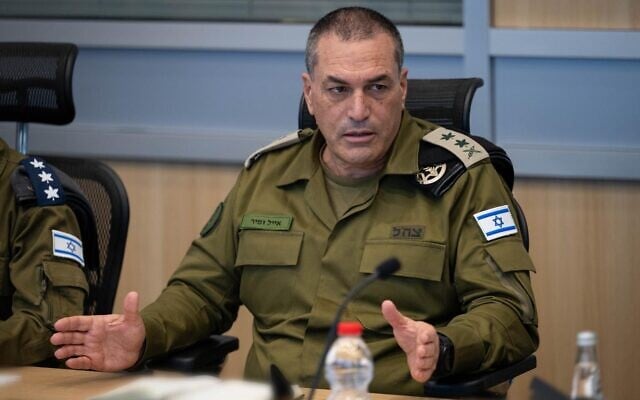
IDF Chief of Staff Lt. Gen. Eyal Zamir holds a security assessment at the IDF's underground command center at the military's HQ in Tel Aviv, April 7, 2026. (Israel Defense Forces)
IDF Chief of Staff Lt. Gen. Eyal Zamir says Israel is “approaching a strategic crossroads” in the war against Iran.
“We are approaching a strategic crossroads in the joint campaign against Iran. So far, we have achieved significant accomplishments, also in relation to the objectives we set when launching the operation. We will continue to act with determination and deepen the blows to the regime,” Zamir is quoted as saying by the IDF during an assessment.
On the IDF’s ground offensive against Hezbollah, he says “we continue to establish a forward defensive area to prevent direct fire toward our communities, while simultaneously operating against the rocket fire [deeper in Lebanon].”
Zelensky hosts Ukraine’s rabbis for Passover reception, doesn’t mention Trump or Netanyahu
Ukraine’s President Volodymyr Zelensky meets rabbis from the country’s main cities in his office in Kyiv for the Passover holiday, the fifth since Russian invaded in 2022.
The rabbis present Zelensky, himself Jewish, with a package of matzah baked in Dnipro and a new Ukrainian language translation of the Torah, the first of its kind.
The meeting, organized by the Federation of Jewish Communities of Ukraine, was originally scheduled for Sunday, March 29, which corresponds with the Lubavitcher Rebbe Menachem Mendel Schneerson’s birthday, but was moved because of Zelensky’s visit to the Middle East last week, an FJCU source tells The Times of Israel.
During the hour-long meeting, Zelensky speaks about freedom, the central theme of Passover, and said that both Ukraine and Israel are praying for freedom and victory over the “axis of evil,” according to an attendee.
Zelensky does not mention either US President Donald Trump or Prime Minister Benjamin Netanyahu — both of whom he has strained relationships with — but instead “focused on the fight against evil, the victory of light, and the hope and freedom that Passover symbolizes,” one of the participants says.
Zelensky was in Jordan last week but did not visit Israel, and hasn’t spoken with Netanyahu in over a year.
“Passover is about the triumph of freedom,” writes Zelensky on X. “This is exactly what all of Ukraine is fighting for today. I thanked the Jewish community for standing united with us in this struggle – for supporting people, helping communities, and praying for our state.”
On the occasion of Passover, I met with rabbis from Ukrainian cities and representatives of Jewish communities.
Passover is about the triumph of freedom. This is exactly what all of Ukraine is fighting for today. I thanked the Jewish community for standing united with us in this… pic.twitter.com/eyAzmcRR1g
— Volodymyr Zelenskyy / Володимир Зеленський (@ZelenskyyUa) April 6, 2026
Iranian missile heading for central Israel and Jerusalem area, says IDF
The IDF has identified a new ballistic missile attack from Iran.
Sirens are expected to sound in central Israel, the Jerusalem area, and the West Bank in the coming minutes.
Iran cuts off direct diplomacy with US as Trump deadline nears, but mediated discussions continue – report
US President Donald Trump speaks about the conflict in Iran in the James S. Brady Press Briefing Room of the White House on April 6, 2026, in Washington, DC. (Brendan SMIALOWSKI / AFP)
Iran has cut off direct diplomacy with the United States as US President Donald Trump’s deadline for the Islamic Republic to open the Strait of Hormuz, but indirect discussions are ongoing, the Wall Street Journal reports.
A Middle Eastern official tells the outlet that the move is intended to show Tehran’s disapproval.
Iran’s judiciary urges courts to ‘speed up’ execution verdicts linked to war
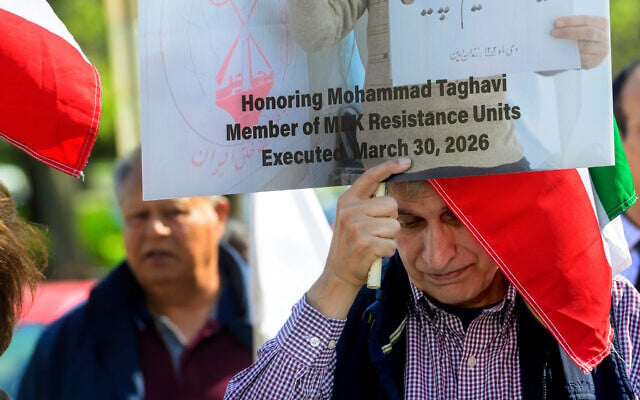
Glenn Torshizi, whose brothers were executed by the Iranian government, joins others in a picket line at the US State Department to highlight the executions in Karaj, Iran, of People's Mojahedin Organization of Iran members, March 30, 2026, in Washington. (AP Photo/ Rod Lamkey, Jr.)
Iran’s hardline judiciary chief urges courts to speed up verdicts linked to the US-Israeli war, including capital punishment, as activists sound the alarm about surging hangings of convicts seen as political prisoners.
Since the war began on February 28, Iran has hanged seven people in connection with the January protests, six convicted of membership of the banned opposition group the People’s Mujahedin of Iran (MEK), and a dual Iranian-Swedish citizen on charges of spying for Israel.
Rights groups have warned dozens more are at risk of execution over the January protests or after being arrested on suspicion of helping the enemy during the current war.
“You need to speed up the issuing of sentences for executions and the confiscation of property,” judiciary chief Gholam Hossein Mohseni Ejei tells a televised meeting of senior judiciary officials.
Using existing laws on punishing espionage, “it is necessary to continue issuing judicial verdicts for elements and agents of the aggressor enemy with greater speed,” he adds.
IDF says it bombed rail bridges, roads used by Iran to transport weapons and military equipment
A railway bridge apparently hit in a strike near Amin Abad, Iran on April 7, 2026. (Screenshot from video posted on X)
The IDF announces that it bombed eight rail bridges and sections of roads “used by the Iranian terror regime to transport weapons and military equipment.”
The strikes were carried out in several areas of Iran, including Tehran, Karaj, Tabriz, Kashan, and Qom, according to the military.
“The crossings were struck to prevent regime forces from using them to transfer equipment and weapons,” the IDF says in a statement.
Ahead of the strikes, the military warned Iranians not to use trains in the country.
Netanyahu ahead of Trump’s deadline: We are crushing Iranian regime ‘with increasing intensity’
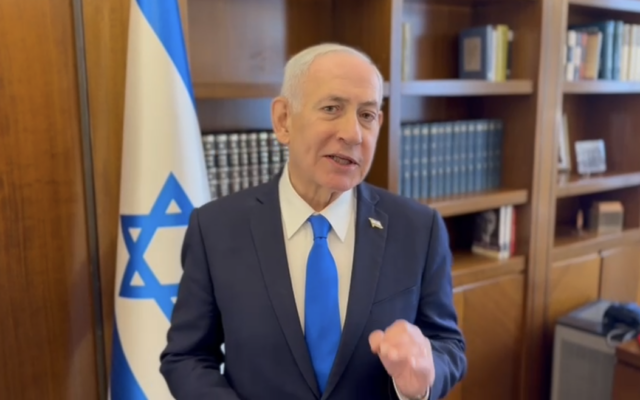
Prime Minister Benjamin Netanyahu gives a video statement on April 7, 2026 (Screen grab)
Israel is “crushing” the regime in Iran with growing force, Prime Minister Benjamin Netanyahu says shortly after US President Donald Trump threatened that “a whole civilization could die tonight.”
Trump’s latest deadline for Iran to open the Strait of Hormuz is set to expire later tonight at 8 p.m. EST.
“We are crushing the terrorist regime in Iran with increasing intensity,” says Netanyahu in a video statement. “Yesterday we destroyed transport aircraft and dozens of helicopters, and today we struck the railways and bridges used by the Revolutionary Guards.”
Netanyahu says the rails and bridges were used to transport “raw materials for weapons, weapons themselves, and operatives who attack us, the United States, and countries in the region — those same operatives who also oppress the Iranian people.”
Netanyahu stresses that Israel is not targeting the Iranian people, but are meant “to weaken and crush the regime of terror that has oppressed them for 47 years.”
2 people lightly injured in latest Iranian, Hezbollah salvos
Two people are lightly injured as a result of the latest Iranian and Hezbollah attacks on Israel, medics say.
In southern Israel, Magen David Adom says it treated a 46-year-old man who was injured by falling fragments following the interception of an Iranian ballistic missile.
In the Galilee, a 36-year-old was injured by shrapnel following a Hezbollah rocket impact, MDA says.
Both were taken to hospitals in good condition, the ambulance service adds.
Wireless music festival canceled after Kanye West barred UK entry over antisemitic comments

Ye, the US rapper formerly known as Kanye West, leaves federal court during the trial of Sean "Diddy" Combs in New York, June 13, 2025. (AP/Larry Neumeister)
Organizers of a London music festival where Kanye West was to perform in July say the event has been canceled after the US rapper was barred from Britain.
“As a result of the Home Office banning YE from entering the United Kingdom, Wireless Festival has been forced to cancel,” organizers say on Instagram, using the name West is now known by.
The government’s interior minister has denied West’s entry into the country, Festival Republic says in a statement, adding that refunds would be issued to all ticket holders.
The UK government blocked West from visiting amid a backlash over his past antisemitic outbursts.
The rapper submitted an application to travel to Britain yesterday, but it was refused on the grounds that his presence would not be conducive to the public good.
West was booked to play all three nights at the Wireless Festival in Finsbury Park, London in July as part of a European comeback tour.
IDF assesses Iran, Hezbollah will continue to attempt to fire on Israel during Passover holiday tonight
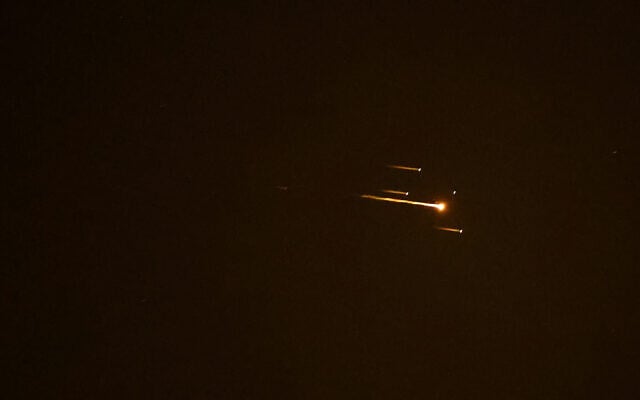
Rocket trails are seen in the sky above the Israeli coastal city of Netanya amid a fresh barrage of Iranian missile attacks on April 4, 2026. (Jack Guez/AFP)
IDF Spokesman Brig. Gen. Effie Defrin says the military assesses that Iran and Hezbollah will attempt attacks on Israel during the Passover holiday tonight.
“We assess that this evening as well, the Iranian regime and Hezbollah will attempt to continue firing toward Israel. The IDF is prepared both defensively and offensively and will act against any threat,” Defrin says in a post on X.
“I ask that you continue to follow Home Front Command instructions — they save lives,” he adds.
During Passover eve on Wednesday, Iran launched a salvo of some 10 missiles at Israel.
French pair held in Iran for over 3 years ‘free and on their way to France,’ says Macron

Portraits of French national Cecile Kohler (L) currently imprisoned in Iran with her partner French national Jacques Paris (C) along with a placard reading "Freedom for Cecile Kohler and Jacques Paris arbitrarily detained in Iran for over two years in appalling conditions" outside the Palais Bourbon, France's National Assembly, in Paris, on March 25, 2025. (Bertrand GUAY / AFP)
Two French nationals held in Iran are on their way back home, President Emmanuel Macron says, following their release in November after more than three years in prison on espionage charges.
“Cecile Kohler and Jacques Paris are free and on their way to France, after three and a half years in detention in Iran,” the French president writes on X.
A source at the French foreign ministry says they left Iran at dawn in a diplomatic convoy with the French ambassador and “are currently in Azerbaijan.”
Iranian missile likely intercepted, IDF says; Hezbollah fires rockets at north
The ballistic missile fired by Iran at southern Israel a short while ago was likely intercepted, according to the IDF.
There are no immediate reports of injuries.
Meanwhile, sirens sound in the Galilee amid a Hezbollah rocket attack from Lebanon.
US oil price jumps over 2% after reported strikes on Iran’s key export terminal Kharg Island

A motorist fills up the tank of a vehicle at a gasoline station, April 6, 2026, in Greenwood Village, Colorado (AP Photo/David Zalubowski)
The main US oil contract extends its gains on reports of strikes on the key Iranian oil export terminal of Kharg Island.
West Texas Intermediate for delivery in May jumps 2.1 percent to $114.71 a barrel.
The international benchmark, Brent North Sea crude, for delivery in June, gains 0.4 percent to $110.22 a barrel.
Vance says US has ‘tools in our toolkit that we so far haven’t decided to use’ on Iran

US Vice President JD Vance speaks during a press conference at the former Carmelite Monastery in Budapest, Hungary, April 7, 2026. (Jonathan Ernst/Pool Photo via AP)
US Vice President JD Vance warns the US has “tools in our toolkit that we so far haven’t decided to use” against Iran, adding he was “hopeful” negotiations would avoid them being deployed.
“The United States has largely accomplished its military objectives,” Vance tells reporters during a visit to Hungary, adding that “there’s going to be a lot of negotiation between now and then” when the US deadline expires, at 0000 GMT Wednesday.
“They’ve got to know we’ve got tools in our toolkit that we so far haven’t decided to use. The president of the United States can decide to use them, and he will decide to use them if the Iranians don’t change their course of conduct,” he adds.
IDF detects ballistic missile fire from Iran; sirens expected in south
The IDF has identified a new ballistic missile attack from Iran, targeting southern Israel.
Sirens are expected to sound in the coming minutes.
Hezbollah rocket fired from Lebanon hits Kiryat Shmona home; no injuries
A Hezbollah rocket fired from Lebanon struck a home in the northern city of Kiryat Shmona, according to rescue services.
No injuries are reported.
Israel bombs some 10 ‘key’ rail sections, bridges to stop Iran’s Revolutionary Guard moving weapons
A railway bridge apparently hit in a strike near Amin Abad, Iran on April 7, 2026. (Screenshot from video posted on X)
The Israeli Air Force has bombed around 10 “key” rail sections and bridges in Iran, as part of efforts to prevent the Islamic Revolutionary Guard Corps from moving weapon systems, security officials tell The Times of Israel.
Ahead of the strikes, the IDF warned Iranians to stay away from trains until this evening.
Security officials say the IRGC had used the rail and highway bridges to move weapons and other military supplies.
Israel has also warned it would strike Iranian “national infrastructure” to cause economic damage to the regime.
«زنجان سه شنبه ۱۸ فروردین؛ ساعت حدود ۱۳:۱۰ یک پل راه آهن نزدیک روستای امین آباد رو زدن. این پله رو زدن که فاصله اش با عکس دوم ۳-۴ کیلومتره که معلومه انبار مهمات و موشکه که تو محوطه اش ایستگاه راه آهن داره» pic.twitter.com/J8iAYFSng1
— مملکته (@mamlekate) April 7, 2026
UK government blocks Kanye West from country after festival backlash over antisemitism

Ye, the rapper formerly known as Kanye West, leaves federal court during the trial of Sean 'Diddy' Combs in New York, June 13, 2025. (AP/Michael R. Sisak)
The British government has blocked US rapper Kanye West from entering Britain on grounds that his presence would not be conducive to the public good, UK media reports.
The update follows mounting criticism over his booking as a headline act at the Wireless music festival in London, set to be held in July.
West, now known as Ye, has made multiple public antisemitic remarks since fall 2022, when he first threatened to go “death con 3 on JEWISH PEOPLE.”
Last year the rapper bought a Super Bowl ad to promote T-shirts with swastikas on them, then released a song titled “Heil Hitler,” to mark the 80th anniversary of the defeat of Nazi Germany in World War II.
He has since expressed regret over his multiple antisemitic rants, which he blamed on his bipolar disorder.
The United Kingdom is seeing soaring antisemitic attacks and incidents, with many in the Jewish community blaming authorities for not taking strong enough action on the matter.
Efforts to facilitate talks between US and Iran ongoing, Pakistani sources say
Efforts to facilitate talks between the US and Iran are still ongoing, two Pakistani sources with knowledge of the discussions tells Reuters, as strikes on Iran intensify and a deadline set by US President Donald Trump nears.
Man badly hurt after his car explodes in Tira; police probing link to criminal feud
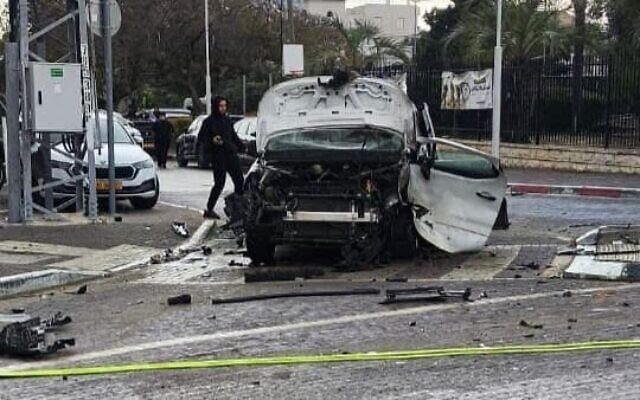
A wrecked car stands idle on the side of the road after it exploded and burst into flames in Tira, a central Arab city, on April 7, 2026. (Fire and Rescue Service)
A man was badly injured after his car exploded while driving in the central Arab city of Tira, first responders say.
Firefighters deployed to the scene around noon found the man’s car up in flames on the side of the road. They extinguished the fire and pulled the man, unconscious, from his vehicle.
Magen David Adom paramedics transported the victim to the hospital. His condition is listed as serious.
Police are investigating the incident and link it to a criminal conflict in the city. No suspects have been arrested.
The car exploded near Tira’s city hall, according to local Arab outlets. Many Arab mayors and municipal officials face threats of violence from criminal syndicates.
Ahead of deadline, Trump warns ‘a whole civilization will die tonight’ if Iran doesn’t open Hormuz

US President Donald Trump speaks with reporters during the White House Easter Egg Roll on the South Lawn of the White House, April 6, 2026, in Washington. (AP Photo/Julia Demaree Nikhinson)
Twelve hours before his 8 p.m. Eastern Time ultimatum is set to expire, US President Donald Trump says “a whole civilization will die tonight, never to be brought back again,” if Iran doesn’t agree to his demands for reopening the Strait of Hormuz.
“I don’t want that to happen, but it probably will,” he writes on Truth Social. “However, now that we have Complete and Total Regime Change, where different, smarter, and less radicalized minds prevail, maybe something revolutionarily wonderful can happen, WHO KNOWS?”
Trump says that “we will find out tonight, one of the most important moments in the long and complex history of the World. 47 years of extortion, corruption, and death, will finally end. God Bless the Great People of Iran!”
In an expletive-laden post on Sunday, Trump warned that the US would attack power plants and bridges in Iran starting Tuesday evening if the Islamic Republic failed to reopen the strait.
Israel condemns Istanbul attack, thanks Turkey for ‘swift action,’ insists ‘terror will not deter us’
The Foreign Ministry “strongly condemns the terrorist attack” on Israel’s consulate in Istanbul earlier today, and thanks Turkey for stopping the gunmen.
“We appreciate the Turkish security forces’ swift action in thwarting this attack,” says the ministry in a statement.
“Israeli missions around the world have been subjected to countless threats and terrorist attacks,” it continues. “Terror will not deter us.”
Police nab Bedouin man suspected of stabbing brother in feud
Police have arrested a Bedouin man from Umm Batin on suspicion of stabbing and injuring his brother over an “intra-family dispute.”
Immediately following the assault, the young man proceeded to damage his brother’s car and slaughter two sheep belonging to the family, police say.
Officers from the Ayarot police station received a report of the incident yesterday morning. Officers dispatched to the southern village located and arrested the suspect within a short time, police say.
Police brought the suspect today to the Beersheba Magistrate’s Court, where they requested to keep him in custody.
After Iran claims Israel attacked Tehran synagogue, Israel official tells ToI: ‘Israel doesn’t target synagogues’
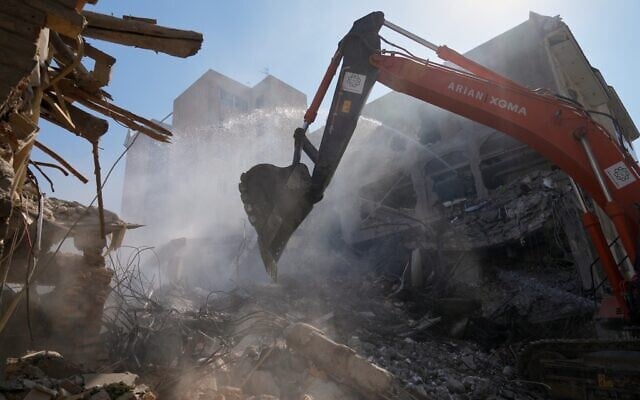
An excavator removes rubble at the site of a strike that, according to Iranian media reports, destroyed half of the Khorasaniha Synagogue and nearby residential buildings in Tehran, Iran, April 7, 2026. (AP Photo/Francisco Seco)
Several hours after Iranian state media claimed that Israel targeted and partially destroyed a synagogue in Tehran in an airstrike, an Israeli official tells The Times of Israel that “Israel doesn’t target synagogues. Anyone claiming otherwise thinks you’re gullible.”
The official spoke off the record, and there has been no direct Israeli comment on the incident.
In response to an inquiry from the Times of Israel, the Prime Minister’s Office states: “Iran is firing missiles at civilians, Israel is striking terror infrastructure. Missiles on civilians versus precision strikes on terror targets. That’s the difference.”
Images show highway bridge in northwestern Iran damaged in Israeli strikes
Images posted online show damage to a highway bridge between the northwestern Iranian cities of Hashtroud and Tabriz, following apparent Israeli strikes.
Another strike on a rail bridge in the central Iranian city of Kashan killed two people, according to Iranian media.
The IDF warned Iranians earlier to stay away from trains. Yesterday, Defense Minister Israel Katz said the IDF had been instructed to “continue striking with full force the national infrastructure of the Iranian terror regime.”
«سلام امروز ۱۸ فروردین پل قویونقشلاق رو در جاده هشترود به میانه (آذربایجان شرقی) زده که ریل و اتوبان از اون پل رد میشدن» pic.twitter.com/7HA1x7u5j8
— مملکته (@mamlekate) April 7, 2026
US official says airstrikes on Kharg Island targeted military sites
WASHINGTON — The US military conducted strikes on military targets on Iran’s Kharg Island, the Axios news outlet reports, citing an unidentified senior US official.
Gunman killed outside Israel’s consulate in Istanbul linked to terror group, Turkey says
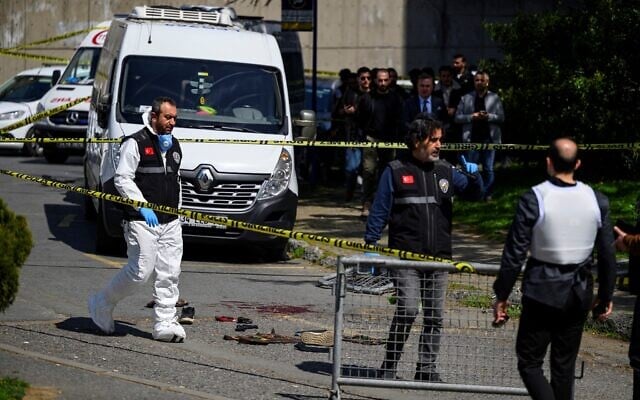
Police officials gather outside the Israeli Consulate in Istanbul, Turkey, on April 7, 2026, following a shootout between gunmen and police. (Yasin AKGUL / AFP)
ISTANBUL, Turkey — A gunman who was killed in a shootout with police outside Israel’s consulate building in Istanbul’s business district was affiliated with “a terror group,” officials say.
The interior ministry says Yunus E.S. “was captured dead” and “had connections with a terrorist group that exploits religion.”
Turkish officials do not immediately reveal the group the attacker was linked to, but Turkish media says it could be the Islamic State terror group.
Times of Israel staff contributed to this report.
IRGC threatens to deprive the US and its allies of oil ‘for years’ if US crosses ‘red lines’
TEHRAN, Iran — Iran’s Islamic Revolutionary Guard Corps warns it will deprive the United States and its allies of oil and gas if Washington crosses Tehran’s “red lines,” a statement carried on state television says.
“The Revolutionary Guards once again declare that if the American terrorist army crosses the red lines, our response will go beyond the region,” the statement says.
It says the paramilitary Guards will target infrastructure “to deprive the United States and its allies of oil and gas in the region for years.”
“America’s regional partners should also know that until today, we have exercised great restraint for the sake of good neighborliness and have had some reservations in choosing targets for retaliation, but all these reservations have since been removed,” it says.
Several blasts reported on Iran’s Kharg Island; rail bridge struck in central Iranian city after Israeli warning
Several explosions are reported on Iran’s Kharg Island, Iran’s semi-official Mehr news agency reports.
Kharg Island, located off Iran’s western coast, is a vital oil export terminal for the country.
US President Donald Trump has recently threatened to destroy the island if a deal to end the war is not reached soon and the Strait of Hormuz does not “immediately” reopen.
Explosions reported in Kharg Island. pic.twitter.com/VazXgBPyHM
— Open Source Intel (@Osint613) April 7, 2026
Additionally, two people were killed in a US-Israeli attack on a rail bridge in the central Iranian city of Kashan, a regional official tells state media Iran’s IRNA news agency, hours after Israel warned Iranians to stay away from trains.
Two IDF officers, 1 civilian to be charged for smuggling goods into Gaza
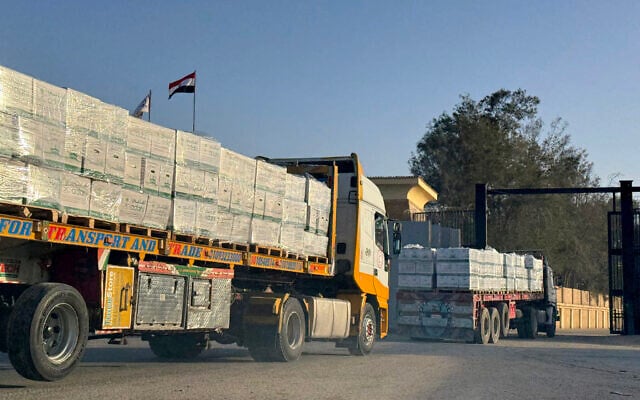
Humanitarian aid trucks enter through the Egyptian side of the Rafah border crossing with the Gaza Strip in northeastern Egypt on February 1, 2026. (AFP)
Two mid-ranking IDF officers and a civilian are set to be indicted on smuggling charges after allegedly trafficking cigarettes and electronic devices into the Gaza Strip.
The suspects are believed to have received hundreds of thousands of shekels in exchange for the goods, smuggled into the enclave via humanitarian aid trucks, according to a joint statement released by the Shin Bet and police.
Investigators believe that Nasser Abu Mustafa, from the Bedouin city of Rahat, contacted his associate, an IDF reservist with the rank of major, proposing the two smuggle goods into Gaza.
They contacted another soldier with the rank of lieutenant colonel and managed to loop him into the scheme.
According to the investigation, Abu Mustafa, apparently posing as a mechanic, arrived to repair several aid trucks that came to a halt due to a purported malfunction en route to Gaza.
While the trucks were idle, he snuck in the goods, among them hundreds of thousands of cigarettes and several cellphones, police say.
The State Attorney’s Office filed a prosecutor’s declaration against the trio today, meaning they are set to be indicted in the near future.
Israel’s Diaspora Ministry notes conflicting reports regarding ostensible strike damaging Tehran synagogue
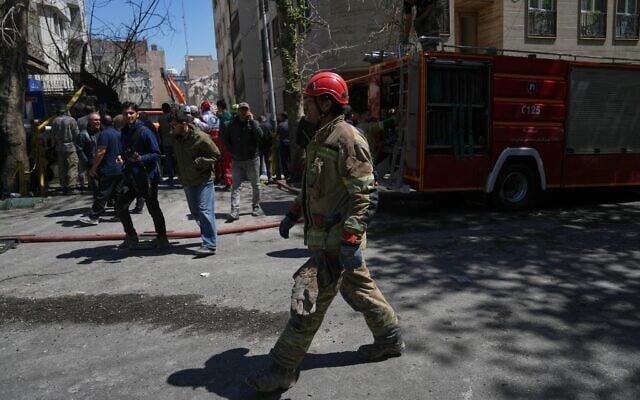
A first responder walks near the site of a strike that, according to an Iranian security official at the scene, destroyed half of a synagogue and nearby residential buildings in Tehran, Iran, April 7, 2026. Iranian state media said a synagogue was badly damaged in what it claimed was an Israeli strike. Israel's Foreign Ministry said it was looking into the incident. (AP Photo/Francisco Seco)
Following Iranian state media reports that the Rafi Niya synagogue in central Tehran has sustained significant damage, allegedly in an Israeli air strike, Israel’s Diaspora Affairs Ministry, in an internal report, notes there are conflicting reports as to the circumstances of the incident and as to whether the synagogue was damaged or completely destroyed.
It says the claim that the synagogue was damaged is supported “by several sources, albeit all of them Iranian.”
The ministry says that the Associated Press has confirmed the reports of damage, citing footage that aligns with Iranian accounts of the destruction. As far as The Times of Israel can establish, AP has quoted Iranian media regarding the incident, and reported that “video from the site showed rescuers moving around and what looked like a book of Hebrew scripture in the rubble.”
The Foreign Ministry in Jerusalem is looking into the reports, an Israeli official told The Times of Israel earlier, while the IDF has yet to comment.
The Diaspora Affairs Ministry’s internal report notes that Iran’s state-run IRNA news agency claims a “significant part” of the Jewish house of worship was destroyed in the alleged attack. Local sources and preliminary analysis, it also notes, suggest the synagogue may have been caught in the blast radius of a strike aimed at an adjacent building.
Ostensible visual documentation from the scene showed rescuers working through piles of rubble and debris, with photographs capturing scattered religious books and damaged interior fixtures.
The ministry’s internal report cites analysts noting that the framing of the event by Iranian officials — asserting that Israel “deliberately attacked” a religious site — has not been independently verified. Some have suggested the reports are being used for propaganda purposes, it adds.
Footage shows the heavily damaged Rafi Niya Synagogue in Tehran following a reported US-Israeli strike on April 7. Rescue crews were seen at the scene as Iranian media reported the strike and noted that the site was targeted despite Iran being home to the second-largest Jewish… pic.twitter.com/mTQUFodfxX
— TRT World (@trtworld) April 7, 2026
A few hours ago, the Jewish synagogue near Palestine Street in Tehran was targeted by Israeli fighter jets.
This synagogue, located near Palestine Square, is known as "Rafi Niya Synagogue," and a significant part of it has been destroyed as a result of the Israeli attack. pic.twitter.com/dBXApQ3omi
— IRNA News Agency ☫ (@IrnaEnglish) April 7, 2026
IDF says ‘extensive’ wave of strikes carried out in Iran targeting regime sites
The Israeli Air Force completed another “extensive” wave of airstrikes in several areas of Iran a short while ago, the military says.
The IDF says the strikes hit dozens of Iranian regime infrastructure sites, and further details will be provided later.
ویدیوهای رسیده به ایراناینترنشنال در سهشنبه ۱۸ فروردین، وقوع انفجارهای مهیب را در کوههای شرق تهران نشان میدهد. pic.twitter.com/LECAnoWyN8
— ايران اينترنشنال (@IranIntl) April 7, 2026
Deputy governor says strike hit bridge near Iran’s Qom; trains canceled in Mashhad
TEHRAN, Iran — The United States and Israel launched an attack on a bridge near the Iranian city of Qom, south of Tehran, the deputy governor of the province says, according to state TV.
“A few minutes ago, one of the bridges on Qom’s communication lines, outside the city of Qom and in the west of the province, was attacked by American and Zionist enemy projectiles,” Morteza Heydari says.
Separately, train travel to and from Iran’s second-largest city of Mashhad was canceled until further notice after Israel warned Iranians not to use railways until 1730 GMT, local media reports, citing the region’s governor.
“Due to the immoral warning of the Zionist regime regarding the attack on the country’s railways and in order to exercise caution, all train movements from the Mashhad Railway have been canceled until further notice,” Governor Hassan Hosseini says, according to several local media outlets.
1 attacker killed, 2 others hurt in gun battle with police outside unstaffed Israeli consulate in Istanbul, governor says
ISTANBUL, Turkey — One attacker was killed and two others were wounded in a gunfight with police near the Israeli consulate in Istanbul, the city’s governor says, adding that two police officers were slightly wounded.
The attackers used rifles and pistols in the assault, Governor Davut Gul tells reporters at the scene. He adds that there have been no Israeli diplomatic staff at the consulate for two and a half years.
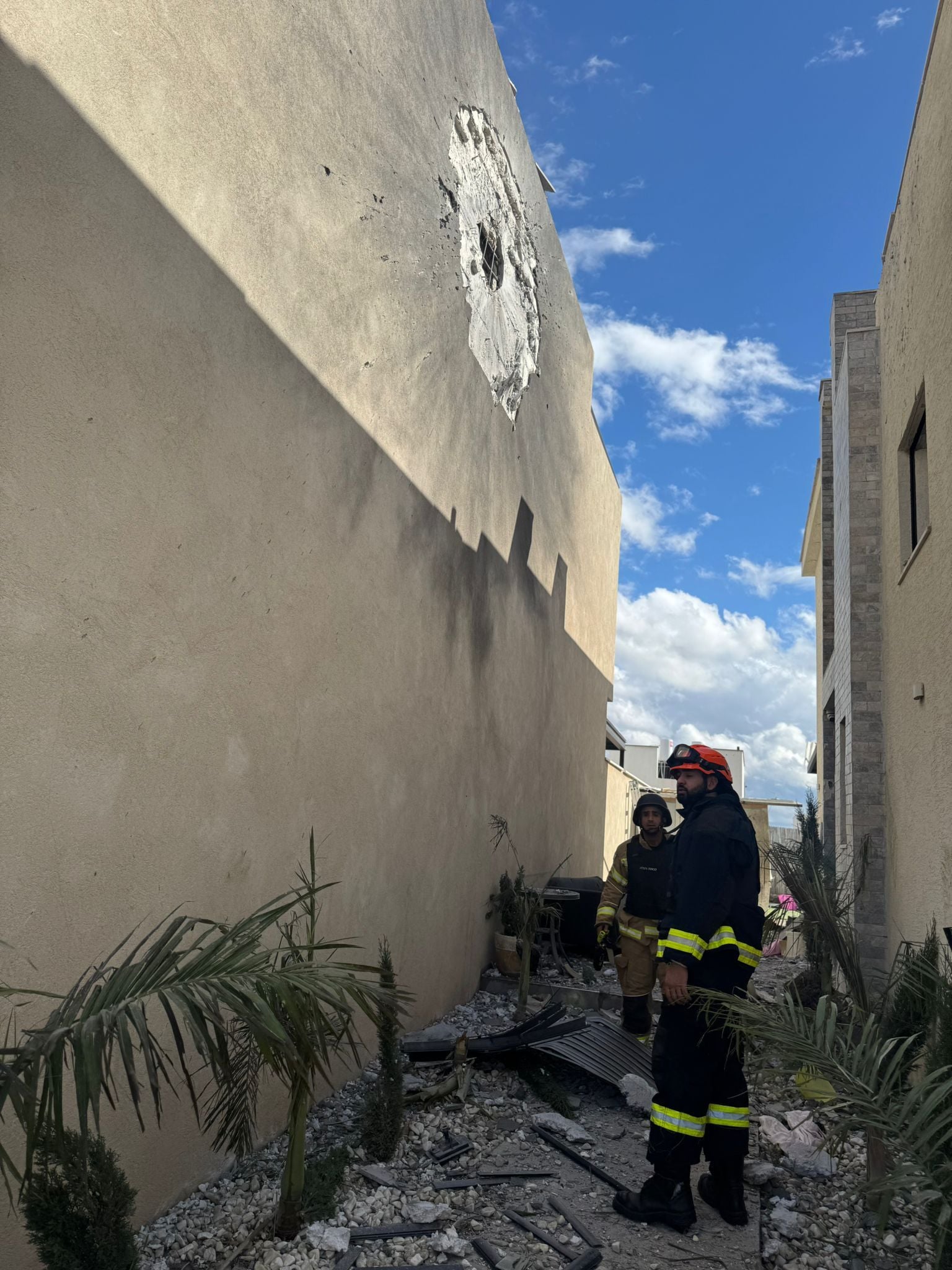
Damage caused across central Israel by Iranian cluster bomb attack
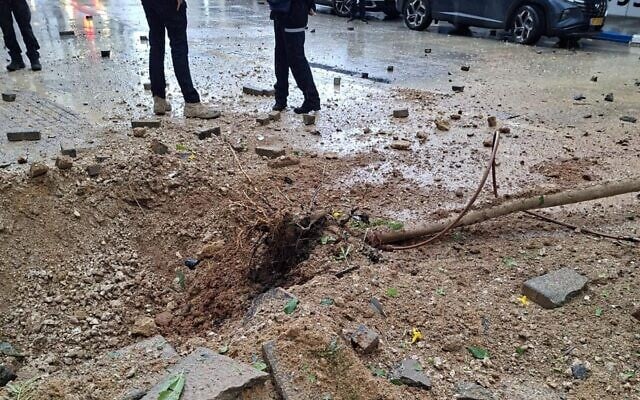
An Iranian bomblet impact in Givat Shmuel, April 7, 2026. (Magen David Adom)
Damage was caused at several sites in central Israel by bomblets from an Iranian ballistic missile carrying a cluster warhead, according to rescue services.
There are no reports of injuries.
הירי מאיראן: מספר זירות נפילה במרכז, לא דווח על נפגעים@hadasgrinberg pic.twitter.com/PTJJ7QURXh
— כאן חדשות (@kann_news) April 7, 2026
Three killed, including two attackers, in exchange of fire near Israeli consulate in Istanbul
Three people were killed — two of them assailants — and two police officers were injured in a gunfire incident near the building housing the Israeli consulate in Istanbul, Turkey’s Haberturk broadcaster reports.
The report says attackers were carrying long-barreled weapons. An exchange of fire with police killed two while a third assailant was captured. One officer sustained injuries during the clash.
Reuters video shows a police officer pulling out a gun and taking cover as gunshots resounded. One person is seen covered in blood.
A strong armed police presence is always maintained in the area near the Israeli consulate. Television footage showed armed police patrolling in the area after the shooting.
The consulate was empty at the time of the incident, says the Foreign Ministry.
Turkish police report killing three terrorists outside of the Israeli Consulate in Istanbul, Turkey.
Reported:
1 killed, 1 injured
3 terrorists eliminated pic.twitter.com/JapVAQhZ1P— Mossad Commentary (@MOSSADil) April 7, 2026
Lazar Berman contributed to this report.
New missile attack from Iran detected by IDF
The IDF has identified a new ballistic missile attack from Iran, targeting central Israel.
Sirens are expected to sound shortly.
Meanwhile, sirens sound in Safed and nearby towns in the Galilee amid a Hezbollah rocket attack from Lebanon.
Gunfire heard near building housing Israeli consulate in Istanbul
ISTANBUL, Turkey — Gunfire was heard near the building housing the Israeli consulate in Istanbul, a Reuters witness says.
The Foreign Ministry is looking into the reports, an Israeli official tells The Times of Israel.
Woman lightly wounded in Hezbollah rocket attack in Nahariya
A woman in her 20s is lightly hurt following Hezbollah’s rocket attack on Nahariya, medics say.
Magen David Adom says the woman was hit by flying stones following a rocket impact in the city. Two others are being treated for acute anxiety, MDA adds.
Some 10 rockets were fired from Lebanon in the attack, with at least one striking a road, causing the injury and damage to nearby cars and homes.
A woman in her 20s is lightly hurt following Hezbollah's rocket attack on Nahariya, medics say.
Magen David Adom says the woman was hit by flying stones following a rocket impact in the city. Two others are being treated for acute anxiety, MDA adds. pic.twitter.com/Y7qNC8nP20
— Emanuel (Mannie) Fabian (@manniefabian) April 7, 2026
Rescue forces responding to reports of Hezbollah rocket impact in Nahariya
Rescue forces are responding to reports of a Hezbollah rocket impact in the northern city of Nahariya.
There are no immediate reports of injuries.
Sirens had sounded in the city amid an attack from Lebanon.
הירי לנהריה: פגיעה ברכב חונה, ללא נפגעים pic.twitter.com/GEojvZovLU
— החדשות – N12 (@N12News) April 7, 2026
IDF strikes another Litani River bridge used by Hezbollah in south Lebanon
The IDF bombed another Litani River bridge that it says was being used by Hezbollah to move operatives and weapons into southern Lebanon.
It marks the seventh river crossing that the military has struck amid the ongoing fighting.
“The IDF struck yesterday another central crossing that was used by Hezbollah terrorists to move from north to south of the Litani River, and to transfer weapons, rockets, and launchers to advance terror attacks against IDF troops,” the military says in a statement.
צה"ל תקף מעבר מרכזי נוסף מעל נהר הליטאני: שבעה מעברים ששימשו את מחבלי ארגון הטרור חיזבאללה הותקפו עד כה
צה"ל תקף אתמול מעבר מרכזי נוסף ששימש את מחבלי ארגון הטרור חיזבאללה לנוע מצפון לדרום נהר הליטאני, ולהעברת אמצעי לחימה, רקטות ומשגרים במטרה לקדם מתווי טרור נגד כוחות צה"ל.… pic.twitter.com/gpW8ULgEmJ
— צבא ההגנה לישראל (@idfonline) April 7, 2026
Pezeshkian says he and 14 million Iranians ready to ‘sacrifice their lives’ for Iran
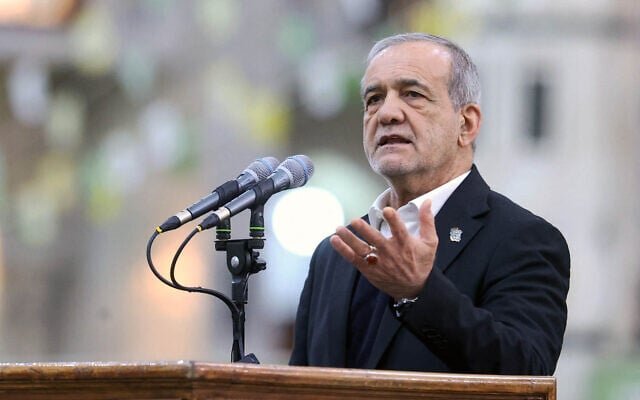
In this handout picture provided by Iranian presidency, Iran's President Masoud Pezeshkian addresses cabinet members, as they visit of the tomb of the late Iranian revolutionary leader ayatollah Ruhollah Khomeini, in Tehran on January 31, 2026. (Handout/Iranian Presidency/AFP)
Iran’s President Masoud Pezeshkian says he and 14 million Iranians have declared they will “sacrifice their lives” to defend Iran.
“More than 14 million brave Iranians have so far declared their readiness to sacrifice their lives to defend Iran. I have also sacrificed my life for Iran, I am and I will continue to do so,” he writes on X.
Iran has a population of around 90 million.
Russian satellite imagery helping Iran strike US sites across Mideast, Ukraine finds
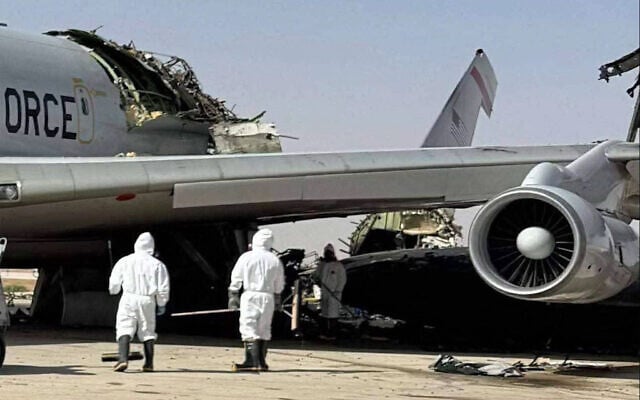
This UGC image posted on social media on March 29, 2026, and verified by AFP staff appears to show a destroyed US Air Force Airborne Warning and Control System (AWACS) aircraft, primarily used for air traffic control, in the aftermath of a projectile strike at Prince Sultan Airbase in Saudi Arabia. (UGC / AFP)
LONDON/PARIS — Russian satellites have made dozens of detailed imagery surveys of military facilities and critical sites across the Middle East to help Iran strike US forces and other targets, according to a Ukrainian intelligence assessment.
The conclusions, reviewed by Reuters, also found that Russian and Iranian hackers were collaborating in the cyber domain. They represent the most detailed account yet of how Russia has provided secret support to Iran since Israel and the US launched their assault on February 28.
Russian satellites, the undated assessment says, made at least 24 surveys of areas in 11 Middle Eastern countries from March 21 to 31, covering 46 “objects,” including US and other military bases and sites, including airports and oil fields.
Within days of being surveyed, military bases and headquarters were targeted by Iranian ballistic missiles and drones, the assessment says, in what it described as a clear pattern.
A Western military source and a separate regional security source tell Reuters that their intelligence also indicated intense Russian satellite activity in the region and said that imagery had been shared with Iran.
Nine surveys covered parts of Saudi Arabia, including five over the King Khalid Military City near Hafar Al-Batin, in what appeared to be an effort to locate elements of the US-made THAAD air defense system, the Ukrainian assessment says.
Areas of Turkey, Jordan, Kuwait, and the United Arab Emirates also came under satellite surveillance twice, while places in Israel, Qatar, Iraq, Bahrain, and Naval Support Facility Diego Garcia did once, it says.
In an emerging trend, the assessment adds, Russian satellites are actively surveying the Strait of Hormuz, a vital waterway for a fifth of global oil and LNG flows, where Iran has imposed a de facto blockade to all but “non-hostile vessels.”
Reuters is not able to independently confirm the content of the Ukrainian assessment.
White House spokeswoman Olivia Wales says that no external support for Iran from any country was affecting the operational success of the United States. The Iranian foreign ministry has no immediate comment. The defense ministry in Russia, which invaded Ukraine four years ago, does not respond to a request for comment.
IDF Home Front Command extends wartime guidelines until Thursday night

People take cover in a bomb shelter as air raid sirens warn of an Iranian ballistic missile attack in Ramat Gan, April 7, 2026. (AP Photo/Oded Balilty)
Following a fresh assessment, the IDF Home Front Command says its current wartime guidelines are being extended until Thursday night at least.
By Thursday at 8 p.m., another assessment will be conducted by the Home Front Command.
Under the current guidelines, educational institutions can operate — provided there is an adequate shelter that can be reached in time — in some areas of the north, south, and West Bank.
A full list of locales can be found on the Home Front Command’s website.
Gatherings of up to 100 people indoors and 50 people outdoors are also permitted, under the same conditions, in those areas.
In the rest of the country, educational activities are still prohibited. Gatherings are limited to 50 people, provided a shelter can be reached in time, and workplaces can operate under the same conditions.
Series of explosions heard in north Tehran, reporter says
TEHRAN, Iran — Explosions rock the Iranian capital, according to the country’s Mehr news agency as well as the newspapers Shargh and Ham-Mihan.
An AFP journalist confirms that a series of blasts were heard coming from the north of the city.
IDF footage shows airstrikes on Iranian air defense systems; over 130 destroyed during war
The IDF publishes new footage showing airstrikes on Iranian air defense systems.
According to the military, more than 130 Iranian air defense systems have been destroyed during the war.
תיעודים מיוחדים מעין הטיל: כך חיל האוויר תוקף מערכות הגנה אוויריות של משטר הטרור האיראני
צה"ל ממשיך במאמץ השיטתי להעמקת הפגיעה במערכי האש ומערכות ההגנה האוויריות של משטר הטרור האיראני ברחבי איראן.
בתקיפות מדויקות שבוצעו בהכוונת למד"ן, הושמדו יותר מ-130 מערכות הגנה אוויריות של… pic.twitter.com/4CqrTd4Teh
— צבא ההגנה לישראל (@idfonline) April 7, 2026
IEA chief: Current oil crisis ‘more serious than the ones in 1973, 1979 and 2002 together’
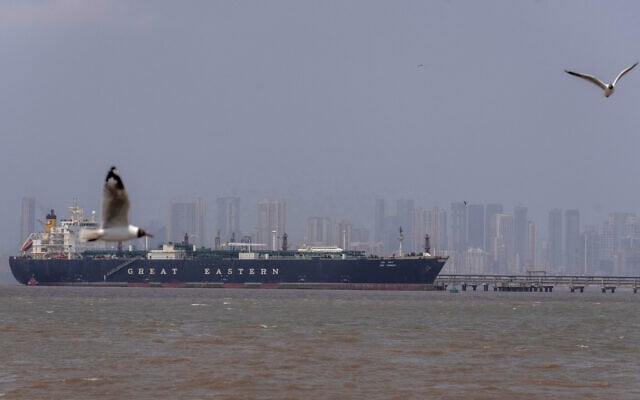
The Indian flagged LPG carrier Jag Vasant transporting liquefied petroleum gas, is seen at the Mumbai Port in Mumbai, India, after it arrived clearing the Strait of Hormuz, April 1, 2026. (AP Photo/Rafiq Maqbool)
PARIS, France — The current oil and gas crisis triggered by the blockade of the Strait of Hormuz is “more serious than the ones in 1973, 1979 and 2002 together,” Fatih Birol, the head of the International Energy Agency (IEA), tells Le Figaro newspaper.
“The world has never experienced a disruption to energy supply of such magnitude,” he says in an interview with the French newspaper released in its Tuesday edition.
He says the European countries, as well as Japan, Australia, and others, will suffer, but the countries most at risk were developing nations, which will suffer from higher oil and gas prices, higher food prices, and a general acceleration of inflation.
The IEA member countries agreed last month to release part of their strategic reserves. Some of this had already been released, and the process continues, said Birol.
In reaction to the strikes by Israel and the US, Iran has almost entirely blocked traffic in the Strait of Hormuz, through which about 20 percent of world oil and gas regularly flows, creating a surge in energy prices.
IDF says it struck one of Iran’s ‘few remaining’ plants producing materials for ballistic missiles

Illustrative: A petrochemical facility in Mahshahr, Iran. (YouTube screenshot, used in accordance with Clause 27a of the Copyright Law)
The IDF confirms bombing another petrochemical facility in Iran yesterday, saying it was “one of the few remaining facilities” used to manufacture materials for ballistic missiles.
Iranian media reported yesterday that the airstrikes hit the Marvdasht Petrochemical Complex, near Shiraz, hours after the Israeli Air Force bombed Iran’s largest petrochemical facility in Asaluyeh.
In a statement, the IDF says that the facility near Shiraz “was used by Iran’s armed forces to produce nitric acid, a substance necessary for manufacturing explosives and additional materials used in ballistic missile development processes.”
The IDF says the site was “one of the few remaining complexes for producing essential chemical components for explosives and ballistic missile materials in Iran,” following the strikes on the petrochemical facility in Asaluyeh and additional plants struck in southern Iran over the weekend.
“In doing so, the IDF deepened the damage to the regime’s military capabilities, with an emphasis on the production capabilities of weaponry that relied on components from the facility,” the military says.
Also yesterday, the IAF struck a facility of Iran’s ballistic missile forces in northwestern Iran, from which the military says dozens of missiles were fired at Israel.
“The site was struck while soldiers and commanders of the missile array were operating within it to advance and carry out terror activities against the State of Israel and other countries,” the IDF says.
After attack on Palestinian family, two Israelis detained by IDF, released; details passed to police
Two Israeli suspects were detained by the military in what it described as a “friction incident,” the IDF says in response to a query from The Times of Israel, after masked individuals were filmed beating a Palestinian family in the Ramallah area yesterday.
According to the IDF, the suspects were detained and questioned but were later released, and their details were transferred to the police.
The IDF has not yet provided a full response regarding why they were not handed over to the police, as is typically done in such cases.
Ben Gvir tours Temple Mount in effort to boost numbers of Jews allowed to visit site
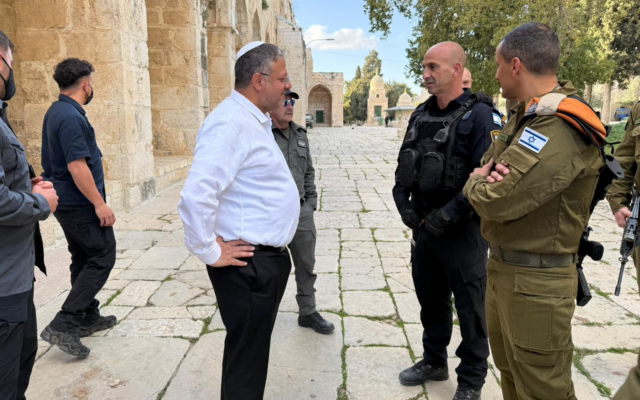
National Security Minister Itamar Ben Gvir on the Temple Mount with senior police and IDF Homefront Command officers, April 7, 2026. (Otzma Yehudit)
National Security Minister Itamar Ben Gvir ascends to Temple Mount in Jerusalem with senior police and IDF Homefront Command officials in what his office describes as an effort to get the military to increase the number of Jewish worshipers allowed at the holy site in the wake of limits imposed on public gatherings due to the ongoing war with Iran.
“During the tour, no agreements were reached, and the Home Front Command still opposes the opening of the Mount contrary to its consent to allow protests of 150 people at Habima Square [n Tel Aviv]. In light of this, an additional tour is expected to take place in order to examine further alternatives,” Ben Gvir’s office says in a statement.
Responding to a petition over the weekend, the IDF Home Front Command and Israel Police gave anti-war protesters permission to rally, in limited numbers, across the country, with 150 allowed to protest at Habima Square in Tel Aviv. The High Court subsequently issued an interim ruling that on Saturday evening up to 600 people could attend the main Tel Aviv protest, which was later broken up by police.
The court’s decision was protested by coalition figures, including Prime Minister Benjamin Netanyahu, who posted disapprovingly on X that “while Jews are restricted during the holiday from praying at the Western Wall, the High Court of Justice has approved a left-wing demonstration in Tel Aviv.”
However, following petitions filed by religious leaders, the court on Sunday ruled that the number of people allowed to gather at the Western Wall and the Temple Mount amid the ongoing war with Iran must rise from 50 to 100.
Iranian cluster bomblets cause damage across central Israel
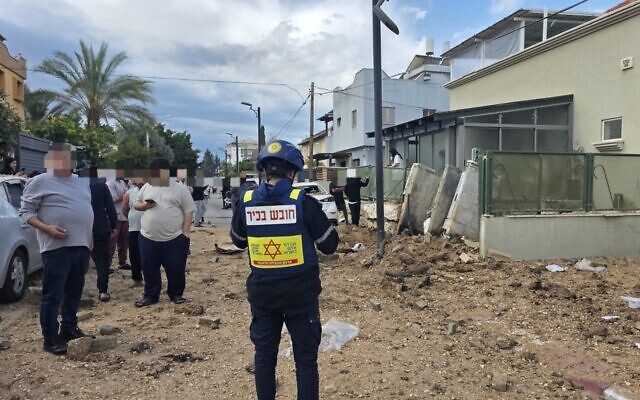
Damage cause by an Iranian cluster bomb impact in central Israel, April 7, 2026. (Magen David Adom)
Damage was caused in central Israel by cluster submunitions from an Iranian ballistic missile, according to rescue services.
Rescue forces are operating at the sites of bomblet impacts in Rosh Haayin, Ramat Hasharon, and other areas of central Israel.
Footage shows that one of the cluster munitions flipped over a car.
מספר זירות פגיעה במרכז, באחת מהן התהפך רכב; טרם דווח על נפגעים@hadasgrinberg (צילום: תיעוד מבצעי מד"א) pic.twitter.com/pnxBJTBfYM
— כאן חדשות (@kann_news) April 7, 2026
There are no immediate reports of injuries.
Iran’s judiciary head says verdicts against those accused of assisting enemies should be expedited
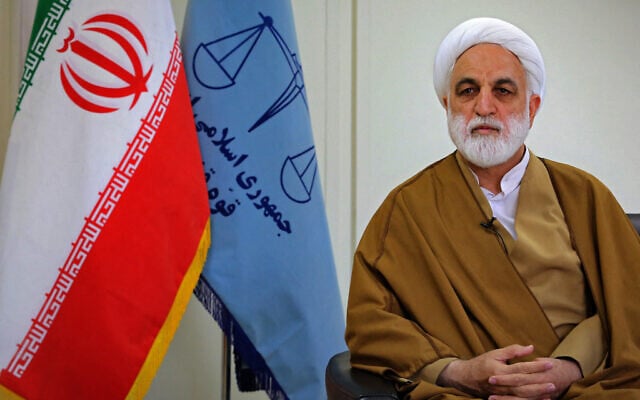
An undated handout picture provided by the Iranian supreme leader official website on July 1, 2021 shows the new chief of Iran's judiciary authority, Gholamhossein Mohseni Ejei. (KHAMENEI.IR / AFP)
DUBAI, United Arab Emirates — Judicial cases against individuals assisting Iran’s adversaries should be processed more quickly, Judiciary chief Gholamhossein Mohseni Ejei says, according to Mizan news, urging execution or asset confiscation verdicts to be expedited.
Since the start of US-Israeli strikes on Iran last month, Iran’s security apparatus has arrested hundreds of individuals accused of aiding adversaries, for instance, by sharing sensitive footage with foreign-based opposition channels or expressing support for attacks on Iran.
Rescue services responding to reports of impacts in center after Iranian cluster bomb attack
Rescue forces and medics are responding to reports of impacts in central Israel following Iran’s latest ballistic missile attack.
The missile fired at central Israel carried a cluster bomb warhead, according to the IDF.
Sirens also sounded in the Eilat area of southern Israel, although that missile, also carrying a cluster bomb, is assessed by the IDF to have struck an open area.
There are no immediate reports of injuries.
IDF says elite 98th Division deployed to south Lebanon as part of offensive on Hezbollah
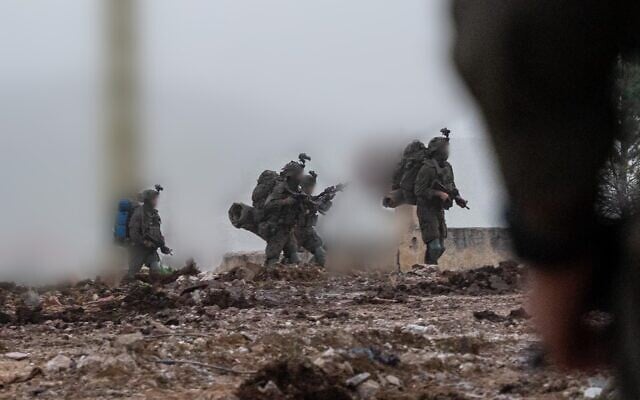
Soldiers of the Paratroopers Brigade operate in southern Lebanon, in a handout photo issued by the military on April 7, 2026. (Israel Defense Forces)
The IDF announces that it has deployed a sixth division to southern Lebanon amid the ongoing ground offensive against Hezbollah.
In the past week, the 98th Division, an elite formation of paratroopers and commando units, began “targeted ground operations to additional objectives in southern Lebanon,” the military says.
The IDF also says that troops have “completed their deployment” along the so-called “anti-tank line,” several kilometers deep into Lebanon, from which Hezbollah could launch anti-tank guided missiles at Israeli communities.
The military says the troops are now “continuing operations in the area to strengthen the forward defensive line and remove threats to residents of the north.”
According to the military, five IDF divisions are now involved in the ground offensive against Hezbollah: the 146th and 162nd pushed into the western sector, and the 91st and 36th have raided the eastern sector.
In addition, the IDF’s 210th “Bashan” Regional Division is stationed in the Mount Dov area and has conducted several raids on the Lebanese side of the mountain.
Iranian ballistic missile attack detected targeting central Israel, Eilat
The IDF has identified a ballistic missile attack from Iran, targeting central Israel and the Eilat area in southern Israel.
Sirens are expected to sound shortly.
Pakistan’s efforts to end war reaching ‘critical, sensitive’ stage, Iranian envoy says
ISLAMABAD, Pakistan — Pakistan’s “positive and productive” efforts to stop the US-Israeli war with Iran are approaching a “critical, sensitive” stage, Iran’s Ambassador to Pakistan Reza Amiri Moghadam says in a post on X.
Pakistan positive and productive endeavours in Good Will and Good Office to stop the war is approaching a critical, sensitive stage …
Stay Tuned for more
— Reza Amiri Moghadam (@IranAmbPak) April 7, 2026
Iranian official calls on youth to form human chains around power plants ahead of threatened strikes
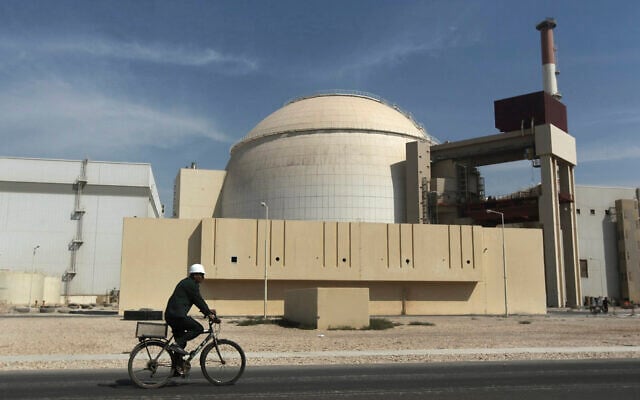
A worker rides a bicycle in front of the reactor building of the Bushehr nuclear power plant, just outside the southern city of Bushehr, Iran, Oct. 26, 2010. (Majid Asgaripour/Mehr News Agency via AP)
Iran calls on “all young people, athletes, artists, students, university students and their professors” to form human chains around power plants ahead of the threatened US-Israeli strikes.
“Power plants that are our national assets and capital, regardless of any taste or political viewpoint, belong to the future of Iran and to the Iranian youth,” Alireza Rahimi, identified by Iranian state television as the secretary of the Supreme Council of Youth and Adolescents, says as he issued the video call in a newscast.
Iran has formed human chains in the past around its nuclear sites at times of heightened tensions with the West.
IDF warns Iranians not to travel by train until evening, says they’d be putting their ‘lives at risk’
The IDF issues an unusual “urgent warning” to Iranians not to travel by train across Iran until this evening.
“Dear citizens, for your safety, we request that from this moment until 21:00 Iran time, you refrain from using and traveling by train across Iran,” says the IDF’s Persian-language spokesman, Lt. Col. (res.) Kamal Penhasi in a statement.
“Your presence on trains and near railway lines puts your lives at risk,” he adds.
Yesterday, Defense Minister Israel Katz said the IDF had been instructed to “continue striking with full force the national infrastructure of the Iranian terror regime.”
Overnight Iranian strike hits Saudi petrochemical plant
RIYADH, Saudi Arabia — Overnight attacks on Saudi Arabia hit a petrochemical complex in a sprawling industrial area in the eastern city of Jubail, a source on the ground tells AFP, hours after similar installations in Iran were struck.
“An attack caused a fire at the SABIC plants in Jubail. The sounds of explosions were very loud,” the source tells AFP, referring to the Saudi Basic Industries Corporation.
Jubail in eastern Saudi Arabia is home to one of the world’s largest industrial cities, where steel, gasoline, petrochemicals, lubricating oil, and chemical fertilisers are produced.
NEW ????
Reports indicate Al Jubail Industrial City in Saudi Arabia is on fire following Iranian strikes. pic.twitter.com/c6KbzFmh3z
— Open Source Intel (@Osint613) April 6, 2026
Health Ministry says 133 wounded hospitalized in Iran, Hezbollah wars
The Health Ministry reports that in the past 24 hours, 133 injured people have been taken to hospitals as a result of the conflict with Iran and Hezbollah.
Among those treated in hospitals over the past day, five are in moderate condition, and 127 are in good condition. One person has been treated for anxiety.
The ministry says that since the beginning of the war on February 28, 7,183 people have been admitted to hospitals, 118 of whom are currently hospitalized. The casualty figures include soldiers and civilians.
The ministry does not give a breakdown of the causes of the injuries. Some were indirect, such as people injured while trying to reach shelters, rather than as a direct result of missile fire.
Iranian media claims Tehran synagogue damaged by US-Israeli strike; Israel says it is looking into the reports
A synagogue in the center of Iran’s capital was heavily damaged by a US-Israeli projectile today, according to the semi-official news agency Mehr.
The IDF does not immediately comment on the matter, and there is no independent confirmation of the claim.
The Foreign Ministry is looking into the reports, an Israeli official tells The Times of Israel.
Iranian outlet Mehr News Agency says a Jewish synagogue in central Tehran was badly damaged during US-Israeli airstrikes. pic.twitter.com/giRLdw0xsr
— Clash Report (@clashreport) April 7, 2026
Times of Israel staff contributed to this report.
Mojtaba Khamenei being treated for ‘severe’ condition in Qom, unable to govern Iran — report
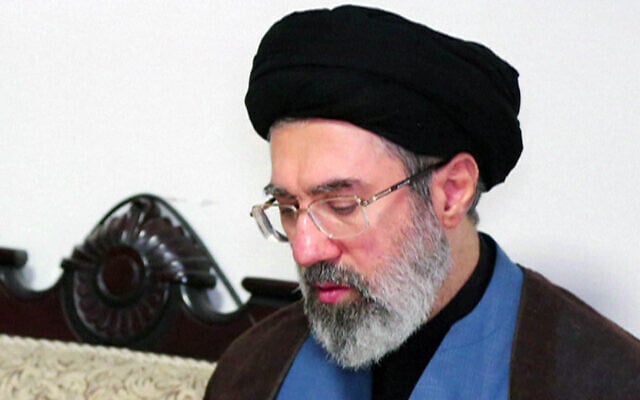
This handout picture taken in Tehran on October 30, 2024, shows Mojtaba Khamenei, son of Iran's slain supreme leader Ayatollah Ali Khamenei. (Office of Supreme Leader / AFP)
Iran’s Supreme Leader Mojtaba Khamenei is unconscious and is being treated for a “severe” medical issue in the city of Qom, while he is unable to govern the country, according to an intelligence assessment cited by The Times.
“Mojtaba Khamenei is being treated in Qom in a severe condition, unable to be involved in any decision making by the regime,” a diplomatic memo based on US-Israeli intelligence and shared with their Gulf allies reads.
It marks the first time a report has revealed Khamanei’s location publicly since the beginning of the war, when he was believed to have been wounded in the opening strikes of February 28.
The document also reveals preparations for his father and former supreme leader Ali Khamenei’s burial in Qom after he was killed in the opening strikes.
Japan says a Japanese national detained in Iran has been released
Japan says a Japanese national detained in Iran since January has been released on bail.
Chief Cabinet Secretary Minoru Kihara tells reporters in Tokyo that his release was confirmed Monday and that Japan is demanding a full release from Iranian authorities.
He says the Japanese ambassador to Iran met the person released and that he is in good health, without providing further details.
The person is believed to be a journalist at Japan’s NHK public television.
Another Japanese national, who was detained in Iran in June, was released and returned to Japan in March.
No injuries or impacts reported after Iranian attack on Beersheba area
No injuries or impacts are reported following Iran’s latest ballistic missile attack.
Sirens had sounded in Beersheba and the surrounding area in southern Israel, in the first attack in some 12 hours.
IDF says it carried out ‘extensive’ wave of Iran strikes
The Israeli Air Force completed an “extensive” wave of airstrikes in Tehran and other areas of Iran a short while ago, the military says.
The IDF says the strikes hit Iranian regime infrastructure sites, and further details will be provided later.
Iranian missile attack targets southern Israel after 12-hour lull
The IDF has identified a ballistic missile attack from Iran, targeting southern Israel, the first Iranian attack on the country in some 12 hours.
Sirens sound in Beersheba and nearby communities.
Saudi Arabia says it downed 7 missiles, debris fell near power facilities
Saudi air defenses have intercepted and destroyed seven ballistic missiles launched toward the country’s east, the defense ministry’s spokesperson says.
The ministry says on X that seven “ballistic missiles launched toward the eastern region were intercepted and destroyed. Parts of ballistic missile debris fell around power facilities; damage assessment is underway.”
Explosions heard in parts of Tehran and nearby Karaj — Iranian media
Explosions are heard in parts of Tehran and the nearby city of Karaj, Iranian media reports.
“Moments ago, explosions were heard in parts of Tehran and Karaj,” local media outlets Fars and Mehr say on Telegram, without giving further details.
UN expected to vote on watered-down Hormuz resolution on Tuesday
The UN Security Council is expected to vote on Tuesday on a resolution to protect commercial shipping in the Strait of Hormuz, but in a significantly watered-down form after veto-wielding China opposed authorizing force, diplomats say.
Oil prices have surged since the US and Israel struck Iran at the end of February, unleashing a conflict that has run for more than five weeks and seen Tehran largely close the Strait, a vital energy artery.
Efforts by Bahrain, the current chair of the 15-member Council, to secure a resolution have involved multiple drafts seeking to overcome opposition from China, Russia and others. The latest iteration, seen by Reuters, drops any explicit authorization of the use of force.
Instead, the text “strongly encourages States interested in the use of commercial maritime routes in the Strait of Hormuz to coordinate efforts, defensive in nature, commensurate to the circumstances, to contribute to ensuring the safety and security of navigation across the Strait of Hormuz.”
It says such contributions could include “the escort of merchant and commercial vessels,” and the text also endorses efforts “to deter attempts to close, obstruct or otherwise interfere with international navigation through the Strait of Hormuz.”
Diplomats say the watered-down version has a better chance of passing, but it remains unclear if it will succeed. It requires at least nine votes in favor and no vetoes from the five permanent members — Britain, China, France, Russia and the US.
Bahrain, which has been backed in its efforts by other Gulf Arab states and Washington, issued a draft on Thursday that would have authorized “all defensive means necessary” to protect commercial shipping, but votes on this were postponed on Friday and Saturday.
Bahrain had previously dropped an explicit reference to binding enforcement.
On Thursday, China opposed a resolution authorizing force, saying this would be “legitimizing the unlawful and indiscriminate use of force, which would inevitably lead to further escalation of the situation and lead to serious consequences.”
Hezbollah rockets trigger sirens in Metula
The IDF Home Front Command gives an all clear after air raid sirens sounded in Metula, the second time tonight Hezbollah has targeted Lebanon border towns with rockets.
Blasts heard in Damascus as Israeli air defenses intercept Iranian missiles, Syrian state TV says
Explosions are heard in the Syrian capital, Damascus, and the surrounding countryside, caused by the Israeli interception of Iranian missiles, Syrian state TV reports.
Iran drone crashes into Iraqi Kurdistan home, kills two — authorities
A drone allegedly coming from Iran has killed a couple in Iraqi Kurdistan after crashing into their home, local authorities report.
The autonomous region’s Counter-Terrorism Service says in a statement that the incident took place on Monday “when a bomb-laden drone coming from Iran crashed into a civilian home in… the Dara Shakran subdistrict within Erbil Province.”
WHO says it has suspended Gaza operations after contract worker killed
The World Health Organization announces that it is suspending evacuations from Gaza after a worker contracted to help them was killed on Monday.
“@WHO is devastated to confirm that a person contracted to provide services to the Organization in Gaza was killed today during a security incident,” the agency’s chief Tedros Adhanom Ghebreyesus posts on X.
Two staff members were present at the incident but were not injured, he adds.
“Following the incident, WHO suspended today’s medical evacuation of patients from Gaza via Rafah to Egypt. Medical evacuations will remain suspended until further notice.”
The United Nations health agency does not give details of what happened, but Tedros says “the relevant authorities” are investigating.
“We call for the protection of civilians and humanitarian workers,” he adds in his post.
Trump hosts Passover reception at White House, with former hostage Edan Alexander and Haredi leaders in attendance
US President Donald Trump hosts a Passover holiday reception for Jewish community leaders at the White House.
The event is closed to the press.
While the White House pegged the event as one for Jewish leaders, a photo from the Oval Office shows that it was largely for ultra-Orthodox community heads, with former American-Israeli hostage Edan Alexander also in attendance.
It was an honor for @AgudahNews to join other Jewish leaders at the @WhiteHouse today to thank @POTUS
It was very fitting for this meeting to take place on Passover, the holiday of Freedom.
My thoughts below ???? /1 pic.twitter.com/s6Y5Z6r5mO
— A. D. Motzen (@ADMotzen) April 6, 2026
Israel okays plan to partially reopen schools starting Sunday
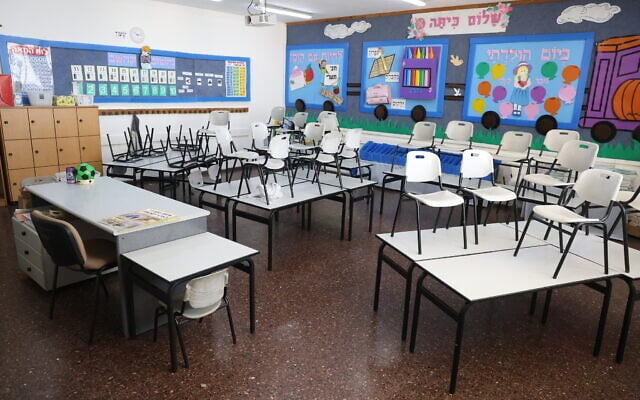
Illustrative: An empty classroom at a school in Safed, northern Israel, on August 31, 2025. (David Cohen/Flash90)
Prime Minister Benjamin Netanyahu has approved an Education Ministry plan to partially reopen schools on Sunday, pursuant to an IDF Home Front Command assessment on Thursday night, according to a ministry statement cited by Hebrew media.
The move comes in the shadow of the war with Iran that has left the country’s 2.5 million children stuck at home for five weeks since the outbreak of hostilities.
Following a meeting with Education Minister Yoav Kisch, Defense Minister Israel Katz and Finance Minister Bezalel Smotrich, Netanyahu is said to have approved an outline mentioned Monday by Kisch in a statement, according to which there will be a rotating system in lower risk areas, alternating between in-person and remote learning, with some 30 to 50 percent of the students attending classes in person at one time. The statement doesn’t include more specific details.
In most of the country, which is considered to be at a relatively high risk of being targeted with missile or rocket attacks, studies will only take place inside bomb shelters, according to that outline.
In lower-risk areas — including the Gaza border communities, the Lower Galilee, Arava, and the West Bank — studies can take place next to a shelter.
Under the current guidelines, areas of the country are designated as yellow (lower risk) and orange. In the former, provided that a shelter can be reached within the time available to reach a protected space, educational activities can be held in person, and gatherings can include up to 50 people outdoors and 100 people indoors. In the latter, educational activities are prohibited, and gatherings can include up to 50 people, provided that shelter is available (workplaces with access to shelters can operate in both areas).
Additionally, Netanyahu has rejected a proposal by Smotrich to designate the wartime period as vacation time for teachers and to have them work instead during the summer break.


read more: