

Live updates (closed)
 Add ToI as a Preferred Source on Google

The Times of Israel liveblogged Monday’s events as they unfolded.
US pump prices hit $4 a gallon as Iran war wreaks havoc on global energy supply
The US national average retail price of gasoline crossed $4 a gallon for the first time in more than three years on Monday, data from price-tracking service GasBuddy shows, as the US-Israeli war with Iran rages on.
Trump said to tell aides he’s willing to end Iran war without reopening Hormuz
US President Donald Trump told aides he is willing to end the military campaign against Iran even if the Strait of Hormuz remains largely closed and leave a complex operation to reopen it for a later date, the Wall Street Journal reports, citing administration officials.
Jewish comedian Modi drops out of Passover event due to Mamdani’s participation
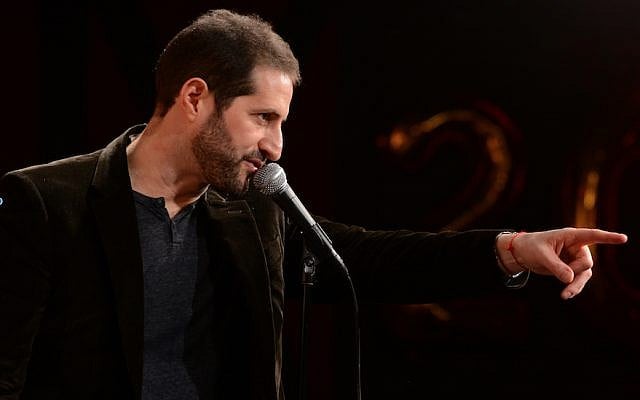
Comedian Modi Rosenfeld. (Courtesy)
The Jewish comedian Modi Rosenfeld, who goes by Modi, drops out of a Passover event after finding out that New York City Mayor Zohran Mamdani is participating.
Mamdani is delivering a speech at a Passover event at City Winery in Manhattan.
Modi, who is Israeli-American, was supposed to perform, but says that he was “not told Mamdani was participating in this event until today.”
“Modi will no longer be attending,” a statement on his social media says.
US refrains from condemning controversial death penalty law passed by Israel
The US avoids condemning controversial legislation passed by the Knesset mandating the death penalty for West Bank Palestinians convicted of carrying out deadly terror attacks.
“The United States respects Israel’s sovereign right to determine its own laws and penalties for individuals convicted of terrorism,” a State Department spokesperson says in a statement sent to querying reporters.
“We trust that any such measures will be carried out with a fair trial and respect for all applicable fair trial guarantees and protections,” the statement adds.
Hegseth’s broker looked to buy defense fund before Iran attack — report
A broker for US Defense Secretary Pete Hegseth attempted to make a big investment in major defense companies in the weeks leading up to the US-Israeli attack on Iran, the Financial Times reports, citing three people familiar with the matter.
Hegseth’s broker at Morgan Stanley contacted BlackRock in February about making a multimillion-dollar investment in the asset manager’s Defense Industrials Active ETF, shortly before the US launched military action against Tehran, the report added.
“This allegation is entirely false and fabricated,” chief Pentagon spokesman Sean Parnell tweets in response to the story.
Debris from air defence interception sparks fire, wounds 4 in Dubai
Falling debris from an air defence interception sparked a fire and wounded four people in Dubai, city authorities say.
“Authorities in Dubai responded to a fire in an abandoned house in Al Badaa caused by debris following an air defense interception,” the Dubai Media Office posts on X, adding that four people near the house sustained minor wounds.
Kuwait says an oil tanker hit in Iranian attack at Dubai port, warns of possible oil spill
Kuwait Petroleum Corporation says a giant Kuwaiti crude oil tanker, Al Salmi, was directly targeted in what it described as an Iranian attack while anchored at Dubai port in the United Arab Emirates, causing damage to the vessel and a fire onboard, the state news agency KUNA says.
The corporation says the tanker was fully loaded at the time of the incident and warned of a possible oil spill in surrounding waters, adding no casualties were reported and an assessment of the damage was underway, KUNA adds.
Just 31% of American Jews back unconditional US aid to Israel — J Street commissioned poll
Just 31 percent of American Jews back unconditional US aid to Israel, according to a new poll commissioned by the dovish J Street lobby.
Forty-four percent of respondents said the US should only provide financial and military assistance to Israel if Jerusalem complies with US law, while 26% said the US should stop providing financial and military assistance to Israel entirely.
Sixty percent of respondents said they strongly or somewhat oppose the US military action against Iran, compared to 40% who said they strongly or somewhat support the operation.
The survey was conducted last week and included interviews with 800 self-identified American Jews who are registered to vote. It has a margin of error of 3.5%.
PM: I won’t put timeline on when Iran war will end, but over half our missions achieved
Prime Minister Benjamin Netanyahu says that the war on Iran has achieved more than half its aims, without putting a timeline on when it would end.
“It’s definitely beyond the halfway point. But I don’t want to put a schedule on it,” Netanyahu tells the conservative US broadcaster Newsmax.
He adds that he meant the war was more than halfway “in terms of missions, not necessarily in terms of time.”
Netanyahu says the war has achieved goals, including killing “thousands” of members of Iran’s Revolutionary Guards.
Israel and the United States are also “close to finishing [Iran’s] arms industry,” he adds.
“Just the whole industrial base — wiping out… entire plants, and the nuclear program itself,” he says.
Netanyahu also voices confidence that the Islamic Republic would fall.
“I think this regime will collapse internally. But at the moment, what we’re doing is just degrading their military capacity, degrading their missile capacity, degrading their nuclear capacity and also weakening them from the inside,” Netanyahu says.
Top Vatican officials meet with Israeli envoy after Holy Sepulchre blocking
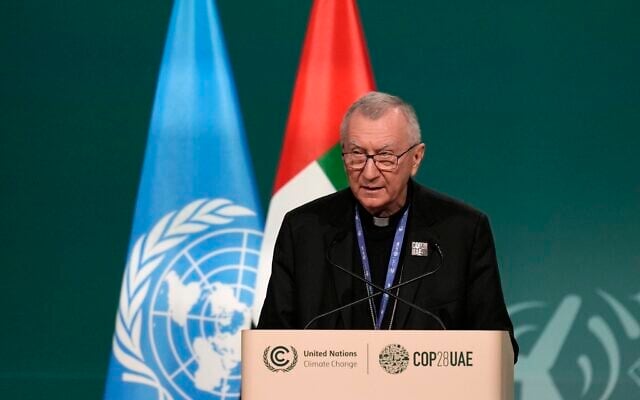
Vatican secretary of state, Cardinal Pietro Parolin, speaks during a plenary session at the COP28 UN Climate Summit, Saturday, Dec. 2, 2023, in Dubai, United Arab Emirates.(AP Photo/Rafiq Maqbool, File)
The Vatican says that top officials met with Israel’s ambassador following an attempt to stop the Latin Patriarch of Jerusalem from accessing the Church of the Holy Sepulchre on Palm Sunday.
Following the incident, which drew international criticism, Israeli authorities and Catholic leaders reached an agreement to allow prayer at the Christian holy site in the Old City of Jerusalem for Holy Week, which culminates with Easter on Sunday.
Vatican second-in-command Secretary of State Cardinal Pietro Parolin, and its top diplomat, Archbishop Paul R. Gallagher, meet with Ambassador Yaron Sideman.
“Regrets were expressed regarding this incident, concerning which clarifications were provided,” the Vatican says.
On Sunday, Israel Police prevented Cardinal Pierbattista Pizzaballa, the Latin patriarch, from entering the church, citing security concerns amid the war with Iran. Pizzaballa described the incident as a “grave precedent” that disregards the sensibilities of Christians worldwide.
After the backlash, Prime Minister Benjamin Netanyahu said the Latin Patriarch would get “full and immediate access.”
Iran’s foreign minister says it’s ‘high time’ for Saudi Arabia to eject US forces
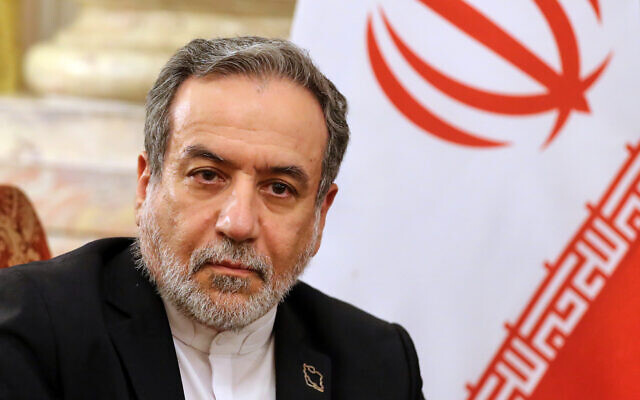
Iranian Foreign Minister Abbas Araghchi looks on during a meeting with Director General of the International Atomic Energy Agency (IAEA) Rafael Grossi, and Egyptian Foreign Minister Badr Abdelatty, at Tahrir Palace in Cairo, September 9, 2025. (AP/Khaled Elfiqi, File)
Iran’s top diplomat urges Saudi Arabia to evict US forces from its territory, reiterating the claim that Iran’s attacks in the region only target its enemies.
“Iran respects the Kingdom of Saudi Arabia and considers it a brotherly nation,” Iranian Foreign Minister Abbas Araghchi writes on X. “Our operations are aimed at enemy aggressors who have no respect for Arabs or Iranians, nor can provide any security… High time to eject US forces.”
Iran has repeatedly fired salvos at Saudi Arabia during tis war with the US and Israel.
Authorities in UAE’s Sharjah say building of telecom company targeted by Iranian drone
Authorities in UAE’s Sharjah say an administrative building of Thuraya Telecommunications was targeted by a drone from Iran, the emirate’s media office says in a post on X.
No injuries are reported.
Bismuth says he will advance draft exemption bill that was taken off Knesset agenda

MK Boaz Bismuth leads a Foreign Affairs and Defense Committee meeting at the Knesset in Jerusalem, December 16, 2025. (Yonatan Sindel/Flash90)
MK Boaz Bismuth, the chair of the Knesset Foreign Affairs and Defense Committee, says he will advance a controversial bill that will enshrine sweeping exemptions from military conscription for Haredi yeshiva students.
Haredi allies of Likud in the government have long demanded the bill, which Bismuth championed. But it has drawn criticism from a wide array of voices.
Critics say it will not bring significant numbers of new soldiers into the IDF’s ranks at a time when the military says it urgently needs more soldiers, and will not lead to equitable participation in Israel’s draft.
The bill was taken off the table with the outbreak of the US-Israeli war with Iran roughly a month ago. But now, Bismuth, a member of Prime Minister Benjamin Netanyahu’s ruling Likud party, says the bill will be put back on the agenda as part of a legislative package intended to shore up the IDF as it is strained by fighting on multiple fronts.
That concern was driven home last week when IDF Chief of Staff Lt. Gen. Eyal Zamir reportedly warned the cabinet that the IDF will ‘collapse in on itself’ amid the manpower shortage.
Bismuth says he will advance the legislation along with bills that would lengthen the term of mandatory service and further regulate reserve duty.
“The prime minister and I have decided, at the request of the chief of staff, to advance legislation including three [proposed] laws: A law lengthening service, the draft law and the reservists law, as a single package of laws to strengthen the IDF’s manpower array,” he says, according to Hebrew media reports.
FBI says armed man who rammed his pickup into Michigan synagogue was inspired by Hezbollah
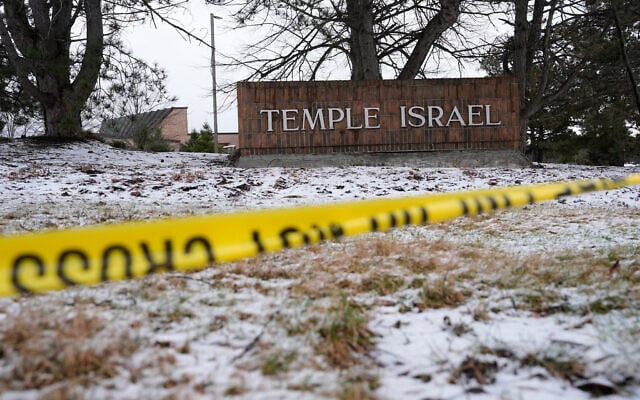
Police tape hangs outside the Temple Israel synagogue March 13, 2026, in West Bloomfield Township, Michigan. (AP/Paul Sancya)
The armed man who rammed his pickup truck into a Detroit-area synagogue earlier this month was carrying out an attack inspired by Hezbollah, the Iran-backed Lebanese terror organization, the FBI says.
Ayman Ghazali made a video before the attack at Temple Israel in West Bloomfield Township, saying he wanted to “kill as many of them as I possibly can,” says Jennifer Runyan, head of the US investigative agency in Detroit.
“We assess this attack to be a Hezbollah-inspired act of terrorism purposely targeting the Jewish community and the largest Jewish temple in Michigan,” she says. “We do not make this characterization lightly without a thorough review and keen evaluation of the facts. In this case, the evidence shows the attacker was motivated and inspired by Hezbollah’s militant ideology.”
The attacker sought out Iranian and pro-Hezbollah content online, she added, and he “regularly consumed breaking news and statements and live coverage of the current secretary-general of Hezbollah, Naim Qassem.”
JUST IN – FBI says Michigan Synagogue attacker was "inspired by Hezbollah's militant ideology." pic.twitter.com/JliR88kGPM
— Disclose.tv (@disclosetv) March 30, 2026
The man’s brother was a Hezbollah commander, the Israel Defense Forces said following the attack, confirming earlier reports on the matter.
Ghazali, 41, of Dearborn Heights, sat in the parking lot for a few hours on March 12 before smashing his pickup through closed doors and into the hallway of an early childhood education area, striking a security guard.
He then exchanged gunfire with another guard before fatally shooting himself, the FBI said at the time. The Ford F150, stocked with commercial-grade fireworks and jugs of gasoline, caught fire during the confrontation.
First responders quickly cleared the building, and no one among the 150 children and staff was injured, officials said.
Ukraine’s Zelensky says Middle East visit a success, announces security accords
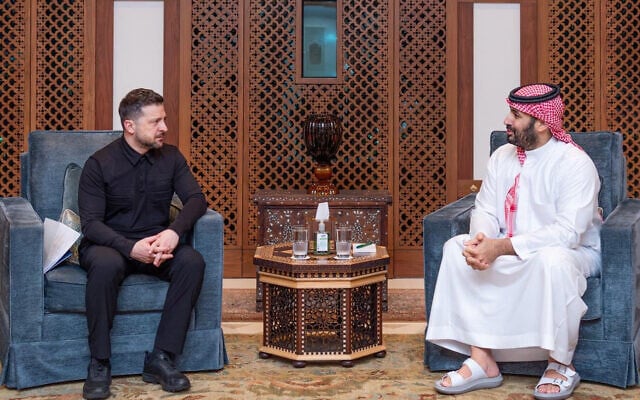
This handout picture released by the Saudi Press Agency (SPA) on March 27, 2026, shows Saudi Crown Prince Mohammed bin Salman (right) meeting with Ukraine's President Volodymyr Zelensky in Jeddah. (SAUDI PRESS AGENCY / AFP)
Ukrainian President Volodymyr Zelensky pronounces his tour of Middle Eastern countries a success and says a number of security cooperation accords have been clinched or are under discussion.
Zelensky embarked on a tour of the region to offer Ukrainian expertise on how to counter attacks from drones fired by Iran in its war with the United States and Israel, which has spread across the Middle East.
He has promoted Ukrainian know-how acquired in its four-year-long war against Russia, which has long deployed Iranian-designed drones to strike Ukraine since Moscow’s February 2022 invasion.
Speaking in his nightly video address after his return to Kyiv, Zelensky says “historic” security agreements have been reached with Saudi Arabia, the United Arab Emirates and Qatar.
Ukraine, he says, is also working with Jordan and Kuwait and adds that two other countries – Bahrain and Oman – have also expressed interest.
“For Ukraine, this is not only about prestige and respect for our people,” Zelensky says.
“This is a very concrete and practical matter. We are exporting our defense system, the skills of our warriors and the knowledge our state possesses.”
He says Ukraine expects “corresponding security cooperation,” which includes discussions on air defense, development of defense production and energy cooperation.
During the tour, the Ukrainian president says he discussed the region’s supplies of diesel, vital for Ukraine’s defense needs and the agriculture sector.
In his address, Zelensky says he found “great respect” for Ukraine in the Middle East and a “shared vision among the countries of the region” to work together with Ukrainian experts.
“Security and restoring stability are the top priorities for everyone,” he says.
IDF says it carried out wave of strikes in Tehran
The IDF says it has completed another wave of airstrikes in Tehran a short while ago.
The military says the strikes hit Iranian regime infrastructure sites, with further details to be provided later.
Civil rights org files petition against death penalty law, calls it ‘unconstitutional,’ ‘discriminatory’
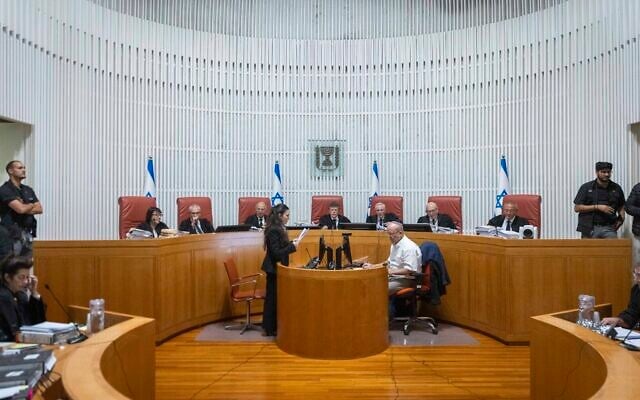
The High Court of Justice hears petitions against the government’s dismissal of Attorney General Gali Baharav-Miara, December 1, 2025. (Chaim Goldberg/Flash90)
The Association for Civil Rights in Israel files a petition to the High Court of Justice asking it to strike down the legislation passed this evening mandating the death penalty for West Bank Palestinians convicted of carrying out deadly terror attacks.
It bases its petition on two legal arguments.
The first is that the Knesset does not have the authority to pass legislation that applies to the Palestinian population of the West Bank since Israel does not hold sovereignty there, and because under the relevant international laws, which Israel largely recognizes, legislative authority lies with the military commander.
“While the Knesset has previously legislated to apply Israeli law to Israeli settlers, this law is categorically different: it applies to the protected Palestinian population,” ACRI says.
“The military’s own legal advisors warned the committee that this amounts to de facto annexation,” the organization adds.
Secondly, ACRI argues that the law is unconstitutional since it violates several fundamental rights laid out in Israel’s semi-constitutional Basic Law: Human Dignity and Liberty, including the right to life, human dignity, due process, and equality.
The organization also argues that the law discriminates between Israeli and Palestinian civilians.
“West Bank Palestinians face near-mandatory death in military courts [under the new law], while the civilian track’s requirement to prove ‘the aim of negating the existence of the State of Israel’ ensures no Jewish perpetrator would ever qualify,” ACRI argues.
Several other organizations and political parties announce that they also intend to petition the court against the law, including the opposition Yesh Atid and Hadash–Ta’al parties.
“This law is not merely a punitive measure—it is an official declaration of the institutionalization of apartheid and racism, and the transformation of the legal system into yet another tool in the violent political repression of the Palestinian people,” says Hadash–Ta’al in a statement to the press.
The New Israel Fund, a left-wing organization that funds like-minded groups in Israel, also condemns the law, with its acting CEO Mickey Gitzin stating, “Make no mistake: this is a death-penalty law for Arabs alone. Its message is unmistakable — Jewish lives matter, Arab lives are cheap.”
PA condemns Israel’s new death penalty law as a ‘dangerous escalation’
The Palestinian Authority condemns the the Knesset’s passing of a law that would mandate the execution of West Bank Palestinians convicted of terror attacks, calling it a “dangerous escalation.”
The PA governs day-to-day affairs in parts of the West Bank, including its Palestinian population centers.
In a post on X, the PA’s Foreign Ministry says that “Israel has no sovereignty over Palestinian land,” adding, “This law once again reveals the nature of the Israeli colonial system, which seeks to legitimize extrajudicial killing under legislative cover.”
France seeks emergency UNSC meeting after strikes kill UN peacekeepers in Lebanon
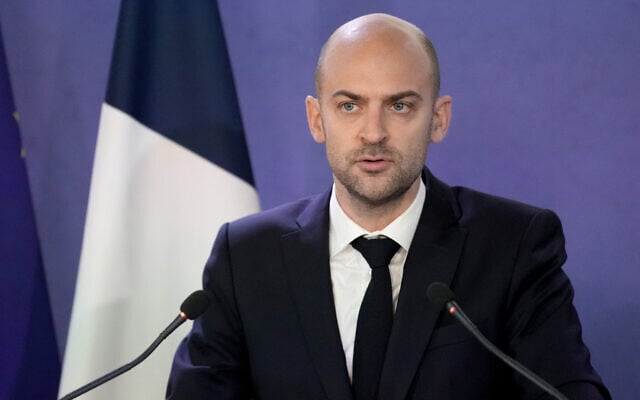
France's Foreign Affairs Minister Jean-Noel Barrot gives a press conference after a crisis meeting in Paris on March 2, 2026. (Thibault Camus / POOL / AFP)
France’s foreign minister Jean-Noel Barrot says he has requested an emergency meeting of the UN Security Council following “the extremely serious incidents” targeting UN peacekeepers in Lebanon that killed one Indonesian national.
“Such attacks near UN peacekeeping positions are unacceptable and unjustifiable,” Barrot says, adding that France is calling “for a full investigation into the circumstances of these tragedies.”
The peacekeeper from Indonesia was the first from the UN’s peacekeeping force, known as UNIFIL, to be killed in the renewed fighting between Israel and the Iran-backed Lebanese terror group Hezbollah, which erupted on March 2 when Hezbollah began attack Israel.
Iranian ballistic missile again hits open area in central Israel; no injuries reported
Iran’s latest ballistic missile fired at central Israel, the second in half an hour, hit an open area, according to initial IDF assessments.
No injuries are reported.
New Iranian missile attack detected, sirens set to sound in central Israel again
The IDF has detected a new ballistic missile attack from Iran, again targeting central Israel, for the second time in half an hour
Sirens are expected to sound in the coming minutes.
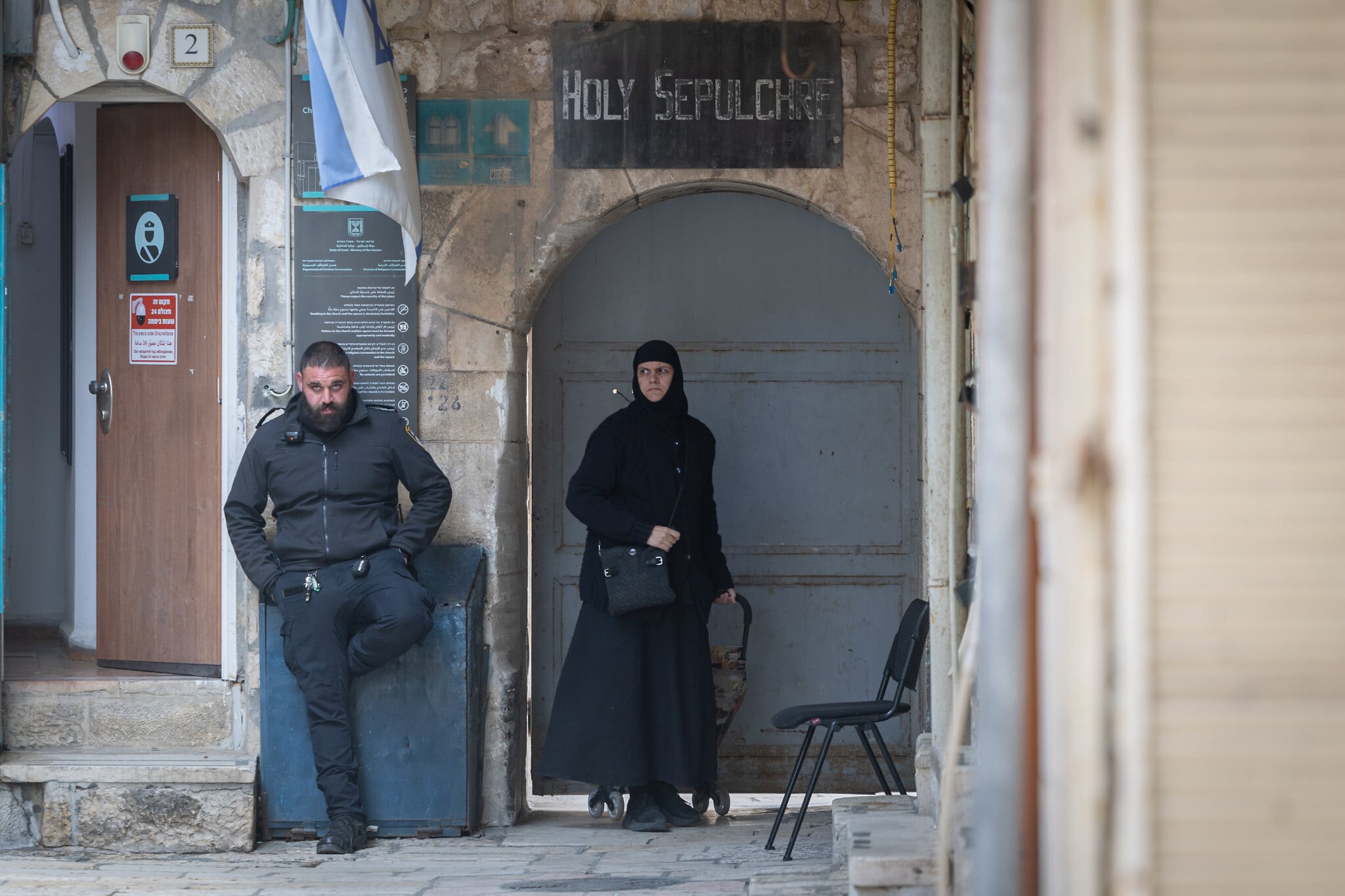
White House says it reached out to Israel over barring of Catholic leaders from Church of Holy Sepulchre
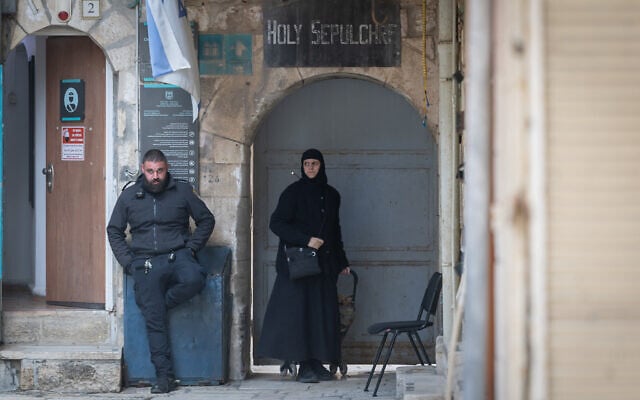
A police officer stands guard outside the Church of the Holy Sepulchre in the Old City of Jerusalem, as the church remains closed due to the war, March 30, 2026. (Chaim Goldberg/Flash90)
WASHINGTON — The White House confirms that it reached out to Israel to express its concern over the Israel Police’s decision to block two top Catholic officials from praying at the Church of the Holy Sepulchre on Palm Sunday yesterday.
The officials who were barred were the Latin patriarch of Jerusalem, Cardinal Pierbattista Pizzaballa, and Father Francesco Ielpo, custos of the Holy Land.
“We did express our concerns with Israel with respect to these holy sites being shut down,” White House press secretary Karoline Leavitt says during a briefing.
Hours earlier, Catholic officials in Jerusalem announced that prayer arrangements for Holy Week, which culminates with Easter on Sunday, April 5, had been resolved with Israeli authorities, ending a diplomatic spat over the issue.
“We want worshipers to be able to access these holy sites. Of course, safety is a top priority, but we understand Israel is working on the security measures to reopen the sites throughout Holy Week, and that’s something that we’re appreciative of,” she adds.
Iranian missile strikes open area in central Israel, IDF says; no injuries reported
Iran’s latest ballistic missile fired at central Israel was allowed to strike an open area, “according to protocol,” according to the IDF.
No injuries are reported.
It marked the sixth Iranian missile attack on Israel today.
Trump spokesperson lists goals for Iran war different than those set out by Rubio hours earlier

White House press secretary Karoline Leavitt speaks with reporters in the James Brady Press Briefing Room at the White House, March 30, 2026, in Washington. (AP/Julia Demaree Nikhinson)
WASHINGTON — White House press secretary Karoline Leavitt lists objectives for the Iran war that are different from the ones laid out by Secretary of State Marco Rubio hours earlier.
“The objectives of Operation Epic Fury [are to] destroy the Iranian navy, destroy their ballistic missiles, dismantle their missile and drone production infrastructure, significantly weaken their proxies and preventing Iran from ever obtaining a nuclear weapon,” Leavitt says during a press briefing.
Earlier today, Rubio insisted that the US has been clear about the goals of the war and that they were as follows: destroying Iran’s navy, destroying Iran’s air force and destroying Iran’s missile and drone programs.
He made no mention of Iran’s support for proxies or its nuclear program.
Destroying Iran’s air force has largely gone unmentioned by US officials other than Rubio, possibly because it is not seen to pose a significant threat.
Asked about the reopening of the Strait of Hormuz, Leavitt says the administration is working toward that end, but she clarifies that it is not a “core objective” of the war.
Sirens sound in Tel Aviv for first time since Saturday due to Iranian missile launch
Iran’s latest ballistic missile fire triggers sirens in Tel Aviv and the surrounding area in central Israel for the first time since Saturday.
The missile fire also breaks a lull of around eight hours.
In the past two days, Iran has mostly directed its missile fire on southern Israel.
Knesset passes law mandating death penalty for West Bank Palestinians convicted of terrorism
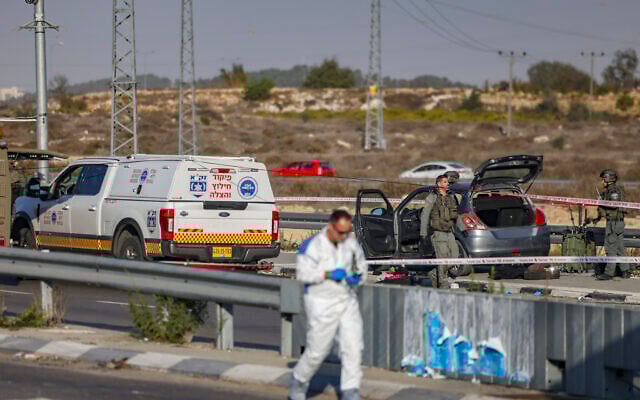
Israeli security forces and rescue personnel at the scene of a deadly terror attack at the Gush Etzion Junction in the West Bank, November 18, 2025. (Chaim Goldberg/Flash90)
The Knesset votes 62-48 to pass a controversial law mandating the death penalty for West Bank Palestinians convicted of carrying out deadly terror attacks.
The vote is a major victory for far-right National Security Minister Itamar Ben Gvir’s Otzma Yehudit party, which has long lobbied for the measure. Prime Minister Benjamin Netanyahu voted for the bill.
“This is a day of justice for the victims and a day of deterrence for our enemies. No more revolving door for terrorists, but a clear decision. Whoever chooses terrorism chooses death,” says Ben Gvir in a statement.
The law, approved after nearly 12 hours of debate, mandates death by hanging as the default punishment for West Bank residents convicted of deadly terrorist acts by military courts. While judges can opt for life imprisonment under vaguely defined “special circumstances,” the death penalty would otherwise be mandatory.
The sentence would require a simple majority of judges rather than a unanimous decision, while eliminating any right of appeal.
The law will not apply retroactively, including to the perpetrators of the October 7 attacks, for which a separate bill is being advanced.
The law effectively enshrines capital punishment for Palestinians alone, as it explicitly excludes Israeli citizens or residents, and Palestinians alone are tried in military courts. Israelis are tried in civilian courts.
Though a separate provision allows courts to impose the death penalty on anyone, including Israeli citizens, it applies only to those who “intentionally cause the death of a person with the aim of denying the existence of the State of Israel” — a definition that in practice excludes Jewish terrorists.
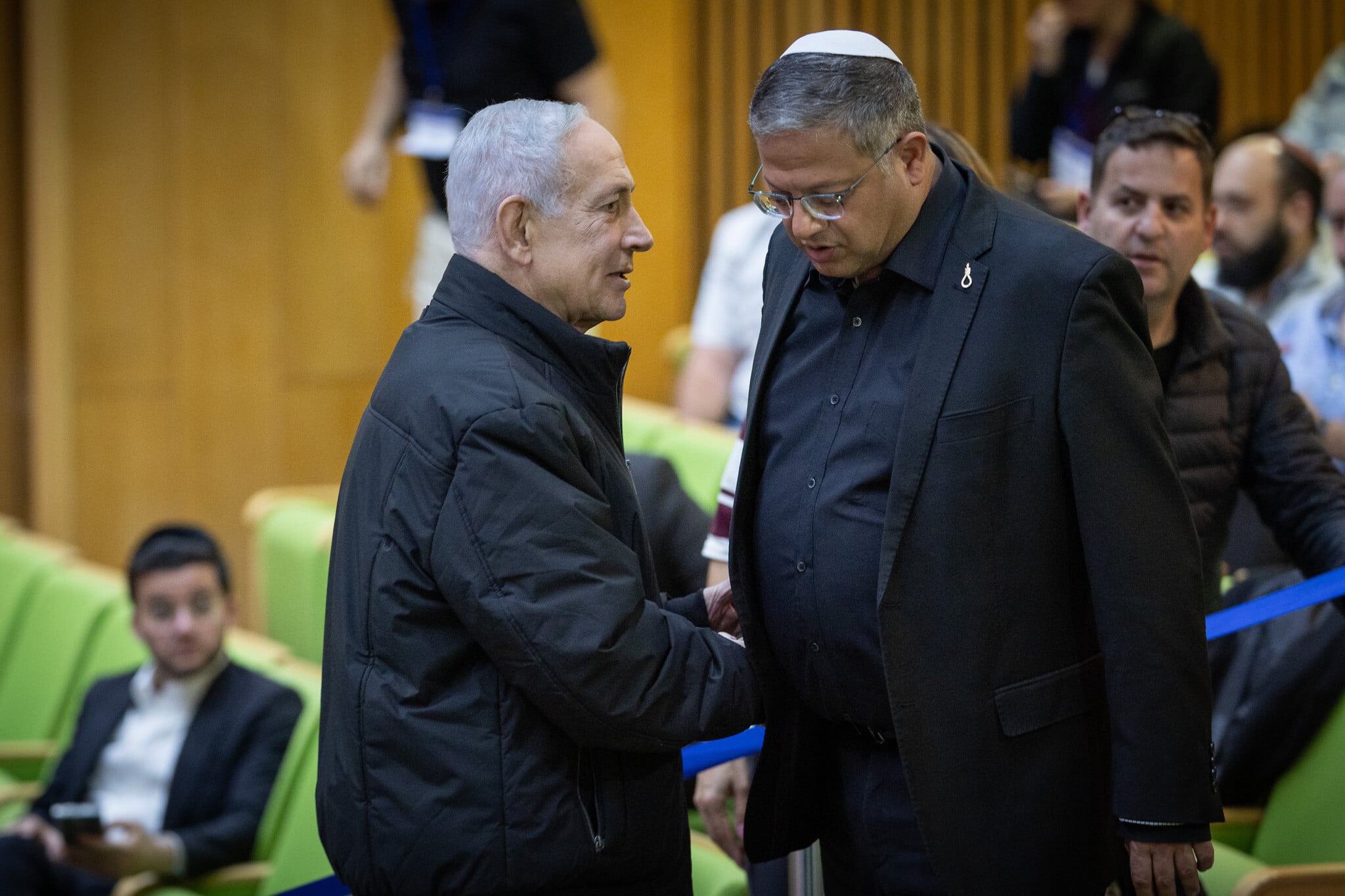
Right-wing opposition party Yisrael Beytenu votes in favor of the law. Party chair Avigdor Liberman had said that his faction would only support the measure if Netanyahu and Shas leader Aryeh Deri showed up in person to vote in favor, which they did in the final moments of the debate.
The ultra-Orthodox Shas and United Torah Judaism’s Degel HaTorah faction also vote in favor, despite reports that Degel HaTorah was going to oppose it, after its spiritual leader Rabbi Dov Lando expressed concern that the legislation could endanger Diaspora Jewry. UTJ’s Agudat Yisrael faction opposes the measure.
New Iranian missile attack detected, sirens set to sound in central Israel
The IDF has detected a new ballistic missile attack from Iran, targeting central Israel.
Sirens are expected to sound in the coming minutes.
Trump would ‘be quite interested’ in Arab countries footing bill for Iran war — spokesperson
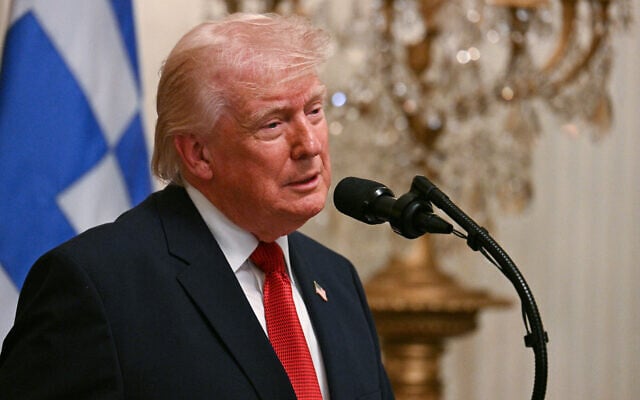
US President Donald Trump speaks during a Greek Independence Day celebration in the East Room of the White House in Washington, DC, on March 26, 2026. (Jim WATSON / AFP)
WASHINGTON — US President Donald Trump would be interested in having Arab countries pay the US for the war in Iran, White House press secretary Karoline Leavitt says during a briefing.
A reporter at a briefing recalls how Arab states helped foot much of the American bill for the Gulf War in the 1990s and asks whether the US would like to see that happen again.
“It’s something the president would be quite interested in calling them to do,” Leavitt responds.
“I won’t get ahead of him on that, but certainly it’s an idea that I know he has and something that I think you’ll hear more from him on,” she adds.
Zelensky: Russia giving Iran intel, satellite images of targets for attack; Ukraine ‘ready for dialogue’ with Netanyahu on war aid

Ukraine's President Volodymyr Zelenskyy walks after a joint press conference with Bulgaria's Prime Minister Andrey Gyurov in Kyiv, Ukraine, March 30, 2026. (AP/Evgeniy Maloletka)
Ukrainian President Volodymyr Zelensky says that Russia has been providing Iran with intelligence and satellite imagery of targets for attack during the US-Israeli campaign against Tehran, in an interview with Channel 12’s Barak Ravid.
“We know that Russia made images using satellites and they share this information with the Iranian regime,” Zelensky says.
Zelensky tells Ravid that Russia has been providing this intelligence since the start of the war, and that the Russians are assisting Iran because they have an interest in prolonging the war as much as possible.
The Ukrainian president confirms that he has had very little contact with Prime Minister Benjamin Netanyahu over the past two years and assesses that the premier tries “to balance” relations between both Moscow and Kyiv during their war, “even though Russia is helping Iran.”
Netanyahu and Zelensky last met on the sidelines of the United Nations General Assembly in October 2023, and have since spoken over the phone on rare occasions. Zelensky expresses an interest in widening dialogue.
Asked what his message is to Netanyahu, Zelensky replies: “We have what he needs, he has what we need… We are ready for this dialogue,” apparently referring to mutual military assistance.
While Zelensky has recently sent military personnel to Jordan, Saudi Arabia, and the UAE to help intercept Iranian drones, drawing on Ukrainian experience, Israel has not requested assistance from Ukraine, Ravid adds.
Zelensky wishes Jews worldwide “peace” ahead of Passover, saying that peace “is the biggest deficit in the world. Energy is number two; the first one is peace. I wish only peace.”
White House: Talks with Iran ‘going well’ despite Iranian rhetoric
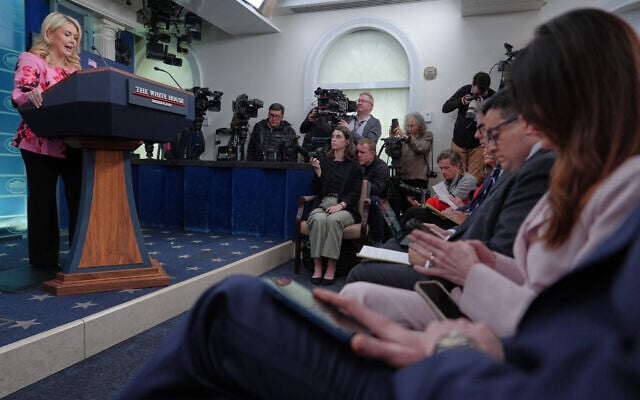
White House press secretary Karoline Leavitt speaks with reporters in the James Brady Press Briefing Room at the White House, March 30, 2026, in Washington, DC. (AP/Alex Brandon)
WASHINGTON — The White House insists that talks with Iran are ongoing and proceeding positively, despite statements to the contrary from Tehran.
Reiterating US military gains against Iran that include the damaging of 70% of missile, drone and naval production facilities, White House press secretary Karoline Leavitt says, “It’s no surprise that we are seeing the remaining elements of the regime become increasingly eager to end the destruction and come to the negotiating table while they still can.”
“Despite all of the public posturing you hear from the regime and false reporting, talks are continuing, and going well,” Leavitt claims.
“What is said publicly is much different than what he communicated to us privately,” she adds.
While the US has framed the talks as direct negotiations, two Arab officials familiar with the mediation efforts have told The Times of Israel that engagement has been limited to the passing of messages through third-party countries.
The US has pointed to Iran’s allowing of a number of oil tankers through the Strait of Hormuz as a demonstration of its seriousness, though Arab officials familiar with the mediation efforts have told The Times of Israel that Iran is unlikely to agree to American demands that it was refusing to accept before the war.
Jordan’s King Abdullah turned down requests from Netanyahu to meet — report
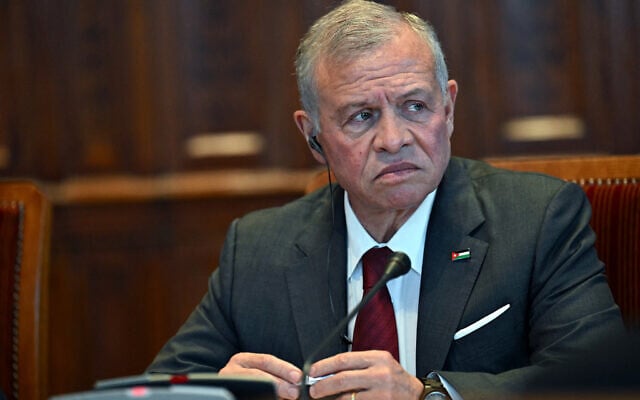
Jordan's King Abdullah II looks on during a reception by the deputy speaker of the Hungarian Parliament at the Hungarian Parliament building in Budapest on October 16, 2025. (Attila KISBENEDEK / AFP)
Prime Minister Benjamin Netanyahu’s office reached out several times recently to Jordan’s King Abdullah in an attempt to arrange a meeting between the leaders, but was turned down, the Kan public broadcaster reports.
At least one of the attempts was made before the outbreak of the current war with Iran.
According to Kan, one of the reasons given by Jordan is that the king will not consider a meeting with Netanyahu while Al Aqsa mosque is closed. Jordan considers itself the custodian of the site in Jerusalem’s Old City, which has been closed due to the missile threat from Iran. Israel only recognizes Jordan’s “special role” at the site.
Israel was attempting to signal to the White House that Jerusalem is maintaining cordial relations with Amman, another US ally.
In response to Israel’s outreach, says Kan, the Jordanians demanded that Israel deal with settler violence, ease restrictions on Muslim worshippers on the Temple Mount, where Al Aqsa is located, sign a new water agreement, allow more types of aid into Gaza, and give answers on the future of the Palestinian question, but were not satisfied with Israel’s answers.
IDF issues evacuation warning for Lebanese villages ahead of strikes on Hezbollah
The IDF issues an “urgent” evacuation warning for several Lebanese villages in the southern section of the eastern Beqaa Valley.
Residents of Zellaya, Libbaya, Yohmor al-Beqaa, Sohmor, Qellaya, and Dlafy are instructed to head toward the town of Qaraoun, located around 30 kilometers north of Israel’s border.
“The activities of the Hezbollah terror organization are forcing the IDF to act forcefully against it in these areas, and we do not intend to harm you,” says army spokesman Col. Avichay Adraee.
#عاجل ‼️انذار عاجل إلى سكان القرى اللبنانية: ????زلايا ????لبايا ????يحمر (البقاع الغربي) ????سحمر (البقاع الغربي) ????قلايا ???? دلافي
⭕️إن نشاطات حزب الله الإرهابي تُجبر جيش الدفاع على العمل ضده بقوة في تلك المناطق ولا ننوي المساس بكم
⭕️لضمان سلامتكم ندعوكم إلى الانتقال فوراً إلى شمال… pic.twitter.com/Ep31fToPMQ
— افيخاي ادرعي (@AvichayAdraee) March 30, 2026
Thousands of US Army paratroopers arrive in Middle East as buildup intensifies
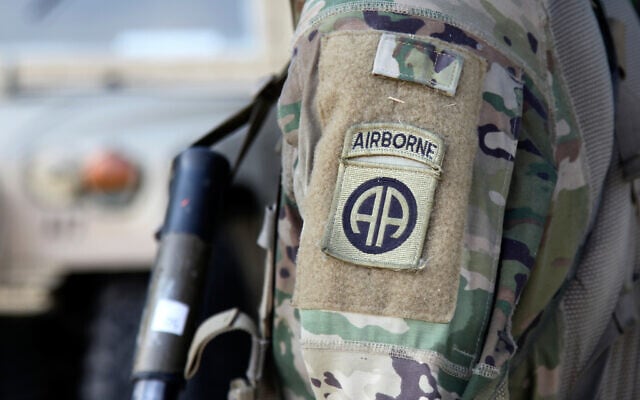
An 82nd Airborne Division paratrooper participates in artillery training during a field exercise at Fort Bragg, North Carolina, on Aug. 26, 2020. (AP Photo/Sarah Blake Morgan, File)
Thousands of soldiers from the US Army’s elite 82nd Airborne Division have started arriving in the Middle East, two US officials tell Reuters, as US President Donald Trump weighs his next steps in the war against Iran.
Reuters first reported on March 18 that Trump’s administration was considering deploying thousands of additional US troops to the Middle East, a move that would expand options to include the deployment of forces inside Iranian territory.
The paratroopers, based out of Fort Bragg, North Carolina, add to the thousands of additional sailors, Marines and Special Operations forces sent to the region. Over the weekend, about 2,500 Marines arrived in the Middle East.
The officials, speaking on the condition of anonymity, do not say specifically where the soldiers are deploying to, but the move is expected.
The additional Army soldiers include elements of the 82nd Airborne Division headquarters, some logistics and other support, and one brigade combat team.
No decision has been made to send troops into Iran, but they will build up capacity for potential future operations in the region, one of the sources says.
The soldiers could be used for several purposes in the Iran war, including an attempt to seize Kharg Island, the hub for 90% of Iran’s oil exports.
UAE minister: Coexistence with Iran ‘impossible’ right now, addressing threat ‘essential’ for peace
Coexistence with Iran “under its current behavior” is impossible, says an Emirati minister.
“Continued Iranian aggression makes coexistence with the Iranian regime under its current behavior impossible, and addressing the Iranian threat—including nuclear, missile, drone programs, and maritime security—is essential for sustainable peace,” says UAE Minister of State Khalifa bin Shaheen Al Marar, according to the country’s Foreign Ministry.
At a virtual Arab League meeting, Marar says, “the Arab League now faces a crossroads: either adopt full solidarity and a firm stance against Iranian terrorism or risk becoming ineffective in addressing major challenges.”
Air Force struck Iranian arms production sites, security HQs over past day
Over the past day, the Israeli Air Force struck 170 targets in Iran using some 400 bombs, including weapon production sites and headquarters of Iran’s security forces, the military says.
According to the IDF, during a wave of strikes in Tehran this morning, IAF jets hit “a central site” for the production of “significant” weapon components; sites for the production of drone engines; and a complex where weapon components were developed.
In western Iran, the IAF struck several “central” headquarters of Iran’s armed forces, including a Basij complex in Daghlan and a police station in Sanandaj, the military adds.
Two more UNIFIL peacekeepers killed in south Lebanon explosion ‘of unknown origin’
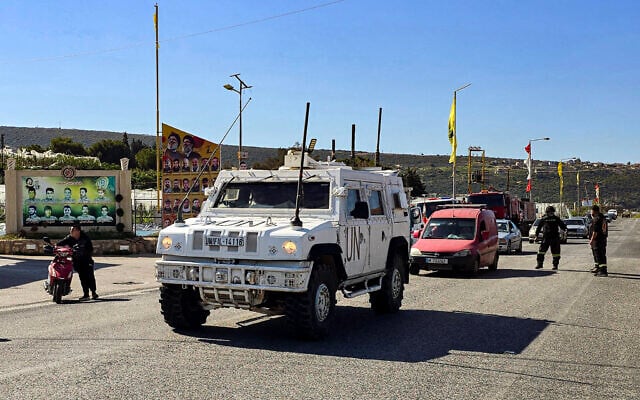
Vehicles of the United Nations Interim Forces In Lebanon (UNIFIL) escort a convoy of residents from the Christian village of Alma al-Shaab evacuating from the village in southern Lebanon through the area of Naqura on March 10, 2026. (KAWNAT HAJU / AFP)
Two UNIFIL troops were killed in southern Lebanon today, says the United Nations peacekeeping force there, “when an explosion of unknown origin destroyed their vehicle near Bani Hayyan.”
Two other peacekeeping troops were hurt, including one severely wounded. The force says it has launched an investigation into the incident.
UN peacekeeping chief Jean-Pierre Lacroix tells reporters that the two peacekeepers were Indonesian.
The incident comes a day after an Indonesian UNIFIL peacekeeper was killed when a projectile exploded at a position near the southern Lebanese village of Adchit al-Qusayr.
“We reiterate that no one should ever have to die serving the cause of peace,” says UNIFIL.
“We reiterate the urgent need for all actors to uphold their obligations under international law and to ensure the safety and security of UN personnel and property at all times, including avoiding any actions that may put peacekeepers in danger,” says the UN mission. “Deliberate attacks on peacekeepers are grave violations of international humanitarian law and of Security Council Resolution 1701, and may constitute war crimes.”
“The human cost of this conflict is far too high,” it says. “The violence, as we have said before, must end.”
Reuters contributed to this report.
Strike kills Hezbollah commanders who liaised with Palestinian terror groups, IDF says
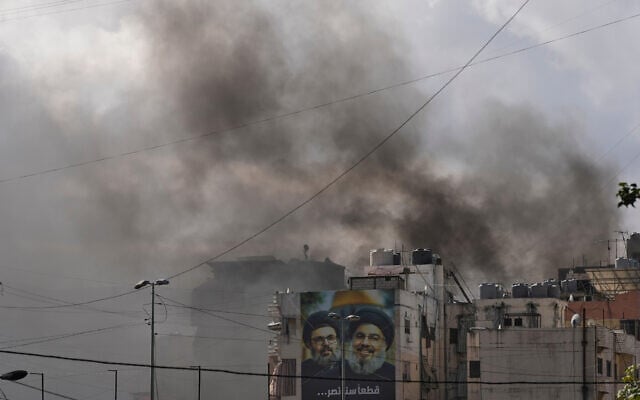
Illiustration: Portraits of Hezbollah's late leaders Hassan Nasrallah, right, and his cousin, Hashem Safieddine, are seen as smoke rises following an Israeli airstrike in Dahiyeh, Beirut's southern suburbs, March 30, 2026. (AP/Hassan Ammar)
Top Hezbollah commanders responsible for the coordination between the Lebanese terror group and Palestinian terror organizations were killed in an Israeli strike in Beirut earlier today, the IDF announces.
The military says the strike in the Lebanese capital targeted and killed Hamza Ibrahim Rakhin, the deputy commander of Hezbollah’s Unit 1800, along with the unit’s chief of operations and another operative.
“Unit 1800 is the unit responsible for coordination between the Hezbollah terror organization and Palestinian terror organizations in Lebanon, Gaza, Syria, and Judea and Samaria (West Bank),” the IDF says in a statement.
The military says that as part of his role, the deputy chief of Unit 1800 also oversaw the deployment of Palestinian terror operatives in southern Lebanon to confront Israeli troops.
In other strikes in Beirut today, the IDF says, it bombed Hezbollah headquarters and command centers.
Bennett vows to investigate ‘sabotage of Haredi enlistment’ if elected PM
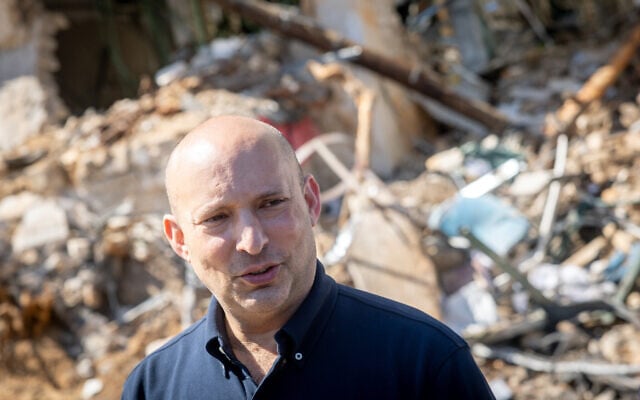
File: Naftali Bennett at the scene of a ballistic missile impact in Tel Aviv on March 1, 2026 (Chaim Goldberg/Flash90)
Former prime minister Naftali Bennett announces that should he win this year’s election, he will “establish a special commission of inquiry regarding the sabotage of Haredi enlistment during the war, which has harmed Israel’s security.”
“Everyone who knowingly took part in violating the Security Service Law during wartime will be investigated,” Bennett pledges.
Some 80,000 ultra-Orthodox men aged between 18 and 24 are currently believed to be eligible for military service, but have not enlisted. During the course of the war in Gaza, the IDF repeatedly told lawmakers that it lacked 12,000 troops due to the strain of the conflict and other military challenges.
Last week, Military Chief of Staff Lt. Gen. Eyal Zamir reportedly warned the “IDF is going to collapse in on itself” as the army deals with mounting operational demands and a deepening manpower shortage.
In June 2024, the High Court issued a ruling ordering the government to start conscripting Haredi men. Since then, yeshivas harboring draft dodgers have seen their budgets slashed, draft refusers have lost access to daycare subsidies for their children and other benefits, and the IDF has begun arresting small numbers of evaders, including some attempting to leave the country.
However, at the same time, the coalition has pushed for legislation which would codify blanket exemptions from military service for full-time yeshiva students, while setting modest conscription targets for Haredi men as a whole. The bill, which had come under fire from a wide array of critics, was recently set aside but may be revived later.
Attorney General Gali Baharav-Miara recently told the High Court that Prime Minister Benjamin Netanyahu’s government has failed to comply with a court order directing it to draw up sanctions against ultra-Orthodox draft dodgers.
At the same time, the IDF has complained that the Israel Police have been systematically preventing the army from arresting draft evaders in ultra-Orthodox neighborhoods.
Both the Attorney General’s Office and police have not taken action against a network of Haredi draft evasion hotlines, including one founded by former cabinet minister Meir Porush, which encourage yeshiva students to ignore conscription orders and actively mobilizes protesters to prevent the arrest of evaders.
Hardline Haredi groups have also paid grants to draft evaders released from military prison.
Lebanon said to ask Ukraine embassy to hand over suspected Mossad agent
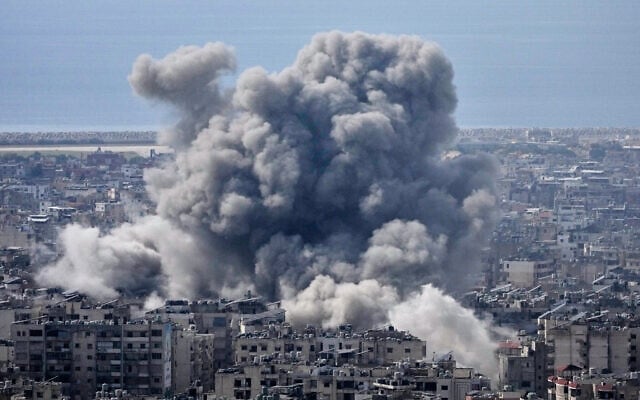
Smoke rises following an Israeli airstrike in Dahiyeh, Beirut's southern suburbs, March 6, 2026. (AP Photo/Hussein Malla)
Lebanon has asked Ukraine’s embassy in Beirut to hand over a man taking refuge there who is suspected of working with Israel’s Mossad spy agency, a senior security official and a Hezbollah source tell AFP.
Lebanon and Israel have officially been at war for decades, and Lebanese security services have arrested dozens of people on suspicion of working for Israel, many of whom were recruited online following the country’s economic collapse beginning in 2019.
The Hezbollah source claims it had detained a Syrian-Palestinian national, who also holds Ukrainian citizenship, in September after he parked a motorbike on a road leading to the Beirut airport through the city’s southern suburbs — a stronghold of the Iran-backed terror group.
The motorbike “was planted with an explosive device disguised as a battery,” the source claimed, requesting anonymity to discuss security issues.
Hezbollah held the man until its war with Israel erupted earlier this month.
On March 6, Israel’s military struck a building in the southern suburbs next to where he was being detained, enabling him to escape to the Ukrainian embassy, the source claiims.
Lebanon’s General Security agency says it managed to arrest five alleged members of the group that had been working with the man and referred them to the judiciary.
Hassan Choukeir, head of General Security, tells AFP that “the Ukrainian embassy in Lebanon contacted us on March 10 requesting us to authorize its citizen… who was present there and had lost his passport, to leave through Beirut airport.”
“After checking his name and photograph, we became aware that he is wanted by the Lebanese judiciary and is the subject of a number of search and investigation notices from Lebanese security agencies,” he adds.
Choukeir says authorities told the embassy it was obliged to hand the man over, adding he was “wanted for involvement in a cell belonging to Israel’s Mossad planning assassinations and bombings in Beirut’s southern suburbs.”
The Ukrainian embassy does not respond to AFP’s requests for comment.
In October, a judicial source told AFP that more than 30 people had been arrested on suspicion of providing Israel with precise information on Hezbollah facilities and the movements of its members during the terror group’s previous war with Israel in 2023 and 2024.
People convicted of working for Israel have been sentenced to up to 25 years in prison in the past.
Dubai announces $272 million economic support package amid Iran war
Dubai has approved economic facilitation measures worth 1 billion dirhams ($272 million) to support the business sector, with implementation set to begin on April 1 for a period of three to six months, Dubai’s crown prince posted on X on Monday.
The support measures aim to enhance the flexibility of the emirate’s economy, strengthen preparedness and enable businesses and families to navigate current economic conditions.
Today, I chaired a meeting of The Executive Council, where we approved an AED 1 billion support package for Dubai’s business sector, to be rolled out from 1 April over the next three to six months. The measures are designed to strengthen the economy's resilience, readiness and… pic.twitter.com/ZBKYGBGppA
— Hamdan bin Mohammed (@HamdanMohammed) March 30, 2026
Trump confirms negotiating with Iranian parliament speaker Mohammad Bagher Ghalibaf
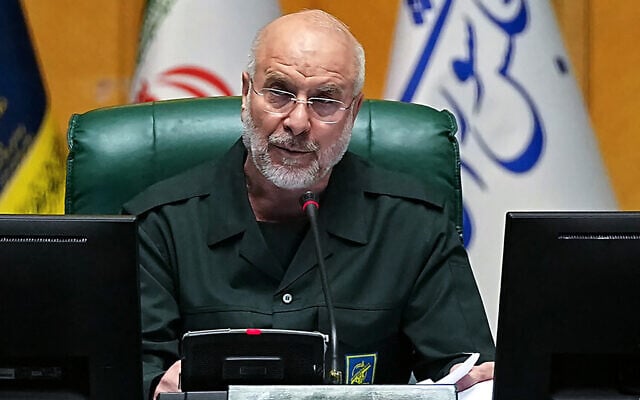
In this handout picture provided by Ihe Islamic Consultative Assembly News Agency (ICANA), Iran's Parliament Speaker Mohammad Bagher Ghalibaf, dressed in an IRGC uniform, chairs a session in Tehran on February 1, 2026. (ICANA News Agency/AFP)
WASHINGTON — US President Donald Trump confirms that Iranian parliament speaker Mohammad Bagher Ghalibaf is the regime figure with whom Washington has been engaging in recent weeks.
Trump tells the New York Post that he’ll know “in about a week,” whether Ghalibaf is someone the US can truly work with.
While Ghalibaf has been thought over the past couple of weeks to be Washington’s preferred conduit — despite his hardline background and ties to the Islamic Revolutionary Guard Corps — US officials have refrained from identifying him.
Trump has quipped that whoever he publicly names would end up being killed.
NYC Council’s antisemitism task force to examine changes in police hate crime reporting

NYPD officers stand guard during an anti-Israel rally at the Israeli consulate on October 9, 2023 in New York City, two days after the Hamas attack on southern Israel. (Michael M. Santiago/Getty Images/AFP)
The New York City Council’s Bipartisan Task Force to Combat Antisemitism will hold its inaugural hearing on April 15.
The council launched the task force in late January, amid a broader push by legislators to rein in antisemitism in the city, where Jews are targeted in hate crimes far more than any other group.
Inna Vernikov, a Jewish Republican representing part of south Brooklyn, leads the task force alongside Eric Dinowitz, a Jewish Democrat from the Bronx.
During the hearing, the task force will examine the NYPD’s announcement last month that it will change how it reports on hate crimes.
The police release a monthly report on crime statistics, including hate crimes. The report is a barometer of how prevalent hate crimes are in the city and how many times each group has been targeted.
The NYPD had reported each month on hate crime allegations that were under review, but announced this month that it will only report incidents that have been investigated and confirmed as hate crimes, saying the updated methodology would be more accurate.
The updated criteria mean that police will report fewer hate crimes, and that comparisons to previous months and years will not be possible via public data.
Hate crime experts have said the change may lead to the false impression that hate crimes have decreased.
New York City Mayor Zohran Mamdani took office at the beginning of January, so it will be difficult to gauge whether his policies have affected the prevalence of hate crimes and antisemitism.
NYPD Commissioner Jessica Tisch, who is Jewish and seen as a moderate, has supported the updated criteria, saying it will be more accurate, and the mayor’s office has said it was not involved in the change.
The task force “will examine in our first hearing” the updated police reporting, Vernikov says on X.
Sara Netanyahu declines nomination to light torch on Independence Day
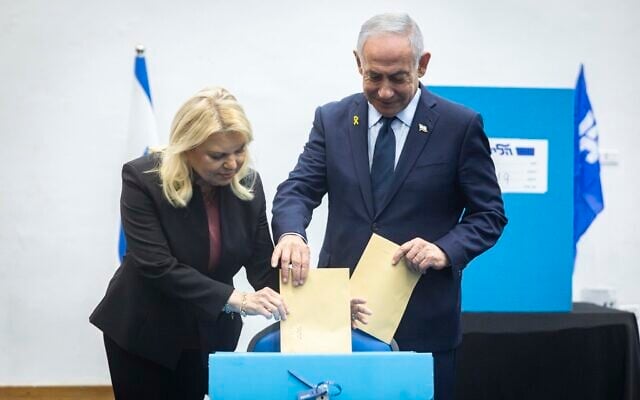
Prime Minister Benjamin Netanyahu and his wife Sara cast their votes during elections for the Likud Central Committee at the International Convention Center in Jerusalem, November 25, 2025. (Chaim Goldberg/Flash90)
Sara Netanyahu turns down a nomination to light a torch at Israel’s Independence Day celebration this year after being nominated by Likud MK Sasson Guetta.
Prime Minister Benjamin Netanyahu’s wife, his office says, “emphasizes that lighting the torch on Independence Day should be dedicated to the wonderful citizens of Israel, who stand bravely on the front lines and on the home front and continue in mutual responsibility through indescribable acts of kindness” in wartime.
According to the PMO, Sara Netanyahu “asked that this torch also belong to our heroic and courageous soldiers, whose acts of bravery will be spoken of for many years; to the bold pilots who defend Israel, who soar high and reach great distances.”
Lapid to petition High Court over funds for Haredi institutions OKed in overnight vote
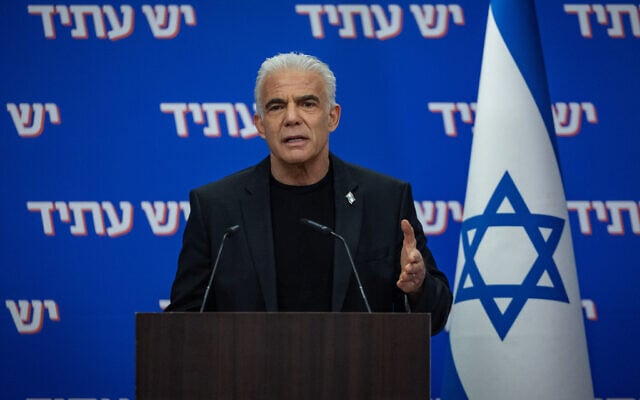
MK Yair Lapid leads a faction meeting at the Knesset on March 23, 2026. (Yonatan Sindel/Flash90)
Opposition Leader Yair Lapid’s Yesh Atid party will appeal to the High Court of Justice to prevent the transfer of approximately NIS 800 million ($255 million) for ultra-Orthodox programs and institutions that the opposition mistakingly voted for in a controversial overnight parliamentary maneuver.
Addressing reporters in the Knesset on Monday evening, Lapid says that the passage of the 2026 state budget last night was “the greatest theft in the history of the country” but that “that wasn’t enough” for the coalition, which “transferred hundreds of millions more to the Haredim through an illegal vote on an illegal amendment proposed by Coalition Chairman Ofir Katz.”
Yesh Atid subsequently wrote to Attorney General Gali Baharav-Miara and Knesset legal advisor Sagit Afik regarding the matter, “the first step in our petition to the High Court of Justice against the illegal theft of funds for the Haredi parties.”
“Following our letter, the Attorney General froze the money for the Haredim. All professional ranks have received a clear directive not to transfer a single shekel. They need to know that we are tracking these budgets, and anyone who attempts to transfer them will face prosecution. We will stop this money. This money will not go through,” Lapid warns.
Because amendments are typically filed by the opposition as a procedural tactic to delay budget votes, opposition MKs appeared to treat the measure as routine and automatically backed it, failing to notice that the coalition was also supporting the amendment. The added funding ultimately passed by a lopsided 107–4 vote before lawmakers appeared to realize their error.
In total, according to a tally by Channel 13, the move boosted allocations to Haredi educational institutions by more than NIS 1 billion, from NIS 4.1 billion ($1.3 billion) to NIS 5.17 billion ($1.65 billion).
G7 says ready to take all measures for energy market stability

From Left: Ukraine's Foreign Minister Andriy Sybiga, EU High Representative and Vice-President for Foreign Affairs and Security Policy Kaja Kallas, Britain's Foreign Secretary Yvette Cooper, Saudi Arabia's Foreign Minister Faisal bin Farhan, Germany's Foreign Minister Johann Wadephul, Italy's Foreign Minister Antonio Tajani, Canada's Foreign Minister Anita Anand, France's Foreign Affairs Minister Jean-Noel Barrot, South Korea's Foreign Minister Cho Hyun, India's Foreign Minister Subrahmanyam Jaishankar, Japan's Foreign Minister Toshimitsu Motegi, Brazil's Foreign Minister Mauro Vieira and and US Secretary of State Marco Rubio pose for a family picture during a G7 Foreign Ministers' meeting at the Vaux-de-Cernay Abbey in Cernay-la-Ville outside Paris, France, March 27, 2026. (Brendan Smialowski/Pool Photo via AP)
Finance leaders from the Group of Seven economic powers say they stand ready to take “all necessary measures” to safeguard energy market stability and limit broader economic spillovers from recent volatility amid the Iran war.
After an online meeting of finance ministers and central bankers, the G7 also calls in a statement on countries “to refrain from imposing unjustified export restrictions on hydrocarbons and related products.”
The statement adds that G7 central banks remain strongly committed to maintaining price stability, with monetary policy staying data‑dependent.
Turkey says NATO defenses downed inbound Iranian missile for fourth time
A ballistic missile launched from Iran entered Turkish airspace before being shot down by NATO air and missile defenses deployed in the eastern Mediterranean, Turkey’s Defense Ministry says.
The interception marked the fourth such incident since the start of the US-Israeli war with Iran, following three earlier interceptions by NATO systems earlier this month that prompted Ankara to protest and warn Tehran.
Tehran has denied in the previous three incidents that it authorized such launches and has asked Ankara to form a joint investigation into the matter.
The ministry says all necessary measures were being taken “decisively and without hesitation” against any threat directed at Turkey’s territory and airspace.
Rubio counts destruction of Iran air force as war aim, differing from lists presented by other US officials

US Secretary of State Marco Rubio arrives at Paris-Le Bourget Airport, in Le Bourget, France, March 27, 2026, to take part in the G7 foreign ministers' meeting. (Brendan Smialowski/Pool Photo via AP)
US Secretary of State Marco Rubio lists what he says are the goals of the war with Iran, knocking those who say that the administration has not been clear about them but departing from a list previously laid out by the White House.
Rubio tells ABC’s Good Morning America that the goals are destroying Iran’s navy, destroying its air force, severely diminishing Iran’s missile launching capabilities and destroying Iran’s missile and drone production factories.
While Rubio did include the destruction of Iran’s air force in the list of war aims he provided last week, that objective has not typically been mentioned by other US officials, given that Iran’s air force has never posed a significant threat.
Moreover, other top US officials have included the prevention of Iran from ever obtaining a nuclear weapon and ceasing Iran’s support for regional proxies in the administration’s list of war aims.
In talking points sent to Republican lawmakers earlier this month, the White House listed those latter two goals along with the destruction of Iran’s navy and missile programs.
No mention was made of Iran’s air force.
AG halts transfer of funds given to Haredi institutions in contentious overnight vote

Attorney General Gali Baharav-Miara attends a ceremony for outgoing Supreme Court Justice Yosef Elron at the Supreme Court in Jerusalem, September 18, 2025. (Yonatan Sindel/Flash90)
Attorney General Gali Baharav Miara halts the transfer of some NIS 800 million ($252 million) to ultra-Orthodox educational institutions approved in a controversial parliamentary maneuver last night.
The allocation of the funds was inserted by the coalition into a legislative amendment to the budget. Since almost all amendments are submitted by the opposition, opposition MKs mistakenly voted in favor of the funds.
Baharav-Miara says that it appears the coalition sought to approve the funds in this manner in order to circumvent a ruling by the High Court of Justice barring the state from providing benefits to students in ultra-Orthodox yeshivas who have refused to obey conscription orders.
Senior United Torah Judaism MK Moshe Gafni rails at the attorney general over her decision, calling it “criminal” and accusing her of hating the ultra-Orthodox.
“The budget was approved last night in accordance with the law, with an unprecedented majority. Gali Baharav-Miara has no authority to intervene; this is criminality by any standard and her hatred towards the ultra-Orthodox public is visible to all. Ten measures of hatred descended upon the world and she took nine of them,” Gafni storms, in an allusion to a rabbinic saying.
Leader of the Opposition and Yesh Atid chairman MK Yair Lapid welcomes the move, calling the allocation “illegal” and celebrations of the vote “premature.”
Says Lapid, “We will continue to fight for you. This money will not be transferred.”
Bazan refinery says damage light, all facilities operating after Iran missile attack
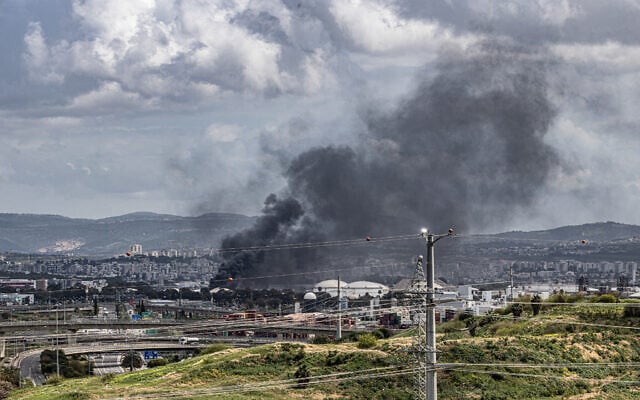
Smoke rises from the Bazan oil refinery in Haifa, following missile attacks from Iran and Lebanon, March 30, 2026. (Anthony Hershko/Flash90)
Bazan oil refineries notifies the Tel Aviv Stock Exchange that the roof of a distillate tank sustained “localized damage” in this morning’s missile attack from Iran, that the damage is “not substantial,” and that all production facilities are operational.
Earlier, the Fire Service clarified that the tank that was hit contained benzene and did not present harm to the public. A fire sparked by the Iranian missile attack spread black smoke smelling of petroleum over a radius of several kilometers.
This was the fourth attack in less than two years on the refinery complex, and the second since the current conflict with Iran began about a month ago. During last June’s Israel-Iran war, three workers died in a fire caused by a missile attack.
The complex is located in the middle of the densely populated Haifa metro area in northern Israel.
Under years of pressure from residents and environmental groups, the government has decided to shutter the facility by 2029 or 2030, and plans are advancing to turn the area into a green, residential and light industry hub.
The refinery’s owners, however, are pushing back and trying to get planning authorities to approve expansion.
France probes possible ‘direct link’ to Iran after bomb attack foiled outside Bank of America

Police stand outside the Bank of America building in Paris, March 28, 2026. (AP/Nicolas Garriga)
French authorities are investigating a suspected link to Iran after thwarting a bomb attack outside a Bank of America building in Paris on Saturday, the interior minister says.
The authorities suspect there could be a link to Iran due to similarities to other recent attempted attacks in Europe for which a pro-Iran group claimed responsibility, French Interior Minister Laurent Nuñez says.
On Saturday morning, Paris police officers spotted two suspects carrying a shopping bag near the premises of the Bank of America building in the 8th arrondissement of the French capital. Five suspects have been arrested, including two today, and the national anti-terrorism prosecutor’s office has opened an investigation into alleged terrorism-related offenses.
Authorities are making a “direct link” with Iran because the “modus operandi is in every respect similar to actions that have been carried out in the Netherlands and in Belgium,” Nuñez says on French radio RTL.
In those cases there were claims by a pro-Iranian group that “linked them to the conflict” in the Middle East, he says.
The group, known on Telegram under the name Harakat Ashab al-Yamin al-Islamia, which translates as the Islamic Movement of the Companions of the Right, also claimed responsibility for an attack last week in London, where four ambulances belonging to a Jewish charity were set on fire.
“Typically, intelligence services of this country [Iran] operate in this way: they use proxies, a series of subcontractors, often common criminals, to carry out highly targeted actions aimed at US interests, the interests of the Jewish community, or Iranian opposition figures,” Nuñez says.
Nuñez says French authorities have stepped up security around key personalities and sites since the beginning of the Iran war, including personal protection of some figures from the Iranian opposition.
Lebanon judge opposed by Hezbollah said to complete probe into Beirut port blast
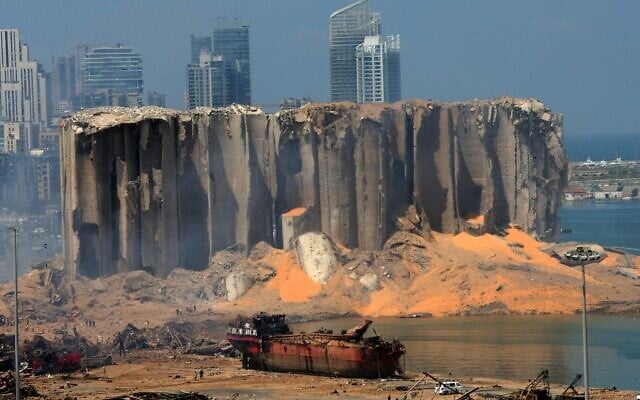
A picture taken on August 5, 2020 shows the damaged grain silo and a burnt boat at Beirut's harbour, one day after a powerful twin explosion tore through Lebanon's capital, resulting from the ignition of a huge depot of ammonium nitrate at the city's main port. (STR / AFP)
Lebanese judge Tarek Bitar has completed his investigation into the 2020 Beirut port blast, a years-long case that involves possible charges against dozens of people, a judicial official tells AFP.
Since 2023, the investigation into the massive Beirut port explosion, which killed more than 220 people on August 4, 2020, has been in jeopardy after Hezbollah led a campaign demanding the removal of Bitar, who was later hit with dozens of lawsuits to remove him from the case.
Bitar resumed his investigation last year as Lebanon’s balance of power shifted following the 2023-2024 war between Israel and Hezbollah that weakened the Iran-backed terror group.
“The investigating judge in the Beirut port explosion case, Tarek Bitar, decided to conclude his investigations into the case and referred the entire file to public prosecutor Jamal Hajjar,” the official tells AFP.
The number of defendants in the case reached around 70 people, including politicians, security and military officials and civil servants, according to the official.
The prosecutor will study the file and present his opinion and then refer it again to Bitar “who will issue his indictment and determine the responsibility for each of the defendants.”
Bitar is supposed to “make a decision regarding about 20 defendants who appeared before him since the beginning of 2025” on whether to “detain them, set them free or conditionally release them,” the official says.
Bitar has already made his decision regarding the remaining 50, including politicians and judges who refused to appear before him for questioning, according to the official.
No one is currently detained in relation to the port blast.
No injuries reported in latest Hezbollah attack on Haifa area
Hezbollah fired a barrage of five rockets from Lebanon at the Krayot suburbs of Haifa a short while ago.
According to the IDF, four rockets were intercepted while the fifth was allowed to hit an open area “according to protocol.”
No injuries are reported.
Sirens sound again in Haifa area warning of attack from Lebanon
Sirens again sound in the Haifa area, warning of an attack from Hezbollah in Lebanon.
Most American Jews disapprove of US military action against Iran, new poll shows

People rally at the Lincoln Memorial in support of Israel in Washington, DC, Sunday, April 7, 2024. (AP Photo/Jose Luis Magana)
More than half of US Jews disapprove of the US military action against Iran, according to a new poll by a nonpartisan polling firm.
The new poll finds that 55% of American Jews oppose the US military action, compared to 32% who support it. The poll found a sharp partisan divide, in line with polling of Americans in general, with Republicans more supportive of the war than Democrats.
A quarter of respondents say they are “torn because while Iran is a threat to peace, this is not the way to handle it.”
The survey was conducted online in mid-March by the Mellman Group and included 800 registered Jewish voters.
The poll finds that a large majority of US Jews believe US President Donald Trump should have sought congressional approval for the war — including nearly a third of those who support it. And about four in 10 say they oppose the war because it lacks “clear provocation and clear objectives.”
The survey also finds that more than half of US Jews say they are concerned that conducting the war jointly with Israel will “be a long-term problem prompting concerns about the role of Israel and American Jews in US foreign policy.”
A poll released last week found that 61% of Americans overall oppose the war, suggesting that American Jews may be slightly more supportive overall — especially when considering that most American Jews tend to vote Democratic.
The Mellman Group’s executive vice president, Michael Bloomfield, says in a statement that his poll’s results underscore the complexity of American Jewish sentiment about the war.
“American Jews are not monolithic. There can be difference, and in this case strongly held on both sides, with a middle group torn between mixed feelings,” he says. “In today’s political environment, partisanship is a very strong driver of views. That is true across the country across demographics, including American Jews.”
Rubio: US must be prepared for ‘probability’ Iran will reject American diplomacy
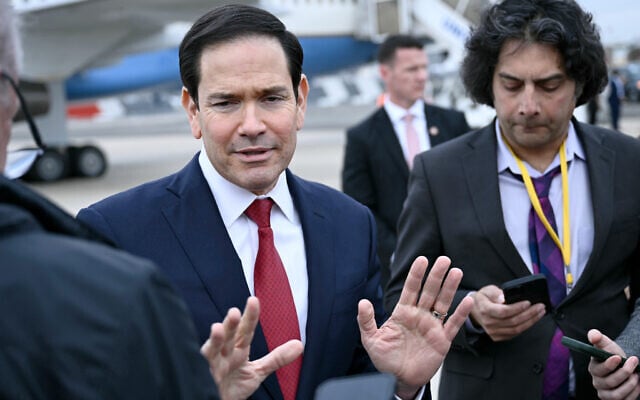
US Secretary of State Marco Rubio speaks to the press at the Bourget airport in Le Bourget, outside Paris, France, March 27, 2026. (Brendan Smialowski/Pool Photo via AP)
WASHINGTON — US Secretary of State Marco Rubio says Washington must be prepared for the “probability” that Iran will reject American diplomatic efforts to end the war, hours after President Donald Trump expressed optimism that Tehran would accept such an agreement.
“There are clearly people there talking to us in ways that previous people in charge of Iran have not spoken to us in the past,” Rubio tells ABC’s Good Morning America, adding that the US intends to test Iran’s ability to back up its statements with action.
“But we also have to be prepared for the fact that that effort might fail. We’re dealing with a 47-year-old regime that still has a lot of people involved in it who aren’t necessarily big fans of diplomacy and peace,” Rubio says, undercutting Trump’s claim that the US has effectively caused regime change by taking out much of Iran’s leadership.
“If there are new people now in charge who have a more reasonable vision of the future, that would be good news for us, for them, for the entire world,” Rubio says.
“But we also have to be prepared for the possibility, maybe even the probability, that that is not the case,” he adds.
IDF strikes Iranian air defenses near Caspian Sea with aim to expand air superiority
The IDF says it carried out a strike yesterday on Iranian air defense systems near the Caspian Sea in northern Iran, more than 1,600 kilometers (some 1,000 miles) from Israel, as part of ongoing efforts to expand its aerial superiority over Iran.
According to the military, Israeli Air Force jets targeted the site – which was concealed in a forested area – during a wave of airstrikes yesterday, hitting systems it says posed a threat to its aircraft.
Passover priestly blessing at Western Wall to occur with ‘limited quorum’ due to war

Jewish worshippers pray at the Western Wall, in Jerusalem's Old City, during the Birkat Kohanim priestly blessing, April 15, 2025. (Chaim Goldberg/Flash90)
Against the backdrop of the war with Iran, the Passover priestly blessing that usually draws tens of thousands of worshippers to the Western Wall will be held “with a limited prayer quorum,” according to a joint statement by the Western Wall Heritage Foundation, the Israel Police, and the Jerusalem Municipality.
The ceremony generally sees male descendants of the Kohanim, the Jewish priestly caste, gather to bestow a benediction — known in Hebrew as Birkat Kohanim — raising their hands to perform the blessing while wrapped in prayer shawls.
Sunday’s ceremony, however, will include just 50 men who will bestow the blessing. The event will be broadcast live.
Under the Home Front Command’s security guidelines, gatherings and services in Jerusalem can take place with up to 50 people, provided that a shelter can be reached within 90 seconds after bomb sirens go off.
Earlier today, police and Christian leaders announced an agreement to allow Easter services to be held amid the security arrangements.
Since the beginning of the war on February 28, the Old City and its surroundings, which include sites holy to Judaism, Christianity and Islam, have been hit by fragments of missiles launched by Iran, causing damage but no casualties.
Bank of Israel cuts growth outlook for this year amid war; interest rates unchanged
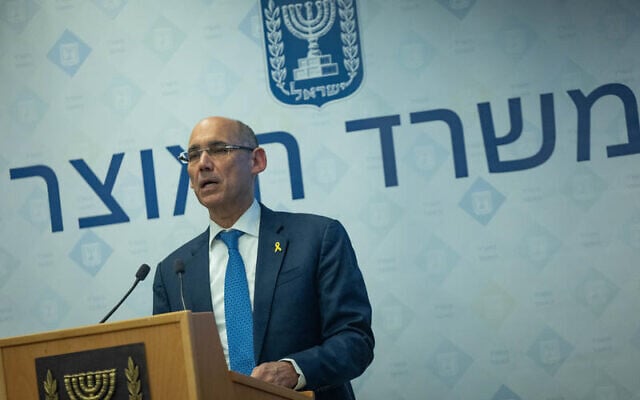
Governor of the Bank of Israel Amir Yaron speaks during a press conference at the Finance Ministry in Jerusalem on August 6, 2025. (Yonatan Sindel/Flash90)
The Bank of Israel cuts the growth outlook for the economy for this year as it leaves interest rates on hold for a second straight meeting, citing the growing geopolitical uncertainty over the duration and intensity of the war with Iran.
“The military operation has broad economic implications for real economic activity and there was a marked decline in activity with the outbreak of the confrontation,” the central bank says. “Geopolitical uncertainty has grown both domestically and globally. This is particularly true with regard to the expected duration and intensity of the fighting and how it will end.”
Under the assumption that the war with Iran and the fighting in Lebanon will end toward the end of April, the central bank now expects the economy to grow by 3.8 percent in 2026, down from its January forecast of 5.2% before the outbreak of war with Iran. In 2027, the pace of growth is expected to pick up to 5.5% versus the 4.3% forecasted last time. Israel’s economy grew 2.9% in 2025, overshadowed by the war with the Hamas terror group in Gaza.
Alongside, the revised growth forecasts, the central bank decides to hold the benchmark interest rate at 4%, in line with forecasts by economists.
“Since the previous interest rate decision, there has been an increase in the inflation environment, mainly due to a marked increase in global energy prices,” the central bank says.
Over the past year, Bank of Israel Governor Amir Yaron has come under fierce criticism by politicians and manufacturers for hesitating to lower high borrowing costs.
In January, the central bank cut borrowing costs by 25 basis points from 4.25% to 4%. In November, it had lowered the benchmark lending rate for the first time in almost two years to 4.25% from 4.5%, following a ceasefire agreement with Hamas.
US will take control of Strait of Hormuz ‘over time,’ treasury chief says
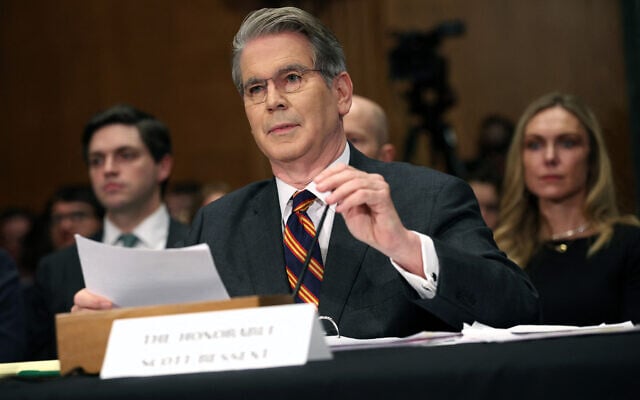
US Treasury Secretary Scott Bessent testifies before the Senate Committee on Banking, Housing, and Urban Affairs in the Dirksen Senate Office Building on February 5, 2026, in Washington, DC. (Kevin Dietsch/Getty Images North America/Getty Images via AFP)
US Treasury Secretary Scott Bessent says the global oil market is well supplied, with more boats traveling through the Strait of Hormuz.
“Over time, the US is going to retake control of the straits and there will be freedom of navigation, whether it is through US escorts or a multinational escort,” Bessent says in an interview with Fox News.
Suspect indicted for act of terror in stabbing of Ramat Gan official

Paramedics arrive at the scene of a stabbing in Ramat Gan on March 12, 2026. (Magen David Adom)
The State Attorney’s Office on Monday indicted Muhammad Watad Salim, a pharmaceutical worker, who is accused of stabbing the head of Ramat Gan’s religious council earlier this month in an apparent terror attack.
The 20-year-old, an employee at a Ramat Gan pharmacy from the Arab town of Jatt, is charged with attempted aggravated murder after allegedly stabbing 47-year-old Gedalyahu Ben Shimon in the Tel Aviv suburb.
According to the indictment, the man came to work March 10 with a sharp knife. About 10 minutes after people in the area received warning of an incoming Iranian missile attack, Watad left his place of work and set his sights on a victim.
Watad caught Ben Shimon off guard outside, stabbing him several times across his body with the intention to kill, prosecutors write. After Ben Shimon fell to the ground, Watad kicked him incessantly as he bled out.
Ben Shimon was severely wounded in the attack and paramedics rushed him to Tel Aviv’s Ichilov Medical Center, where he underwent emergency surgery. He emerged in stable condition.
Today’s indictment stresses that Watad sought to kill Ben Shimon out of religious and nationalist fervor, noting he shouted “Allahu Akbar” — meaning “God is greatest” in Arabic — while assaulting his victim.
The defendant is also accused in the Tel Aviv District Court of obstructing legal proceedings, as well as holding a knife in the context of an act of terror.
Earlier this month, Watad claimed before the court that he was wrongfully nabbed by police while running out of his workplace to take cover from the missiles.
Merz says Syrian refugees have important role in rebuilding their home country

German Chancellor Friedrich Merz gives a statement at Siemens Energy plant in Hangzhou, in eastern China's Zhejiang Province on February 26, 2026. (Photo by Jade Gao / AFP)
German Chancellor Friedrich Merz says Syrian refugees who found asylum in Germany have an important role to play in rebuilding their country and Berlin will help those that want to return.
“We are working together to ensure that Syrians living in Germany can return to their homeland,” Merz says in a press conference in Berlin with visiting Syrian President Ahmed al-Sharaa.
Czechs detain fifth suspect over arson attack on drone factory by pro-Palestinian group
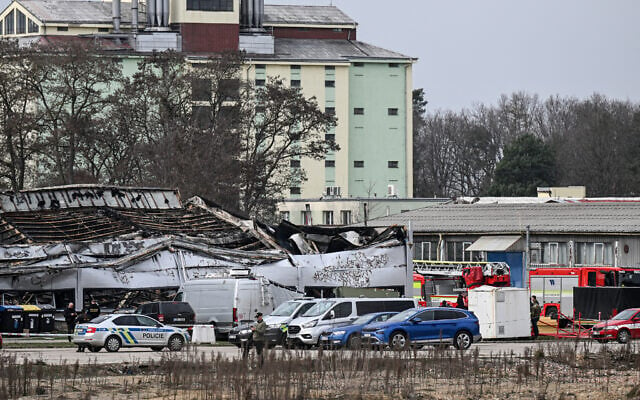
Firefighters and investigators check the scene of the burnt factory owned by Czech arms maker LPP Holding, March 20, 2026, in Pardubice, Czech Republic. (Michal Cizek / AFP)
A fifth person is detained in connection with an arson attack on an optics and drone factory in the Czech Republic for which a previously unknown pro-Palestinian activist group had claimed responsibility, a public prosecutor says.
Police said on Saturday they had detained a fourth suspect over the March 20 fire. Czech police say they are searching for other suspects.
In a statement, the Prague high public prosecutor’s office says another person was detained yesterday, but it did not provide details.
Police had earlier detained an Egyptian man and a Czech woman and charged them with terrorism. Another person, a US citizen, was detained in neighboring Slovakia in relation to the attack.
A lawyer for the Egyptian said in a statement on Saturday released through a Czech news website that the suspect, identified only as M, had an alibi for the time of the attack.
The website said a request filed for taking the Egyptian man and Czech woman into custody, provided to them by the lawyer, showed the two had denied taking part in the attack.
The fourth suspect also denied participation in any illegal activity, news agency CTK cited a judge as saying on Saturday.
The group that claimed responsibility said in a statement online that the targeted company was developing weapons for Israel. The company, LPP Holding, announced plans to cooperate with Israeli group Elbit Systems in 2023, but says those plans were never implemented.
Rocket fired by Hezbollah at Haifa successfully intercepted, IDF says; no injuries reported
The IDF says sirens in Haifa and nearby towns a short while ago were triggered by a single rocket that was launched by Hezbollah from Lebanon and was successfully intercepted by air defense systems.
There are no immediate reports of injuries.
Sirens blare in Haifa, nearby towns warning of Hezbollah rocket attack
Sirens sound in Haifa and nearby towns amid a Hezbollah rocket attack from Lebanon.
Assailant who carried out ramming attack near Tulkarem was Palestinian police officer
The assailant who carried out a ramming attack at the Einav checkpoint near Tulkarem earlier was a junior officer in the Palestinian Authority’s Tulkarem police, identified as Abd al-Rahman Mahza Abu al-Rub, a security source tells The Times of Israel.
He held a rank equivalent to a lieutenant.
Earlier, the IDF said a suspect attempted to ram troops at the Einav junction in the Tulkarem area of the West Bank. He was shot dead by soldiers. No troops were injured.
ارتقاء الشاب عبد الرحمن حمزة ابو الرب (مرتب الشرطة في طولكرم )من قرية جلبون شرق جنين جراء اطلاق النار على سيارته على حاجز عناب https://t.co/lSxD2k4ITP pic.twitter.com/ptoGEvBxKR
— سم????ح (@samah_0000) March 30, 2026
Herzog assures Jewish Diaspora leaders he is ‘carrying out best efforts’ to curb settler violence
President Isaac Herzog assures Jewish Diaspora leaders he is “carrying out best efforts” to ensure settler violence is curbed in response to a letter by over 1,000 Jewish Diaspora leaders urging action against the rampant attacks.
Herzog says he shares the belief that “these acts of violence stand in stark contradiction to the values upon which Israel was founded and to the enduring ethical tradition of the Jewish people.
“Our heritage emphasizes the sanctity of human life, and grounds it in a basic biblical tenet: ‘You shall love the stranger’ — a foundational moral principle that has defined the Jewish people across generations.”
Herzog says he has spoken with government and law enforcement officials to demand “they employ all available means to bring those responsible to justice and to put an immediate end to this unacceptable phenomenon.”
“Best assured I am fully committed to the cause and carry out my best efforts to deal with this challenge,” he says.
President Isaac Herzog's response to a letter from Diaspora Jewish leaders concerning the recent surge of violence by extremist elements in Judea and Samaria: pic.twitter.com/zrpTz9m6nE
— Office of the President of Israel (@IsraelPresident) March 30, 2026
Police chief freezes ‘proactive monitoring’ by anti-incitement body after High Court order
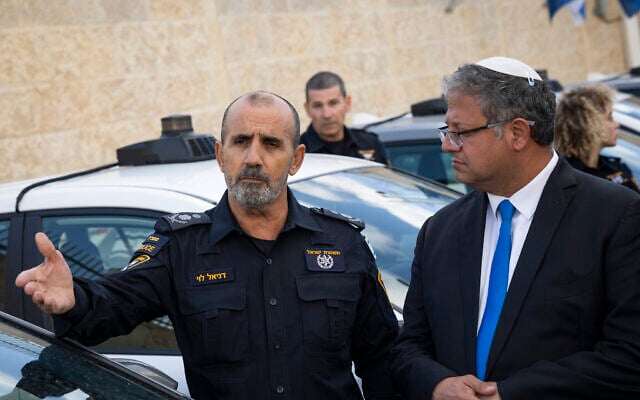
National Security Minister Itamar Ben Gvir (right) and police chief Danny Levy attend a ceremony at the Israel Police headquarters in Jerusalem, November 30, 2025. (Chaim Goldberg/Flash90)
Police chief Danny Levy has decided to freeze the operations of law enforcement’s Incitement Department, in compliance with a High Court decision handed down yesterday.
The court decision orders a pause to the body’s “proactive monitoring” of specific individuals’ social media activity in order to “discover incitement and speech offenses.”
Levy announces the move in response to Attorney General Gali Baharav-Miara, who sent him a letter earlier this month saying the body’s reported activities raise real concern about “unjustified harm to human rights and free expression.”
Earlier this month, a Kan news report claimed that the body’s head, Ch. Supt. Udi Ronen, had urged police officers to send him the names of people who “interest or concern” them, with the goal of monitoring their social media and potentially launching investigations.
The Incitement Department was established in January by National Security Minister Itamar Ben Gvir, who appointed Ronen and subordinated him to the deputy police chief.
Previously, officers in the police’s investigations and intelligence division, led by Deputy Commissioner Boaz Blatt, handled such cases.
IDF strikes IRGC-linked university in Tehran used for weapons research and development
The IDF says it struck in recent days an Islamic Revolutionary Guard Corps military facility embedded within Imam Hossein University in central Tehran.
According to the military, the university – described as “one of the IRGC’s central military infrastructure sites” – has allegedly been used under civilian cover for weapons research and development, including work tied to ballistic missiles and other advanced capabilities.
The IDF says the strike hit several core components of the site, including underground wind tunnels used for ballistic missile testing, a chemistry center said to be involved in chemical weapons research, and a central engineering complex tied to weapons development.
The military has targeted the site in previous strikes, saying that the university’s direct affiliation with the IRGC and its role in advancing military capabilities make it a legitimate target, adding that strikes were aimed at significantly degrading Iran’s weapons production and development capabilities.
Trump says he expects a deal ‘shortly’ with Iran, threatens to ‘blow up’ Kharg Island if Hormuz Strait is not immediately reopened

US President Donald Trump walks on the South Lawn upon his arrival to the White House, March 29, 2026, in Washington. (AP Photo/Jose Luis Magana)
US President Donald Trump says progress is being made in “serious discussions” with Iran about ending the war, while warning that the US will destroy key Iranian energy sites and infrastructure if a deal is not achieved “shortly” and if the Strait of Hormuz is not reopened, in a post on his Truth Social account.
“The United States of America is in serious discussions with A NEW, AND MORE REASONABLE, REGIME to end our Military Operations in Iran,” writes Trump. “Great progress has been made but, if for any reason a deal is not shortly reached, which it probably will be, and if the Hormuz Strait is not immediately ‘Open for Business,’ we will conclude our lovely ‘stay’ in Iran by blowing up and completely obliterating all of their Electric Generating Plants, Oil Wells and Kharg Island (and possibly all desalinization plants!), which we have purposefully not yet ‘touched,'” he adds.
“This will be in retribution for our many soldiers, and others, that Iran has butchered and killed over the old Regime’s 47 year ‘Reign of Terror,'” Trump concludes.
The US has been deploying thousands of troops to the region since Trump announced talks last week in preparation for a potential ground invasion.
While there has not been regime change in Iran and it remains unclear with which Iranian officials Washington is speaking, Trump has repeatedly said that strikes against the top leadership there effectively amount to regime change.
— Trump War Room (@TrumpWarRoom) March 30, 2026
Egypt’s Sissi appeals to Trump: ‘Please help us stop the war’

Egypt's President Abdel-Fatteh el-Sissi delivers a speech during the World Economic Forum (WEF) annual meeting in Davos on January 21, 2026. (Fabrice COFFRINI / AFP)
CAIRO, Egypt — Egyptian President Abdel-Fattah el-Sissi urges US President Donald Trump to stop the Iran war, saying only he could do so, and warns that fears of the oil price going above $200 a barrel are not exaggerated.
“I tell President Trump: nobody can stop the war in our region in the Gulf but you,” Sissi says at the Egypt Energy Show 2026 conference in Cairo. “Please, Mr. President, please. Please help us stop the war. You are capable of doing so,” he added.
Egypt, long a recipient of US military aid and support from wealthy Gulf countries, has also condemned Iranian attacks on Gulf Arab states and pushed diplomatic efforts to avoid a wider regional war.
Israeli strike on Beirut earlier killed at least 3 Hezbollah members, security source says
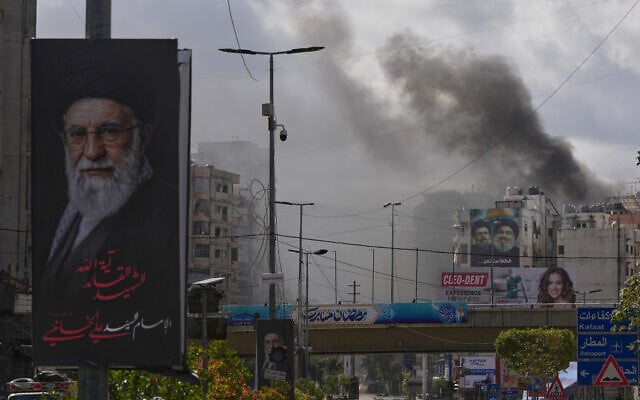
A portrait of Iran's late supreme leader Ayatollah Ali Khamenei, left, is seen, as smoke rises following an Israeli airstrike in Dahiyeh, Beirut's southern suburbs, Lebanon, March 30, 2026. (AP Photo/Hassan Ammar)
BEIRUT, Lebanon — An Israeli airstrike on a residential building near Beirut’s southern suburbs killed at least three Hezbollah members, a security source tells AFP.
The strike “targeted an office used by Hezbollah, killing three members and seriously wounding three others,” while the Israeli army, for its part, announced it had “begun striking Hezbollah terrorist infrastructures in Beirut.”
An AFP photographer says the targeted apartment is located in a neighborhood crowded with shops and commercial establishments, several of which were damaged, adding that armed Hezbollah members set up a security cordon following the strike.
UNIFIL says peacekeepers injured in unspecified ‘incident’ in Lebanon
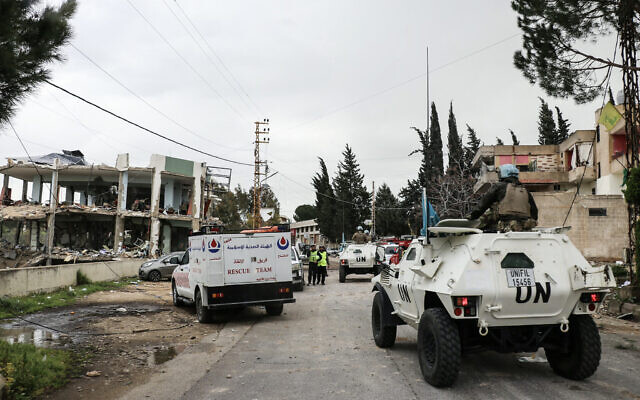
United Nations peacekeepers with the UN Interim Force in Lebanon (UNIFIL) drive past a destroyed healthcare center building in the aftermath of an Israeli strike in the southern Lebanese town of Burj Qalawiya on March 14, 2026. (Kawnat HAJU/ AFP)
BEIRUT, Lebanon — UN peacekeepers in south Lebanon were wounded in an “incident” near the Lebanese-Israeli border, a spokesperson for the force said Monday, without specifying the nature of the incident.
“There has been an incident involving peacekeepers near Bani Hayyan, and we have injuries,” Kandice Ardiel told AFP, a day after an Indonesian peacekeeper was killed by a projectile of unknown origin that struck a UN position.
Iran claims, without proof, that Israel attacked Kuwaiti desalination plant
TEHRAN, Iran — Iran’s military says that Israel was behind an attack on a desalination plant in Kuwait.
“The brutal aggression by the Israeli regime against Kuwait’s desalination plant, carried out in recent hours under the pretext of accusing the Islamic Republic of Iran, is a sign of the vileness and depravity of the Zionist occupiers,” says the military’s operational command Khatam Al-Anbiya in a statement carried by state TV.
The Iranian military offers no evidence for the claim.
IDF says strike kills armed Hamas operatives in northern Gaza Strip
The IDF says it carried out an overnight strike in the northern Gaza Strip, killing several armed Hamas operatives identified as posing a threat to troops.
According to the military, soldiers spotted the gunmen operating in the area before directing a strike to “remove the threat.”
בתקיפה אווירית: חוסלו מחבלים חמושים מארגון הטרור חמאס בצפון רצועת עזה
כוחות צה״ל זיהו במהלך הלילה מחבלים חמושים מארגון הטרור חמאס בעת שפעלו בצפון רצועת עזה.
מיד לאחר הזיהוי, צה״ל תקף וחיסל את המחבלים החמושים במטרה להסיר את האיום על כוחותינו.
כוחות צה"ל בפיקוד הדרום פרוסים… pic.twitter.com/Nmz3NK2cEA
— צבא ההגנה לישראל (@idfonline) March 30, 2026
Spain shuts airspace to US planes attacking Iran

Spain's Defense Minister Margarita Robles waits for the start of a meeting of the North Atlantic Council in defense ministers format at NATO headquarters in Brussels, Belgium, October 15, 2025. (AP Photo/Omar Havana)
MADRID, Spain — Spain has closed its airspace to US planes involved in attacks on Iran, a step beyond its previous denial of use of jointly-operated military bases, Defense Minister Margarita Robles says.
“We don’t authorize either the use of military bases or the use of airspace for actions related to the war in Iran,” she tells reporters in Madrid.
Spanish newspaper El Pais had first reported the news today, citing military sources.
The closure of the airspace forces military planes to bypass NATO member Spain en route to their targets in the Middle East, but it does not include emergency situations, El Pais added.
“This decision is part of the decision already made by the Spanish government not to participate in or contribute to a war which was initiated unilaterally and against international law,” Economy Minister Carlos Cuerpo says during an interview with radio Cadena Ser when asked if the decision to close Spain’s airspace could worsen relations with the United States.
Shin Bet uncovers Hamas-linked terror network in West Bank directed from Turkey
The Shin Bet reveals that a December 2025 investigation uncovered a Hamas-linked terror network in the West Bank that was directed by a Turkey-based operative and aimed to advance attacks against Israel.
According to the agency, the network was run by Mahmoud Radwan, a Hamas member released in a prisoner-hostage exchange and deported to Turkey in January 2025, who had been jailed in Israel for his role in the 2001 killing of Rishon Lezion resident Yossi Alfasi.
The Shin Bet says Radwan recruited two young men from the West Bank village of Azzun during a meeting in Turkey in December, where he outlined his ongoing terror activity and sought to enlist them. The suspects allegedly agreed to join him.
Indictments have recently been filed against the suspects, according to the Shin Bet.
Iran says lawmakers mulling leaving Nuclear Non-Proliferation Treaty
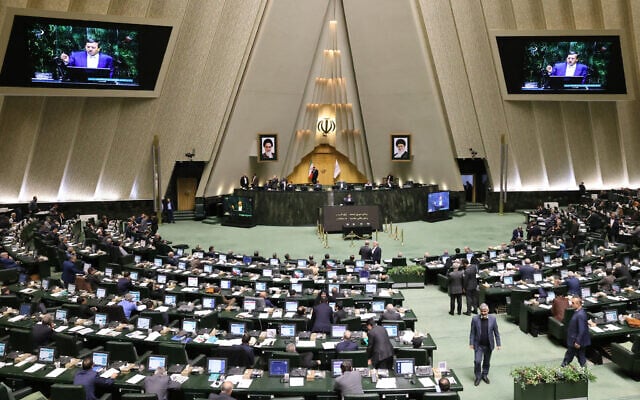
Illustration: A meeting of Iran's parliament on March 2, 2025. (ATTA KENARE / AFP)
DUBAI, United Arab Emirates — Iran’s parliament is reviewing a possible exit from the Nuclear Non-Proliferation Treaty, foreign ministry spokesperson Esmail Baghaei says, while insisting Tehran has not and will not seek nuclear weapons.
Iranian lawmakers had also raised the possibility of leaving the NPT, which recognizes the right to develop, research, produce, and use nuclear energy as long as nuclear weapons are not pursued, after the 12-day war last June when Israel and the US struck Iranian nuclear facilities.
“What is the benefit of joining a treaty in which bullying parties at the international level not only do not allow us to benefit from its rights but also attack our nuclear facilities?” Baghaei says, adding that Tehran would respect the treaty as long as it is a member.
Troops uncover Hezbollah weapons, destroy anti-tank missiles in southern Lebanon, IDF says
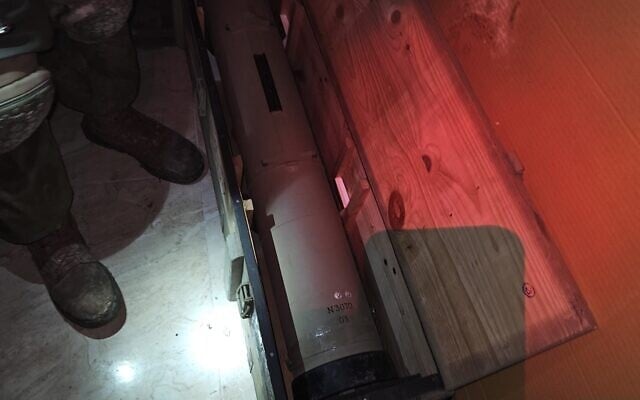
A Hezbollah anti-tank missile uncovered by the IDF in southern Lebanon, in a photo cleared for publication on March 30, 2026. (Israel Defense Forces)
IDF troops operating in southern Lebanon uncovered Hezbollah weapons caches and destroyed anti-tank missiles allegedly intended for attacks on Israel, the military says.
According to the IDF, forces from the 401st Armored Brigade discovered the weapons caches during raids on terror infrastructure.
Additional arms were found in underground storage facilities and destroyed on site, the military says.
No injuries reported after Iran’s latest ballistic missile attack on southern Israel
No injuries are reported following Iran’s latest ballistic missile attack on Israel.
A missile, which triggered sirens in southern Israel, was apparently intercepted, according to the IDF.
Iran says US truce proposals ‘unrealistic, illogical and excessive’
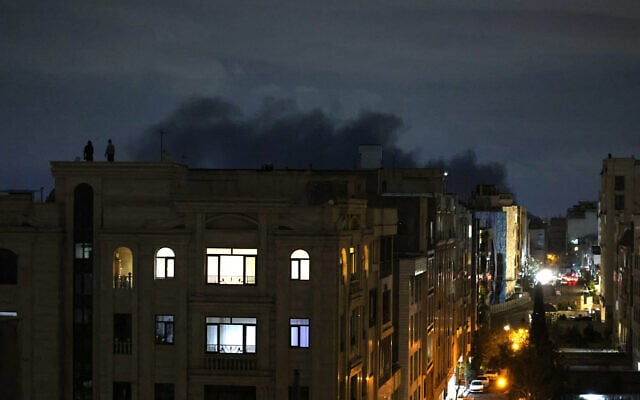
A plume of smoke rises from the site of a strike in Tehran early on March 28, 2026. (Atta Kenare/AFP)
DUBAI, United Arab Emirates — Iran received messages via intermediaries indicating the United States’ willingness to negotiate, but deemed US proposals to be “unrealistic, illogical and excessive,” foreign ministry spokesperson Esmaeil Baghaei says.
Baghaei’s press conference took place a day after the foreign ministers of Pakistan, Egypt, Saudi Arabia, and Turkey met in Islamabad to hold initial discussions primarily focused on proposals to reopen the Strait of Hormuz to shipping.
“Our position is clear. We are under military aggression. Therefore, all our efforts and strength are focused on defending ourselves,” Baghaei says.
Lebanese military says soldier killed in Israeli strike on checkpoint in south Lebanon
BEIRUT, Lebanon — An Israeli strike has killed a Lebanese soldier at a checkpoint in the country’s southern Tyre region, Lebanon’s military says.
“An Israeli attack targeted an army checkpoint” near Tyre, “resulting in the death of one soldier and injuries to others,” the Lebanese military says.
A military source tells AFP the attack was the first direct targeting of a Lebanese army position since the start of the war.
Haifa oil refinery hit by debris from intercepted missile, Fire and Rescue Service says
An industrial building and a fuel tanker at the Bazan oil refinery in the northern city of Haifa were hit by debris from an intercepted missile, Israel’s Fire and Rescue Service says.
It is not immediately clear whether the missile was fired from Iran or Iran-backed Hezbollah terrorists in Lebanon. No casualties are reported.
The fire service says a direct hit was identified on a tanker parked within the factory grounds, causing thick smoke from the roof of a nearby structure. Firefighters are currently working to prevent the fire from spreading to additional areas while also searching for trapped individuals.
Energy Minister Eli Cohen says there was no damage to production facilities and that fuel supply will not be affected.
A senior firefighter tells the Kan public broadcaster that the tanker that was hit is on the periphery of the site and contains benzene, which is not dangerous. He says it will take several hours to extinguish the fire sparked by the attack.
Sue Surkes and Times of Israel staff contributed to this report.
Iran says its ambassador to Lebanon will stay in country despite Beirut’s order to leave
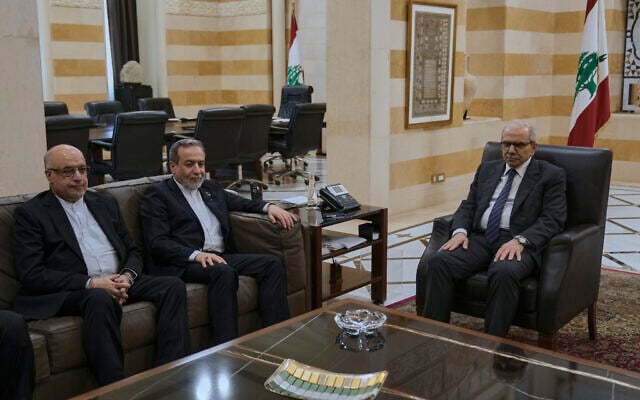
Iranian Foreign Minister Abbas Araghchi (center) and Iranian Ambassador to Lebanon Mojtaba Amani (left) meet with Lebanese Prime Minister Nawaf Salam in Beirut, Lebanon, June 3, 2025. (AP Photo/Bilal Hussein)
TEHRAN, Iran — Iran says its ambassador to Lebanon would remain in the country despite being declared a persona non grata and ordered to leave.
“Our ambassador … will continue his work as Iran’s ambassador in Beirut and remains present there,” foreign ministry spokesman Esmaeil Baqaei says in a weekly press briefing, adding that the embassy in Beirut remains “operational.”
Another Iranian ballistic missile attack detected targeting southern Israel
The IDF has detected a new ballistic missile attack from Iran, targeting southern Israel.
Sirens subsequently sound in Beersheba and surrounding areas.
Sgt. Liran Ben Zion, 19, killed by Hezbollah anti-tank missile in southern Lebanon
Sgt. Liran Ben Zion, 19.
An IDF soldier was killed and an officer was seriously wounded in a Hezbollah anti-tank missile attack in southern Lebanon yesterday, the IDF announces.
The slain soldier is named as Sgt. Liran Ben Zion, 19, of the 401st Armored Brigade’s 9th Battalion, from Holon.
According to an IDF probe, one anti-tank missile struck a tank of the 9th Battalion, killing Ben Zion and seriously injuring the officer.
A short while later, two more anti-tank missiles were fired toward the troops, with no injuries caused.
The IDF says troops are operating in the area to locate the cell behind the deadly attack.
Ben Zion is the sixth soldier to be killed following the IDF’s renewed offensive against Hezbollah.
Two wounded in latest Iranian, Hezbollah attacks on northern Israel
Smoke rises from the Bazan oil refinery in Haifa, following missile attacks from Iran and Lebanon, March 30, 2026. (Anthony Hershko/Flash90)
Magen David Adom is reportedly treating two people wounded in the latest attacks on northern Israel, including one in serious condition and another lightly injured.
Footage shows multiple impact sites following Iran’s ballistic missile attack and concurrent Hezbollah rocket fire from Lebanon a short while ago.
At least six impact sites were reported across the north – three in Kiryat Ata, two in Haifa, and one in Shfaram.
*פגיעה ישירה במבנה : תיעוד מהנפילה בשפרעם* pic.twitter.com/k3muqvlQb9
— מה חדש. What's new❓ (@Gloz111) March 30, 2026
After meeting with police, Catholic leaders say arrangements for Easter prayer at Holy Sepulchre resolved
After police stopped the top Catholic figures in the region from praying at the Church of the Holy Sepulchre yesterday — an incident which blew up into an international fiasco — the Latin Patriarchate of Jerusalem and the Custody of the Holy Land say that prayer arrangements for Holy Week and Easter “have been addressed and resolved.”
The announcement comes after a late-night meeting between officials from the Christian denominations in Jerusalem, Israel Police and other Israeli authorities.
“In agreement with the Israel Police,” say the two Catholic bodies, “access for representatives of the Churches has been secured in order to conduct the liturgies and ceremonies and to preserve the ancient Easter traditions at the Church of the Holy Sepulchre.”
Following a productive meeting between the Israel Police and Latin Catholic Cardinal Pierbattista Pizzaballa, a mutual framework has been established for upcoming Easter ceremonies.
Due to the complex security reality of Operation “Roaring Lion,” ceremonies including the “Holy… pic.twitter.com/uWcE4fnQMO
— Israel Police (@israelpolice) March 30, 2026
The services will be broadcast live in order to comply with Home Front Command restrictions on public gatherings.
They thank President Isaac Herzog for his “prompt attention and valued intervention.”
“The Church remains in continuous dialogue with the authorities, including the Israel Police,” they say. “We pray and hope for an end to the tragic war affecting the region, mindful of the heavy consequences it has on all.”
Herzog writes on X to “warmly welcome the understandings reached this morning between the commanders of the Israel Police in Jerusalem and the Latin Patriarch, His Beatitude Cardinal Pierbattista Pizzaballa, during their meeting together with a representative of the Office of the President of Israel to settle arrangements for Easter prayers in the Old City of Jerusalem.”
“On behalf of the State of Israel,” he continues, “I extend my warmest wishes for the upcoming Easter holiday to the Latin Patriarch, to our Christian sisters and brothers in the Holy Land, and to our Christian friends across the Middle East and around the world.”
I warmly welcome the understandings reached this morning between the commanders of the @IsraelPolice in Jerusalem and the Latin Patriarch @LPJerusalem, His Beatitude Cardinal Pierbattista Pizzaballa, during their meeting together with a representative of the Office of the…
— יצחק הרצוג Isaac Herzog (@Isaac_Herzog) March 30, 2026
Environmental Protection Ministry says no risk of hazardous leak at Haifa oil refinery
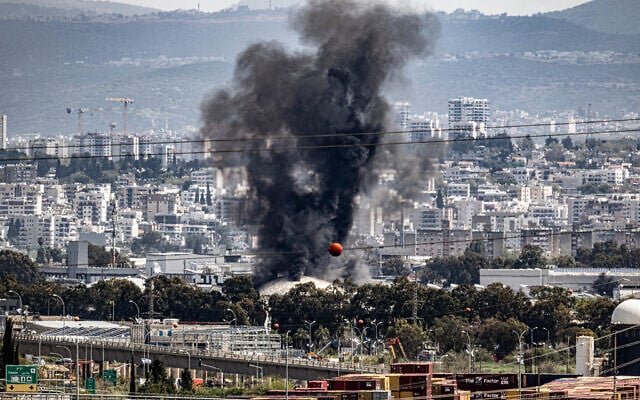
Smoke rises from the oil refinery in Haifa following a missile attack fired from Iran and Lebanon at Israel, March 30, 2026. (Anthony Hershko/Flash90)
The Environmental Protection Ministry rules out any risk of hazardous materials leakage from an attack on the Bazan oil refinery complex in the northern city of Haifa.
Five Lebanese soldiers hurt in attack on army checkpoint, Lebanese military official says
BEIRUT, Lebanon — An Israeli strike hit a Lebanese army checkpoint in the country’s south, a Lebanese military official says, in the first direct attack on a military post since the start of the Israel-Hezbollah war.
The official, who requested anonymity, says at least five soldiers were wounded.
Since the start of the war on March 2, the military has mourned eight soldiers killed by Israeli fire in southern and eastern Lebanon while off duty.
Report finds growing trend of harassment of Christians in Israel
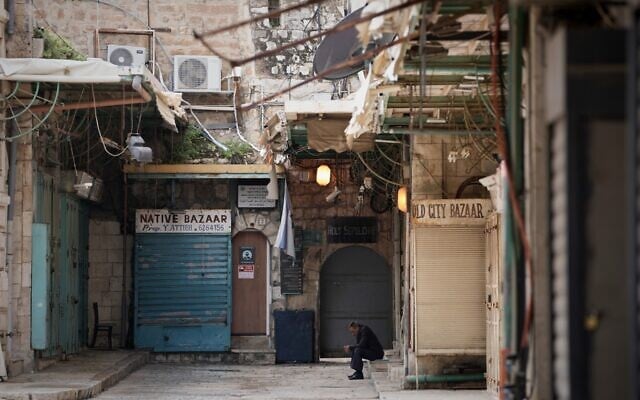
A man sits beside a locked door of the Church of the Holy Sepulchre and shuttered shops in Jerusalem’s Old City, which remains off limits to visitors amid the war with Iran, on March 27, 2026. (AP Photo/Mahmoud Illean)
There was a “continued and expanding pattern of intimidation and aggression” against Christian clergy and Church property in 2025, according to an annual study released on Monday by an Israeli group.
The 155 documented incidents last year “reflect a persistent and worrying pattern in which both overt violence and everyday humiliations accumulate into a broader atmosphere of exclusion,” say the Rossing Center for Education and Dialogue’s report, titled “Attacks on Christians in Israel and East Jerusalem.”
Most of the incidents were physical attacks, mostly commonly spitting in the direction of easily identifiable Christian clergy.
“Clergy in areas such as Mount Zion and the Armenian Quarter report that harassment has become so routine that stepping outside can carry an almost certain risk of abuse,” according to the center.
There were 28 known cases of verbal harassment in 2025, more than double the number in the previous year.
While each incident is easily dismissed, says the report, “collectively, however, they are humiliating and exhausting, producing a climate in which Christians feel increasingly unwelcome, pressured to conceal their identity, and uncertain about the future of their communities.”
The report points to a worrying trend – “harassment and violence against Christians are continuing within a socio-political climate that is increasingly intolerant of diversity and more assertive in exclusivist national-religious claims.”
Clergy in Jerusalem told researchers that police are often “supportive and responsive,” but that most cases are closed without the perpetrators being held accountable.
Christians in Israel are also caught up in broader trends. Many live in Arab towns, where violent crime and murder are a spiraling problem. There has also been a rise in attacks by ultra-nationalist Jewish youth against Palestinians, some of whom are Christian.
Safety concerns during wars and new regulations in the wake of the 2021 Mount Meron tragedy often constrain central Christian ceremonies, and are seen by communities as being applied without sensitivity toward their needs.
The Rossing Center recommends new training for police, the creation of designated liaisons in the municipal and national governments, improved education about Christianity in the public Israeli system, and direct engagement with the national-religious community.
Israel’s economy to shrink in first 3 months of year amid war with Iran, Finance Ministry says

Israelis at the Azrieli shopping mall in Givatayim near Tel Aviv, where stores reopened after staying closed for a few days following the outbreak of the ongoing US-Israel war on Iran, March 6, 2026. (Miriam Alster/FLASH90)
Israel’s economy is set to shrink in the first three months of the year as the war with Iran is taking longer than expected, the Finance Ministry’s chief economist says.
The country’s economy is expected to end the first quarter with negative growth of 9.5 percent in annual terms and 2.5% in quarterly terms, based on current indicators of economic activity and past war experience, the Finance Ministry’s chief economist Shmuel Abramzon says.
Earlier this month, the Finance Ministry lowered the growth forecast for 2026 to 4.8% from 5.2%, on the assumption that the war with Iran and fighting with Lebanon would be short-lived.
“Since this scenario did not materialize and the fighting was prolonged and is still ongoing, the Chief Economist’s Department updated its economic growth forecasts under a number of possible scenarios depending on the continuation of the fighting,” the Finance Ministry says.
Abramzon projects Israel’s economy will grow between 3.3% to 3.8% in 2026, depending on the length of wars on multiple fronts. In 2027, the economy is expected to grow at a pace of 5.3% to 6.1%, depending on security developments.
Footage aired on TV shows flames at Haifa oil refinery after Iranian, Hezbollah missile attack
A fire burns at the Bazan oil refinery after the latest Iranian and Hezbollah missile attack, according to footage shown on Channel 12 news.
It is unclear if the refinery was directly hit by a missile or if it was hit by shrapnel from an interception.
Rescue services responding to reports of impacts in north after Iranian, Hezbollah attacks
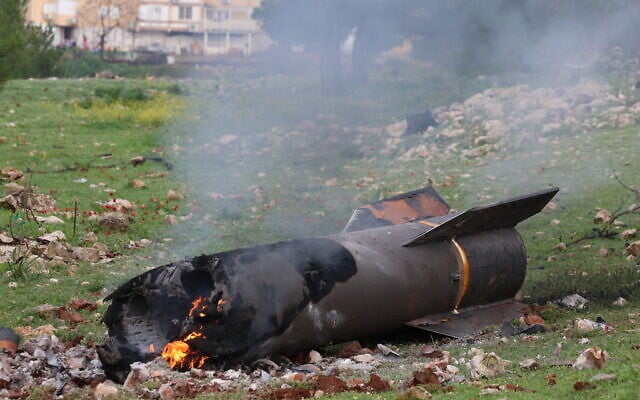
Illustrative: Israeli security at the scene where an Iranian missile fragment fell in an open area in the northern Israeli city of Safed, March 23, 2026. (David Cohen/Flash90)
Medics and rescue forces are responding to reports of impacts in northern Israel following Iran’s latest ballistic missile attack and concurrent Hezbollah rocket fire from Lebanon.
There are no immediate reports of injuries.
Sirens sound in Netanya, surrounding areas amid Hezbollah missile attack
Sirens sound in the coastal city of Netanya and nearby towns amid a Hezbollah missile attack from Lebanon.
The attack comes shortly after Hezbollah fired a barrage of rockets at the Galilee and Haifa Bay area, and Iran fired a missile at northern Israel.
There are no immediate reports of injuries in the attacks.
Sirens sound in Galilee, Haifa Bay area due to Hezbollah rocket fire shortly after Iranian attack
Sirens sound in the Galilee and Haifa Bay area amid a Hezbollah rocket attack from Lebanon.
The rocket fire comes shortly after sirens sounded across northern Israel due to an Iranian ballistic missile attack.
The Iranian missile is assessed to have carried a cluster bomb warhead.
Syria reports large-scale drone attack on its bases near Iraqi border
DAMASCUS, Syria — Syria’s military says a large-scale drone attack targeted its bases near the border with Iraq, the latest such incident since the outbreak of the Middle East war.
In a statement, the army reports “a large-scale attack by a number of drones targeting several army bases near the Iraqi border at dawn today,” adding that most of the drones were intercepted.
“We are studying our options and will respond appropriately to neutralize any threat and prevent any aggression against Syrian territory.”
IDF says it struck Hezbollah operatives dressed as paramedics in south Lebanon on Saturday
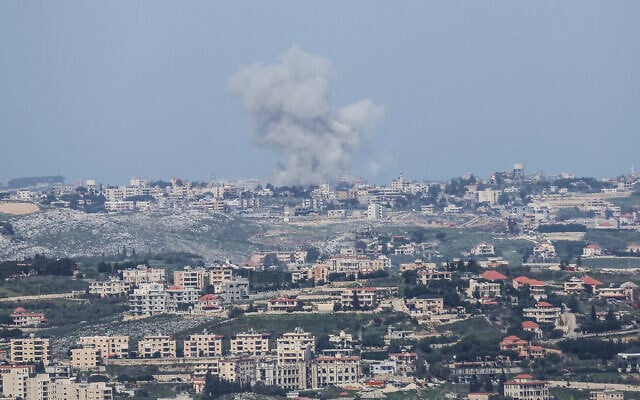
A photograph taken from the southern Lebanese area of Marjayoun shows smoke rising from the site of an Israeli airstrike that targeted Hezbollah in the village of Deir al-Zahrani on March 28, 2026 (AFP)
The Israeli military says it struck a “Hezbollah terror cell dressed as paramedics” in southern Lebanon on Saturday.
According to the IDF, the Hezbollah operatives were operating next to an ambulance.
“The terrorists who were targeted had been systematically transferring weapons using ambulances from northern to southern Lebanon, as part of ongoing terror activities and for use against IDF troops and the State of Israel,” the military claims.
Lebanon’s health minister on Saturday reported that nine medics were killed in Israeli strikes, including four from Hezbollah’s Islamic Health Committee and five from the Hezbollah-allied Amal movement’s Risala Scouts.
The IDF has warned several times that Hezbollah is using ambulances and medical facilities in Lebanon for military purposes.
“In the past month alone, dozens of rockets have been launched toward the State of Israel and at IDF soldiers from areas in which these terrorists operated, while they exploited ambulances and medical infrastructure for military purposes,” the IDF says.
“The use of ambulances and medical teams to conceal terror activities constitutes a severe violation of international law. Under IDF directives and in accordance with international law, medical teams are afforded special protection, provided they do not engage in hostile acts outside their humanitarian duties and subject to the conditions established under the law,” the military adds.
Iranian ballistic missile attack detected targeting northern Israel
The IDF has detected a new ballistic missile attack from Iran, targeting northern Israel.
Sirens are expected to sound in the coming minutes.
Spain summons Israel’s top envoy to protest blocking of Latin Patriarch from prayer at Holy Sepulchre

Cardinal Pierbattista Pizzaballa, the Latin Patriarch of Jerusalem, holds a prayer service to mark Palm Sunday in Jerusalem, March 29, 2026. (Ammar Awad/Pool Photo via AP)
MADRID, Spain — Spain summons Israel’s top envoy to Madrid in protest over Israel Police’s blocking of the Latin Patriarch from Christianity’s holiest site in Jerusalem, the foreign minister says.
“This cannot happen again, Catholic worship must be able to be celebrated normally,” Jose Manuel Albares tells RAC1 radio after Cardinal Pierbattista Pizzaballa was prevented from holding Palm Sunday mass at the Holy Sepulchre church.
Israel has said the cardinal will regain access to the site, and had cited security concerns for the measure as the country bans gatherings in synagogues, churches and mosques during the ongoing war with Iran.
IDF says it struck Hezbollah infrastructure in Beirut
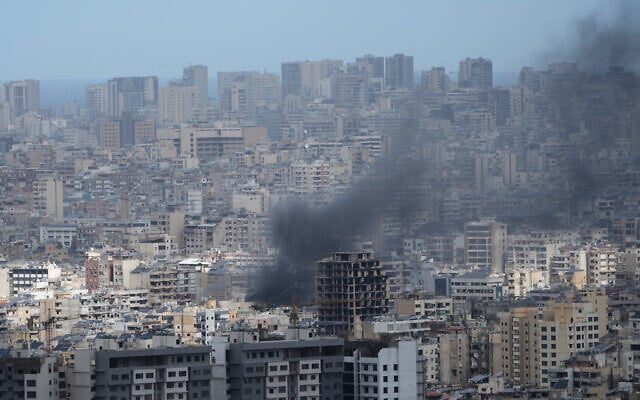
Smoke rises following an apparent Israeli airstrike in Dahiyeh, Beirut's southern suburbs, Lebanon, March 30, 2026. (AP Photo/Bilal Hussein)
The IDF says it carried out airstrikes on Hezbollah infrastructure in Beirut a short while ago.
No further details are given.
Iran confirms death of IRGC Navy chief Alireza Tangsiri
This handout photo provided by Iran's Revolutionary Guard Corps (IRGC) official website Sepah News on February 1, 2025, shows IRGC navy commander Admiral Alireza Tangsiri talking to a reporter during the unveiling of the Qadr-380 naval cruise missile in an undisclosed location in Iran. (SEPAH NEWS / AFP)
DUBAI, United Arab Emirates — Iran confirms the death of Islamic Revolutionary Guard Corps Navy Commander Alireza Tangsiri following severe injuries, Iranian media reports, based on a statement by the guards.
Defense Minister Israel Katz had said on March 26: “In a precise and lethal operation, the IDF eliminated the commander of the IRGC Navy, Tangsiri, along with senior naval command officials.”
Knesset set to cast final votes on death penalty bill
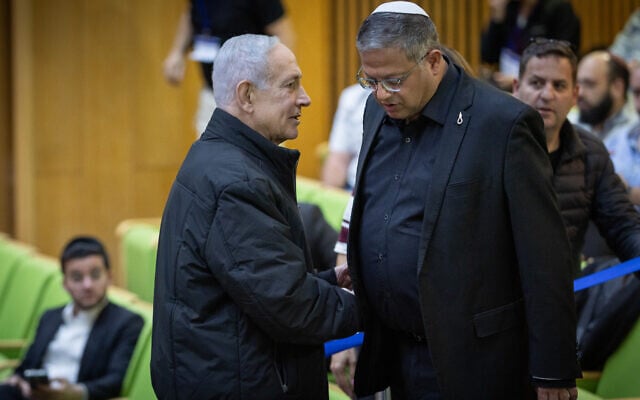
Prime Minister Benjamin Netanyahu speaks with National Security Minister Itamar Ben-Gvir during a vote on the state budget, March 29, 2026. (Yonatan Sindel/Flash90)
The Knesset is set to vote on the far-right Otzma Yehudit party’s controversial bill to legislate the death penalty for terrorists in its second and third readings.
The bill is likely to be passed despite reported pressure from Prime Minister Benjamin Netanyahu on National Security Minister Itamar Ben Gvir and Otzma Yehudit chair to withdraw the bill.
It is among a series of last-minute laws that the coalition is trying to advance prior to the end of the current Knesset legislative session tomorrow and the beginning of the Knesset’s Passover recess.
Democrats MK Gilad Kariv, who sits on the Knesset National Security Committee and has been among the fiercest opponents of the bill, says the bill amounts to an election stunt and writes in a post on X that it is “immoral, un-Jewish, undemocratic, and yes, also ineffective from a security standpoint.”
“Opposition members who do not clearly and unequivocally oppose this law are buying golden shares in the takeover of the State of Israel by Kahanism,” he adds.
Right-wing opposition party Yisrael Beytenu has said it will vote in favor of the legislation if both Netanyahu and Shas chairman Aryeh Deri show up in person to vote in favor.
Suspect shot in alleged ramming attempt near Tulkarem, IDF says
The IDF says troops shot and “neutralized” a suspect who accelerated his vehicle toward them near Tulkarem in “a manner that posed a threat.”
No Israeli injuries were reported.
The incident follows two overnight attacks in the West Bank. In Dura, near Hebron, a knife-wielding assailant ran toward IDF forces and was shot dead, while in the al-Ram area, north of Jerusalem, troops opened fire at a suspect who accelerated his vehicle toward them, also “neutralizing” the attacker.
The military said no soldiers were hurt in either incident.
IDF says over 80 bombs dropped on Iranian weapons factories last night
During a wave of airstrikes in Tehran last night, Israeli Air Force fighter jets struck several Iranian weapon production sites, the military says.
More than 80 bombs were dropped on the sites, the IDF says.
The IDF says the targets included a site where long-range anti-aircraft missiles were assembled; a manufacturing facility for components for anti-tank and anti-aircraft missiles; and a complex for the production, research, and development of ballistic missile engines.
The military says it has ramped up strikes on Iran’s weapon production industries, with some 40 sites targeted in the past two days.
Israel’s ADAMA says interception debris damaged pesticides warehouse in south yesterday
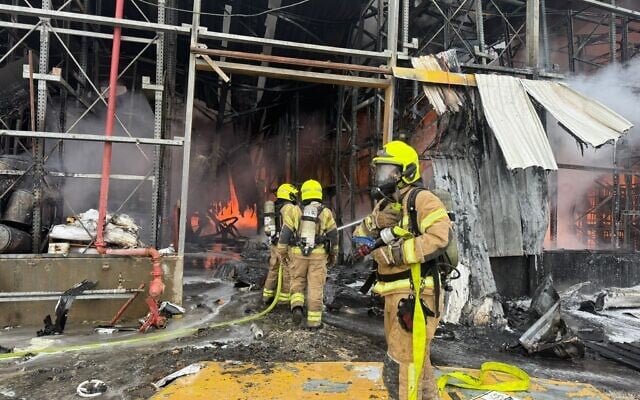
Firefighters work to extinguish a blaze caused by an Iranian missile at the Neot Hovav industrial zone, near Beersheba, March 29, 2026. (Fire and Rescue Service)
Israeli pesticides maker ADAMA says that debris from an interception of an Iranian missile attack caused damage to a warehouse containing finished products, along with production equipment and systems.
ADAMA, part of Chinese-owned Syngenta Group, says there were no injuries from the attack that hit its Neot Hovav chemicals plant in southern Israel, which is now closed.
“Efforts are underway to resume normal operations in a gradual and safe manner as soon as possible,” ADAMA says in a statement to the Tel Aviv Stock Exchange.
“The Company is assessing the impact on its operations and financial results, as well as the expected timeline for restoring the affected facilities to full operation.”
Settlers reportedly torch vehicles, spray graffiti in Bethlehem area
Settlers set fire overnight to several vehicles in the village of Nahalin, in the Bethlehem area of the West Bank, Palestinian media outlets report.
Graffiti was also sprayed reading “Regards to Avi Blot,” the name of the IDF Central Command chief, the reports say.
No injuries are reported. No arrests have been made.
تخريب وإحراق مركبات وكتابة شعارات عنصرية.. آثار اعتداءات المستوطنين على ممتلكات الفلسطينيين في بلدة نحالين غرب بيت لحم#ألبوم pic.twitter.com/i7YdwSUQNK
— الجزيرة فلسطين (@AJA_Palestine) March 30, 2026
Finance Ministry director general quits after Knesset approves state budget
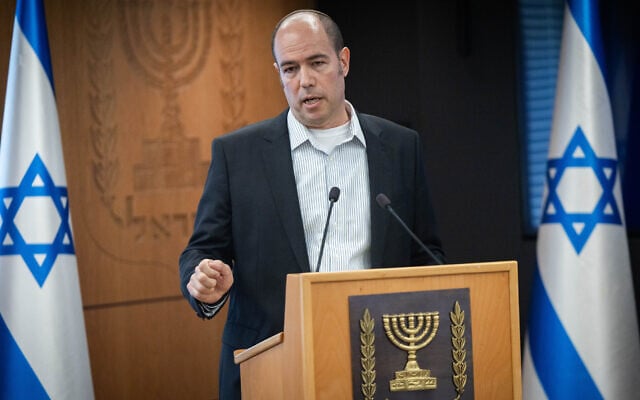
Finance Ministry Director General Ilan Rom holds a press conference at the Finance Ministry, in Jerusalem, on November 4, 2025. (Yonatan Sindel/Flash90)
Finance Ministry Director General Ilan Rom informs Finance Minister Bezalel Smotrich that he is resigning from his position upon completion of the state budget passage in the Knesset.
Rom was appointed Finance Ministry director general in January 2025 to help strengthen Israel’s economic resilience during the war with the Hamas terror group in Gaza. During his tenure, Rom steered the state budgets for 2025 and 2026, led negotiations with the defense establishment over budget spending, and was also involved in the fight against black money alongside the Tax Authority.
“The Finance Ministry has been blessed with a top-notch professional manager who has contributed greatly to the management of the economy,” says Smotrich. “The macroeconomic vision that Rom brought, along with the long-term view and the assimilation of norms of innovation and progress, will contribute greatly to the Finance Ministry and the country.”
As a former senior official at the Mossad, Rom brought a macroeconomic and strategic perspective, formulating economic policy for the day after the war, the Finance Ministry says.
“I was privileged to contribute to the country during this busy and challenging period and to be a partner in the tremendous economic effort,” says Rom.
Defense Ministry signs $48m wartime artillery shell deal with Elbit
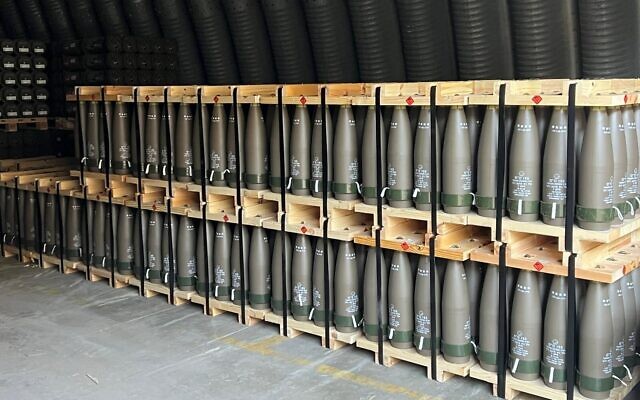
Crates containing 155mm artillery shells purchased by the Defense Ministry as part of a deal with Elbit Systems, in a photo cleared for publication on March 30, 2026. (Defense Ministry)
The Defense Ministry announces it has signed a deal worth more than NIS 150 million ($48 million) with Elbit Systems to purchase tens of thousands of 155mm artillery shells, as it seeks to bolster the IDF’s readiness for ongoing fighting.
The munitions will be produced at Elbit facilities across the country, which are operating at an accelerated pace to meet wartime demand.
According to the Defense Ministry, the deal is part of a broader push, led by Defense Minister Israel Katz and the ministry’s Director General Amir Baram, to strengthen Israel’s domestic arms production and reduce reliance on foreign supply chains.
Footage shows airstrike in south Beirut after Israeli warning
BEIRUT, Lebanon — A strike hit Beirut’s southern suburbs today, AFPTV footage showed, after Israel issued a warning for people in the Hezbollah stronghold to leave.
The strike is the first since Friday in the area, which is now largely deserted since Israel began frequent attacks against Hezbollah in early March.
AFPTV’s live broadcast showed plumes of smoke rising from the southern suburbs.
Israeli forces carried out airstrikes on Hezbollah positions in Beirut’s southern suburbs. pic.twitter.com/8O2gvn81Zb
— Open Source Intel (@Osint613) March 30, 2026
3 IDF soldiers seriously hurt in Hezbollah attacks in south Lebanon, military says
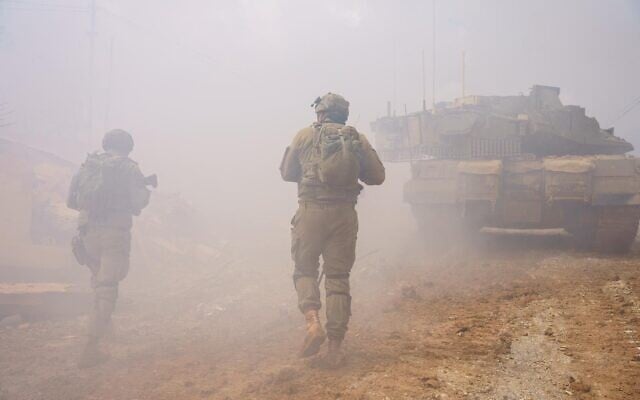
IDF troops of the 769th 'Hiram' Brigade operate in southern Lebanon, in a handout photo issued by the military on March 29, 2026. (Israel Defense Forces)
Three IDF soldiers were seriously wounded and several others were moderately hurt in Hezbollah attacks and other incidents in southern Lebanon yesterday, the military announces.
In one incident yesterday afternoon, two soldiers were seriously hurt by an anti-tank guided missile, according to the military.
In a separate incident, a soldier was seriously injured and two were moderately hurt by a Hezbollah drone that struck near Israeli forces in south Lebanon, the IDF says.
One more soldier was moderately wounded in an “operational accident” in southern Lebanon, the army adds.
The troops were all taken to hospitals for treatment and their families were notified.
IDF chief says assault of CNN crew in West Bank ‘grave ethical incident’

A masked soldier, identified as Meir, looks at the camera as he opens the door of the car where CNN correspondent Jeremy Diamond, left, sits detained in the northern West Bank village of Tayasir, March 26, 2026. (Screen capture: CNN)
IDF Chief of Staff Lt. Gen. Eyal Zamir says an incident this week in which reservists allegedly assaulted a CNN crew and trumpeted far-right ideology is a “grave ethical incident.”
“This is a grave ethical incident that is out of line with IDF norms and values. We all swore the soldier’s oath upon enlistment, weapons are to be used solely for the purpose of carrying out the mission, and never for revenge. We will not accept such incidents within the ranks of the IDF,” Zamir says in remarks published by the army.
The military says its investigation into the incident found “several failures in the conduct of the soldiers toward the reporters.”
During the incident on Thursday, near the site of an illegal settler outpost near the Palestinian village of Tayasir — in area A of the West Bank, which is supposed to be under control of the Palestinian Authority — an Israeli soldier was caught on camera telling a CNN reporter that the entire West Bank belongs to Jews and that they were avenging the killing of a settler.
“During the interaction with the reporters, one of the soldiers made inappropriate remarks that do not align with IDF values or with the mission of IDF soldiers in the area,” the military says.
However, contrary to the report and what the reservist appeared to claim, the IDF denies that the soldiers were assisting the illegal outpost. Rather, they had been deployed to the area to dismantle it, the army says.

Troops of Menashe Regional Brigade’s 941st “Netzah Israel” Battalion, a reserve unit made up mostly of former soldiers of the Kfir Brigade’s ultra-Orthodox Netzah Yehuda Battalion, were sent to the outpost to “isolate” the area and prevent clashes between the settlers and Palestinians, before Border Police officers arrived to dismantle it, according to the military.
The outpost in question had already been evacuated twice before the incident with CNN, and again last night.
The IDF says its investigation into the incident found that “the soldiers documented in the incident were operating to prevent confrontations.”
“A team of journalists arrived at the scene together with several Palestinians. The soldiers operating in the area distinguished between the reporting team and the group of Palestinian individuals and conducted security checks on both groups,” the military says.
Regarding claims that CNN’s Jeremy Diamond and two of his colleagues were detained for about two hours, the IDF says that “after the security screening, the team was released, except for one team member, who was released after being identified as a journalist.”
Also during the incident, Diamond said a soldier put his cameraman in a chokehold as troops tried to prevent them from filming.
The soldier behind the alleged assault denies the allegations, which are currently being investigated by the Military Police.
“The allegation regarding violence used by one of the soldiers will be further examined by the relevant authorities, and further action will be determined in accordance with the findings,” the IDF says.
The IDF also denies any connection between the soldiers’ conduct at the outpost and the injury of an elderly Palestinian man — allegedly by settlers in the area the night before — as seen in the CNN report. The military says it has found “no indication that the elderly man was harmed by IDF soldiers” and that it has been unable to verify claims that the man was injured by settlers.
In a statement, the IDF says it “respects and enables freedom of the press in the area and regrets the incident.”
“It should be emphasized that during and after the event, direct contact was maintained with the reporters, including a personal apology regarding the circumstances,” the army adds.
Earlier, the IDF announced that the Netzah Israel Battalion was being suspended from operational duties in the West Bank. “The battalion will remain in reserve service and undergo a process to reinforce its professional and normative foundations,” the military said.
Health Ministry: 232 people hospitalized due to injuries from Iran war over past 24 hours
The Health Ministry reports that in the past 24 hours, 232 injured people have been taken to hospitals as a result of the conflict with Iran, bringing the number of hospitalizations due to the fighting to over 6,000.
Among those treated in hospitals over the past day, two are in serious condition, eight are in moderate condition, and 215 are in good condition.
Seven people have been treated for anxiety.
The ministry says that since the beginning of the war with Iran on February 28, 6,008 people have been admitted to hospitals, 121 of whom are currently hospitalized.
The ministry does not give a breakdown of the causes of injuries, and some might be sustained by people trying to reach shelter rather than as a direct result of missile fire from Iran or rocket fire from Lebanon.
The casualty figures include soldiers and civilians.
Security guards scuffle with activists protesting state budget outside Knesset
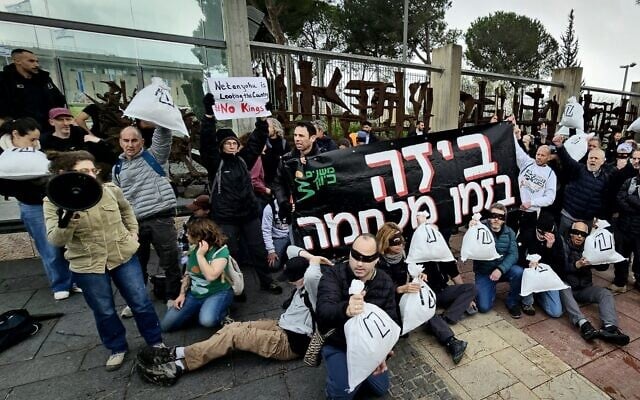
Protesters demonstrate against the annual state budget at the entrance of the Knesset, in Jerusalem, March 30, 2026. (Udi Salmanovich/Pro-Democracy Protest Movement)
Footage shows Knesset security guards scuffling with anti-government activists protesting the annual state budget at the Knesset.
Security appears to be trying to disperse a sit-in at the entrance of the Knesset by force.
Protesters hold a banner reading, “looting during wartime.”
אלימות משמר הכנסת pic.twitter.com/eKpwYEI7Lg
— משנים כיוון ↩️ (@change_dir_il) March 30, 2026
Australian PM says he wants Trump to clarify objectives of Iran war
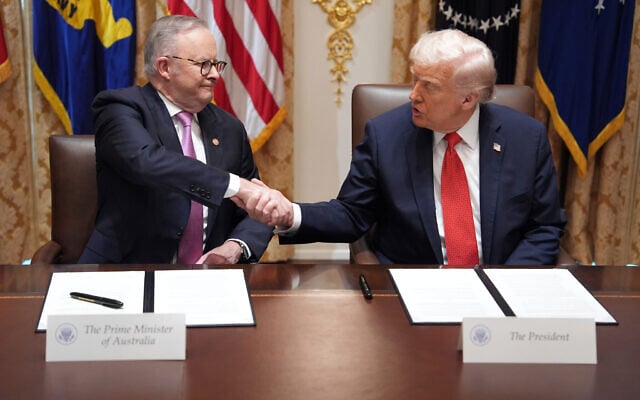
US President Donald Trump, right, shakes hands with Australian Prime Minister Anthony Albanese during a meeting in the Cabinet Room of the White House in Washington on October 20, 2025. (AP Photo/Evan Vucci)
SYDNEY, Australia — Australian Prime Minister Anthony Albanese says he wants more certainty from US President Donald Trump on the objectives of the ongoing war in Iran.
“I want to see more certainty in what the objectives of the war are, and I want to see a de-escalation,” Albanese says, responding to a question about his view on how Trump was prosecuting the war.
Latest Iranian ballistic missile fired at Israel likely shot down

Illustrative: An Israeli air defense missile intercepts missiles launched from Iran, as seen over Modi'in, March 25, 2026. (Jonathan Shaul/Flash90)
A ballistic missile launched from Iran at southern Israel was likely intercepted, according to the IDF, in the fourth attack since this morning.
Sirens had sounded in the Dimona area, and no injuries are reported.
Iranian ballistic missile attack detected for 4th time this morning
For the fourth time since this morning, the IDF has detected a ballistic missile attack from Iran, again targeting southern Israel.
Sirens are expected to sound in the coming minutes.
Iran executes two men convicted of ties to opposition group, planning attacks
DUBAI, United Arab Emirates — Iran executes two men convicted of links to the opposition group People’s Mojahedin Organization of Iran and plotting armed attacks in Tehran using improvised launcher devices, its judiciary news outlet says.
The news outlet does not provide details about when they were arrested.
IDF Home Front Command extends wartime restrictions until at least Saturday night

Israelis take cover in a public bomb shelter in Kfar Chabad as a siren warns of incoming missiles fired from Iran at Israel. March 29, 2026. (Rachel Alroey/Flash90)
The IDF Home Front Command says its current wartime guidelines are being extended until Saturday night at least.
By Saturday at 8 p.m., another assessment will be conducted by the Home Front Command.
Under the current guidelines, educational institutions can operate, provided there is an adequate shelter that can be reached in time, in some areas of the north, south, and West Bank.
A full list of locales can be found on the Home Front Command’s website.
Gatherings of up to 100 people indoors and 50 people outdoors are also permitted, under the same conditions in those areas.
In the rest of the country, educational activities are still prohibited. Gatherings are limited to 50 people, provided a shelter can be reached in time, and workplaces can operate under the same conditions.
Trump mulling operation to seize 1,000 pounds of uranium from Iran — report
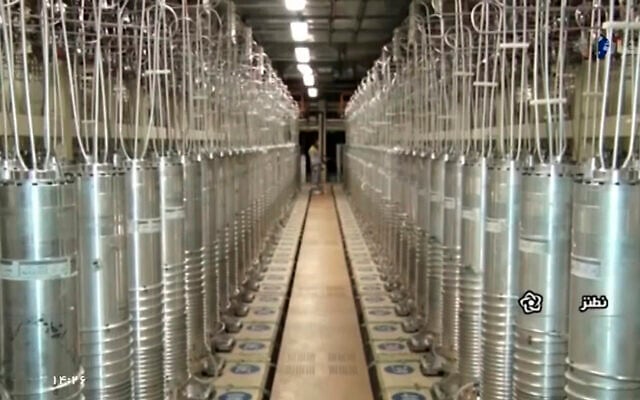
Centrifuges line a hall at the Uranium Enrichment Facility in Natanz, Iran, in a still image from a video aired by the Islamic Republic Iran Broadcasting company on April 17, 2021, six days after the hall had been damaged in a mysterious attack. (IRIB via AP)
US President Donald Trump is considering launching a special ground operation to extract 1,000 pounds of uranium from Iran to prevent the Islamic Republic from building a nuclear weapon, US officials tell the Wall Street Journal.
Trump has not yet made a final decision on the matter as he is weighing the risk to troops, US officials say.
The article references Iran’s “400 kilograms of 60% highly enriched uranium, and nearly 200 kilograms of 20% fissile material, which is easily converted into 90%-weapons-grade uranium.”
Latest Iranian ballistic missile fired at Israel shot down
The latest Iranian ballistic missile fired at Israel, in the third attack since this morning, was intercepted, according to the IDF.
Sirens had sounded in southern Israel, and no injuries are reported.
Settlers said to set fire to several vehicles in the southern West Bank; no injuries reported
Settlers torched several vehicles in the village of Dahariya, in the Hebron area of the southern West Bank, Palestinian media outlets report.
No injuries were reported. No arrests have been made.
فيديو| جانب آخر من اندلاع النيران في مركبات المواطنين جراء هجوم المسـ.tـوطنين على بلدة الظاهرية جنوب الخليل. pic.twitter.com/nuolb9ihc1
— فلسطين بوست (@PalpostN) March 30, 2026
Indonesia confirms one of its UNIFIL peacekeeper killed in Lebanon
JAKARTA, Indonesia — Indonesia confirms that one of its peacekeepers was killed in Lebanon, where the UN force said a projectile hit one of its positions.
On Sunday, a projectile exploded near the town of Adchit al-Qusayr, killing one peacekeeping soldier yesterday, UNIFIL said.
UNIFIL said it did not know the origin of the projectile but had launched an investigation to find out.
The Indonesian foreign ministry says “indirect artillery fire” near the town of Adchit al-Qusayr killed one of its peacekeepers and wounded three others.
“Our thoughts and prayers are with the bereaved family, and we wish a full and swift recovery to the injured personnel,” the ministry says.
“Indonesia is working with UNIFIL to ensure the prompt repatriation of the fallen and the best possible medical treatment for the injured.”
Indonesia strongly condemns the incident and calls for an investigation, adding that the safety and security of UN peacekeepers must be respected “at all times.”
Another ballistic missile attack detected from Iran
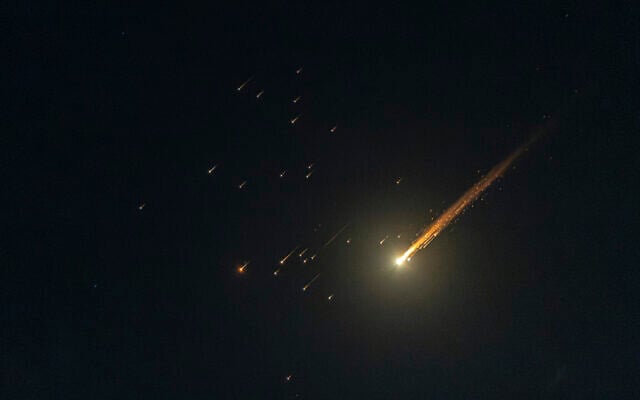
A ballistic missile launched from Iran, as seen over Jerusalem, March 27, 2026. (Yonatan Sindel/Flash90)
The IDF has identified another ballistic missile attack from Iran, again targeting southern Israel.
Sirens are expected to sound in the coming minutes.
Latest Iranian ballistic missile attack shot down; no reports of injuries
The latest Iranian ballistic missile attack on Israel was intercepted, according to the IDF.
The small number of missiles triggered sirens in southern Israel.
There are no reports of injuries.
IDF says it is striking Iranian regime targets in Tehran
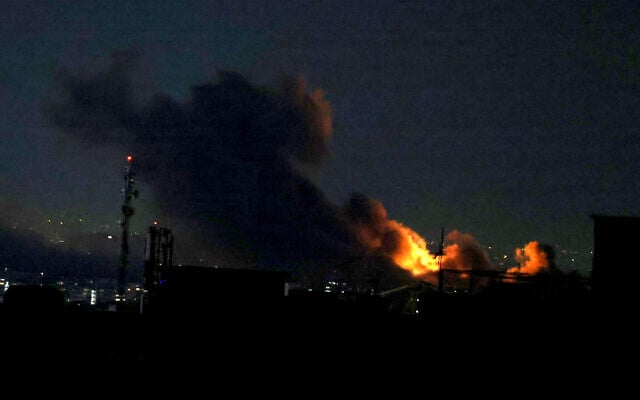
A plume of smoke rises from the site of a strike in Tehran, Iran, March 29, 2026. (ATTA KENARE / AFP)
The IDF says it is attacking infrastructure belonging to the Iranian regime in Tehran.
No further details are provided.
Additional Iranian ballistic missile attack launched
The IDF has identified a new ballistic missile attack from Iran, targeting southern Israel.
Sirens are expected to sound in the coming minutes.
Sirens sound as drone infiltration suspected on northern border
Sirens sound in several communities on the border with Lebanon due to a suspected drone infiltration.
Iranian missile launch detected, sirens set to sound in southern Israel, West Bank
A ballistic missile attack from Iran has been detected by the IDF.
Sirens are expected to sound in southern Israel and the southern West Bank in the coming minutes.
Trump: Many targets in Iran ‘destroyed’ over past day.
US President Donald Trump claims in a Truth Social post that “many long sought after targets have been taken out and destroyed” by the US military in Iran over the past day.
IDF says it stopped two attempted terror attacks in the West Bank
The Israel Defense Forces says it halted two attempted terror attacks in the West Bank.
In one instance, in the Palestinian town of Dura in the southern West Bank, the IDF says troops identified a man running at them with a knife. The troops opened fire and killed the attacker, the statement says.
In the second incident, in the Palestinian town of Al-Ram in the central West Bank, the IDF says troops fired at a man who accelerated his car toward them in a manner that constituted a threat. Troops fired on that man and neutralized him, the statement says.
Trump says he’d like to ‘take the oil in Iran,’ adds US may seize Kharg Island

US President Donald Trump speaks to reporters aboard Air Force One on March 29, 2026. (AP/Mark Schiefelbein)
US President Donald Trump says he’d like to “take the oil in Iran,” and muses about capturing Kharg Island, in an interview with the Financial Times.
“To be honest with you, my favorite thing is to take the oil in Iran but some stupid people back in the US say: ‘Why are you doing that?’ But they’re stupid people,” he says, likening the situation to Venezuela, where the US captured the country’s president, Nicolas Maduro, and hopes to exert control over its oil.
He also declines to say whether he would approve an operation to seize Kharg Island, the export terminal for 90 percent of Iran’s oil shipments, which could be key to opening up the Strait of Hormuz. Iran has blocked the strait, a key pathway for the world’s oil supply.
“Maybe we take Kharg Island, maybe we don’t. We have a lot of options,” Trump tells FT. “It would also mean we had to be there for a while.”
But he says the US has made progress in its strikes on Iran, and says the US could reach a deal to end the fighting with Iran soon.
“We’ve got about 3,000 targets left — we’ve bombed 13,000 targets — and another couple of thousand targets to go,” he says. “A deal could be made fairly quickly.”
Trump insists killing of Iran’s leaders ‘truly is regime change’
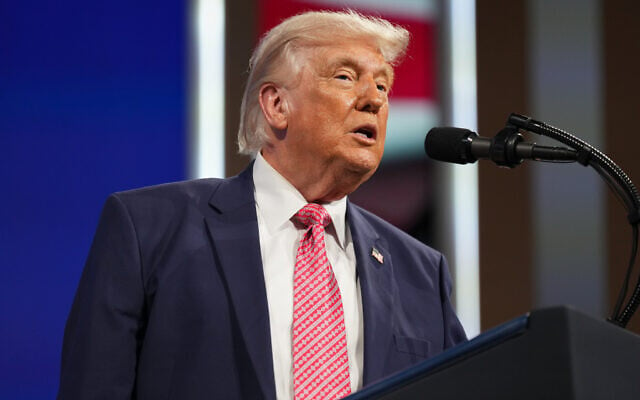
US President Donald Trump speaks at the Future Investment Initiative Institute's summit in Miami Beach, Florida, March 27, 2026. (AP Photo/Mark Schiefelbein)
US President Donald Trump says that the strikes against the top leadership of the Islamic Republic effectively amount to regime change, repeating a contention he first expressed upon announcing talks to end the war with Iran.
The broader Islamic Republic regime has not, in fact, fallen, but Trump is apparently trying to frame the decapitation of Supreme Leader Ali Khamenei and dozens of other top officials as tantamount to the collapse of the old government.
“The one regime was decimated, destroyed, they’re all dead. The next regime is mostly dead, and the third regime — we’re dealing with different people than anybody’s dealt with before… and frankly, they’ve been very reasonable,” Trump tells reporters aboard Air Force One.
The US has been seeking to work with Iran’s parliament speaker Mohammad Bagher Ghalibaf, but he is closely tied to the Islamic Revolutionary Guard Corps and most analysts view him as no less hardline than those who were unwilling to accept US demands to date.
“It truly is regime change… you can’t do much better than that,” Trump claims.
As for Mojtaba Khamenei, Ali Khamenei’s son, whom Iranian clerics selected to replace his father as supreme leader, Trump reiterates that he has been incommunicado. “He may be alive, but he’s obviously very seriously… wounded.”
The younger Khamenei wwas thought to be wounded in strikes on the first day of the war, when his father and other officials were killed.
Asked about a potential ground operation against Iran, Trump remains non-committal.
He insists the war is “weeks” ahead of schedule, even though the White House on Thursday again stood by its timeline of four to six weeks to wrap up a war that crossed the four-week mark on Saturday.
Trump is also pressed on whether he’s satisfied with Director of National Intelligence Tulsi Gabbard, who avoided stating that Iran posed an imminent threat before the war, instead telling US lawmakers in congressional testimony that only the US president could make that determination.
“She’s a little bit different in her thought process than me. I would say I’m very strong on the fact that I don’t want Iran to have a nuclear weapon… I think she’s probably a little bit softer on that issue, but that’s okay,” Trump says.
Asked about Iran reportedly imposing tolls on ships crossing through the Strait of Hormuz, Trump responds, “I have to find out if that’s true.”
“We could close [the Strait of Hormuz] up in two minutes,” he warns.
He goes on to insist, without proof, that Gulf states are fighting back against Iran.
Public reporting has shown that the Gulf countries’ responses to Iran attacks on their territory have been limited to defensive measures aimed at intercepting drones and missiles.
Trump: Deal to end war ‘could be soon,’ Iran agreed to let 20 more boats through Hormuz

US President Donald Trump speaks to reporters aboard Air Force One en route from West Palm Beach, Florida, to Joint Base Andrews, Maryland, March 29, 2026. (AP/Mark Schiefelbein)
US President Donald Trump says a deal to end the war with Iran could come “soon,” but warns that “they’re not going to have a country” unless Tehran agrees to a US proposal to stop the fighting.
He says that Iran agreed to allow another 20 boats of oil to pass through the Strait of Hormuz as a “sign of respect” and a further demonstration of its willingness to negotiate an agreement.
Speaking to reporters aboard Air Force One, Trump says those “big boats” will begin passing through Hormuz on Monday and days that follow.
Pakistani deputy prime minister Ishaq Dar, whose country is one of the main mediators between the US and Iran, first revealed the gesture from the Islamic Republic, ostensibly aimed at preventing the further rise of oil prices during the war, in a Saturday social media post.
Trump claimed last week that Iran allowed eight Pakistani-flagged boats to travel through Hormuz, along with two others, in what he described as a “present” also aimed at demonstrating Iran’s willingness to negotiate with the US. Those figures have not been verified by public reporting or vessel-tracking data.
Over the course of the 20-minute gaggle, Trump offers varying levels of optimism regarding the chances for a deal with Iran.
“We’re doing extremely well in that negotiation. But you never know with Iran, because we negotiate with them and then we always have to blow them up,” he says.
“I think we’ll make a deal with them, but it’s possible that we won’t,” Trump continues. “I do see a deal in Iran. It could be soon.”
His largely upbeat comments come ahead of the stock market re-opening on Monday morning.
Trump goes on to claim, without proof, that Iran has agreed to most of the US demands in Washington’s 15-point proposal for a deal to end the war.
Iran has yet to formally respond to the offer, though, even though US negotiators were hoping it would have done so by Friday.
“They’re going to give up nuclear weapons. They’re going to give us the nuclear dust,” Trump says, referring to Iran’s stockpiles of highly-enriched uranium.
“They’re going to do everything that we want to do, [and] they’re going to go on and maybe have a great country again. But if they don’t do that, they’re not going to have a country,” he threatens.
Sirens sound in Haifa due to salvo from Lebanon
Sirens sound in Haifa and the surrounding area due to a rocket attack from Lebanon.
Politico removes cartoon criticized as antisemitic from its website
The US news site Politico removes a cartoon that had been criticized as antisemitic from its website.
The cartoon depicted Prime Minister Benjamin Netanyahu, US President Donald Trump and other US leaders on a ship, with Netanyahu and Trump wearing blood-soaked tallitot, or Jewish prayer shawls.
Politico Deletes Antisemitic Cartoon Showing Trump and Netanyahu Covered in Blood https://t.co/OoUtP8VLQu
— Mediaite (@Mediaite) March 28, 2026
Netanyahu was depicted with an oversize nose, and a bloody bag of money was affixed to the ship’s mast. The cartoon also features the word “Amalek,” referring to the Biblical archenemy of the Jews.
Politico says it dropped the cartoon “after weighing comments from readers that it did not meet our standards.”
“Sharp arguments and provocative imagery in political cartoons are within bounds. Images that could be reasonably interpreted to rely on ethnic stereotypes or employing tropes that have been involved in historically hateful ways are not,” the statement says.
UNIFIL says one peacekeeper killed, one critically injured in southern Lebanon explosion
The UN peacekeeping mission in Lebanon (UNIFIL) says a peacekeeper was killed when a projectile exploded at one of its positions near the southern Lebanese village of Adchit al-Qusayr yesterday.
Another peacekeeper was critically injured, it said in a statement early today.
“We do not know the origin of the projectile. We have launched an investigation to determine all of the circumstances,” UNIFIL adds.
IDF says it intercepted two drones fired from Yemen
The Israel Defense Forces says it recently intercepted two drones fired from Yemen, home to the Iran-backed Houthi terror group.
The statement comes shortly after sirens sounded in Eilat when a hostile drone was detected.
IDF confirms battalion removed early from West Bank action after alleged assault of CNN crew
The Israel Defense Forces confirms that IDF Chief of Staff Lt. Gen. Eyal Zamir has removed an entire battalion from action in the West Bank following an incident last week in which soldiers detained and allegedly assaulted a CNN crew.
The Menashe Regional Brigade’s 941st “Netzah Israel” Battalion, a reserve unit made up mostly of former soldiers of the Kfir Brigade’s Netzah Yehuda Battalion, was due to end its activities in the West Bank at the end of next month.
Now, the IDF says, following an investigation into the incident, Zamir has decided to end the battalion’s operational activity in the West Bank. The battalion will remain in reserve duty and will undergo training “strengthening its professional and ethical foundations.” With the approval of the head of the command, it will return to activity at the end of that process, the statement says.
The statement adds that additional steps will be taken and further details about the investigation will be released in the future.
Emanuel Fabian contributed to this report.
Knesset approves 2026 budget, the largest in Israeli history, avoiding early elections

Finance Minister Bezalel Smotrich holds a press conference ahead of final votes on the 2026 state budget at the Knesset in Jerusalem, March 29, 2026. (Yonatan Sindel/Flash90)
The Knesset passes the 2026 state budget in its final reading, avoiding the collapse of the government and early elections, which would have been triggered had it failed to pass before the legally mandated deadline on Tuesday.
Elections are currently slated for October.
Lawmakers vote 62-55 in favor of the highly contentious NIS 850.6 billion ($271 billion) spending bill, which Finance Minister Bezalel Smotrich calls “a budget that takes care of everyone and fights the cost of living,” and which Opposition Leader Yair Lapid calls “the greatest theft in the history of the state.”
The total budget is the largest in Israel’s history. The Defense Ministry’s budget alone will be more than NIS 142 billion ($45.3 billion), a record, plus NIS 22 billion ($7 billion) in income-dependent expenditure, and NIS 82.2 billion ($26.3 billion) for long-term spending commitments.
The vote follows over 14 hours of opposition filibustering and multiple interruptions from sirens warning of Iranian ballistic missiles, which caused proceedings to pause repeatedly as lawmakers left the plenum. Amendments passed late in the process reportedly allocated hundreds of millions of shekels to priorities of Haredi parties.
Sirens sound as suspected hostile drone detected in Eilat area
A suspected hostile drone has been detected near Eilat, triggering warning sirens in the area.
Police, Catholic patriarchate reach agreement on prayer at Holy Sepulchre, details to come

Cardinal Pierbattista Pizzaballa, the Latin Patriarch of Jerusalem, greeting Christians gathered at the Church of the Holy Sepulchre in Jerusalem for a mass honoring Pope Francis on April 23, 2025. (Rossella Tercatin/Times of Israel)
After widespread outrage over their refusal to let top Catholic figures pray at the Church of the Holy Sepulchre today, the Israel Police announces it has reached an agreement with the Latin Patriarchate to allow limited prayer at the Christian holy site.
Jerusalem District Commander Deputy Commissioner Avshalom Peled and David Sub-District Commander Dvir Tamim met with a representative of the Latin Patriarchate, and agreed on a framework that will allow all Christian denominations to worship in the church while the Iran war continues, says the police.
A police official tells The Times of Israel that the details of the framework will be released tomorrow after a meeting is held with all the denominations.
Prime Minister Benjamin Netanyahu just posted on X that he had instructed that the Latin Patriarch, Cardinal Pierbattista Pizzaballa, be granted “full and immediate access” to the church.
I have instructed the relevant authorities that Cardinal Pierbattista Pizzaballa, the Latin Patriarch, be granted full and immediate access to the Church of the Holy Sepulchre in Jerusalem.
Over the past several days, Iran has repeatedly targeted the holy sites of all three…
— Benjamin Netanyahu – בנימין נתניהו (@netanyahu) March 29, 2026
On Sunday morning, Israeli police officers kept the two top Catholic clergymen in the Holy Land – Latin Patriarch Cardinal Pierbattista Pizzaballa and Custos of the Holy Land Father Francesco Ielpo – from reaching the Church of the Holy Sepulchre to celebrate a small Palm Sunday Mass.
A fragment from an intercepted Iranian ballistic missile fell near the church some two weeks ago.
Coalition allocates large sums to Haredi parties in last-minute budget amendments
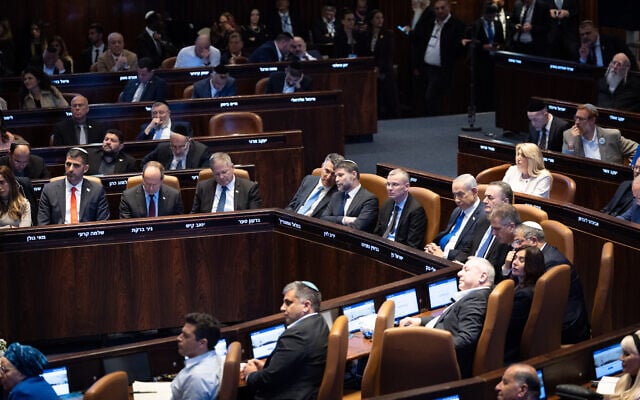
Israeli lawmakers listen to Indian Prime Minister Narendra Modi at the Knesset in Jerusalem during Modi’s official visit to Israel on February 25, 2026. (Yonatan Sindel/Flash90)
In a last-minute move before the state budget comes up for a final vote in the Knesset, the coalition has allocated hundreds of millions of shekels to Haredi educational institutions and other causes favored by ultra-Orthodox parties, Hebrew media outlets report.
The allocations, approved in amendments passed around midnight Sunday-Monday, appear to deliver funding that was previously blocked by Attorney General Gali Baharav-Miara due to the lack of Haredi enlistment in the IDF, Channel 12 reports.
Opposition Leader Yair Lapid decries the allocations, calling those who approved it “a collection of lowly thieves who are disconnected from the people, who are looting the citizens of Israel while they’re in bomb shelters” due to the war with Iran.
The Knesset is debating the state budget and is expected to approve it in the early hours of Monday morning.
IDF chief said to order removal of whole battalion from West Bank action after alleged assault of CNN crew
A masked soldier, identified as Meir, looks at the camera as he opens the door of the car where CNN correspondent Jeremy Diamond, left, sits detained in the northern West Bank village of Tayasir, March 26, 2026. (Screen capture: CNN)
IDF Chief of Staff Lt. Gen. Eyal Zamir has reportedly ordered the removal of an entire battalion from operational activity in the West Bank following an incident last week in which soldiers detained and allegedly assaulted a CNN crew.
The Menashe Regional Brigade’s 941st “Netzah Israel” Battalion, a reserve unit made up mostly of former soldiers of the Kfir Brigade’s Netzah Yehuda Battalion, was due to end its activities in the West Bank at the end of next month.
However, following the incident with the CNN crew, Zamir instructed to remove the battalion from operational activities early, according to soldiers serving in the unit.
The IDF has not yet commented on the move.
During the incident on Thursday, CNN’s Jeremy Diamond said a soldier put his cameraman in a chokehold as troops tried to prevent them from filming at an illegal West Bank outpost.
Soldiers in the unit were also caught on camera saying the entire West Bank belongs to Jews and that they were avenging the killing of a settler, Yehuda Sherman, days earlier.


read more: