

Live updates (closed)
 Add ToI as a Preferred Source on Google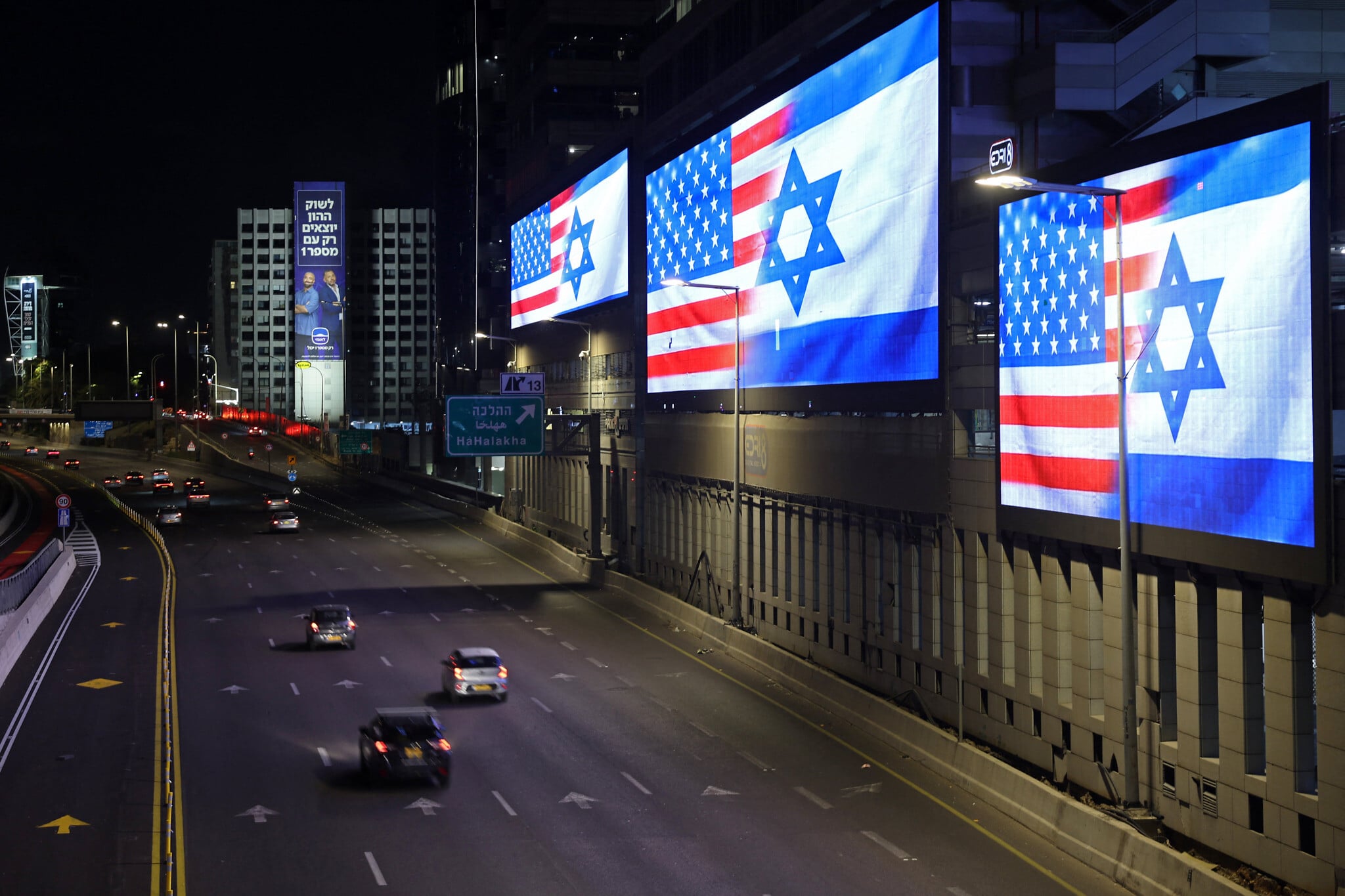

The Times of Israel liveblogged Wednesday’s events as they unfolded.
Most in US disapprove of Trump’s Iran war handling; 1/3 of non-MAGA Republicans oppose the US strikes
A slight majority of Americans disapprove of US President Donald Trump’s handling of the war in Iran, including roughly one-third of moderate Republicans, a new poll indicates.
Fifty-four percent of voters disapprove of Trump’s management, compared to 41% who approve and 5% who say they aren’t sure, a poll published by NBC finds.
A similar share, 52%, say the US should not have taken military action against Iran, compared to 41% who say it should have and 7% who say they aren’t sure.
Results largely fall along party lines, with 89% of Democrats saying the US should not have struck Iran, while 77% of Republicans say the opposite.
Among self-identified MAGA Republicans, 90% back the strikes, while Republicans who don’t identify as part of the MAGA movement only backed the strikes to the tune of 54%, compared to 36% of them who opposed the strikes.
The high support among MAGA Republicans may surprise some, given that those are the members of the party who are seen as more isolationist.
The margin of error for 1,000 registered voters polled is 3.1%.
Several reports claim Kurdish fighters have launched cross-border attack in Iran; Iran denies it
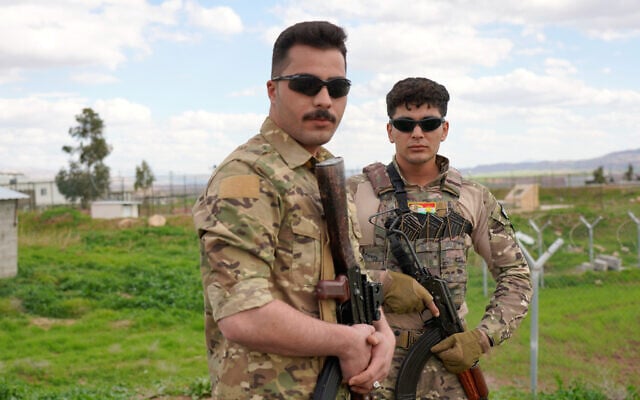
Members of the Democratic Party of Iranian Kurdistan PDKI stand at a checkpoint leading to their base in the Koya district of Irbil, Iraq, Feb. 27, 2026. (AP Photo/Rashid Yahya)
Several reports cite sources as saying Kurdish militias in Iraq have launched a cross-border military operation in Iran. However, Iran’s Tasnim news agency, quoted by Reuters, says its reporters in three border provinces deny the reports.
Channel 12 reporter Barak Ravid, who earlier cited a US official confirming the offensive, updates that there are “conflicting reports” and says that a senior official in one of the Iranian-Kurdish factions also denies that a ground offensive has begun.
Update: There are conflicting reports regarding what is currently happening in northwestern Iran near the border with Iraq. It is unclear whether a ground offensive by the Iranian-Kurdish militias has already begun or may be launched in the coming hours. A senior official in one…
— Barak Ravid (@BarakRavid) March 4, 2026
The Kurdish groups are widely seen as the most well-organized segment of the fragmented Iranian opposition and are believed to have thousands of trained fighters. Their entry into the war could potentially pose a significant challenge to the embattled authorities in Tehran and risk pulling Iraq further into the conflict.
EXCLUSIVE: Kurdish forces in Iraq have launched a ground military offensive into Iran against the Islamic regime, an Iranian Kurdish official tells @i24NEWS_EN.
According to the official, thousands of Kurdish fighters began taking combat positions inside Iranian territory on… pic.twitter.com/g2EyzB3Ch3
— Yulia Pobegailova (@Y_Pobegailova) March 4, 2026
Thousands of Iraqi Kurds have launched a ground offensive in Iran: US official tells Fox.@FoxNews
— Jennifer Griffin (@JenGriffinFNC) March 4, 2026
Kurdish groups claim they’re preparing cross-border op in Iran with US support
Kurdish Iranian dissident groups based in northern Iraq are preparing for a potential cross-border military operation in Iran, and the US has asked Iraqi Kurds to support them, Kurdish officials tell The Associated Press.
The Kurdish groups are widely seen as the most well-organized segment of the fragmented Iranian opposition and are believed to have thousands of trained fighters. Their entry into the war could pose a significant challenge to the embattled authorities in Tehran and could also risk pulling Iraq further into the conflict.
Khalil Nadiri, an official with the Kurdistan Freedom Party, or PAK, based in northern Iraq’s semi-autonomous Kurdish region, says some of their forces have moved to areas near the Iranian border in Sulaymaniyah province and are on standby.
He says Kurdish opposition group leaders have been contacted by US officials regarding a potential operation, without giving more details.
The White House has denied that the US has been arming Kurdish fighters in Iraq, asserting that while President Donald Trump has been in touch with Kurdish leaders in Iraq, the subject was the American military base in the country.
Arab League tells Iran to halt attacks on Gulf nations
The ongoing strikes deepen an “unprecedented state of hostility” with Iran’s neighbors in the Gulf, says Arab League chief Ahmed Aboul Gheit in a statement.
He demands that Tehran stop the attacks, which he calls a “strategic mistake,” saying “Iran must come to its senses.”
The Arab League, made up of 22 member states, promotes regional cooperation. However, it is widely seen as toothless and has long struggled to help solve conflicts.
US, Israel targeting Iran regime forces involved in crackdown to enable protest renewal — officials
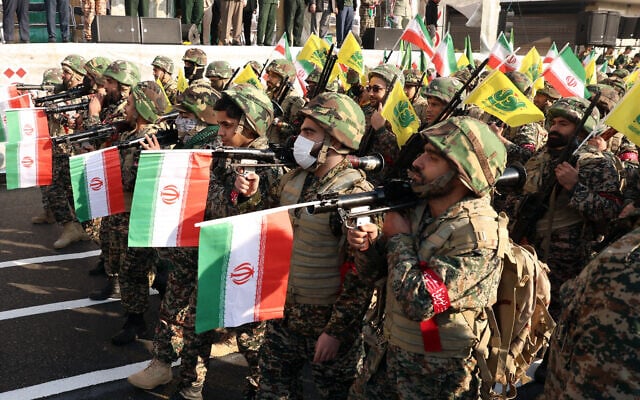
Members of Iranian paramilitary forces (Basij) march with weapons and their national flag during a rally in Tehran, January 10, 2025. (AFP)
The US and Israel, in their ongoing airstrikes throughout Iran, are targeting members of the regime’s forces that took part in the crackdown on anti-government protesters earlier this year, hoping to make it easier for demonstrators to return to the streets once the bombing subsides, a US official and an Israeli official tell The Times of Israel.
“When we said that we’re trying to create the conditions for regime change, these are the kinds of things that we’re referring to,” an Israeli official says.
In announcing the launch of Operation Epic Fury on Saturday, US President Donald Trump called on Iranian freedom-seekers to take over their government once the bombing subsides.
In the days that followed, though, Washington has clarified that it views the fall of the government as merely a potential byproduct of the operation, while the stated aims are limited to destroying Iran’s missile program, destroying its navy, preventing it from obtaining a nuclear weapon and ceasing its support for proxy militias.
Still, the US official confirms that regime forces involved in the crackdown — such as the Basij voluntary paramilitary offshoot of the Islamic Revolutionary Guard Corps — are among those that American and Israeli forces are targeting.
IDF says it struck second Hezbollah member in Beirut in past hour
The IDF says it carried out a strike against another Hezbollah operative in Beirut a short while ago.
It marks the second strike targeting a member of the terror group in the Lebanese capital in under an hour.
The military says it will provide further details on the strikes later.
IDF targets Hezbollah launch sites, drone factory in southern Lebanon
The IDF says it completed a wave of strikes against Hezbollah targets in southern Lebanon.
Among the dozens of targets were numerous rocket and missile launching sites — all located south of the Litani River — and a drone manufacturing lab, the military says.
UN says 100,000 people fled Tehran in the war’s first 2 days
The UN refugee agency, basing its estimates on Iranian officials, says some 100,000 people fled Tehran in the war’s first two days.
It also says around 1,000 to 2,000 vehicles per day are reported to be leaving the capital, mostly heading north.
Geneva-based UNHCR spokesman Babar Baloch says the latest reports today indicate no increase in cross-border movements linked to the recent conflict, “but the situation remains fluid.”
Wartime restrictions to be eased tomorrow to allow limited workplace, gathering resumption; education activities still banned
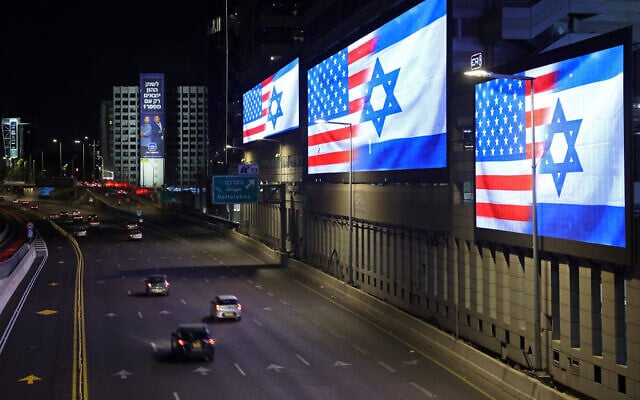
Giant screens installed along a highway display the national flags of US and Israel, in Tel Aviv on March 4, 2026. (Jack GUEZ / AFP)
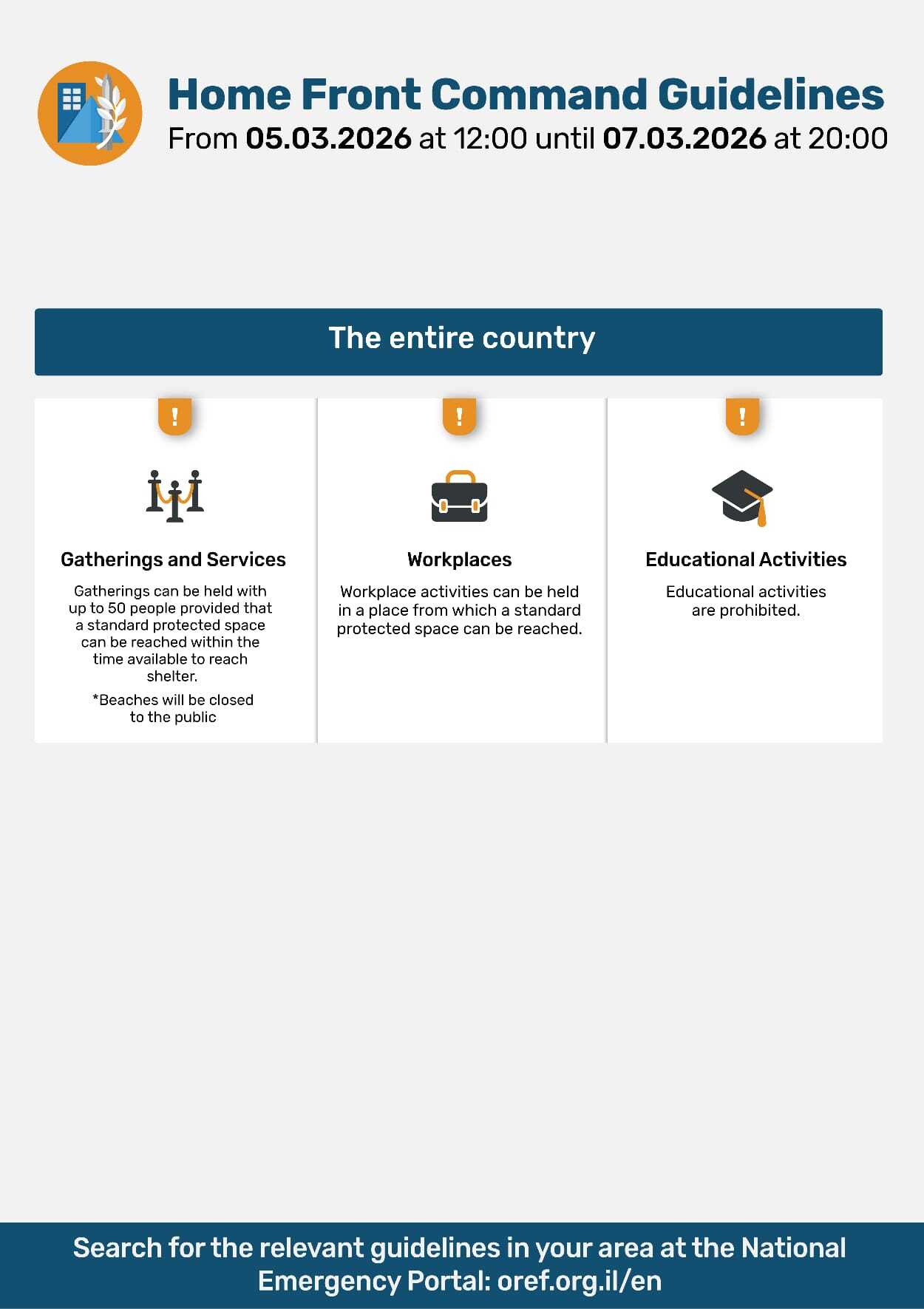
As the rate of Iran’s ballistic missile fire on Israel slows, the IDF Home Front Command says it is easing restrictions that were imposed on the Israeli public at the start of the conflict.
Following a fresh assessment, the Home Front Command says that from tomorrow at noon, the activity scale in the country will be adjusted from “essential activity” to “limited activity.”
As part of the changes, educational activities remain prohibited, except for a number of outlined exceptions; gatherings of up to 50 people are permitted, provided a shelter can be reached in time; and workplaces can operate under the same conditions.
The guidelines remain in effect until Saturday night, when the Home Front Command will conduct another assessment.
Trump: US in ‘very strong position’ on Iran, whose leadership is ‘rapidly going’

US President Donald Trump speaks during an event about the Ratepayer Protection Pledge, in the Indian Treaty Room of the Eisenhower Executive Office Building on the White House complex, March 4, 2026, in Washington. (AP Photo/Jacquelyn Martin)
US President Donald Trump says he rates the American performance in the ongoing Iran war as a 15 out of 10.
“Somebody said, ‘On a scale of 10, where would you rate it? I said about a 15,” Trump says in opening remarks during an event at the White House.
“If we didn’t do it first, they would have done it to Israel and give us a shot, if that was possible,” Trump says.
Pentagon briefers reportedly told Congressional leaders earlier this week that the US does not have any intelligence indicating that Iran was planning to carry out a preemptive strike against the US or Israel.
“We’re in a very strong position now, and their leadership is rapidly going. Everybody that seems to want to be a leader ends up dead,” Trump says.
The president acknowledges that the war will likely cause a “little interlude” in price drops and market booms.
Rubio says attacks on Turkey ‘unacceptable’ after Iran missile launch
US Secretary of State Marco Rubio says that attacks on NATO ally Turkey’s sovereignty are “unacceptable,” after the alliance shot down an Iranian missile, which a Turkish official said had veered off course.
In a call with Foreign Minister Hakan Fidan, Rubio says that “attacks on Turkey’s sovereign territory were unacceptable and pledged full support from the United States,” State Department spokesman Tommy Pigott says.
IDF confirms targeting Hezbollah operative in Beirut, says details to come
The IDF confirms carrying out an airstrike in Beirut, saying it struck a Hezbollah operative.
It says further details on the strike in the Lebanese capital will be provided later.
White House: US working on plan to secure Hormuz Strait; dominance over Iran airspace expected ‘in the coming hours’
The US is working on plans to secure the Strait of Hormuz amid the war with Iran, White House spokeswoman Karoline Leavitt says.
Leavitt says during a press briefing that Operation Epic Fury will ensure that “Iran will no longer be able to restrict the free flow of energy through a waterway that controls roughly 20% of the world’s oil supply.”
“As the Department of War said this morning, we expect to have complete and total dominance over Iranian airspace in the coming hours,” Leavitt says. War Secretary Pete Hegseth said earlier today that the US and Israel would have total control of Iranian skies within the week.
Leavitt adds that the US has destroyed more than 20 Iranian ships, doubling the number from two days ago.
Asked about reports that the US is considering arming Kurdish fighters against Iran, Leavitt denies that this is the case, saying that Trump only spoke to Kurdish leaders recently about the American military base in northern Iraq.
While Leavitt doesn’t rule out the potential for US ground troops in Iran eventually, she says they are not part of the plan for the operation “at this time.”
She announces that Spain has agreed to cooperate with the US military after President Donald Trump tore into Madrid yesterday. But Spanish officials quickly deny that the country has changed its position regarding the war and that its bases will not be used as part of it.
Fresh Israeli strike reported on car in Hezbollah stronghold in Beirut
Lebanese media reports an Israeli airstrike in Beirut’s southern suburbs, a known Hezbollah stronghold.
There is no immediate comment from the IDF.
According to Lebanese media, the strike hit a car on a highway in the area.
استهداف سيارة على اتوستراد الاسد#ملحق pic.twitter.com/oYVArN46Nq
— Mulhak – ملحق (@Mulhak) March 4, 2026
IDF says it destroyed loaded, manned missile launchers in ‘extensive’ wave of Iran strikes earlier today
An “extensive” wave of Israeli airstrikes in central and western Iran earlier today destroyed dozens of Iranian ballistic missile launchers and air defense systems, the military says.
According to the IDF, some of the missile launchers were armed for attacks on Israel, and they were struck while Iranian soldiers were operating them.
“The combined effort to further degrade the regime’s firing and defense capabilities has continued since the first day of Operation Roaring Lion to reduce to the fullest extent possible the volume of fire directed at the State of Israel, while expanding the Israeli Air Force’s aerial superiority,” the military says.
The IDF publishes footage showing some of the strikes.
המאמץ המשולב להעמקת הפגיעה ביכולות האש וההגנה נמשך: עשרות מערכות טילים בליסטיים והגנה הותקפו היום במערב ובמרכז איראן
חיל האוויר השלים מוקדם יותר היום גל תקיפות נרחב לעבר מטרות של משטר הטרור האיראני במערב ובמרכז איראן.
בתקיפות הושמדו עשרות תשתיות של מערך הטילים הבליסטיים של… pic.twitter.com/JQE0rMMpnw
— צבא ההגנה לישראל (@idfonline) March 4, 2026
Hezbollah chief: Renewed attacks on Israel a response to 15 months of violations, ‘unrelated to any other battle’
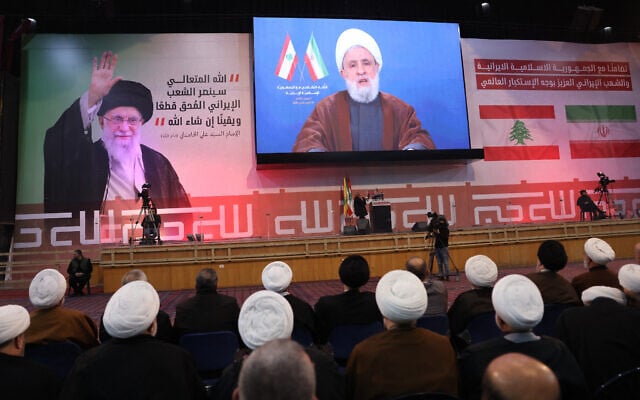
Supporters watch a televised speech by Hezbollah chief Naim Qassem during a rally to show their solidarity with Iran, in the southern suburb of Beirut on January 26, 2026. (Anwar AMRO / AFP)
In a televised address, Hezbollah chief Naim Qassem says his group’s resumption of rocket attacks on Israel this week is a response to Israel’s continued presence and airstrikes in Lebanon since the November 2024 Israel-Hezbollah ceasefire deal.
The speech comes amid the Lebanese government’s searing accusations that the Iran-backed proxy terror group is dragging Lebanon into a regional war, after the US and Israel launched a bombing campaign on Iran that the Islamic Republic has responded to with missile and drone strikes across the region.
“By God, how strange you are,” Qassem says in a televised speech, addressing the Lebanese government. “What is your response to the wide-scale aggression?”
The renewed fighting against Israel, he claims, “is not linked to any other battle; what we want is to stop the aggression.”
But he also says that the renewed rocket attacks on Israel “are a response to 15 months of violations against us, including the targeting of the great religious authority,” Ayatollah Ali Khamenei, the Iranian supreme leader who was killed at the start of the US-Israeli bombing campaign on Saturday.
“To anyone asking about the timing” of Hezbollah’s resumption of attacks, Qassem says: “Were we expected to remain endlessly patient?”
He adds that the Lebanese government’s formal decision in August to bring all weapons in the country, chiefly Hezbollah’s, under state control, “was a grave error that has weakened the position of the Lebanese state and legitimized Israel’s freedom of aggression.”
“As long as there is occupation — resistance and arms are a right,” he says.
IDF says fresh round of strikes conducted in Tehran
The Israeli Air Force has launched a new wave of airstrikes against Iranian regime targets in Tehran, the IDF announces.
According to the IDF, it is the 11th wave of strikes in Tehran since the start of the conflict, and the second today.
It says further details on the strikes in Iran’s capital will be provided later.
‘Bless them:’ Iranians thank Netanyahu, Trump for Khamenei’s end, describe ‘regular’ explosions, in messages shared with ToI
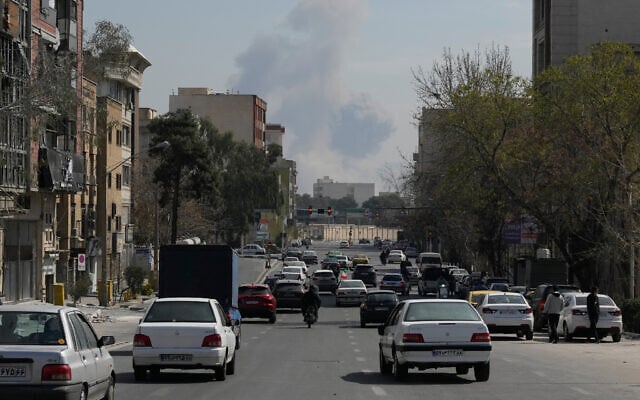
A plume of smoke rises following a US-Israeli strike in Tehran, Iran, March 4, 2026. (AP/Vahid Salemi)
Some residents of Iran express gratitude to Prime Minister Benjamin Netanyahu and US President Donald Trump for assassinating Iranian supreme leader Ali Khamenei, while describing uncertainty for what comes next in the ongoing US-Israeli bombing campaign in the country, in testimonies shared with The Times of Israel.
Four residents provided written and recorded responses to a series of questions from The Times of Israel. The questions were sent by Gio Esfandeyari, a British-Iranian anti-regime activist and board member of NGO Lotus Advocacy, who gathered and forwarded the Persian-language replies to the outlet. Their accounts cannot be independently verified.
“We kiss the hands of Mr. Trump and Netanyahu. Thank you to them. People really became happy,” says a man in his 40s from Shahrud in northern Iran. On the night of Saturday’s assassination, he says, “when we found out that this bastard had gone to hell, we poured into the streets. From Shahrbani Street to Azadi Square in Shahrud — people were celebrating and dancing.”
A Tehran resident in his 30s describes similar scenes in the capital: “That same night, when this filthy animal went to hell, that’s when people poured into the streets… everyone had come out. It was dancing, celebration and cheering. Thanks to Mr. Trump and Netanyahu. Bless them. Good for them.”
Residents also describe frequently hearing explosions amid the conflict.
The Shahrud resident describes hearing many explosions, including on an ammunition depot, near where he lives: “It was quite far away… No civilian people were hurt.”
A resident in northern Tehran says she “regularly” hears explosions, and that “almost everything is shut down” in the city. Many residents “are worried” about the situation and are trying to remain safe, she continues, “but they support it,” she adds, referring to the ongoing campaign. “We hope for victory.”
Casualty figures from the ongoing campaign remain difficult to verify. Iranian authorities have reported several hundred deaths, without distinguishing between civilians, soldiers and regime personnel. An Israeli Air Force officer has said Israeli strikes in Iran have killed thousands of Iranian soldiers.
A 23-year-old Tehran resident says: “The worry about war is much less than in the previous one,” referring to Israel’s June aerial assault on Iran, which the US eventually joined. “People are mentally much more prepared,” he continues.
“I want to say that the place of every person who was killed feels very empty today,” he adds, referring to civilians killed under the regime.
France’s Macron urges Netanyahu not to go after Hezbollah on the ground in Lebanon
French President Emmanuel Macron has spoken to Prime Minister Benjamin Netanyahu and urged him not to order a ground offensive against Hezbollah in Lebanon, according to the French readout.
“It is important for the parties to return to the ceasefire agreement,” writes Macron on X.
He has also called Lebanon’s President Joseph Aoun and Prime Minister Nawaf Salam, stressing “the need for Hezbollah to immediately cease its attacks against Israel and beyond. This strategy of escalation constitutes a major error that endangers the entire region.”
“France will continue, with its partners, to support the efforts of the Lebanese Armed Forces, so that they can fully assume their sovereignty missions and put an end to the threat posed by Hezbollah,” writes Macron.
IDF has no intel signaling that concurrent Hezbollah, Iran fire was coordinated — spokesman
IDF Spokesman Brig. Gen. Effie Defrin says the military has no intelligence indicating that today’s concurrent fire from Iran and by Hezbollah in Lebanon was a coordinated effort.
“It is true, there was fire at the same time, more or less, you can say simultaneously, from Iran and Lebanon. I don’t possess any intelligence information that says this was coordinated,” Defrin says in response to a question at a press conference.
“With that said, there is no doubt that Hezbollah works for the Revolutionary Guards in Iran; it’s a wing of the Revolutionary Guards in Iran,” he says.
Settlers said to open fire, spray tear gas in Palestinian village; Red Crescent: 2 locals injured
The Palestinian Red Crescent Society says it is treating two people, including an elderly man, after they were assaulted by settlers in Khirbet Yarza, east of Tubas in the northern West Bank.
The Red Crescent says its medics were also assaulted by settlers while trying to reach the wounded Palestinians.
A spokesperson for Jordan Valley Activists, a group of Israelis who perform “protective presence” in Palestinian communities in the area, reports having received a distress call from people in Yarza who said they were being shot at.
According to the spokesperson, the settlers also sprayed tear gas. The spokesperson says ambulances coming from Tubas were temporarily blocked from reaching Yarza.
Footage shared with The Times of Israel by the Jordan Valley Activists shows about five settlers walking among homes in Yarza and shining flashlights at locals and homes.
Settlers are seen shining flashlights in the Palestinian village of Khirbet Yarza, in the northern West Bank’s Jordan Valley, March 4, 2026. (Jordan Valley Activists)
Israel didn’t think Hezbollah would join the fighting at the current intensity, Israeli official said to admit
A senior Israeli official acknowledges that Israel misjudged Hezbollah’s decision-making, after the terror group joined the fighting alongside Iran, Channel 13 reports.
“We were mistaken about Hezbollah – we didn’t think they would fire at these ranges,” the official is quoted as saying, after Hezbollah sent five rockets towards Israel’s center earlier today in an attack that concurred with the launch of a ballistic missile from Iran.
Most of Hezbollah’s rocket and drone attacks in recent days have targeted northern Israeli communities.
According to the report, the shift in Hezbollah’s posture is expected to be discussed in a security meeting convened by Prime Minister Benjamin Netanyahu later tonight.
The discussion is set to include Defense Minister Israel Katz, National Security Minister Itamar Ben Gvir, Foreign Minister Gideon Sa’ar and senior security officials, but not the full security cabinet, which has reportedly met only once since the war began.
White House appears to confirm Netanyahu call about Khamenei meeting was key in strike that started war
White House Press Secretary Karoline Leavitt appears to confirm an Axios report that US President Donald Trump moved to strike Iran after a February 23 phone call from Prime Minister Benjamin Netanyahu during which the premier informed him that Israel had intelligence indicating that supreme leader Ali Khamenei would be holding a meeting with other top senior Iranian officials on February 28.
Leavitt says in a press briefing that the call was “important with respect to the timeline” of the US strikes in Iran, while insisting that the president was set on attacking Iran regardless.
Asked about polling suggesting that the American public largely doesn’t support the war with Iran, Leavitt dismisses the notion outright.
“The president is smart enough to read past many of the fake news headlines produced by people in this room that his action was unjustifiable,” Leavitt says. “This is a rogue terrorist regime that has been threatening the United States, our allies and our people for 47 years, and the American people are smart enough to know that.”
Leavitt adds that the US is aware and monitoring reports that Khamenei’s son Mojtaba has been tapped to succeed his father.
Indicating an extended US presence in Iran, Leavitt says Trump and his aides are discussing what role the US could have inside the country after the war.
Report: Saudis vow to retaliate if Houthis attack kingdom; security upped around king, crown prince
If Yemen’s Houthis join Iran in attacking Saudi Arabia, Riyadh will retaliate militarily against them, the Kan public broadcaster reports, citing an unnamed official in the Saudi royal family.
Asked about the option of direct Saudi and Gulf actions against Iran, the official says: “Right now, we are letting the US and Israel conclude their steps in Iran.” The official says such intervention would dramatically affect oil prices, but that if Iranian attacks persist and intensify, this may be reconsidered.
Kan cites Arab intelligence officials as estimating that the Houthis are planning to strike key targets in Saudi Arabia with missiles and drones.
The officials say security has been boosted around King Salman and Crown Prince Mohammed bin Salman.
Report: Netanyahu raised concerns with White House over possible US-Iran contacts
Prime Minister Benjamin Netanyahu contacted the White House earlier this week after Israeli intelligence raised suspicions that senior officials in US President Donald Trump’s administration might be holding contacts with Iranian officials regarding a possible ceasefire, Channel 12 news reports.
According to the network, the intelligence was not definitive but suggested that some figures in the Trump administration could be engaging with representatives of the Iranian regime about conditions for ending the war.
The report says Netanyahu called senior White House officials on Monday to ask whether such contacts were taking place, either directly or indirectly. An official denied the claim and told Netanyahu that the Trump administration was not speaking with Tehran “behind his back,” according to a source familiar with the matter cited by Channel 12.
Another source tells the outlet that Iran passed messages to the Trump administration through several Gulf states and European countries, but that Washington did not respond to the messages.
Both the Prime Minister’s Office and the White House have declined to comment on the report, Channel 12 says.
A senior US official told reporters earlier today that Trump’s envoy Steve Witkoff has not spoken with Iranian Foreign Minister Abbas Araghchi or any Iranian representative “since this thing went kinetic.”
Jacob Magid contributed to this report.
In Jerusalem, hundreds flout wartime restrictions with hours-long Purim street party
Police are working to disperse a massive Purim street party in Jerusalem’s Nachlaot neighborhood.
The revelry has been ongoing since noon, attendees tell The Times of Israel, flouting the army’s wartime restrictions barring public gatherings.
Police attempted to break up the hundreds-strong crowd by driving a patrol car slowly down the bustling street while blaring its sirens, but were unsuccessful.
No arrests have yet been made, according to several officers in the area.
Police try to disperse a massive Purim party in Nachlaot, ongoing since noon despite army's wartime restrictions on public gatherings pic.twitter.com/pEWgb73R9f
— charlie summers (@cbsu03) March 4, 2026
Iranian official said targeted in Israeli strike on Beirut suburb overnight
Sources cited by Saudi-owned outlet Al-Hadath say an Israeli airstrike overnight in the Beirut suburb of Hazmieh targeted an Iranian official, who the sources say was likely a diplomat.
According to the report, the Israeli strike targeted the hotel room where the unnamed Iranian official and his Lebanese wife were staying. The wife was killed in the attack, while the official’s status is unclear, the report says.
Lebanese media reported early this morning that an Israeli strike hit a hotel in Hazmieh, the first recent such attack on the predominantly Christian area.
The IDF said it struck a Hezbollah command center in southern Lebanon’s Nabatieh area overnight, as well as other sites belonging to the Iran-backed group.
A spokesman for Iran’s armed forces was quoted by Iranian media this afternoon as saying Iran would target Israeli embassies around the world should Israel strike Iran’s embassy in Beirut.
Agencies contributed to this report.
Tehran resident says he hopes US-Israeli campaign topples regime, in message during brief window of connectivity
Internet access in Iran is almost entirely shut down, meaning residents use brief windows of connectivity to send messages to the outside world.
A 23-year-old in Tehran tells The Associated Press that he hopes US and Israeli strikes topple the Islamic Republic.
“It has to fall or they will take their revenge on us,” he writes. He says that in January, he joined anti-government protests in which security forces shot thousands of demonstrators and arrested tens of thousands more.
Another resident in the capital’s Velenjak neighborhood tells the AP that “conditions in Tehran are falling apart fast” under the air campaign. As she speaks, ambulance sirens wail and pro-government slogans blare from nearby mosque loudspeakers.
“The possibility of moving around isn’t as much as before,” she says, adding: “I hope whatever is good for Iran, happens.”
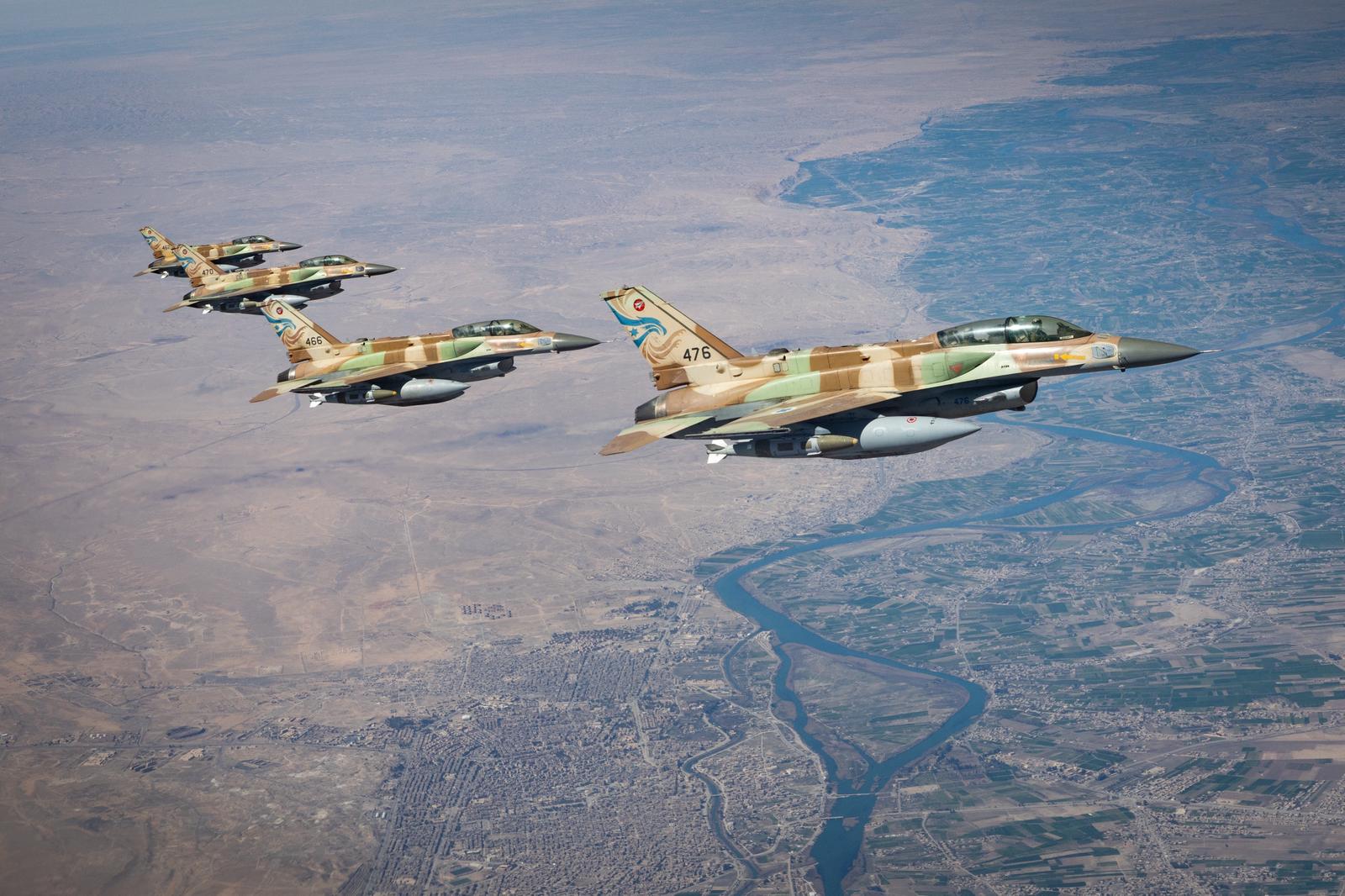
Israeli Air Force airs footage of F-16I jets flying to Iran for strikes
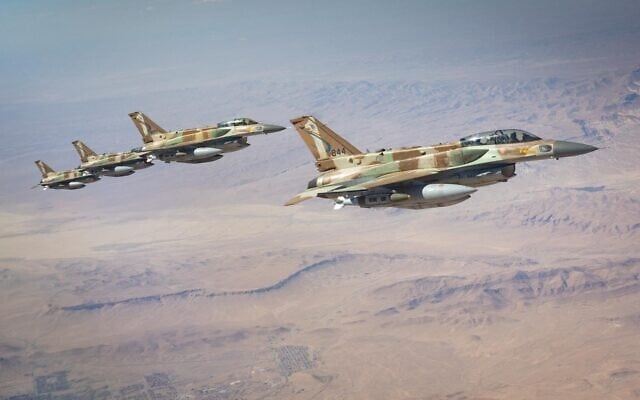
IAF F-16i fighter jets fly to Iran to carry out strikes, in a handout photo published on March 4, 2026. (Israel Defense Forces)
The Israeli Air Force publishes footage of F-16I fighter jets flying to attack Iran.
According to the military, IAF fighter jets have carried out hundreds of sorties and dropped over 5,000 bombs in Iran during the conflict.
IAF F-16i fighter jets fly to Iran to carry out strikes, in a handout video published on March 4, 2026. (Israel Defense Forces)
Report: Within days, US military may be forced to start conserving interceptors
The US military is potentially “days away” from being forced to start conserving its air defenses amid constant Iranian attacks on American assets in the Middle East, The Washington Post reports, citing three unnamed people familiar with the matter.
However, top US military officials have publicly argued otherwise. Joint Chiefs of Staff Chairman Gen. Dan Caine said in a briefing that “we have sufficient precision munitions for the task at hand, both on the offense and defense.”
The report says the US military has used hundreds of advanced THAAD interceptors.
Senior Iran cleric urges Shiite Muslims to shed the blood of Israelis, Trump
Senior Iranian cleric Abdollah Javadi-Amoli says that shedding the blood of Israelis and of US President Donald Trump is what is required of devout Shiite Muslims today, according to Iran’s state media.
Iran tells neighbors self-defense was last resort after failed diplomacy
Iranian President Masoud Pezeshkian says his regime pursued diplomacy to avoid war but was forced to defend itself after US and Israeli attacks.
“We respect your sovereignty,” Pezeshkian says on X in a message to neighboring countries and allies, “and believe the region’s security and stability has to be achieved through the collective efforts of its states.”
Iraq hit with total electricity blackout, ministry says
Iraq’s electricity ministry says the entire country has been affected by a total power outage, without identifying the cause.
“The power grid has completely shut down across all Iraqi provinces,” the ministry says, according to the Iraqi News Agency (INA).
It adds that it is looking to determine the cause of the blackout, and has begun restoring power stations and transmission lines. Parts of the country have come under repeated attack since the war between Israel, the US and Iran broke out.
UN watchdog says no damage to Iran sites housing nuclear material
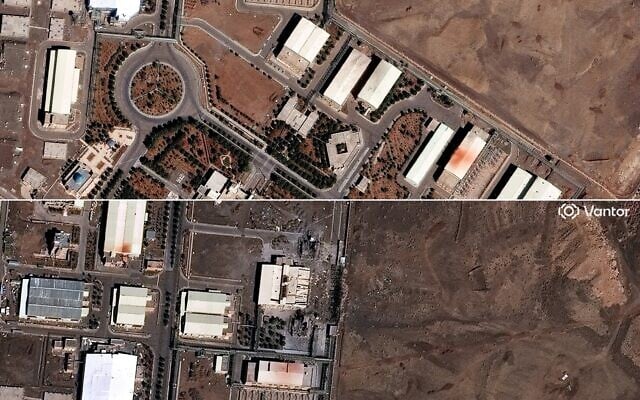
(COMBO) This combination of pictures created on March 2, 2026 using handout satellite images courtesy of Vantor shows a view of the Natanz nuclear complex facility near Natanz, Isfahan province, Iran, on March 1, 2026 (top) and on March 2, 2026, with damage observed on several buildings. (Satellite image ©2026 Vantor/AFP)
The UN nuclear watchdog, IAEA, says facilities housing nuclear material in Iran have suffered no damage in the recent US-Israeli strikes and there is no risk of a radiation leak.
“Based on analysis of latest available satellite imagery, IAEA sees no damage to facilities containing nuclear material in Iran and therefore no radiological release risk at this time,” the agency says on X.
Near the Natanz site near the central city of Isfahan, “damage is visible at two buildings” and there is “no additional impact detected” after “damage at entrances” reported yesterday, it says.
IAEA inspectors have had no access to the key Natanz site since it was targeted by bombings in June during the 12‑day war with Israel.
The IAEA reports “no impact at other nuclear sites, including Bushehr” in the southeast.
IAEA Director General Rafael Grossi repeats his call for “utmost restraint” in the conflict to avoid a radiation threat.
Hezbollah says its fighters engaged in clashes with Israeli troops in Lebanon
Hezbollah says its fighters are engaged in “direct” clashes with Israeli forces in the southern Lebanese town of Khiam, located about six kilometers from the border.
This is the first claim of a direct confrontation between the two sides since the Iran-backed terror group joined the war on Monday.
Hezbollah says in a statement that “after monitoring the movements of an Israeli enemy army force that tried to advance” inside the town of Khiam, “the fighters of the Islamic resistance detonated an explosive device and engaged in direct clashes with the force.”
US embassy tells Americans to leave Iraq now
The US embassy in Baghdad tells its nationals that they should leave Iraq immediately.
“US citizens in Iraq are strongly encouraged to depart as soon as they are safely able to do so, and shelter in place until such time as conditions are safe to depart,” the embassy says on X. “If safe to do so, Americans should leave Iraq now.”
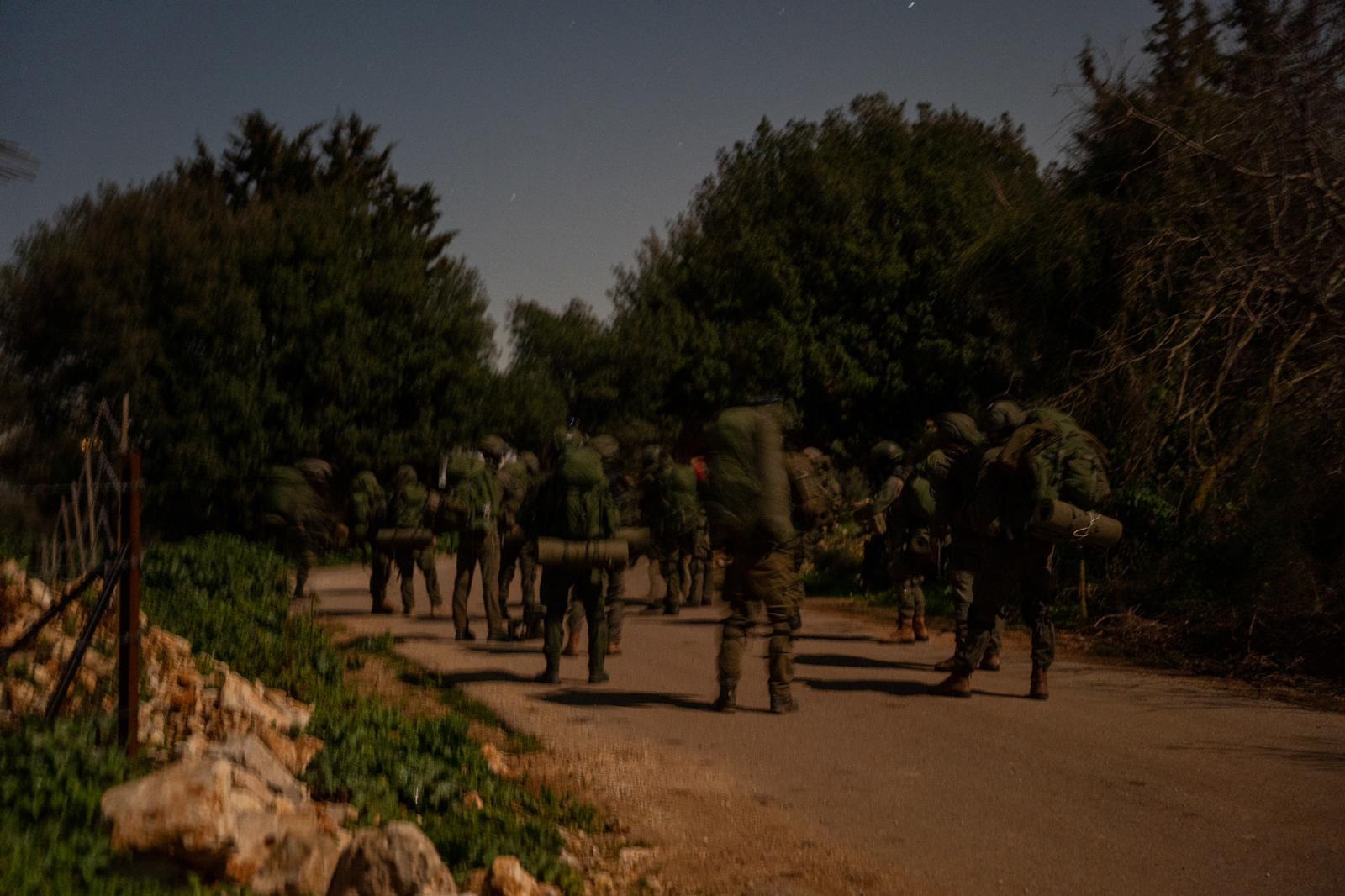
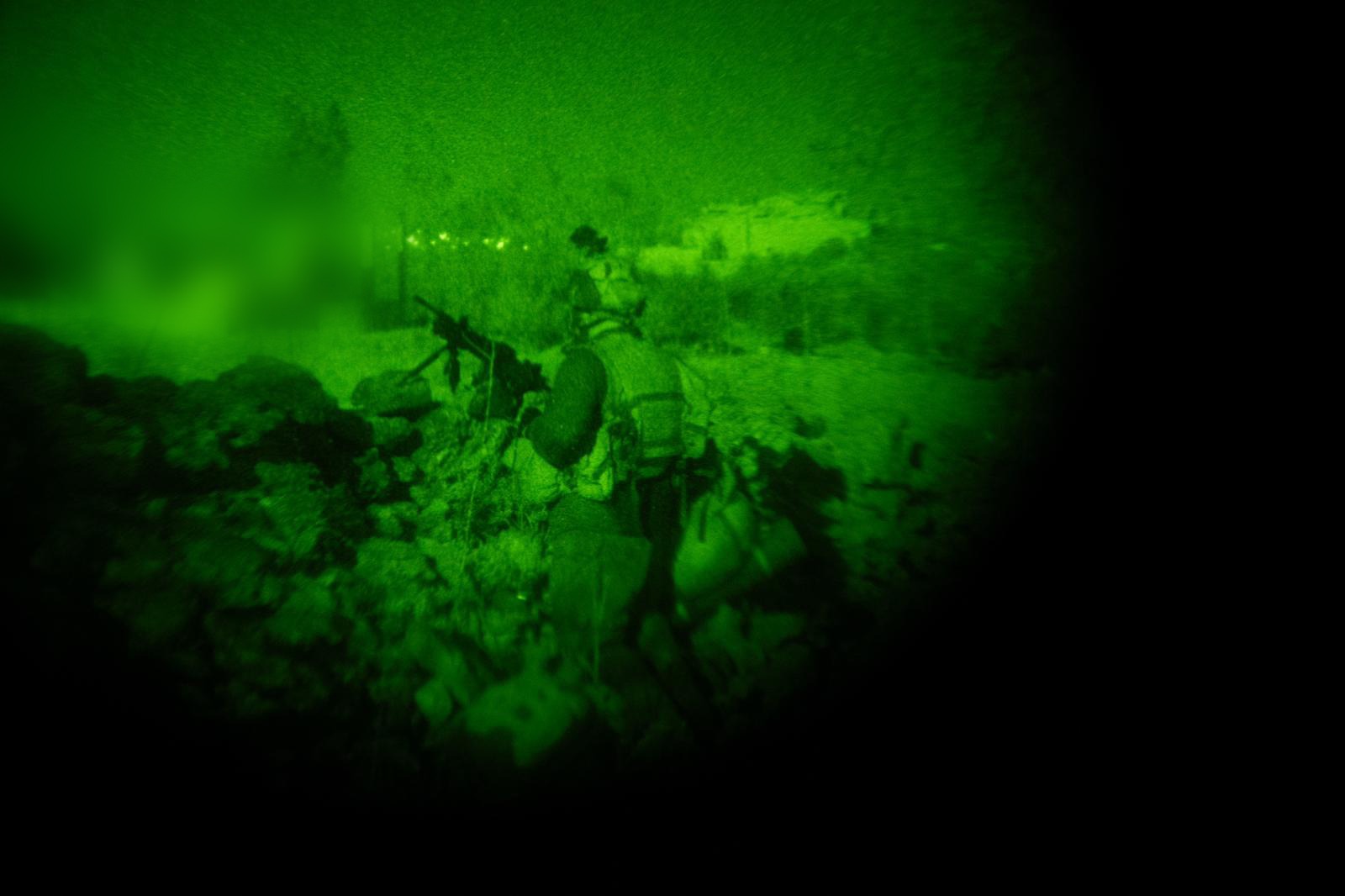
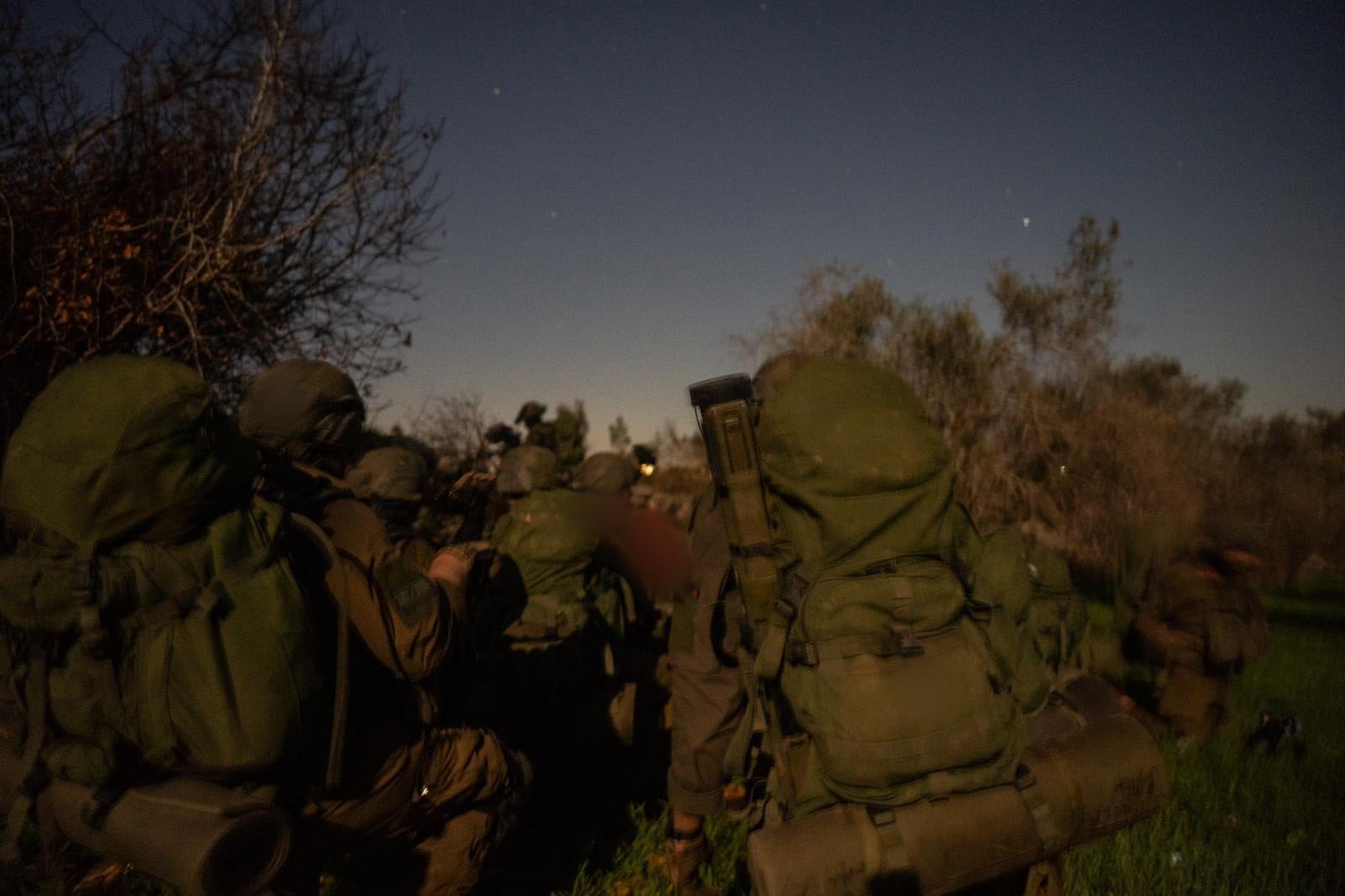
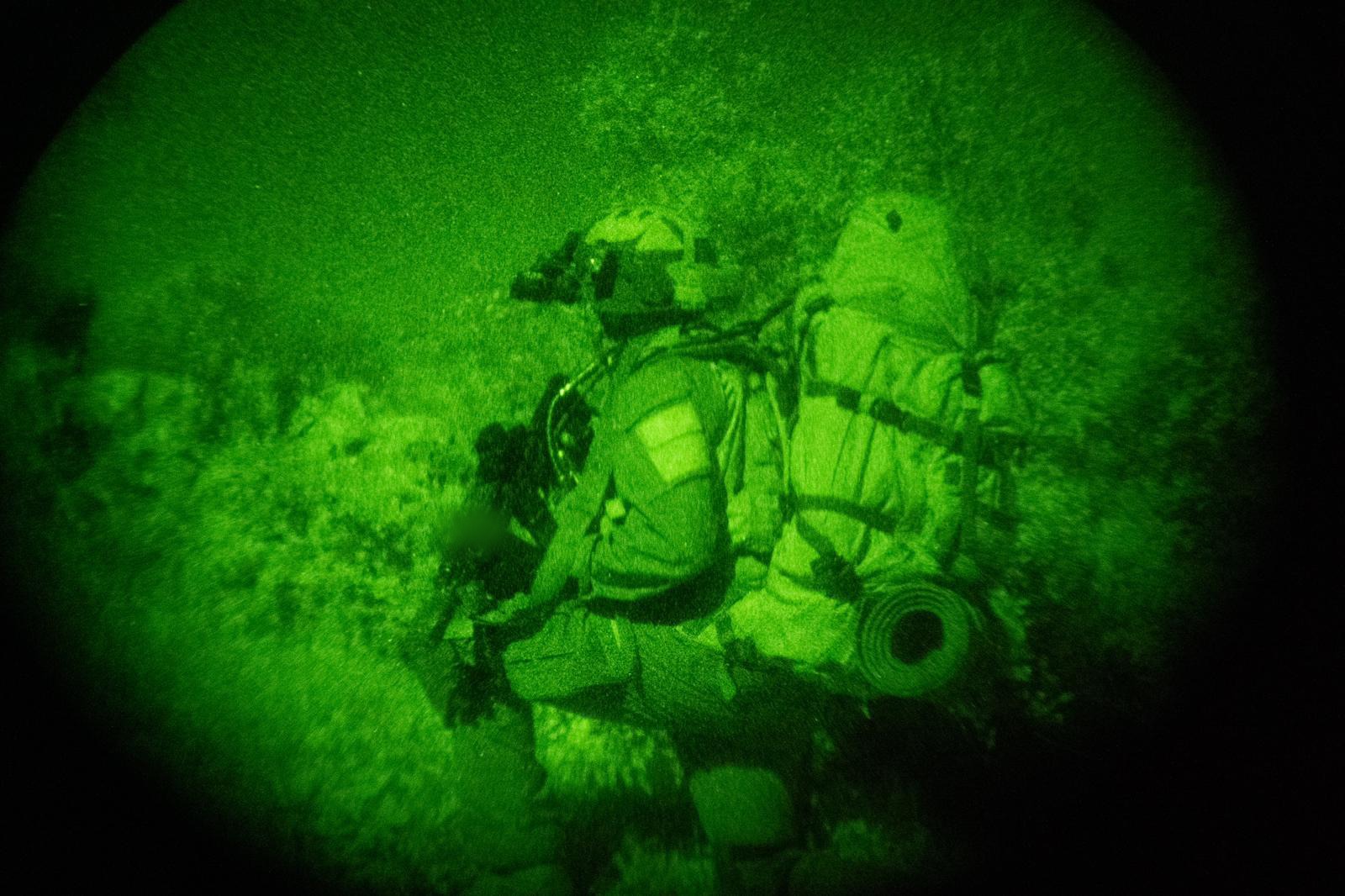
IDF airs footage of its new ‘forward defensive positions’ in southern Lebanon
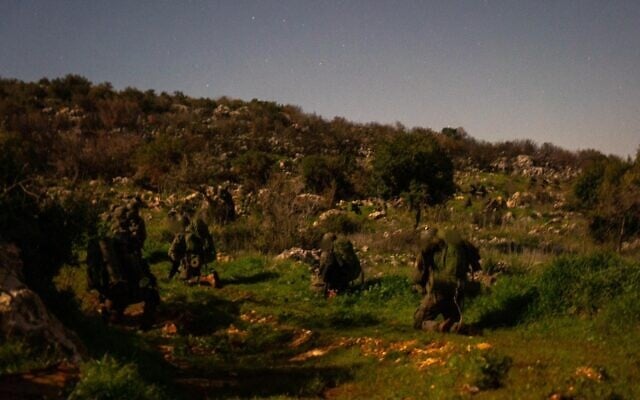
Troops of the 300th "Baram" Regional Brigade operate in southern Lebanon, in a handout photo issued by the military on March 4, 2026. (Israel Defense Forces)
The IDF publishes footage of its new deployment in southern Lebanon, after Hezbollah began attacking Israel.
Troops have pushed deeper into southern Lebanon in recent days, with the IDF saying it has assumed “forward defensive positions to establish an additional defensive layer to remove the threats to the residents of northern Israel.”
The 146th Reserve Division is deployed to the western portion of southern Lebanon, the 91st “Galilee” Regional Division is operating in the east, and the 210th “Bashan” Regional Division is operating in the Mount Dov area, the army says.
The IDF says the forces include infantry, armored and combat engineering troops.
Troops of the 91st “Galilee” Regional Division operate in southern Lebanon, in a video issued by the military on March 4, 2026. (Israel Defense Forces)
Hezbollah leader to speak at 9 p.m., terror group says
The head of the Lebanese terror group Hezbollah, Naim Qassem, is expected to give a speech at 9:00 p.m. local and Israel time (1900 GMT) today, the Iran-backed movement says, his first since the start of the war in the Middle East.
He had been slated to deliver an address on Saturday, on the first day of US-Israeli attacks on Iran, but it was postponed.
UK withdraws some staff from Bahrain embassy as a precaution
Britain says it has temporarily withdrawn some staff and their dependents from its embassy in Bahrain as a precautionary measure, as the US steps up its military campaign against Tehran.
The embassy in Bahrain continues to operate, the government adds.
No injuries reported in latest Iranian salvo; IDF: 1 missile downed, 2nd fails to reach Israel
There are no reports of injuries following the latest Iranian ballistic missile fire on central Israel, medics say.
One missile was intercepted by air defenses while a second failed to reach the country or was intercepted outside of Israel’s borders, according to preliminary military assessments.
The IDF Home Front Command says civilians in areas where sirens sounded can now leave bomb shelters, but should still remain close to them.
Lebanon says Israeli strikes this week have killed 72 people, displaced over 83,000
Israeli strikes on Lebanon have killed 72 people and displaced more than 83,000 since the start of a new round of fighting between Israel and Hezbollah, Lebanese officials say.
In a statement, the health ministry says “the toll of the Israeli aggression since dawn on Monday… has risen to 72 martyrs and 437 wounded,” while the minister of social affairs announces that the number of displaced in official shelters is 83,847.
Israel is carrying out airstrikes on multiple areas of Lebanon after the Iran-backed terror group began launching rockets and drones towards it on Monday in retaliation for the US and Israeli attack that killed Iran’s supreme leader.
CENTCOM airs footage of US strikes on Iran missile lauchers
The US Central Command publishes new footage showing American airstrikes on Iranian missile launchers in Iran, which have been used in attacks on Israel and Gulf states amid the conflict.
“While the Iranian regime indiscriminately targets civilians with missiles and drones, US forces continue to aggressively hunt and destroy Iranian missile launchers with precision,” CENTCOM says.
While the Iranian regime indiscriminately targets civilians with missiles and drones, U.S. forces continue to aggressively hunt and destroy Iranian missile launchers with precision. pic.twitter.com/1RIhMcg0Jm
— U.S. Central Command (@CENTCOM) March 4, 2026
Sirens blare in Tel Aviv, center amid barrage from Iran
Sirens sound in Tel Aviv and across central Israel amid Iran’s latest ballistic missile attack.
Civilians in areas where sirens are sounding are instructed to enter bomb shelters until further notice, as the IDF says it is working to shoot down the projectiles.
Lebanese army arrests 27 for weapons possession as Hezbollah military activity banned
The Lebanese army says it has arrested 27 people in the past two days for “illegally possessing weapons and ammunition,” following a government decision to ban Hezbollah’s military activities.
In a statement, the army says troops at its checkpoints “detained over the past two days 26 Lebanese nationals and one Palestinian in several areas for illegally possessing weapons and ammunition.”
It adds that the move is part of “exceptional measures to maintain security and prevent armed displays in various regions.”
The Lebanese state banned the military activities of Hezbollah on Monday after the Iran-backed terror group launched rockets towards Israel in retaliation for the killing of the Islamic Republic’s supreme leader.
Missile launch from Iran detected; sirens expected in central Israel
After a lull of some three hours, the IDF says it had detected a new launch of ballistic missiles from Iran.
Sirens are expected to sound in central Israel shortly.
Germany warns US, Israel that it’s ‘illusory’ to think military force alone can resolve conflicts
German Defense Minister Boris Pistorius says it is “illusory” to think that conflicts in the Middle East can be resolved “by military force and unilateral action alone.”
“We must emphasize this repeatedly to our American and Israeli friends, and we will continue to do so,” Pistorius tells the German parliament.
China says it will send special envoy to mediate in US-Israel-Iran war
China will send a special envoy to mediate in the Middle East, Foreign Minister Wang Yi says, as the war triggered by US-Israeli strikes on Iran continues its regional spread.
Beijing is a close partner of Iran and has said it backs Tehran in defending its sovereignty, while urging the United States and Israel to cease their strikes.
China “will send a special envoy on Middle East issues to regional countries for mediation,” Wang says during a call with his Saudi Arabian counterpart Prince Faisal bin Farhan, according to a readout by Beijing.
The statement does not name the envoy or give details about which countries they will visit.
Beijing “has always been a force for peace and is willing to continue playing a constructive role,” Wang says.
“China strongly urges all parties to… return to dialogue and negotiations as soon as possible, and prevent the further escalation of tensions,” he adds.
Iran will run out of ballistic missiles within days if it keeps firing at current rate — Western officials
Western officials, speaking on condition of anonymity to discuss intelligence matters, say Iran has several days’ worth of ballistic missiles if it continues firing at the current rate.
One senior official says the rate of Iranian missile strikes is declining due to US and Israeli success at taking out launch sites, but says Iran may be holding back some of its stocks.
A second official says it’s “definitely an issue” that countries targeted by Iran are going through their defensive missiles, and they will have to carefully manage their own stocks.
Iran FM says strikes targeted US interests, not Qatar; Doha rejects claim
Iran’s Foreign Minister Abbas Araghchi has told his Qatari counterpart Sheikh Mohammed bin Abdulrahman al-Thani that Iranian missile attacks were directed at US interests and not at Qatar.
Qatar’s top diplomat “categorically rejected” that claim and called for an immediate halt to Iran’s attacks, the Qatari Foreign Ministry says on X.
Sheikh Mohammed bin Abdulrahman says his country will confront any aggression with its “right to self-defense,” stressing that Doha has always been inclined towards dialogue and diplomacy conducted in good faith.
Maersk halts cargo bookings for Gulf states until further notice
Maersk says it is temporarily suspending most cargo bookings in and out of the United Arab Emirates, Oman, Iraq, Kuwait, Qatar, Bahrain and Saudi Arabia until further notice.
The Jeddah and King Abdullah ports in Saudi Arabia and the Salalah port in Oman remain operational while the shipping group is also still accepting cargo to and from Jordan and Lebanon.
US forces have struck or sunk more than 20 Iranian ships, military says
US forces have struck or sunk more than 20 Iranian ships since the conflict with Tehran began last week, the US Central Command says.
NYT: Iran has damaged at least 7 US military communication sites across Mideast
Iranian strikes between Saturday and Monday damaged structures that are either part of or adjacent to US military communication radar systems in at least seven sites throughout the Middle East, The New York Times reports, citing an analysis it conducted of videos and satellite images.
The sites are located in Qatar, Bahrain, Kuwait, Saudi Arabia and the United Arab Emirates.
US says it killed leader of Iranian unit that tried to assassinate Trump
US forces have killed the leader of an Iranian unit that tried to assassinate US President Donald Trump, Pentagon chief Pete Hegseth says.
“Iran tried to kill President Trump, and President Trump got the last laugh,” Hegseth tells a news conference at the Pentagon.
He says the United States has known “for a long time that Iran had intentions on trying to kill President Trump and or other US officials.”
Targeting those behind that effort was not the main focus of US operations, and Trump never raised the issue, Hegseth says, after reports that the assassination risk was one factor in the president’s decision to launch the war.
“I ensured, and others ensured, that those who were responsible for that were eventually part of the target list,” Hegseth adds, without providing further details.
American officials have previously accused Iran of seeking to assassinate Trump to avenge the death of Iranian general Qassem Soleimani, who was killed on the US president’s orders in a 2020 drone strike in Iraq.
Senior Air Force officer says Israeli strikes have killed thousands of Iranian troops
A senior Israeli Air Force officer says Israel’s strikes in Iran have killed thousands of Iranian soldiers amid the ongoing conflict.
“In the past two days, we have killed thousands of Iranian forces,” says Col. “Aleph,” the commander of the Ramat David Airbase — identified only by his first initial in Hebrew — in a video published by the military.
The airbase commander says he participated in the latest wave of strikes on a massive Iranian military compound in eastern Tehran.
“Seconds before I dropped the bombs, I looked right and left, and saw dozens of fighter jets beside me. They’re flying freely, dropping hundreds of tons of precise munitions and destroying the targets,” he adds.
Israel says it targeted major Iranian military HQ with 250 bombs dropped by 100 jets
The Israeli Air Force says it carried out “large-scale” airstrikes in Tehran targeting a massive Iranian military compound, which housed headquarters and personnel from across Iran’s security apparatus.
The strikes carried out by over 100 fighter jets on the compound in eastern Tehran were completed a short while ago, the IDF says.
More than 250 bombs were dropped on the compound and the headquarters in it, according to the military.
At the complex, the IDF says it struck the headquarters of Iran’s Islamic Revolutionary Guard Corps, the IRGC Quds Force, intelligence directorate, Basij paramilitary force, Iran’s cyber unit, the special forces unit of Iran’s internal security forces, and a “protest suppression” unit of the internal security forces.
“The headquarters were struck while personnel of the Iranian terror regime responsible for managing the campaign, advancing terror plans against the State of Israel and countries in the region, and suppressing Iranian civilians were operating from them,” the military says.
צה"ל השלים תקיפה נרחבת לעבר מתחם צבאי רחב היקף של משטר הטרור ובו מפקדות וחיילים של כלל מערכת הביטחון האיראנית
לכל הפרטים:https://t.co/DeX5vtREL3 pic.twitter.com/HSnpLCriS3
— צבא ההגנה לישראל (@idfonline) March 4, 2026
Iran’s Larijani: Trump, ‘with Netanyahu’s clownish antics,’ dragged US into ‘unfair war’
Iran’s security chief Ali Larijani says US President Donald Trump dragged the American people into “an unfair war” with Iran.
“Mr. Trump, with Netanyahu’s clownish antics, dragged the American people into an unfair war with Iran,” Larijani posts on X.
Oil tanker traffic through Strait of Hormuz down 90%, trade monitor says
Oil tanker traffic in the Strait of Hormuz has plunged by 90% since the outbreak of US-Israeli attacks on Iran, the energy market intelligence firm Kpler says on X.
Iranian military officials have said they have completely choked off traffic through the waterway that a fifth of the world’s crude oil supplies transit, but Kpler says some are risking the trip.
“Unlike several other vessel segments where movements have largely ceased, some tankers are still traveling east and west through the strait, with a number of voyages occurring under AIS blackouts,” says Kpler Principal Freight Analyst Matt Wright, referring to the marine traffic tracking system.
Turkey summons Iranian envoy to protest ballistic missile heading toward airspace
Turkey summons the Iranian ambassador to Ankara to its foreign ministry to convey its protest and concerns over a ballistic missile fired from Iran that was heading towards its airspace, a Turkish diplomatic source says.
The Turkish Defense Ministry said in a statement Wednesday that a ballistic missile fired from Iran and heading into Turkish airspace after passing Syria and Iraq was destroyed by NATO air and missile defense systems in the eastern Mediterranean Sea, causing no casualties.
Almost half of Iran’s missiles, drones used in current war have targeted the UAE, data shows
Almost half of the missiles and offensive drones fired by Iran in the current conflict have targeted the United Arab Emirates, the American Jewish Committee says, citing estimates based on data from the Institute for National Security Studies.
Nearly 50% of the missiles and UAVs fired by the Iranian regime have been aimed at the UAE.
Tehran’s actions threaten U.S. partners across the region and put broader Middle East stability at risk. pic.twitter.com/s581ZmMAjl
— American Jewish Committee (@AJCGlobal) March 3, 2026
IDF says F-35I struck a loaded Iranian missile launcher near Kermanshah today
An armed Iranian ballistic missile launcher in the Kermanshah area in western Iran was destroyed by an Israeli Air Force F-35I fighter jet today, the military says.
The IDF publishes footage of the strike.
“The Israeli Air Force continues to strike missile launch sites and missile launchers in order to remove the threat posed to the State of Israel,” the military adds.
תיעוד מיוחד ממטוס קרב מסוג ״אדיר״ (F-35i): הושמד משגר טעון של משטר הטרור האיראני במערב איראן
בתקיפה שבוצעה על ידי מטוס קרב מסוג ״אדיר״ (F-35i) במרחב כרמאנשה שבמערב איראן, הושמד משגר טעון עם טיל קרקע-קרקע.
חיל-האוויר ממשיך לפגוע באתרי השיגור ומשגרי הטילים על מנת להסיר איומים על… pic.twitter.com/Br9dIQKIMC
— Israeli Air Force (@IAFsite) March 4, 2026
War expected to cost $3 billion per week if current limits on economy persist — Finance Ministry
The cost to Israel’s economy from the war with Iran is estimated to reach NIS 9.4 billion ($3 billion) per week if restrictions imposed nationwide remain in place, the Finance Ministry says.
On Monday, following another assessment amid the conflict with Iran, the IDF Home Front Command extended nationwide restrictions until Saturday night. The restrictions prohibit all gatherings, educational activities and arrival to workplaces, except for essential businesses. The guidelines limit travel to work and force employees to work from home, while schools remain shut.
Finance Ministry Director-General Ilan Rom has sent a letter to Home Front Command chief Maj. Gen. Shai Klapper to ask to ease restrictions and move to limited activity to allow for a gradual, partial reopening of the economy as early as tomorrow.
“There is no dispute about the need to preserve a defense policy adapted to the security situation, but at the same time, the closure of the economy on a broad scale carries heavy economic costs,” says Rom.
“We need a solution that provides a response to both the security needs of the home front and the needs of the economy, after two and a half years in which the economy has been paying a heavy economic price in light of the increase in security needs and the consequences of the [Hamas] war.”
IDF general says Air Force special forces conducting ‘extraordinary’ operations in Iran war
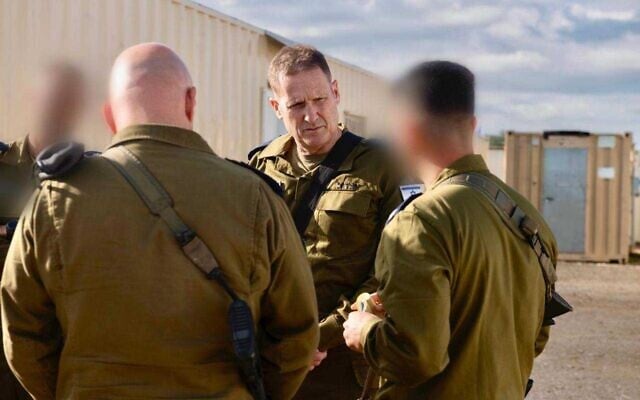
IAF chief Maj. Gen. Tomer Bar speaks to reservists at an Iron Dome battery in northern Israel, February 5, 2026. (Israel Defense Forces)
Israeli Air Force chief Maj. Gen. Tomer Bar says that Israeli special forces have been conducting “extraordinary” operations during the ongoing conflict with Iran.
“The troops of the air force’s special units are currently carrying out extraordinary missions that can spark one’s imagination,” Bar writes in a missive to soldiers of the IAF.
Bar does not elaborate further on the nature of the operations or where they were conducted.
Poll: 93% of Jewish Israelis back Iran operation, vs 26% of Arabs; majority support toppling regime
An overwhelming majority of Jewish Israelis support the ongoing US-Israeli military campaign against Iran, according to new data from the Israel Democracy Institute, with backing far lower among Arab citizens.
The survey finds 93% of Jewish respondents support Operation Roaring Lion, compared with just 26% among Arab respondents, for an overall support level of 82%.
Among Jewish respondents, 57% say the operation should continue not only until Iran’s nuclear and ballistic capabilities are eliminated but also until the Islamic Regime is overthrown, while 36% say it should end after only the more limited objectives are achieved.
The poll also finds 74% of Jews trust Prime Minister Benjamin Netanyahu to manage the operation well, compared with 16% among Arab respondents.
Confidence that Israelis are protected from Iranian attacks is similarly divided: 74% of Jews say they feel fairly or very protected, versus 15% of Arabs.
The survey also finds that most Jewish respondents believe US President Donald Trump considers Israel’s security a key factor in his policy, with 64% expressing that view.
The survey was conducted online on March 2-3, 2026, with 500 respondents polled Hebrew and 99 in Arabic, constituting a nationally representative sample of Israel’s adult population. The maximum sampling error is 4% at a confidence level of 95%.
Suspected drone infiltration sirens sound in Galilee, Golan
Fresh sirens warning of a suspected drone infiltration sound in the Galilee Panhandle and the Golan Heights.
The alerts are activated in several communities near the Lebanon border.
Hezbollah has launched several drones at northern Israel today, according to the IDF.
Hegseth indicates US’s Gulf allies are ‘going on offense’ against Iran
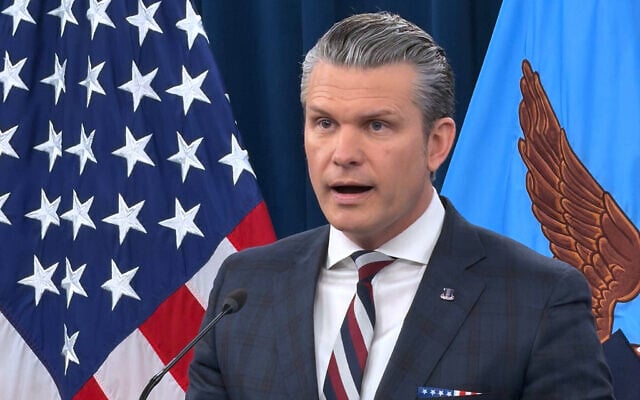
US War Secretary Pete Hegseth speaks during a press briefing at the Pentagon in Washington, March 4, 2026. (AP/Konstantin Toropin)
US War Secretary Pete Hegseth intimates that the US’s Gulf Arab allies might join in the attacks on Iran, saying they are “going on offense.”
“What you’re seeing right now is a response in the region to the belligerence of Iran,” he says.
“On different levels, they’re reaching out to us,” he says, “whether they’re going on offense, which they are, whether they’re giving us additional access, basing and overflight, we’re working very closely and collaborating with them.”
He also says that none of the US objectives in Iran are “premised on the support or arming of any particular force,” in response to a question about reports that the US is planning to arm an Iranian Kurdish uprising.
Katz: Iran operation was originally planned for mid-2026, was moved up due to developments
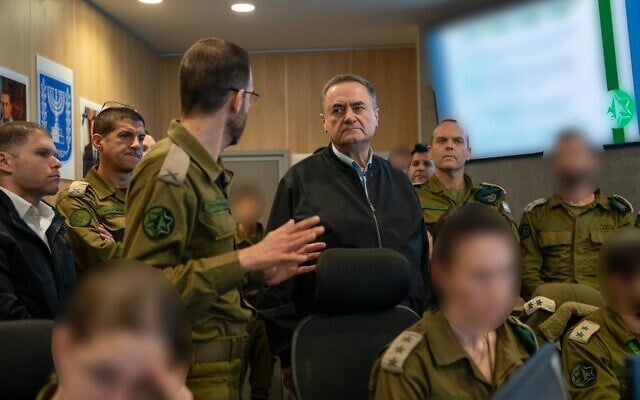
Defense Minister Israel Katz, center, visits the IDF's Intelligence Directorate during Operation Roaring Lion, March 4, 2026. (Defense Ministry)
During a visit to the IDF’s Intelligence Directorate, Defense Minister Israel Katz says Israel accelerated its planned military campaign against Iran from mid-2026 to February due to evolving circumstances and new intelligence capabilities.
“An operation had originally been planned for the middle of the year,” Katz tells intelligence officers, adding that “there arose a need to bring everything forward to February,” due to “developments and circumstances,” including the weeks-long anti-regime protests in Iran.
“You provided enormous progress on the intelligence front, day by day and hour by hour,” Katz continues, saying that the Intelligence Directorate’s work helped enable coordination with the United States and the “fantastic opening strike and what followed.”
Intelligence Directorate chief Maj. Gen. Shlomi Binder says the IDF’s intelligence arm is working “24/7” to provide warning and operational intelligence across multiple fronts as Israel continues its campaign against Iran.
“We are providing intelligence for decision-making and, above all, intelligence for victory over the enemy,” Binder says, adding that thousands of personnel are working to support ongoing operations.
Iran postpones state funeral for Khamenei, citing expected turnout, not security situation
Iran announces that a state funeral for supreme leader Ayatollah Ali Khamenei, which had been planned for this evening in Tehran, has been postponed “in anticipation of unprecedented turnout,” state television reports.
“The farewell ceremony for the martyred Imam has been postponed. The new date will be announced later,” Iranian television reports after Khamenei was killed at 86 in US-Israeli strikes over the weekend.
This morning, authorities had said a tribute would take place this evening in Tehran before Khamenei’s body is buried in the holy city of Mashhad, where he was from.
Strikes have pummelled Tehran since Saturday, with missiles targeting military and government infrastructure.
Authorities do not link the postponement to the security situation.
It is partly down to “the expected participation of millions of people and the need to provide the proper infrastructure” for such a crowd, Mohsen Mahmoudi, head of Tehran’s Islamic Development Coordination Council, the body organizing the event, tells state TV.
Saudi Aramco’s Ras Tanura target of attempted drone attack, defense ministry says
Saudi Aramco’s Ras Tanura, which houses its largest domestic refinery and a key crude export terminal, was targeted by an attempted drone attack today, a Saudi defense ministry spokesperson says on X, two days after a drone attack on the complex shut the refinery.
The attack resulted in no damage, the spokesman says. The Saudi state news agency also cites an energy ministry source as saying that there was no disruption to supplies.
Three separate sources tell Reuters that Ras Tanura was struck, but do not provide details on any damage.
Saudi Arabia and other regional Gulf oil producers, such as the United Arab Emirates, Kuwait and Iraq, have been unable to move oil through the Strait of Hormuz since the US and Israel launched attacks on Iran on Friday.
Hundreds of ships have anchored on either side of the Strait as a precaution, and Iran has said it will fire on any vessel that attempts to transit the shipping choke point.
Ras Tanura sits on Saudi Arabia’s eastern coast on the Gulf. Aramco is attempting to reroute some of its crude exports to the Red Sea to avoid the Strait, sources have said.
Aramco does not immediately respond to an emailed request for comment.
Iran threatens to target Israeli embassies worldwide if Tehran’s Beirut embassy is targeted
Iran will target Israeli embassies worldwide if the Jewish state attacks the Iranian embassy in Beirut, a spokesman for Tehran’s armed forces is cited as saying by Iranian media.
Special flight set to return many senior doctors, nurses and other medical workers to Israel
The Health Ministry reports that a special rescue flight is expected to return approximately 100 senior doctors, approximately 80 nurses and additional medical workers from Athens to Israel tomorrow.
Among those returning to Israel are surgeons, intensive care physicians and anesthesiologists.
About 1,145 medical staff across professions are abroad, including 567 doctors (out of some 35,000 licensed doctors), 70 interns, 197 nurses, 139 health professionals, 27 staff members, 37 administrators and 107 other medical personnel.
The ministry has already arranged for dozens of medical staff to return on ZIM ships, with many more expected to return, as needed and depending on the situation.
IDF says Israeli Air Force has dropped over 5,000 bombs on Iran in current campaign
The Israeli Air Force has dropped over 5,000 bombs during strikes in Iran since the start of the conflict, the military says.
The military says that IAF fighter jets “continue to deepen air superiority throughout Iran, with an emphasis on the Tehran area.”
Alongside the update, the IDF publishes a video showing a strike on an Iranian air defense system in the Tehran area.
תיעוד נוסף מעין הטיל: חיל-האוויר תקף עם יותר מ-5,000 חימושים באיראן מתחילת המבצע
מטוסי קרב של חיל-האוויר ממשיכים להעמיק את העליונות האווירית בכל רחבי איראן, בדגש על מרחב טהרן.
צה"ל חושף כעת תיעוד נוסף מתוך עין הטיל, מתקיפה שבוצעה להשמדת מערכת הגנה של משטר הטרור האיראני בטהרן. pic.twitter.com/bs1CuQInO8
— Israeli Air Force (@IAFsite) March 4, 2026
Hegseth salutes Israel’s ‘unmatched skill and iron determination’
US War Secretary Pete Hegseth speaks during a press briefing at the Pentagon in Washington, March 4, 2026. (AP/Konstantin Toropin)
US Defense Secretary Pete Hegseth praises Israel’s conduct of the war with Iran, saying its mission is being carried out with “unmatched skill and iron determination.”
He calls Israel a “steadfast partner,” and says it’s a “breath of fresh air” to fight with such a capable ally.
“We salute your courage and your contribution,” says Hegseth.
He stresses that “this is not a ‘mission accomplished situation,'” referencing the infamous photo of former US president George W. Bush on an aircraft carrier weeks into the 2003 war in Iraq.
“We’ve taken control of Iran’s airspace and waterways without boots on the ground,” he says. “We control their fate.”
He accuses the press of wanting to make the US president look bad by focusing on Iranian drones that make it through air defenses.
Hegseth pledges that Iran will never possess a nuclear bomb.
He stresses that the US has put defending its troops “ahead of everything else.” He says that before that war, 90% of US troops in the region were moved outside the range of Iranian fire.
Knesset to resume limited legislative activity tomorrow
The Knesset will resume some legislative activity tomorrow, after suspending nearly all committee meetings and plenum sessions following the outbreak of war with Iran over the weekend.
Following a situational assessment with senior Knesset officials as well as coalition and opposition representatives, Knesset Speaker Amir Ohana announces that committee discussions will be held on war-related legislation, budgetary matters and necessary meetings of the Foreign Affairs and Defense Committee.
Committee meetings will only be held in chambers that serve as protected spaces or adjacent to them, while visits and tours will remain curtailed.
A missile alert in Jerusalem forced several members of the Foreign Affairs and Defense Committee to take shelter on Monday, interrupting a special closed session in which they were receiving an operational intelligence review of the war, as well as holding a vote approving the declaration of a “special situation” on the home front.
During the alert, members of the committee from both the coalition and opposition took shelter in the chambers of the Diaspora Affairs Committee, which is reinforced as a bomb shelter. The lawmakers snapped a selfie together in a show of wartime unity, then posted it to social media.
No injuries reported in more concurrent Iran-Lebanon barrages; missile fragments said to land in Jerusalem area
There are no reports of injuries following the latest Iranian ballistic missile fire on Israel, medics say.
Missile fragments reportedly landed in the Jerusalem area.
Rockets were also launched from Lebanon, setting off sirens in several communities near the border. No injuries are reported there either.
The IDF Home Front Command says civilians in areas where sirens sounded can now leave bomb shelters, but should still remain close to them.
IDF says 2 troops moderately injured today from anti-tank fire in southern Lebanon
Two IDF soldiers from the 401st Armored Brigade were moderately wounded in a Hezbollah anti-tank missile attack in southern Lebanon earlier today, the military announces.
Hezbollah earlier claimed to have targeted a Merkava tank in the village of Houla.
The IDF says the two soldiers were taken to a hospital in moderate condition and their families were notified.
The military in the past two days advanced deeper into southern Lebanon, saying it assumed “forward defensive positions to establish an additional defensive layer to remove the threats to the residents of northern Israel,” after Hezbollah began to launch attacks.
Sirens sound in Jerusalem, Tel Aviv and across central Israel; civilians instructed to enter shelters
Sirens sound in Jerusalem, Tel Aviv and across central Israel amid Iran’s latest ballistic missile attack.
Alerts were also activated in the Galilee Panhandle due to rocket fire from Lebanon.
An early warning is also issued across northern Israel as the IDF detects more ballistic missile fire from Iran.
Civilians are instructed to enter shelters.
Top US general: Iran missile launches down 86% from first day of conflict
US Chairman of the Joint Chiefs of Staff Gen. Dan Caine describes a significant decline in Iranian missile and drone launches since the start of Operation Epic Fury during a press conference at the Pentagon alongside Defense Secretary Pete Hegseth.
“Iran’s theater ballistic missile shots fired are down 86% from the first day of fighting, with a 23% decrease just in the last 24 hours… Their one-way attack drone shots are down 73%,” Caine says.
Caine says the three military goals of the operation are currently to neutralize Iran’s ballistic missile threat, degrade or destroy the Iranian navy, and prevent Iran from quickly rebuilding its military capabilities.
The general says the US has struck more than 2,000 targets during the campaign, and that over 20 Iranian naval vessels have been destroyed, largely neutralizing Iran’s main naval presence in the theater.
“This progress has allowed CENTCOM to establish localized air superiority across the Southern flank of the Iranian Coast,” he continues, saying, “We will now begin to expand inland, striking progressively deeper into Iranian territory,” adding that the military is transitioning from long-range strikes to closer-range precision strikes.
Caine stresses that the US military has enough precision munitions to sustain the operation, but says he will not disclose quantities for security reasons.
New barrage from Iran detected; sirens expected to sound
The IDF says it had detected a new launch of ballistic missiles from Iran.
Sirens are expected to sound in northern Israel shortly.
Meanwhile, sirens warning of a suspected drone infiltration sound in the Jordan Valley area of the West Bank.
Hegseth says it was a US submarine that sunk Iranian warship in Indian Ocean: ‘Quiet death’
US Defense Secretary Pete Hegseth takes credit for the sinking of an Iranian warship by a submarine near Sri Lanka.
“Yesterday in the Indian Ocean, an American submarine sunk an Iranian warship that thought it was safe in international waters,” he says.
“Instead, it was sunk by a torpedo,” he continues. “Quiet death.”
https://t.co/PiqQpVIrMu pic.twitter.com/Wc1e0B0um7
— Department of War 🇺🇸 (@DeptofWar) March 4, 2026
The IRIS Dena frigate was armed with heavy guns, surface-to-air missiles, anti-ship missiles and torpedoes and could carry a helicopter.
The 180-crew frigate had issued a distress call at dawn. Over 100 are missing.
Iran will “still be able to shoot some missiles,” says Hegseth, “and will still be able to launch one-way attack drones at civilian targets.”
Hegseth: Complete control of Iran’s skies to be achieved within a week; ‘death and destruction from the sky’ will follow
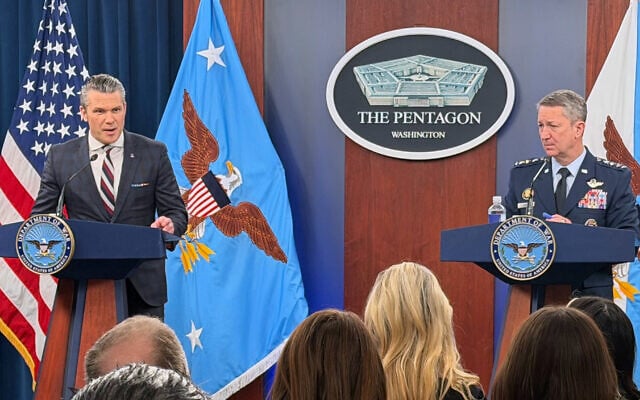
US War Secretary Pete Hegseth and Chairman of the Joint Chiefs of Staff Gen. Dan Caine, speak during a press briefing at the Pentagon, March 4, 2026, in Washington. (AP/Konstantin Toropin)
Within a week, the US and Israel “will have complete control over Iranian skies,” says US Defense Secretary Pete Hegseth in a Pentagon press conference.
“Uncontested airspace,” he says of an effort that began last night.
That means, he says, “we will fly all day, all night, day and night, finding, fixing and finishing the missiles and defense-industrial base of the Iranian military. Finding and fixing their leaders, and their military leaders.”
He says that Iranian leaders will look up and only see US and Israeli airpower, “every minute of every day until we decide that it’s over.”
“Iran will be able to do nothing about it,” he warns.
“Death and destruction from the sky. All day long.”
The US and Israel “are playing for keeps,” he says, without explaining what that means in practice. US pilots “have maximum authorities granted personally by the president and yours truly.” Rules of engagement “are designed to unleash American power, not shackle it.”
“This was never meant to be a fair fight, and it is not a fair fight,” he says. “We are punching them when they’re down, which is exactly how it should be.”
This campaign “has seven times the intensity” of Israel’s June operation against Iran. “More and larger waves are coming; we are just getting started. We are accelerated.”
Once air supremacy is established, the US will begin dropping 500-, 1000- and 2000-pound precision bombs, of which the US has a virtually unlimited stockpile, says Hegseth.
US stockpiles of stand-off guided missiles and Patriot missiles remain “extremely strong,” he says, amid concerns the campaign against Iran could deplete American defenses ahead of a potential war with China.
“We can sustain this fight easily, for as long as we need to,” he says. There has been some concern that air defense of America’s Arab allies could run out amid a concerted Iranian missile and drone assault.
Iran can’t adapt to the new challenges it faces, he argues: “Iran’s senior leaders are dead. The so-called governing council that might have selected a successor are dead, missing, or cowering in bunkers, too terrified to even occupy the same room.”
Lower-level fighters can’t communicate, says Hegseth.
“The Iranian air force is no more,” he boasts. “The Iranian navy rests at the bottom of the Persian Gulf.”
IDF says navy shot down Hezbollah drone this morning
The Israeli Navy shot down a Hezbollah drone launched from Lebanon this morning, the military says.
The IDF publishes footage showing the interception carried out by a Navy warship.
יירוט איומים מכלל הגזרות: ספינת חיל הים יירטה כלי טיס בלתי מאויש ששוגר משטח לבנון
כוחות חיל הים לוקחים חלק מאז תחילת מבצע 'שאגת הארי' במשימת הגנת השמיים, מזהים ומיירטים כלי טיס בלתי מאוישים שמשוגרים לעבר שטח מדינת ישראל pic.twitter.com/RlxoPolIhb
— צבא ההגנה לישראל (@idfonline) March 4, 2026
Hegseth: Iran is ‘toast,’ more US forces on the way

US Secretary of Defense Pete Hegseth delivers a briefing on the war in Iran, on March 4, 2026. (Screenshot/AP)
The US “is winning” in its war on Iran, US Secretary of Defense Pete Hegseth says in a Pentagon press briefing, “devastatingly, decisively, and without mercy.”
Hegseth stresses that only four days of the campaign have gone by, but “metrics are shifting, dust is settling and more forces are arriving.”
“We will take all the time we need to make sure we succeed,” he says, citing the US commander-in-chief, President Donald Trump.
The results of the campaign “have been incredible,” he argues.
Hegseth says that the US is “leading” the campaign. “But when you add the Israeli Defense Forces, a devastatingly capable force, the combination is sheer destruction for our radical Islamist Iranian adversaries.”
Iran is “toast, and they know it,” he says, “or at least, soon enough, they will know it.”
Hegseth stresses that the US and Israel “have only just begun” hunting and degrading Iranian capabilities.
Sirens in Haifa, surrounding area due to rocket fire from Lebanon
Sirens sound in Haifa and the surrounding area following rocket fire from Lebanon.
The alerts are activated in some parts of the coastal city and nearby towns.
Hezbollah has fired several rockets at Israel today, including at the country’s center.
Two injured in concurrent Iranian missile and Hezbollah rocket fire on central Israel
Two people were injured in the concurrent Iranian ballistic missile fire and Hezbollah rocket barrage on central Israel earlier, medics say.
According to Magen David Adom, a man in his 30s was hurt by shrapnel, and another person was wounded by a blast. Both are listed in good condition, MDA says.
Fragments from the Iranian missiles and Hezbollah rockets had impacted at several locations in central Israel.
Rocket launched from Lebanon intercepted over northern Israel
Another rocket launched from Lebanon at northern Israel a short while ago was intercepted by air defenses, the military says.
Sirens had sounded in the Upper Galilee.
NATO condemns Iran’s ‘targeting’ of member country Turkey with ballistic missile fire
NATO condemns Iran’s “targeting” of member country Turkey after Ankara said a missile heading towards its airspace had been destroyed by alliance defence systems.
“We condemn Iran’s targeting of Türkiye. NATO stands firmly with all allies, including Türkiye, as Iran continues its indiscriminate attacks across the region,” NATO spokeswoman Allison Hart says, using the country’s official name.
“Our deterrence and defence posture remains strong across all domains, including when it comes to air and missile defence,” she adds.
Hezbollah claims to have targeted Israeli tank in southern Lebanon; no comment from IDF
The Hezbollah terror group claims to have targeted an Israeli tank in southern Lebanon earlier today.
In a statement, Hezbollah says it targeted a Merkava tank in the village of Houla.
The IDF has not yet commented on the incident.
Lapid: Israel must do what it needs to to protect its civilians, even if it means invading Lebanon
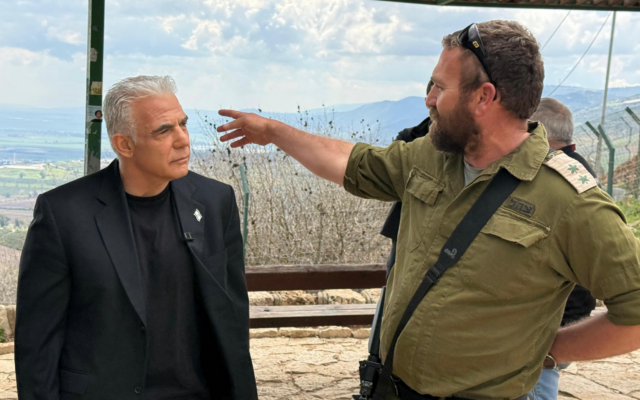
Opposition Leader Yair Lapid speaks with an IDF officer along the northern border with Lebanon, on March 4, 2026. (Yesh Atid)
Israel must take whatever steps are necessary to protect Israelis in the north of the country, even if that involves an invasion of Lebanon, Opposition Leader Yair Lapid declares, following a series of meetings with soldiers and residents along the border.
“We must ensure that the residents of the northern border live in security; they will not have security if Hezbollah sits across the border,” Lapid says. “If this involves creating a sterile zone, let them create a sterile zone. If this involves entering Lebanon, we must enter Lebanon. Hezbollah must be eliminated to provide security to the residents of this area.”
The Israel Defense Forces said Tuesday it had deployed troops deeper into southern Lebanon, beyond the five posts it currently holds, “as part of an enhanced forward defense posture” amid attacks by the Hezbollah terror group.
The expanded deployment came after Iran-backed Hezbollah began launching rockets and drones at northern Israel early Monday in response to Israel’s killing of the Islamic Republic’s supreme leader.
WATCH: Pentagon holds live briefing on progress of the war against Iran; Hegseth: We have only just begun to fight
The Pentagon is holding a briefing on the progress of the US-Israel war against Iran.
US Defense Secretary Pete Hegseth is speaking first, and says that “four days in, we have only just begun to fight.” He is followed by the chairman of the Joint Chiefs of Staff, Gen. Dan Caine.
IDF: Air Force destroyed Iranian air defense and detection systems at Tehran airport
The Israeli Air Force destroyed Iranian air defense and detection systems at Mehrabad Airport in Tehran a short while ago, the military says.
According to the IDF, during the wave of strikes in Tehran, “defense and detection systems used by the Iranian terror regime, which posed a threat to air force aircraft, were destroyed.”
No reports of injuries in latest concurrent Iranian, Hezbollah rocket fire
There are no reports of injuries following the latest concurrent Iranian ballistic missile fire and Hezbollah rocket barrage on Israel, medics say.
Sirens sounded in central Israel due to ballistic missile fire from Iran, and alerts were activated near Haifa in the north due to two rockets fired from Lebanon.
The two rockets launched from Lebanon were intercepted by air defenses, according to the IDF.
Fragments from the Iranian missiles reportedly impacted in central Israel, causing damage.
The IDF Home Front Command says civilians in areas where sirens sounded can now leave bomb shelters, but should still remain close to them.
Schools in Israel to continue with remote learning through end of week
Following the end of the Purim holiday, Israeli schools will continue with distance learning on Thursday and Friday, Education Minister Yoav Kisch announces.
The Education Ministry is “prepared for any scenario, including a hybrid model or a phased return to face-to-face learning, in accordance with updated situation assessments,” Kisch says in a statement, adding that “a final update will be issued at the end of the week upon receipt of a full situational picture.”
Sirens sound across central Israel amid an Iranian ballistic missile attack
Sirens sound across central Israel amid an Iranian ballistic missile attack.
Alerts were also activated near Haifa in northern Israel a short while ago due to more rocket fire from Lebanon.
New Iranian missile launch expected, sirens to sound in central Israel
The IDF says it had detected a new launch of ballistic missiles from Iran.
Sirens are expected to sound in central Israel shortly.
IDF says new wave of strikes being carried out in southern Lebanon
The Israeli Air Force is carrying out a new wave of strikes in southern Lebanon, the IDF announces.
It says further details will be provided later.
Earlier, the IDF issued a wide evacuation warning for southern Lebanon.
No reports of injuries in latest concurrent Iranian missile and Hezbollah rocket fire
There are no reports of injuries following the concurrent Iranian ballistic missile fire and Hezbollah rocket barrage on Israel, medics say.
Sirens sounded in central Israel due to one Iranian ballistic missile and some five rockets launched by Hezbollah. Alerts were also activated in northern Israel due to the rocket fire from Lebanon.
The projectiles were all intercepted, according to the IDF.
The IDF Home Front Command says civilians in areas where sirens sounded can now leave bomb shelters, but should still remain close to them.
Sirens sound across central Israel and in Jerusalem amid an Iranian ballistic missile attack
Sirens sound across central Israel and in Jerusalem amid an Iranian ballistic missile attack.
Alerts were activated a short while before in central Israel following a barrage of some five rockets launched from Lebanon.
Israelis are told to head to shelters.
Amid rocket fire from Lebanon, IDF says sirens to sound again in central Israel due to fire from Iran
The IDF says it had detected a new launch of ballistic missiles from Iran.
Sirens are expected to sound in central Israel in the coming minutes.
Alerts are meanwhile in central Israel due to rocket fire from Lebanon.
Long-range rocket fire from Lebanon sets off sirens in central Israel
Sirens sound in central Israel following long-range rocket fire from Lebanon.
The alerts are activated in Tel Aviv and the surrounding area.
All-clear given without sirens sounding as Iranian missile launch fails to reach Israel
No sirens are expected to sound as the ballistic missile launched by Iran at Israel a short while ago either failed to reach the country or was intercepted outside of Israel’s borders.
The Home Front Command issued an early warning to civilians across central Israel, but now says the incident is over.
Turkey says Iranian ballistic missile entered its airspace, shot down by NATO
A ballistic missile fired from Iran and heading into Turkish airspace after passing Syria and Iraq was destroyed by NATO air and missile defense systems in the eastern Mediterranean Sea, the Turkish Defense Ministry says.
The ministry said in a statement that there were no casualties or injuries in the incident, adding that Turkey reserves the right to respond to any hostile actions against it, while warning parties to refrain from steps that could escalate the conflict.
NYT report: Iran intel operatives signaled openness to talks with CIA to end war
Operatives from Iran’s Ministry of Intelligence signalled openness to the US Central Intelligence Agency (CIA) to talks on ending the war, The New York Times reports, citing officials briefed on the matter.
The offer was made through an unnamed country’s spy agency, the Times says, citing Middle Eastern officials and officials from a Western nation who spoke on condition of anonymity.
The White House and the CIA do not immediately respond to a request for comment.
Officials in Washington are sceptical as to whether Iran or the Trump administration is really ready for an “off-ramp,” at least in the short term, the report adds.
Iran’s ambassador to the United Nations in Geneva yesterday ruled out for now any negotiations with the United States, days after the US and Israel launched joint strikes on his country.
US President Donald Trump said on Tuesday that Tehran wanted to talk, but it was too late, as the United States continued its military operation against Iran.
Sirens expected in central Israel as new Iranian ballistic missile launch detected
After a lull of nearly eight hours, a new launch of ballistic missiles from Iran has been detected by the IDF.
Sirens are expected to sound in central Israel in the coming minutes.
Suspected drone infiltration sets off sirens in Galilee Panhandle
Sirens warning of a suspected drone infiltration sound in the Galilee Panhandle.
The alerts are activated in several communities near the Lebanon border.
Hezbollah has launched several drones at northern Israel today, according to the IDF.
Iran postpones state funeral for Khamenei to unspecified future date
Iran announces that a state funeral for supreme leader ayatollah Ali Khamenei, which had been planned for this evening in Tehran, has been postponed “in anticipation of unprecedented turnout,” state television reports.
“The farewell ceremony for the martyred Imam has been postponed. The new date will be announced later,” Iranian television report, after Khamenei was killed in US-Israeli strikes over the weekend.
IDF plans for 1-2 more weeks of operations in Iran as it aims to degrade regime systematically
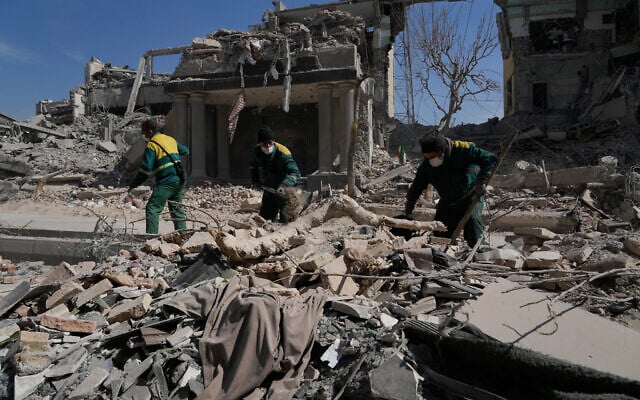
Workers remove the rubble of a police facility struck during the US–Israeli military campaign in Tehran, Iran, March 4, 2026. (AP Photo/Vahid Salemi)
The Israeli military is planning for at least one or two more weeks of operations in Iran, during which it aims to hit thousands more Iranian regime targets, The Times of Israel has learned.
Israel’s goal is a systematic degradation of the Iranian regime and its military sites.
Meanwhile, some officials in the IDF believe that Gulf states — who have been attacked by Iran amid the conflict — will join the campaign offensively.
Currently, the Gulf states are mainly involved defensively, shooting down Iranian ballistic missiles and drones aimed at their countries.
IDF reveals how Israel, US divide strike zones, target types amid Iran conflict
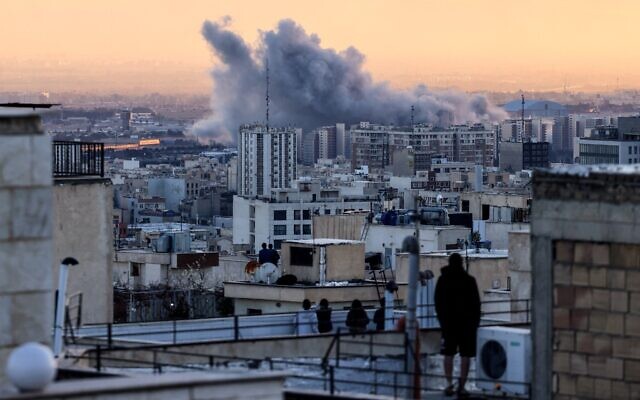
A person stands on the roof of a building looking at a plume of smoke rises after a strike on the Iranian capital Tehran, on March 3, 2026. (Atta Kenare/AFP)
The Israeli military reveals how it is dividing the work with the American military amid the ongoing campaign against Iran, both geographically, by target types and by relative advantage.
Geographically, the Israeli Air Force has been operating against Iranian ballistic missile launchers and other military assets in western and central Iran. This is because Iran fires long-range ballistic missiles at Israel from those areas.
Meanwhile, the American military has been operating against Iranian missile launchers in Iran’s south, as it has used those areas to fire shorter-range missiles on US bases in the Gulf.
For target types, Israel and the US have also split their work. The American military, for example, has taken responsibility for targeting the entire Iranian Navy. Israel has meanwhile focused on other targets, based on relative advantage, such as regime sites in Tehran.
Additionally, the Israeli Air Force has relied heavily on the US military’s aerial refueling capabilities, as the US military has roughly 10 times the IAF’s refueling fleet. Dozens of US refueling tankers have been stationed in Israel amid the conflict.
Israeli military officials describe the conflict as the first full-scale joint war between Israel and the US, following extensive joint planning in recent months.
There are ” joint coordination cells” in both Israel and the US operating amid the campaign, synchronizing intelligence, targets, and defense, according to the IDF. More than 1,000 American troops are stationed in Israel.
“This is a war in English,” a military official says.
IDF Chief of Staff Lt. Gen. Eyal Zamir has meanwhile been speaking with US CENTCOM chief Adm. Brad Cooper daily, according to the military.
Israeli Air Force completes strikes targeting subterranean Hezbollah weapon depots, IDF says
The Israeli Air Force completed a wave of strikes targeting subterranean Hezbollah weapon depots and other assets in Beirut, the IDF says.
The military says that in addition to the underground weapon storage sites, it hit Hezbollah command centers, as well as a site used by Hezbollah to collect intelligence and for “propaganda purposes.”
Ahead of the strikes, the IDF issued evacuation warnings for Lebanese civilians.
צה"ל ממשיך לתקוף בביירות: הותקפו מחסני אמל"ח תת-קרקעים ומפקדות של ארגון הטרור חיזבאללה
צה"ל תקף במהלך היממה האחרונה בביירות והשלים גל תקיפות נוסף נגד תשתיות של ארגון הטרור חיזבאללה.
הותקפו מחסן אמצעי לחימה תת-קרקעי ומפקדות בשימוש ארגון הטרור חיזבאללה.בנוסף, הותקף אתר ששימש את… pic.twitter.com/XJJe52qZfL
— צבא ההגנה לישראל (@idfonline) March 4, 2026
Israel Stroke Society warns against ignoring stroke symptoms as hospital visits fall during war
Citing the significant decrease in hospital arrivals for acute stroke cases since the start of the war with Iran on Saturday, Prof. Ronen Leker, director of the Stroke Center at Hadassah Medical Center, Israel Stroke Society, calls on the public not to wait “as soon as the first worrying signs of a stroke appear.”
Among the signs of a stroke are sudden weakness on one side of the body, speech disturbance and/or a drooping corner of the mouth, blurred vision or sudden loss of vision (usually in one eye), severe dizziness accompanied by loss of balance, and sudden confusion accompanied by difficulty understanding language.
“The window for administering intravenous medication to open the blocked artery is up to 4.5 hours from the onset of symptoms,” Leker says. “From the moment symptoms appear, it is mandatory to arrive quickly and urgently at the hospital.”
The society reminds the public that the chance of a stroke can be reduced by at least fifty percent through preventive treatment of the main risk factors, which include high blood pressure, diabetes, high blood lipids and high cholesterol, smoking, excess weight and a lack of physical activity.
Netanyahu’s office: AG’s call to fire Ben Gvir ‘inconceivable,’ he will stay in office
Prime Minister Benjamin Netanyahu’s office calls Attorney General Gali Baharav-Miara’s request of the High Court to remove National Security Minister Itamar Ben Gvir “inconceivable.”
“It is inconceivable that in the midst of an existential war against Iran, led by President Donald Trump and Prime Minister Benjamin Netanyahu,” Baharav-Miara is calling for the removal of Ben Gvir, says the PMO, noting that he “is responsible for internal security during the war.”
The attorney-general’s request “undermines the foundations of democracy, shatters the principle of separation of powers and contradicts Basic Law: The Government,” argues Netanyahu’s office.
Ben Gvir, insists the PMO, “will continue to serve in his position.”
Baharav-Miara based her request on the argument that Ben Gvir “systematically undermined the independence of the police.”
Indonesia says Board of Peace talks ‘on hold’ during Iran war

US President Donald Trump holds the charter during a signing ceremony on his Board of Peace initiative at the Annual Meeting of the World Economic Forum in Davos, Switzerland, on January 22, 2026. (AP/Markus Schreiber)
Indonesia says that all Board of Peace discussions “are on hold” because of the Israel-US war with Iran.
US President Donald Trump’s Board of Peace, created out of the ceasefire he brokered last year in Gaza, held its inaugural meeting in February in Washington.
Indonesia’s President Prabowo Subianto was at that meeting.
“All BoP discussions are on hold as all attention has shifted to the situation in Iran,” says Foreign Minister Sugiono after a dinner with Subianto.
“We will also consult with our friends and colleagues in the Gulf because they are also under attack,” he says.
Indonesia is one of the few countries that has said it would send troops to the nascent International Stabilization Force in Gaza.
The Indonesian Ulema Council, the Islamic scholars’ body, called on the country to leave the board in the wake of the strikes on Iran.
Lebanese state media says Israeli troops entered Khiam, 6 km from the border
Lebanese state media reports that the Israeli army entered the southern Lebanese town of Khiam, about six kilometres (3.7 miles) from the Lebanon-Israel border.
“The town of Khiam is witnessing continuous artillery shelling, while the Israeli enemy army penetrated into the town,” state media says.
A Lebanese military source told AFP yesterday that Israel had launched a ground incursion into a border area in southern Lebanon, in parallel with its campaign of airstrikes.
The IDF said that its decision to deploy troops deeper into southern Lebanon was “part of an enhanced forward defense posture” amid attacks by the Hezbollah terror group.
IDF tells all civilians in southern Lebanon to move north of Litani River, in sweeping evacuation order
The IDF says Lebanese civilians in all of southern Lebanon should evacuate to north of the Litani River, amid the ongoing fighting against Hezbollah.
“The activities of the Hezbollah terror organization force the IDF to act against it with force. The IDF does not intend to harm you. For your safety, you must evacuate your homes immediately. Anyone located near Hezbollah operatives, facilities, or combat equipment is putting their life at risk,” says army spokesman Col. Avichay Adraee.
“To the residents of southern Lebanon, you must immediately head north of the Litani River. To ensure your safety, you must evacuate your homes immediately and move north beyond the Litani River,” he says.
Adraee adds that any movement southward “may put your lives at risk.”
#عاجل ‼️تحذير عاجل إلى سكان جنوب لبنان
🔸إنّ أنشطة حزب الله الإرهابي تُجبر جيش الدفاع على العمل ضده بالقوة. جيش الدفاع لا ينوي إلحاق الأذى بكم.
🔸حرصًا على سلامتكم، عليكم إخلاء منازلكم فورًا. كل من يتواجد بالقرب من عناصر حزب الله أو منشآته أو وسائله القتالية يعرّض حياته للخطر.… pic.twitter.com/4yVqByIonw— افيخاي ادرعي (@AvichayAdraee) March 4, 2026
The last time the IDF issued such a sweeping evacuation in south Lebanon was in October 2024, amid a ground offensive against Hezbollah.
More than 100 people said missing after submarine attacks Iranian ship off Sri Lanka’s coast
At least 101 people are missing and 78 wounded after a submarine attack on an Iranian ship off Sri Lanka’s coast, sources in Sri Lanka’s navy and defense ministry tell Reuters.
Earlier, Sri Lanka’s foreign ministry said the country’s military had rescued 30 people on board the sinking Iranian ship.
Suspected drone infiltration sets off sirens in Upper Galilee
Sirens warning of a suspected drone infiltration sound in the Upper Galilee.
The alerts are activated in several communities near the Lebanon border.
Kuwait says 11-year-old girl killed by shrapnel amid Iranian assault on Gulf
Kuwait’s health ministry says that an 11-year-old girl has been killed by falling shrapnel following waves of Iranian attacks across the Gulf.
“Resuscitation was performed in the ambulance while the girl was being transported to the hospital, and attempts continued for nearly half an hour upon arrival at Al-Amiri Hospital. However, she passed away due to her injuries,” says the ministry in a statement posted on X.
Meanwhile, Kuwait’s military says it has detected additional incoming projectiles and is working to intercept the missiles and drones in its airspace.
The Gulf has borne the brunt of much of Tehran’s response since the US and Israel launched a massive air campaign against Iran over the weekend, with at least 13 people killed in the region in the fallout.
IDF publishes footage of strike against Iranian air defense system in Tehran
New footage released by the IDF shows an airstrike against an Iranian air defense system in the Tehran area.
The IDF says it has struck dozens of Iranian air defense systems since the start of the conflict.
צפו בתיעוד מעין הטיל: חיל האוויר משמיד מערכת הגנה באופן מדויק בטהרן
לאורך מבצע ״שאגת הארי״, חיל האוויר פגע בעשרות מערכות הגנה איראניות ובכך מעמיק את העליונות אווירית בכל רחבי איראן.
בתיעוד מעין הטיל, ניתן לראות כיצד חימושי המטוסים פוגעים באופן מדויק במטרות, ובהם במערכות ההגנה… pic.twitter.com/TWCmVismjt
— צבא ההגנה לישראל (@idfonline) March 4, 2026
Israeli Air Force struck Iranian military assets in Isfahan, Shiraz overnight, IDF says
The Israeli Air Force carried out a wave of airstrikes against Iranian military assets in Isfahan and Shiraz overnight, the military says.
IDF Spokesman Brig. Gen. Effie Defrin tells a press conference it is the first time that the military is striking in this area in the current campaign against Iran.
He says more than 20 targets were hit in the strikes, including two facilities in Isfahan where Iran stored advanced Ghadr ballistic missiles.
Other targets included ballistic and cruise missile storage sites, as well as air defense systems, according to the IDF.
“We estimate that the strikes took out many dozens of ballistic missiles and cruise missiles,” Defrin says.
Israel’s Bank Leumi posted record profit in 2025
People walk past a branch of Bank Leumi in Jerusalem on February 5, 2024. (Chaim Goldberg/Flash90)
Bank Leumi, one of Israel’s two largest lenders, posted a record profit in 2025, benefiting from a conducive interest-rate environment and robust growth in credit and loan operations.
Net profit in 2025 jumped 4.7 percent to NIS 10.3 billion ($3.2 billion), from NIS 9.8 billion ($3.1 billion) in the previous year. In the fourth quarter of 2025, Leumi saw its profit increase to NIS 2.55 billion ($799 million), versus NIS 2.45 billion ($768 million) in the same quarter in 2024.
Leumi says that at this stage, the bank expects the current war with Iran to have “no impact” on its financial results.
“Bank Leumi has entered the operation in a solid financial position, with significant capital surplus and a high level of liquidity,” Leumi says. “The bank’s operations continue as usual for the benefit of its customers, while optimally implementing the bank’s business continuity plans.”
“To the extent that the Israeli-US operation against Iran will significantly reduce the threat to Israel, it is expected to have positive implications on the growth potential of Israel’s economy,” Leumi adds.
Overall in 2025, Leumi’s credit portfolio grew by 14.1% year-on-year. The bank’s corporate portfolio increased by 20.5%, the commercial portfolio by 6.2% and the mortgage portfolio by 6.9%. Net interest income in 2025 rose 2.1% to NIS 16.9 billion ($5.46 billion) versus the previous year.
In 2025, the Bank of Israel kept interest rates steady for the year, except once in November when it cut borrowing costs to 4.25% from 4.5%, marking the first reduction in almost two years.
For the full year of 2025, Leumi will distribute an accumulative dividend of NIS 5.9 billion ($1.9 billion) to shareholders.
Government ministers accuse AG of harming Iran war effort with call to fire Ben Gvir
Members of Prime Minister Benjamin Netanyahu’s cabinet accuse Attorney General Gali-Baharav Miara of harming the war effort against Iran after she calls on the High Court of Justice to order the dismissal of National Security Minister Itamar Ben Gvir.
“The dismissed attorney general has not stopped for a moment from harming the work of the government, even in times of war,” declares Justice Minister Yariv Levin.
Calling the hearing on Ben Gvir’s potential dismissal “illegal,” Levin declares that “no judge or attorney general has the authority to replace the Knesset and the prime minister and to determine who will serve as a minister…The fact that Adv. Baharav-Miara is choosing to engage in this at this time proves once again that she is unfit to serve in any position. Her presence is interfering with the war effort.”
While Israelis are “united in a historic war against their enemies in the Iranian axis of evil,” Baharav-Miara “finds it urgent to continue her delusional display of detachment and lack of self-awareness in her war against the government, against democracy, and against the will of the people,” declares Finance Minister Bezalel Smotrich.
Only the Knesset and the government can appoint or remove ministers, he says, insisting that Ben Gvir will remain in office and “our government will continue to lead the State of Israel, in spite of Baharav-Miara.”
In contrast, Democrats chairman Yair Golan backs Baharav-Miara and calls Ben Gvir “a convicted criminal [and] a dangerous pyromaniac who has taken over the Israel Police.”
“Such a person must be immediately removed from any decision-making position, and all the more so from the central body entrusted with law enforcement in Israel,” he writes on X.
AG to High Court: Netanyahu must be ordered to fire Ben Gvir from National Security Ministry

L: National Security Minister Itamar Ben Gvir (Chaim Goldberg/Flash90); R: Attorney General Gali Baharav-Miara (Oren Ben Hakoon/Pool)
Attorney General Gali Baharav-Miara calls on the High Court in a new legal filing to approve petitions to remove National Security Minister Itamar Ben Gvir from his position, arguing that he “systematically undermined the independence of the police.”
Baharav-Miara further accuses the far-right minister of violating court rulings and showing “contempt for the rule of law.”
As such, she says that unless there is a significant change and Prime Minister Benjamin Netanyahu submits a filing justifying why he is not going to fire Ben Gvir, then the attorney general’s position is that the High Court must put out an order for his removal “stipulating that he cannot serve as the minister in charge of the Israel Police.”
Baharav-Miara has previously accused the far-right minister of exercising undue influence over the police, a force meant to operate independently, and has said that he has violated a compromise the two agreed on last year. Ben Gvir has maintained that he is fulfilling the will of the voters who elected him and branded the attorney general a “criminal.”
Hitting back at Baharav-Miara, Ben Gvir says that “While the State of Israel is engaged in one of the most fateful and important wars in its history, a dismissed criminal official is trying to promote a coup in a democratic country and dismiss an elected official.”
The High Court last December annulled a government decision to fire Baharav-Miara on procedural grounds, leading much of the government to refuse to recognize her authority.
Calling his potential firing an unprecedented move for a democracy, Ben Gvir asserts that the attorney general “thinks we are in Iran and soon she and her fellow criminal officials will establish Revolutionary Guards here.”
Senior Khamenei aide says Iran won’t negotiate with US, can ‘continue the war’ indefinitely
Iran has no intention of negotiating with the United States and can continue fighting across the Middle East for as long as needed, Mohammad Mokhber, a senior aide to the former supreme leader Ali Khamenei, tells state TV.
He tells the broadcaster that Iran had “no trust in the Americans and we have no basis for any negotiations with them,” adding that: “We can continue the war as long as we want.”
Israeli Air Force F-35 shoots down Russian-made Iranian jet over Tehran
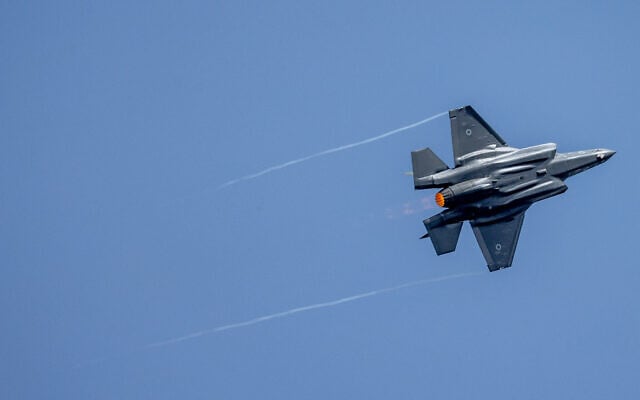
An F-35I fighter jet flies during training for Israel's Independence Day in Jerusalem, April 19, 2023. (Yonatan Sindel/Flash90)
An Israeli Air Force F-35I fighter jet shot down a Russian-made Iranian Yak-130 jet over Tehran a short while ago, the IDF says.
It marks the first-ever downing of a manned aircraft by an F-35.
It also marks the first time in some 40 years that the Israeli Air Force has engaged in air-to-air combat with manned aircraft.
The last time IAF jets shot down a manned enemy aircraft was on November 24, 1985, over Lebanon. In that incident, an IAF F-15 downed two Syrian MiG-23 fighters.
IDF: Israeli Air Force carrying out ‘extensive’ strikes on targets in Tehran
The Israeli Air Force is carrying out an “extensive” wave of strikes against Iranian regime targets in Tehran, the IDF announces.
It says further details on the strikes will be provided later.
Canadian PM says Israel-US strikes on Iran appear ‘inconsistent with international law’
Canadian Prime Minister Mark Carney says he believes that Israeli-US strikes on Iran are not consistent with international law.
“It would appear, prima facie, not to be consistent or to be inconsistent with international law,” Carney tells a gathering at the Lowy Institute in Sydney.
California Governor Newsom says Netanyahu taking Israel down path that could lead US to rethink military support

FILE - California Governor Gavin Newsom speaks during a rally with Harris County Democrats at the IBEW local 716 union hall November 8, 2025, in Houston. (AP Photo/Karen Warren, File)
California Governor Gavin Newsom says he believes the actions of the current Israeli government, under the leadership of Prime Minister Benjamin Netanyahu, may eventually force the US to rethink its military support for the Jewish state.
Newsom, who is widely believed to be planning a 2028 presidential bid, is asked about Israel while promoting his new memoir, “Young Man in a Hurry: A Memoir of Discovery.”
“It breaks my heart, because the current leadership in Israel is walking us down the path where I don’t think you have a choice about that consideration,” he says of the possibility that the US could rethink its military support.
His comments come amid a coordinated US-Israeli campaign against Iran, which opened on Saturday with the killing of Iran’s supreme leader Ali Khamenei.
Newsom has opposed the fighting in Iran — even as he has agreed that the regime of the Islamic Republic “must go” — accusing US President Donald Trump of dragging his country into “an illegal, dangerous war that will risk the lives of our American service members and our friends without justification to the American people.”
Netanyahu, says Newsom at his memoir event, has “got his own domestic issues. He’s trying to stay out of jail. He’s got an election coming up. He’s potentially on the rocks.”
He sharply criticizes the premier’s far-right allies and their bid to annex the West Bank, and suggests that people would be correct to refer to Israel as “sort of an apartheid state.”
The California governor has been vocal about his disdain for Netanyahu in the past, saying earlier this year that he is “crystal clear in my love for Israel — and my condemnation of Bibi [Netanyahu], and there’s a distinction.”
Newsom visited Israel less than two weeks after Hamas’s October 7, 2023, attack, meeting with anguished Israelis as well as senior officials, including Netanyahu.
Jewish Telegraphic Agency contributed to this report.
Sri Lanka says 30 people recovered from sinking Iranian ship near its waters
The Sri Lankan military has rescued at least 30 people on board a sinking Iranian ship near Sri Lankan waters, the country’s foreign minister tells parliament.
The Sri Lankan navy dispatched a rescue mission after a distress call from the Iranian ship, a defense ministry spokesperson said earlier.
Foreign Minister Vijitha Herath does not give further details but says Sri Lanka will take appropriate action.
Local media reported that the ship reported distress off the coast of Galle in the southern part of the country, and that the injured had been admitted to a hospital in Galle.
Arkia to operate repatriation flights for Israelis from six locations as airspace gradually reopens

An Arkia plane takes off at the Ben Gurion Airport, outside of Tel Aviv, August 14, 2025. (Yossi Aloni/Flash90)
Israel’s carrier Arkia says it plans to fly Israelis back home from six destinations as the country’s airspace is expected to gradually reopen overnight Wednesday to Thursday.
Due to current restrictions, Arkia is preparing to initially operate inbound repatriation flights from the following cities: Larnaca, Athens, Rome, Dubai, Bangkok and New York.
Ticket sales will be open for the general public, but Arkia customers whose flights were canceled will receive priority for placement on the repatriation flights. Arkia customers stranded abroad need to register on the following website: https://refund.arkia.co.il/canceledflightsarkiacustomers
Once registered, Arkia customers who have received a refund for their cancelled flights will be required to purchase a new ticket and will be credited the difference between the new ticket price and the original ticket price they paid.
The country’s airspace has been shut since Saturday, when Israel and the US launched a major joint military strike on Iran and the Islamic Republic responded with barrages of missile fire.
Once restrictions on air traffic at Tel Aviv’s Ben Gurion Airport are further eased, Arkia plans to operate an air train of outbound and inbound flights using a fleet of 16 aircraft. Destinations include London, Bucharest, Prague, Budapest, Sofia, Barcelona, Paris, Batumi and Dubai.
Health Ministry says 219 people treated at hospitals over past 24 hours of Iran fighting
The Health Ministry reports that in the past 24 hours, 219 injured people have been taken to hospitals as a result of the conflict with Iran.
Among those treated in hospitals, 10 are in moderate condition and 198 are in good condition.
Seven people have been treated for anxiety, and four have undergone or are undergoing medical evaluation.
A total of 1,274 people have been evacuated to hospitals since the fighting began on Saturday. Of that number, 96 are still currently hospitalized or in the ER, while the remainder have been treated and released.
Four of the people still currently hospitalized are in moderate condition, although two of them were not directly wounded by missile strikes.
Another 23 people are still currently hospitalized in moderate condition, and 65 others are in good condition. Four others remain in the hospital for medical evaluations.
IDF redeploys 146th Reserve Division to western part of Lebanon border
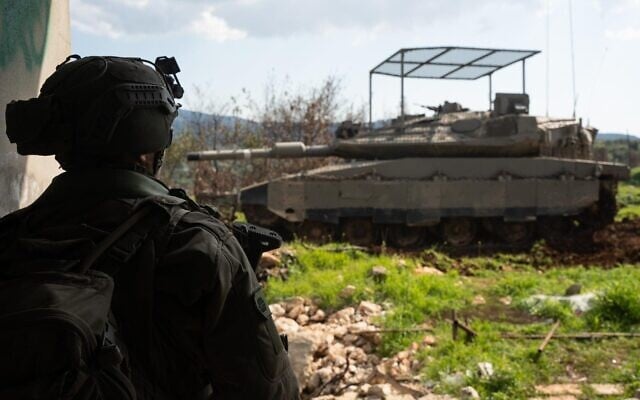
A soldier of the 146th Reserve Division is seen next to an IDF tank on the Lebanon border, in a handout photo published March 4, 2026. (Israel Defense Forces)
The IDF says it has redeployed the 146th Reserve Division to the western portion of the Lebanon border.
The division had been tasked with the western portion of the border with Lebanon from the beginning of the war on October 7, 2023, before being withdrawn in May 2025.
Normally, the Lebanon border — from Rosh Hanikra up to, but not including, Mount Dov — is under the responsibility of the 91st “Galilee” Regional Division.
The military says that “as part of strengthening defense and readiness in the northern sector,” it is redeploying the reserve division for “defensive missions.”
IDF: More than 250 targets struck in Lebanon since Hezbollah entered fray on Monday
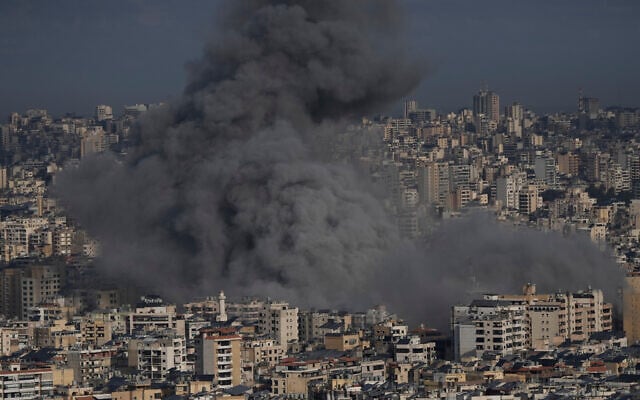
Smoke rises following an Israeli airstrike in Dahiyeh, Beirut's southern suburbs, Lebanon, March 4, 2026. (AP Photo/Bilal Hussein)
Since Hezbollah joined the conflict on Monday, the IDF has struck over 250 targets in Lebanon, including 100 in the past day, according to the military.
The targets have included senior terror operatives, rocket launchers, weapon depots, and headquarters belonging to Hezbollah and other terror groups.
Overnight, the IDF says it struck a Hezbollah command center in the Nabatieh area, as well as other sites belonging to the terror group in southern Lebanon.
Additionally, last night, a Hezbollah rocket launcher used to fire three rockets at Tel Aviv and Haifa was destroyed in a strike within an hour of the attack, according to the IDF.
In southern Lebanon, the military estimates that some 300,000 Lebanese civilians have evacuated their villages after the IDF ordered them to leave. The IDF issued evacuation warnings for more than a dozen more south Lebanon villages overnight.
Iran to hold three-day state funeral for Khamenei, starting Wednesday evening — state media
Iranians are to bid farewell to late Supreme Leader Ayatollah Ali Khamenei in a ceremony on Wednesday at 10 p.m. at Tehran’s Imam Khomeini prayer ground, state media reports.
The ceremony will last for three days and the funeral procession will be announced when it is finalized, it said.
IDF says new wave of strikes underway against Hezbollah targets in Beirut
The IDF says it has launched a wave of strikes against Hezbollah infrastructure in Beirut.
It says further details will be provided later.
Ahead of the strikes, the military issued evacuation warnings for two buildings in the Lebanese capital.
Katz: Khamenei’s successor will be ‘unequivocal target for elimination’
Defense Minister Israel Katz says any leader appointed by the Iranian regime to replace Ali Khamenei will be an “unequivocal target for elimination.”
“Any leader appointed by the Iranian terror regime to continue leading the plan to destroy Israel, threaten the US and the free world and the countries of the region, and oppress the Iranian people, will be an unequivocal target for elimination,” Katz says in a statement.
“It does not matter what his name is or where he hides,” he says.
“We will continue to act with full force, together with our American partners, to dismantle the regime’s capabilities and create the conditions for the Iranian people to overthrow and replace it,” Katz adds.
Suspected drone infiltration sirens sound in the Galilee Panhandle
Sirens warning of a suspected drone infiltration sound in the Galilee Panhandle.
The alerts are activated in several communities near the Lebanon border.
Hezbollah launched several drones at northern Israel yesterday.
IDF issues evacuation warning for two buildings in Beirut ahead of strike
The IDF issues evacuation warnings for two buildings in Beirut ahead of airstrikes against Hezbollah infrastructure.
“You are located near facilities affiliated with Hezbollah,” says army spokesman Col. Avichay Adraee, attaching maps of the buildings that are set to be targeted.
Civilians in the area are instructed to distance themselves at least 300 meters from the buildings.
#عاجل ‼️ انذار عاجل للمتواجدين في الضاحية الجنوبية في بيروت وتحديدًا في حي حارة حريك
⭕لكل من يتواجد في المبنى المحدد بالأحمر وفق ما يُعرض في الخارطة والمباني المجاورة له: أنتم تتواجدون بالقرب من منشآت تابعة لحزب الله.
⭕ من أجل سلامتكم وسلامة أبناء عائلاتكم أنتم مضطرون لإخلاء… pic.twitter.com/pI18B9ZAv7— افيخاي ادرعي (@AvichayAdraee) March 4, 2026
IDF publishes footage of airstrike on Iranian soldiers operating air defense system
New footage published by the IDF shows an airstrike against a group of Iranian soldiers operating an air defense system, and the targeting of a Russian-made Mi-17 helicopter used by the Iranian army.
“The air force continues to strike the aerial capabilities of the Iranian regime,” the military says.
חיל האוויר ממשיך לפגוע ביכולות האוויריות של המשטר האיראני: סוכלו חיילים איראנים שהפעילו מערכות הגנה אווירית נגד מטוסי חיל האוויר pic.twitter.com/f6hg6FV5at
— צבא ההגנה לישראל (@idfonline) March 4, 2026
IDF: Airstrikes hit command centers of Iran’s Basij, internal security forces in Tehran yesterday
A wave of Israeli airstrikes in Tehran yesterday hit dozens of command centers of Iran’s Basij paramilitary force and internal security forces, the military says.
“The targeted command centers were used by the Iranian regime to maintain control throughout Iran and maintain the regime’s situational assessments,” the IDF says.
In addition, as part of the strikes, the IDF says it struck sites belonging to the Iranian army’s logistics division, missile launchers and air defense systems.
❌ ارتش اسرائیل دهها مقر وابسته به نیروهای انتظامی و بسیج، که تحت فرمان رژیم تروریستی ایران فعالیت میکنند، را هدف قرار داد.
مقرهایی که مورد حمله قرار گرفتند، توسط رژیم تروریستی ایران برای حفظ ثبات و کنترل خود در سراسر ایران و همچنین برای شکلدهی به تصویر وضعیت عملیاتی مورد… pic.twitter.com/jX30PlUtx1
— ارتش دفاعی اسرائیل | IDF Farsi (@IDFFarsi) March 4, 2026
US gives non-emergency personnel permission to leave Cyprus
The US State Department has given its non-emergency personnel and their families in Cyprus permission to leave, the US embassy says.
The department “authorized non-emergency US government employees and US government employee family members to leave Cyprus due to the safety risks.”
Iran’s IRGC say they have ‘complete control’ over Strait of Hormuz
Iran’s Islamic Revolutionary Guard Corps say they control the Strait of Hormuz, a vital shipping route for oil and gas, and any vessels seeking to pass through the waterway risk damage from missiles or stray drones.
“Currently, the Strait of Hormuz is under the complete control of the Islamic Republic’s Navy,” says IRGC Navy official Mohammad Akbarzadeh in a statement issued on Fars news agency.
US President Donald Trump said yesterday the US Navy was ready to escort oil tankers through the crucial Gulf shipping route.
US in talks with Kurds on potential military operation in Iran — sources
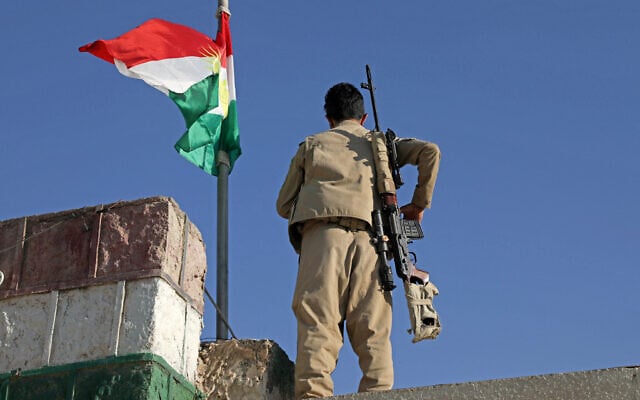
Illustrative: A Kurdish peshmerga fighter affiliated with the Iranian Kurdistan Democratic Party (KDP-Iran) stands guard on a building following an Iranian cross-border attack in the town of Koye (Koysinjaq), 100Km east of Arbil, the capital of the autonomous Kurdish region of northern Iraq on October 1, 2022. (Safin Hamid/AFP)
Iranian Kurdish militias have consulted with the United States in recent days about whether, and how, to attack Iran’s security forces in the western part of the country, according to three sources with knowledge of the matter.
The Iranian Kurdish coalition of groups based on the Iran-Iraq border in the semiautonomous region of Iraqi Kurdistan has been training to mount such an attack in hopes of weakening the country’s military, as the United States and Israel pound Iranian targets with bombs and missiles.
The goal would be to create room for Iranians opposed to the Islamic regime to rise up now that Supreme Leader Ali Khamenei and other top officials have been killed since the US-Israeli attack began on Saturday, two of the sources say.
A final decision has not yet been made on the operation and its possible timing, add the sources, who speak on condition of anonymity to talk freely about sensitive military planning.
The groups have requested US military support and Iraqi leaders in Erbil and Baghdad have also been in touch with the Trump administration in recent days, they say.
The forces are in talks with the United States about CIA help to provide weapons, two of the sources say.
CNN was the first to report on the CIA’s involvement with the groups and the potential ground operation. Axios said this week that US President Donald Trump held a telephone call with two of Iraqi Kurdistan’s top leaders.
Reuters cannot independently confirm the extent of the CIA’s involvement in the planning of the operation, if it had facilitated the weapons or if any US forces planned to go into Iran with the Kurdish groups.
The CIA declines to comment. The White House and the Pentagon don’t immediately respond to a request for comment.
The Kurdish Regional Government doesn’t immediately respond to a request for comment.
Non-emergency US embassy staffers, families authorized to leave Saudi Arabia and Oman
The US State Department has given its non-emergency personnel and their families in Saudi Arabia and Oman permission to leave, the US embassies in both Gulf states say, as Iran launches retaliatory strikes in response to US-Israeli air raids.
The department “authorized non-emergency US government employees and US government employee family members to leave” Saudi Arabia and Oman “due to safety risks,” the US embassies in Riyadh and Muscat say in advisories on their websites.
No injuries reported as IDF gives Israelis all clear to exit shelters after latest Iranian missile fire
The Magen David Adom ambulance service says there are no immediate reports of injuries following the latest ballistic missile launches from Iran.
The IDF Home Front Command gives Israelis the all clear to exit bomb shelters, though residents of the Lebanese border town of Metula are told to remain inside due to an apparent Hezbollah rocket attack.
Sirens sound in Jerusalem area, parts of central Israel and West Bank amid Iranian missile fire
Sirens sound in the Jerusalem area, some parts of central Israel and the West Bank, with the Israel Defense Forces saying it detected another launch of missiles from Iran.
The military adds that it is working to intercept the missiles, while urging the public to remain in shelters until further notice
X to crack down on AI-generated war footage
The social media platform X, formerly Twitter, will crack down on AI-generated war footage, says Nikita Bier, the company’s head of product.
“During times of war, it is critical that people have access to authentic information on the ground. With today’s AI technologies, it is trivial to create content that can mislead people,” Bier writes in a post.
X users who post “AI-generated videos of an armed conflict,” without stating that the footage was made with AI, will be suspended from the platform’s creator revenue sharing, Bier writes.
Creator revenue sharing allows eligible users to earn money on X. To earn eligibility, users must have a sizable reach.
If a user violates the AI policy a second time, they will be permanently suspended from earning revenue, Bier says.
X will identify AI content through community notes — a feature that allows users to flag falsehoods — or if the video has other signals of AI, Bier says.
Limiting the policy to users who earn revenue means most X users will not face any repercussions for posting fake footage. AI-generated photos will also not be limited by the new policy.
Rapidly improving AI technology has allowed members of the public who have little technical experience to create realistic videos and photos.
The fake content has proliferated on X since the start of the Iran war.
A fake video showing a massive missile bombardment of Tel Aviv, for example, has been shared widely and viewed millions of times.
Tel Aviv, stripped of illusion, as you have never witnessed it. pic.twitter.com/HE3ckjBMti
— Abdulruhman Ismail (@a_abdulruhman) March 3, 2026
Photos of Iranian girls’ bodies, also created by AI, have also been shared widely, including by the UN special rapporteur for the Palestinians, Francesca Albanese, and other purportedly legitimate sources.
Iran’s regime is illiberal and brutal, and the Iranian people deserve the freedom they have long fought for. This gives no right to the US or Israel -whose own policies in Palestine are also illiberal and brutal- to bomb Iran, nor to EU leaders to cloak escalation in hypocrisy. https://t.co/GM1SrxhCPa
— Francesca Albanese, UN Special Rapporteur oPt (@FranceskAlbs) March 3, 2026
Saudi Arabia reports interception of 2 cruise missiles near Riyadh, downing of drones
The Saudi defense ministry says two cruise missiles were intercepted over an area south of the capital Riyadh, and state media reports a separate drone attack was thwarted.
“Two cruise missiles were intercepted and destroyed in Al-Kharj” district, a defense ministry statement says, while the official Saudi Press Agency cites a ministry spokesman as saying “nine drones were intercepted and destroyed immediately upon entering the Kingdom’s airspace.” The statements don’t say who may be behind the attacks.
Fatalities reported in Israeli strikes on Lebanon’s Baalbek, pair of southern towns
Several people were killed in an Israeli airstrike on a four-story residential building in the eastern Lebanese city of Baalbek, the state news agency NNA reports early Wednesday.
Rescue teams are working to pull families from beneath the rubble, NNA says.
Lebanon’s health ministry meanwhile says that Israeli strikes on two towns south of Beirut killed six people and wounded eight.
In a statement, the ministry says that “the Israeli enemy’s attacks on the areas of Aramoun and Saadiyat” killed six people and wounded eight others “in a preliminary toll,” which doesn’t differentiate between civilians and combatants.
Aramoun and Saadiyat are both towns outside of Iran-backed terrorist group Hezbollah’s traditional strongholds.
Rockets fired from Lebanon trigger sirens in Safed, neighboring communities; IDF says most intercepted
Several rockets were launched from Lebanon at northern Israel a short while ago, triggering sirens in Safed and other communities in the Upper Galilee.
According to the IDF, most of the rockets were intercepted by air defenses, while one impacted in the area.
The IDF says the rocket impact caused no injuries.
No injuries reported after most recent Iranian missile attack; IDF believes projectile intercepted
There are no reports of injuries following Iran’s latest ballistic missile fire on southern Israel, medics say.
According to preliminary military assessments, one missile was fired in the attack, and it was successfully intercepted by air defenses.
The IDF Home Front Command says civilians in areas where sirens sounded can now leave bomb shelters, but should still remain close to them.
Sirens sound in Beersheba, surrounding area as IDF works to intercept Iranian missiles
Sirens sound in Beersheba and the surrounding area in southern Israel amid Iran’s latest ballistic missile attack.
The IDF says it is working to interpret the missiles.
IDF says Iran launched another batch of missiles, with sirens set to activate in south
A new launch of ballistic missiles from Iran has been detected by the IDF.
Sirens are expected to sound in southern Israel in the coming minutes.
IDF issues evacuation warning for 16 Lebanese villages ahead of upcoming strikes
The IDF’s Arabic-language spokesman issues an immediate evacuation warning for residents of 16 Lebanese villages, signaling imminent strikes on Hezbollah targets.
US says it has bombed over 2,000 targets in Iran, is ‘continuing with 24/7 strikes’
The US military commander in the Middle East says that American forces have struck nearly 2,000 targets so far in Iran as part of the largest firepower buildup in the region in a generation.
“We’ve already struck nearly 2,000 targets with more than 2,000 munitions. We have severely degraded Iran’s air defenses and destroyed hundreds of Iran’s ballistic missiles, launchers and drones,” Admiral Brad Cooper of US Central Command says in a video message.
He adds that the US has destroyed 17 Iranian ships, including a submarine. “Today, there is not a single Iranian ship underway in the Arabian Gulf, Strait of Hormuz, or Gulf of Oman.”
According to Cooper, “the first 24 hours of this operation were nearly double the scale” of the first day of shock-and-awe strikes on Iraq in 2003, “and we continue with 24/7 strikes into Iran.”
Cooper also reveals that Iran has so far launched over 500 ballistic missiles and over 2,000 drones in retaliatory attacks against American targets, Israel and US-allied Arab states in the region.
Rocket sirens activated in several Lebanon border towns
Rocket warning sirens are activated in a few towns near the Lebanon border, with residents told by the military to seek immediate shelter
Jewish New Yorkers hold Purim event outside Iranian consulate
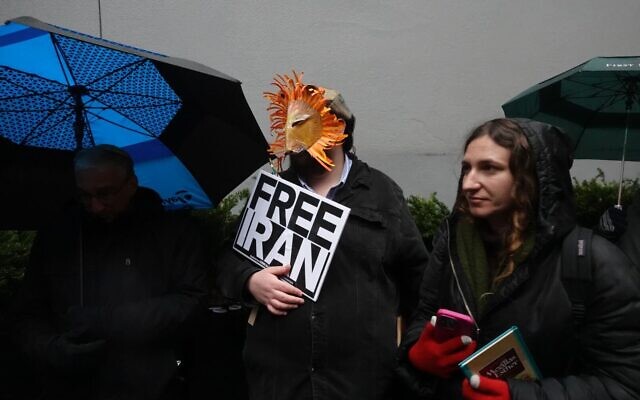
Jews hold a Purim event outside the Iranian consulate in New York Citiy, March 3, 2026. (Luke Tress/Times of Israel)
Jewish New Yorkers hold a Purim event outside the Iranian consulate in midtown Manhattan, connecting the holiday to the Iran war.
The Purim story is about Jews in the ancient Persian empire overcoming the villain Haman.
The event is organized by Hineni, a grassroots Jewish group based in the city.
Around 30 participants gather in the cold winter rain, holding Israeli and Iranian flags and signs that say, “Free Iran.”
Shai Davidai, a co-founder of Hineni and a prominent Jewish activist in the city, says the Purim story begins with the character Mordechai not deferring to Haman, which ends up setting an example for other Jews.
“All of a sudden, they see someone who refuses to bow to Haman and that’s the most important thing,” Davidai says, connecting the story to combating antisemitism.
“Even when we are afraid, we refuse to bow down to that fear, and if we are able to do that, we can do a lot of things,” he says.
A rabbi then leads the crowd in a reading of the Megillah, which tells the Purim story.
Ahead of Saturday strike, PM phoned Trump to say Khamenei would convene his top advisers that day — report
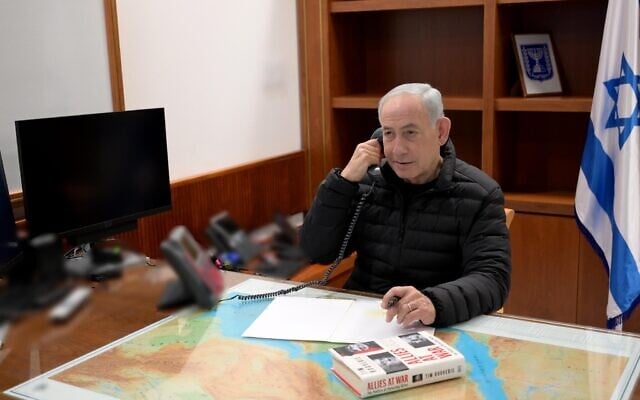
Prime Minister Benjamin Netanyahu speaks to US President Donald Trump on February 28, 2026 (GPO/ Avi Ohayon)
Prime Minister Benjamin Netanyahu phoned US President Donald Trump last Monday to inform him that Iranian supreme leader Ayatollah Ali Khamenei would be gathering in Tehran with his senior advisers on Saturday morning, making it possible to take them all out in one strike, according to Axios, citing sources briefed on the call.
The report, which describes the February 23 conversation as “the call that changed the Middle East,” says that Trump directed the CIA to look into the tip from Israel’s Military Intelligence, which the US spy agency confirmed.
US officials quoted by the news site says that as preparations for the strike moved ahead, Trump made a “deliberate decision” not to focus on Iran too much in his State of the Union speech the day after his call with Netanyahu, concerned Khamenei could go underground.
By Thursday — the same day as Trump’s top envoys met with Iranian negotiators in Geneva — the CIA definitively “confirmed that these people were all going to be together, and we needed to take advantage of it,” a source tells Axios.
Following the Geneva meeting, Trump was reportedly informed by his envoys that the talks were going nowhere: “If you decide you want to do diplomacy, we will push and fight to get a deal. But these guys showed us they weren’t willing to make the deal you will be satisfied with.”
The next day, after deciding that the negotiations were for naught and the intelligence on Khamenei was solid, Trump ultimately gave the order to strike.
The Axios report also cites a US official who says that the US and Israel initially planned to strike sometime in late March or early April so the administration could time to build support for the attack with Americans, but Netanyahu “agitated” to move up the assault, warning that Iranian opposition leaders in hiding risked being killed by the regime.
“We didn’t make the case in advance as well as we could have because the opportunity came on us so fast,” the official says.
Settlers near Hebron filmed opening fire, harassing Palestinians during Purim
A settler was filmed opening fire on Palestinians Tuesday near the village of Sa’ir, north of Hebron in the southern West Bank.
In footage published by Palestinian media, the settler trains his assault rifle on a Palestinian man and woman. Another two Palestinians can be seen fleeing, with one woman screaming, as two shots are heard.
توثيق مشاهد من هجوم مستوطنين مسلحين على مواطنين في أراضيهم بخلة الفرا غرب مسافر يطا وسط فزع الأطفال وخوفهم #فيديو pic.twitter.com/P948iWlB2B
— الجزيرة فلسطين (@AJA_Palestine) March 3, 2026
The same settler then appears from behind a bush with his rifle at the ready, gestures to Palestinians next to him to go away, and fires another shot.
Separate footage from Sa’ir, published by Palestinian media, shows Palestinian youth running after a departing vehicle, with one hurling a stone at it.
مستوطنون يطلقون الرصاص تجاه الفلسطينيين خلال اقتحام محيط المنازل شرق بلدة سعير جنوب الضفة الغربية#فيديو pic.twitter.com/FQG0qjr7Du
— الجزيرة فلسطين (@AJA_Palestine) March 3, 2026
Meanwhile, extremist settler activist Elisha Yered publishes footage filmed from inside a vehicle that shows several young Palestinians hurling stones in the vehicle’s direction, apparently with the village of Sa’ir behind them.
גם בפורים האויב לא נח: עשרות פורעים ערבים מכפר המרצחים סעיר יידו אבנים הבוקר לעבר רכב שנסע בכביש הגישה לגבעת מעלה תדהר בגוש עציון.
הפורעים התמקמו בשטח בחסות בית ערבי שנבנה לאחרונה בעידוד הרש"פ בסמוך לכביש הגישה לגבעה, וניסו לנפץ את שמשת הרכב. בנס לא היו נפגעים.
כוחות צה"ל פתחו… pic.twitter.com/23Uivw79Dn
— אלישע ירד (@ElishaYered) March 3, 2026
WAFA, the Palestinian Authority’s official news agency, says Palestinians in Sa’ir were fending off attacking settlers.
According to the report, two Palestinians were wounded by settler gunfire during the clashes, and IDF forces on the scene arrested a Palestinian.
Footage from the Sa’ir shows Palestinians carrying an apparently wounded man.
إصابة فلسطيني في هجوم نفذته ميليشيات المستوطنين على بلدة سعير شمال الخليل pic.twitter.com/XQ4mRt41NA
— شبكة قدس الإخبارية (@qudsn) March 3, 2026
The condition of the wounded is unspecified in the report. The IDF does not respond to a request for comment.
Separately, WAFA says settlers on Tuesday — when most Israelis celebrated Purim — came to the area of Wadi Tiran, south of Hebron, and “walked among the homes, repeating slogans calling for the death and expulsion of Palestinians.”
Left-wing Israeli activists who perform “protective presence” in Palestinian communities in the area post footage of settlers, some of them in Purim costumes, dancing, singing holiday songs and chanting “may your village burn” in and around Wadi Tiran on Tuesday.
Today: settlers invaded the villages of Wadi Tiran and Ghwein to celebrate Purim by abusing Palestinians.
In Wadi Tiran, more than ten settlers invaded the village – some dressed in costumes, dancing, assaulting residents, spilling and wasting their water https://t.co/Qr9FeafgBF pic.twitter.com/0JFRGVipMl— מחוץ לעדר/ kivsa shchora (@masafering) March 3, 2026
Footage published by the activists from the night before, when Purim began, showed settlers driving a car through the nearby community of Umm al-Kheir, playing and singing loud Purim music.
This evening in the village of Umm al-Kheir: settlers drove through the village, played Purim holiday songs, and shouted “Death to Arabs.” pic.twitter.com/om8iykR0og
— מחוץ לעדר/ kivsa shchora (@masafering) March 2, 2026
Saudi Arabia vows to take all necessary measures to defend itself after Iranian attack targeting US embassy
Saudi Arabia will take all necessary measures to defend its security and protect its territory, citizens and residents, the state news agency reports, citing a cabinet statement.
An Iranian attack targeted the US embassy in Riyadh on Tuesday amid ongoing Iranian missile and drone strikes on Gulf states that host US bases, following US and Israeli strikes on Iran on Saturday.
Lindsey Graham urges Trump to join Israeli strikes on Lebanon’s Hezbollah
US Senator Lindsey Graham, a Republican from South Carolina, speaks to members of the media as the Trump cabinet briefs members of Congress on Iran, at the US Capitol on March 3, 2026, in Washington, DC. (Anna Moneymaker/Getty Images/AFP)
WASHINGTON — Republican US Senator Lindsey Graham calls on US President Donald Trump to join Israel in striking Hezbollah in Lebanon.
“Fly with Israel and go after Hezbollah, which has American blood on its hands. Not only take the mothership of Iran. Also take the proxy of Hezbollah,” Graham tells reporters on Capitol Hill.
Lindsey Graham: "I'm calling on President Trump today — join Israel to attack Hezbollah … fly with Israel" pic.twitter.com/ymiUtdOGB9
— Aaron Rupar (@atrupar) March 3, 2026
Khamenei’s son Mojtaba has emerged as leading candidate for new supreme leader — NYT
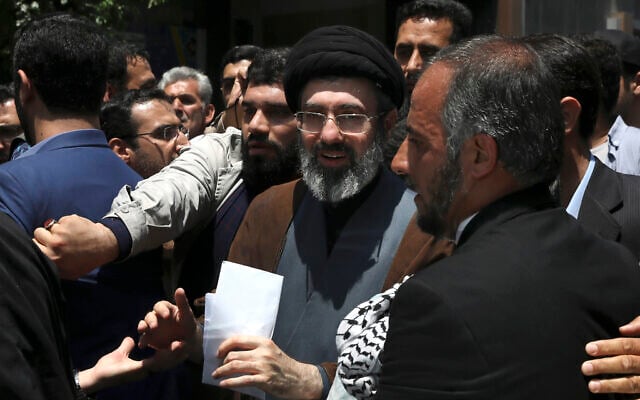
Mojtaba, son of Iranian Supreme Leader Ayatollah Ali Khamenei, center, attends the annual Quds, or Jerusalem Day rally in Tehran, Iran, on May 31, 2019. (AP/Vahid Salemi)
The son of supreme leader Ayatollah Ali Khamenei is the front-runner to succeed his father as the Islamic Republic’s next head, according to a New York Times report that says the senior clerics tasked with choosing the next supreme leader could announce their choice as early as Wednesday morning.
Quoting Iranian officials familiar with the deliberations, the newspaper says the clerics have some reservations about declaring Mojtaba Khamenei as supreme leader, fearing it could increase the likelihood he is targeted by the US and Israel.
The report adds that the clerics held two virtual meeting on the matter Tuesday, while noting an Iranian media report saying that a building in Qom was empty when the IDF announced hitting it in an airstrike targeting the Assembly of Experts, as the body tasked with selecting the supreme leader is formally known.
The New York Times report comes after the opposition outlet Iran International claimed that Mojtaba Khamenei was already chosen by the Assembly of Experts as his father’s successor, citing “informed sources.”
Pentagon identifies first American soldiers killed in Iran war as US Army reservists
The Pentagon has released the names of four of the six service members who have been killed in the Iran war, saying they died in a drone strike in Kuwait.
All four Army Reserve soldiers were killed Sunday when a drone hit a command center in Port Shuaiba, Kuwait. That was just a day after the US and Israel launched its military campaign against Iran, which has launched retaliatory strikes.
All were assigned to the 103rd Sustainment Command in Des Moines, lowa.
Killed were Capt. Cody A. Khork, 35, of Winter Haven, Florida; Sgt. First Class Noah L. Tietjens, 42, of Bellevue, Nebraska; Sgt. First Class Nicole M. Amor, 39, of White Bear Lake, Minnesota; and Spc. Declan J. Coady, 20, of West Des Moines, lowa.
Loud explosion reported in Beirut
A loud explosion is heard by an AFP journalist in the Lebanese capital Beirut shortly after midnight on Wednesday, as Israel and Hezbollah trade strikes and rocket fire.
Tehran-backed Hezbollah reprised its rocket and drone attacks on Israel on Monday after a long hiatus in retaliation for the killing of Iranian supreme leader Ayatollah Ali Khamenei in a wave of joint US-Israeli strikes.
IDF announces it launched ‘broad wave of attacks’ across Iran
The IDF says that is has begun a “broad wave of attacks” across Iran, with the strikes targeting launch sites, defense systems “and other infrastructure of the Iranian terror regime.”
Sirens set to again sound across the north as IDF detects another missile launch from Iran
The military says that it’s detected another missile launch from Iran, with residents across northern Israel instructed to enter bomb shelters as sirens are set to be activated.
“Air defense systems are working to intercept the threat,” a statement from the Israel Defense Forces says.
UAE seems to push back on report it’s considering joining strikes on Iran
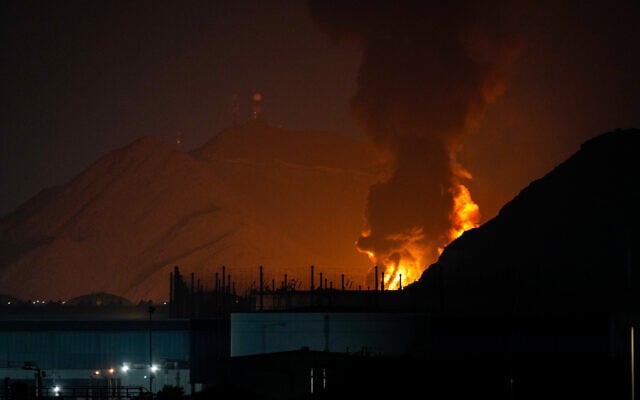
Large fire and plume of smoke is visible after, according to the authorities, debris of an Iranian intercepted drone hit the Fujairah oil facility, in Fujairah, United Arab Emirates, March 3, 2026. (AP Photo/Altaf Qadri)
The UAE appears to push back on a report that is considering joining the US and Israel in striking Iran.
Axios reported earlier Tuesday that Abu Dhabi is considering the unprecedented step in response to Iranian drone and missile strikes on its country.
Shortly after the report, the UAE issued a statement through its WAM state news agency asserting that it “has not taken any decision to alter its defensive posture in response to the repeated Iranian attacks.”
“The UAE reiterates that it is not a party to this war and has not permitted the use of its territory, territorial waters, or airspace for any attack against Iran, consistent with its long-standing policy of good neighborliness, de-escalation, and its firm commitment to the Charter of the United Nations,” the statement says.
“Furthermore, the UAE underscores that it retains its legitimate right to self-defense, as recognized under international law and the Charter of the United Nations,” it continues.
“The UAE further stresses the importance of journalistic responsibility and the need to rely on official, credible sources before publishing or circulating inaccurate or misleading reports,” the statement adds, while notably not denying the Axios report outright.
Board of Peace envoy says aid entered Gaza for first time since Israel shuttered borders amid Iran strikes

Board of Peace High Representative for Gaza Nickolay Mladenov speaks at the Munich Security Forum on February 13, 2026. (Screen capture/YouTube)
The Board of Peace High Representative for Gaza Nickolay Mladenov says aid entered Gaza for the first time today since Israel shut down the Strip’s borders upon the launch of joint military strikes with the US against Iran.
“Essential supplies, including Ramadan care packages, are once again reaching families in urgent need,” says Mladenov.
“This is the result of sustained engagement with all relevant parties to ensure humanitarian access remains a top priority. The basic needs of Gaza’s population cannot be delayed,” he adds.
No injuries reported following Iranian missile fire targeting north and Eilat
There are no reports of injuries following Iran’s latest ballistic missile fire on northern Israel and Eilat in the south, medics say.
The IDF Home Front Command says civilians in areas where sirens sounded can now leave bomb shelters, but should still remain close to them.
Fresh Iranian ballistic missile attack triggers sirens in north, Eilat area
Sirens sound across northern Israel, as well as in Eilat in the south, amid an Iranian ballistic missile attack.
Civilians in areas where sirens are sounding are instructed to enter bomb shelters until further notice, as the IDF says it is working to shoot down the projectiles.


read more: